

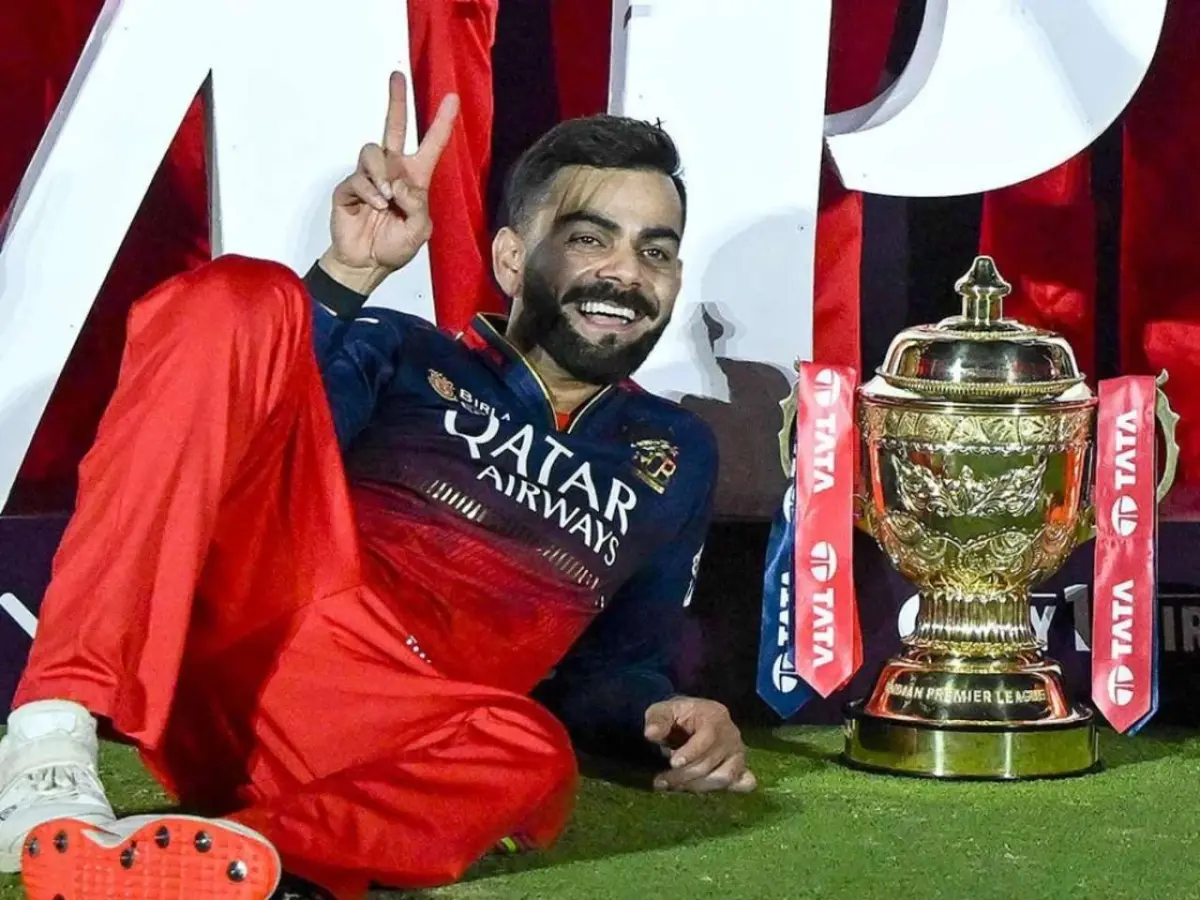
Bengaluru, India – In the high-stakes, hyper-competitive world of the Indian Premier League (IPL), the captaincy of a franchise is more than just a leadership role; it’s a crucible of immense pressure, expectation, and often, unwavering scrutiny. For over a decade, the Royal Challengers Bengaluru (RCB) and Virat Kohli have been synonymous, an inseparable entity that has captivated millions of fans worldwide. Kohli’s journey with RCB, from its inception in 2008 to his long tenure as captain, is etched into the annals of IPL history. Yet, a bombshell revelation from former India and RCB batter Parthiv Patel has peeled back the curtain on a dramatic, hitherto unknown chapter: a moment when Kohli’s captaincy was on the brink, and Patel was asked to stand ready as his successor.
This unprecedented disclosure, first hinted at by former RCB all-rounder Moeen Ali and now explicitly confirmed by Patel, suggests a period of intense deliberation within the RCB management before the 2019 season. It paints a vivid picture of the internal pressures and strategic shifts that define franchise cricket, even for a player of Kohli’s stature. The details surrounding this near-transfer of power, the individuals involved, and the eventual turn of events offer a rare glimpse into the complex decision-making processes of one of the IPL’s biggest and most ardently followed teams.
The Revelation That Shook the RCB Fandom
The news, emerging from a candid conversation between Parthiv Patel and former cricketer Aakash Chopra on YouTube, sent ripples through the cricketing community. While the possibility had been subtly floated before, Patel’s direct confirmation solidified what many fans and analysts might have only speculated. The core of the revelation is startling: before the 2019 IPL season, Parthiv Patel, then an active member of the RCB squad, was approached with the prospect of taking over the captaincy from Virat Kohli.
Parthiv Patel’s Candid Admission
Patel, known for his articulate nature and insightful commentary post-retirement, minced no words in his confirmation. "I have never talked about this, but Moeen Ali mentioned it in an interview. The fact is that I was told, ‘Be ready, we are thinking about this for next year.’ But the next year, the two people who offered it to me (Ashish Nehra and Gary Kirsten) were replaced; new coaches came in, and I didn’t get to play a single match that entire season," Parthiv recounted during his chat with Aakash Chopra. This statement is not just a confirmation but also provides critical context: the offer was tied to a specific coaching regime and dissolved with its change.
)
Moeen Ali’s Precursor Hint
Prior to Patel’s full disclosure, Moeen Ali, another former RCB player and an astute observer of the game, had offered a tantalizing hint on Sports Tak. Ali’s words, though less direct, clearly pointed towards Patel being considered for the top job. "Yes, I think he was. I’m quite sure he was. In the final year when Gary Kirsten was there, after the first year, I believe Parthiv was in line to become captain. He had a brilliant cricketing brain," Moeen had stated. He further added, "That was the talk at the time. I don’t know what happened or why it didn’t materialise, but I’m sure he was seriously considered for the role." Moeen’s testimony not only corroborated the story but also underscored the seriousness of the discussions and Patel’s perceived leadership qualities.
A Captain’s Reign: Virat Kohli’s RCB Journey
To fully grasp the magnitude of this revelation, one must understand the intricate tapestry of Virat Kohli’s association with RCB. He is the quintessential one-franchise player, having been with the team since the inaugural season in 2008. From a promising youngster to a global cricketing icon, Kohli’s journey has been inextricably linked with the Bengaluru franchise.

The Genesis: From Player to Leader
Kohli’s captaincy tenure officially began in 2013, though he had stepped in as interim skipper a few times even in 2011. His leadership, marked by aggressive intent and an unyielding will to win, quickly became the defining characteristic of RCB. Under his captaincy, the team reached three IPL finals (2011, 2016, 2024), most notably in 2016, a season where Kohli himself amassed an astounding 973 runs. Despite his individual brilliance and passionate leadership, the elusive IPL trophy remained out of reach throughout his official captaincy stint, which concluded in 2021. This prolonged trophy drought fueled constant debate and immense pressure from the passionate but often frustrated RCB fanbase.
The Weight of Expectation and the Elusive Title
The "E Sala Cup Namde" (This Year, The Cup Is Ours) mantra became a rallying cry for RCB fans, but also a heavy burden for the team and especially its captain. Year after year, despite boasting a star-studded lineup, RCB consistently flattered to deceive, often failing to convert promising starts into championship glory. The narrative of Kohli, the unparalleled batter, struggling to lead his team to an IPL title became a dominant theme, overshadowing his phenomenal individual records. This backdrop of unfulfilled aspirations undoubtedly contributed to the management’s contemplation of a leadership change.
)
The 2019 Conundrum: A Season of Flux
The 2019 season, the year preceding the potential captaincy change, was particularly challenging for RCB. The team endured a dismal campaign, finishing at the bottom of the points table with only five wins from fourteen matches. This performance, coupled with the ongoing struggle for an IPL title, likely intensified internal discussions about strategic overhauls, including leadership. It was amidst this climate of underperformance and a desperate search for a winning formula that the idea of a new captain, specifically Parthiv Patel, gained traction within certain quarters of the management and coaching staff.
Behind the Scenes: The Captaincy Conundrum of 2019
The revelation of Parthiv Patel being considered for captaincy shines a light on the intricate and often volatile dynamics within an IPL franchise. Decisions of such magnitude are rarely impulsive; they are often the culmination of strategic assessments, performance reviews, and a vision for the team’s future.
)
The Coaching Influence: Kirsten and Nehra’s Vision
Patel’s statement explicitly links the offer to two key figures: Ashish Nehra and Gary Kirsten. In 2018, Gary Kirsten was appointed as the head coach of RCB, with Ashish Nehra serving as his assistant and bowling coach. This coaching duo, both highly respected figures in Indian cricket with World Cup-winning experience (Kirsten as India’s coach in 2011, Nehra as a player), likely brought their own philosophy and strategic outlook to the franchise. It appears they envisioned a potential change in leadership for the upcoming 2019 season, believing a different voice or approach might unlock the team’s potential. Their decision to approach Patel suggests they saw in him not just a seasoned cricketer, but a leader capable of guiding the team.
Why Parthiv Patel? Assessing the Alternative
Parthiv Patel, at that time, was a veteran wicketkeeper-batter with extensive experience in domestic cricket and the IPL. He had played for multiple franchises and had a reputation for being a smart, gritty cricketer. Wicketkeepers, by virtue of their position, often possess a deep understanding of the game, reading pitches, field placements, and bowler strategies. Moeen Ali’s description of Patel having a "brilliant cricketing brain" is a testament to this.
)
Considering Patel for captaincy would have been a significant departure from the established order. It would have meant entrusting the reins to a player who, while experienced, wasn’t a global superstar like Kohli. However, such a move could have been motivated by a desire to:
- Reduce pressure on Kohli: Allowing him to focus solely on his batting, free from the burden of captaincy.
- Bring a fresh perspective: A new captain might inject different tactical approaches and foster a new team culture.
- Leverage a "cricketing brain": Utilize Patel’s strategic acumen on the field.
This thought process underscores the management’s deep concern about the team’s performance and their willingness to consider unconventional solutions to break the trophy drought.
)
The Unraveling of the Plan: A Change of Guard
However, as Patel himself revealed, the plan never materialised. The reason was a swift and decisive change in the coaching staff. Following the disappointing 2019 season, both Gary Kirsten and Ashish Nehra were replaced. Simon Katich took over as head coach, and Mike Hesson was appointed as Director of Cricket Operations. This change in leadership at the coaching and management level effectively nullified the previous discussions. New coaches often come with their own ideas, strategies, and preferred personnel. With Kirsten and Nehra gone, the proponents of Patel’s captaincy were no longer in power, and the opportunity vanished as quickly as it had appeared. Ironically, Patel found himself benched for the entire subsequent season under the new regime, a stark illustration of how quickly fortunes can change in professional sports.
Parthiv Patel: A Wicketkeeper-Batter’s Perspective
Parthiv Patel’s career trajectory, marked by resilience and a keen understanding of the game, made him a plausible candidate for leadership, particularly from a coach’s perspective.
)
His Role at RCB and Leadership Acumen
Patel joined RCB in 2018 and played a significant role as an opening batter and wicketkeeper. His presence behind the stumps offered a constant stream of tactical input to the bowlers and captain. His experience playing under various captains and in different team environments across the IPL and domestic circuit would have provided him with a unique vantage point on leadership styles and team management. Moeen Ali’s endorsement of his "brilliant cricketing brain" suggests that his strategic insights were highly valued within the dressing room, making him a credible alternative for the captaincy. He was known for his calm demeanour under pressure, a quality highly prized in a captain.
The Impact of the Coaching Turnover
The abrupt end to the captaincy discussions highlights the transient nature of coaching roles in professional sport. For Patel, it meant not only missing out on a potentially career-defining opportunity but also losing his place in the playing XI. The incoming management likely had a different vision for the team composition and leadership, prioritising other options or perhaps reaffirming faith in Kohli after internal reviews. This episode serves as a powerful reminder of how intertwined a player’s fate can be with the management and coaching decisions of a franchise.
)
Moeen Ali’s Endorsement: A Cricketing Brain
Moeen Ali’s initial hint and subsequent confirmation lend significant weight to Parthiv Patel’s account. As an overseas player, Ali offered an outsider’s perspective, untainted by local politics but privy to dressing room discussions.
Confirming the Whispers
Ali’s statement about "the talk at the time" confirms that the idea of Patel as captain was not merely a fleeting thought but a serious consideration discussed within the team’s inner circle. His observation that Patel "had a brilliant cricketing brain" speaks volumes about the respect Patel commanded for his tactical understanding and ability to read the game, which are crucial attributes for a captain. This peer endorsement from an international cricketer adds layers of credibility to the narrative.
)
The Unanswered Questions
While Ali and Patel have shed light on the situation, many questions remain. What were the specific reasons articulated by Kirsten and Nehra for considering a change? What was Virat Kohli’s reaction or involvement in these discussions, if any? And how did the rest of the team perceive these potential changes? Without official statements from RCB management or Virat Kohli himself, these remain speculative areas, adding to the intrigue of this almost-chapter in RCB’s history.
The Implications: A Pivotal ‘What If’ Moment for RCB
This revelation represents a significant "what if" moment in the history of RCB and, by extension, the IPL. The trajectory of the franchise, and even Virat Kohli’s legacy, could have been dramatically different had the change in captaincy occurred.
)
Reshaping RCB’s Trajectory
Had Parthiv Patel taken over the captaincy in 2019, it would have fundamentally reshaped RCB’s immediate future. The team’s strategy, player dynamics, and on-field approach would have certainly evolved under a new leader. While the outcome is impossible to predict, it’s conceivable that a fresh leadership perspective could have either accelerated or delayed the team’s eventual success. The pressure on Kohli, immense as it was, might have been alleviated, potentially allowing him to focus purely on his unparalleled batting prowess without the added burden of tactical decisions and team management.
The Enduring Legacy of Virat Kohli’s Captaincy
The fact that Kohli remained captain until 2021, and then continued to be a central figure, underscores the faith placed in him despite the internal deliberations. His captaincy, though trophyless, built a strong foundation and nurtured a distinct identity for RCB. It cemented his status as the spiritual leader of the franchise, a bond that has only grown stronger over the years. The revelation, however, adds a layer of complexity to his captaincy narrative, highlighting the constant evaluation and pressure even a legend faces.
)
The Future That Unfolded: Titles Under Rajat Patidar
Perhaps the most ironic twist in this saga, as the current timeline (2026) shows, is how RCB finally achieved its long-awaited IPL glory. The article states that RCB, under the leadership of Rajat Patidar, secured back-to-back IPL titles in 2025 and 2026, with Kohli finally lifting the coveted trophy. This outcome, years after the discussions involving Parthiv Patel, suggests that patience, strategic recalibrations, and the emergence of new leadership (Patidar) ultimately led to the desired success. It highlights that sometimes, the path to glory is circuitous and involves unforeseen changes and new heroes, even for a team steeped in star power like RCB. Kohli’s continued presence and contribution as a player, even without the captaincy, proved instrumental in these later triumphs, completing his IPL legacy.
Virat Kohli: An IPL Pantheon
Irrespective of the captaincy debates or the ultimate outcome of the team’s trophy hunt, Virat Kohli’s individual records and impact on the IPL are nothing short of legendary. He stands as a colossus in the league’s history, his statistics painting a picture of unparalleled dominance.
)
A Statistical Goliath
Calling Kohli an IPL legend is an understatement. He holds a staggering array of records that solidify his place at the apex of the league’s pantheon:
- Most Runs: A testament to his consistent excellence and longevity.
- Most Games: Reflecting his unwavering commitment to the league and his franchise.
- Most Centuries: Showcasing his ability to convert starts into match-winning, dominant innings.
- Most Fifties: Further emphasizing his consistency and knack for significant contributions.
- Most Runs as Captain: Underscoring his dual role as a prolific batter and a leader.
- Most Catches: Highlighting his athleticism and commitment in the field.
- Most Seasons with One Team: A rare feat in modern franchise cricket, epitomizing loyalty.
- Sixes for a Single Franchise: Demonstrating his power-hitting capabilities.
- Most Runs in a Season: His 973 runs in 2016 remains an all-time benchmark.
- Most Runs Against One Team: Illustrating his ability to dominate specific opposition.
- Joint-Most Seasons: Another marker of his enduring presence.
- Most Fours: A reflection of his elegant yet aggressive stroke play.
Each of these records, when examined closely, tells a story of dedication, relentless pursuit of excellence, and an almost superhuman ability to perform under pressure. His statistics are not just numbers; they are a chronicle of a player who consistently pushed the boundaries of what was thought possible in T20 cricket.
)
Beyond the Records: The Heartbeat of RCB
Beyond the sheer volume of his runs and records, Kohli has been the emotional heartbeat of RCB. His passion, his fierce competitiveness, and his unwavering belief in the team have endeared him to millions. He has transcended the role of a mere player to become an icon, a symbol of the franchise’s aspirations and its identity. Even after relinquishing captaincy, his influence on the team and its fan base has remained undiminished. He is not just a part of RCB’s history; he is a living legend who continues to shape its present and future.
The Ageing Maestro: Continued IPL Dominance
Remarkably, Kohli suited up for the IPL even before making his debut for India, a testament to his early promise. Now, as he approaches his late thirties (turning 38 in the current 2026 timeline), his commitment to the league remains as strong as ever. Even as his international career may eventually draw to a close, there is little doubt that the IPL will continue to witness plenty more of Kohli’s brilliance. His unparalleled fitness and insatiable hunger for runs suggest that he will remain a formidable force in franchise cricket for years to come, further cementing his already impregnable legacy.
)
Conclusion
The revelation of Parthiv Patel almost replacing Virat Kohli as RCB captain before the 2019 season is more than just a piece of cricketing trivia; it’s a profound insight into the relentless pressures and strategic machinations that define the IPL. It underscores that even the most iconic figures are subject to performance reviews and potential changes in leadership, especially when a coveted trophy remains elusive.
This untold chapter highlights the strategic thinking of a coaching staff, the quiet readiness of a seasoned veteran like Parthiv Patel, and the eventual, perhaps fortunate, decision to retain faith in Kohli. In a fascinating twist of fate, the very captaincy that was once under such intense scrutiny eventually found its ultimate triumph years later, with Kohli as a key player under a new leader, Rajat Patidar.
)
Ultimately, this revelation enriches the already storied history of RCB and Virat Kohli, adding a layer of depth to their journey. It reminds fans that behind every gleaming trophy and every record-breaking performance, there are countless untold stories of internal debates, pivotal decisions, and the ever-present "what ifs" that shape the destiny of a team in the electrifying world of the Indian Premier League. The resilience of Kohli, the quiet professionalism of Patel, and the eventual success of RCB collectively weave a narrative that continues to captivate and inspire.
