

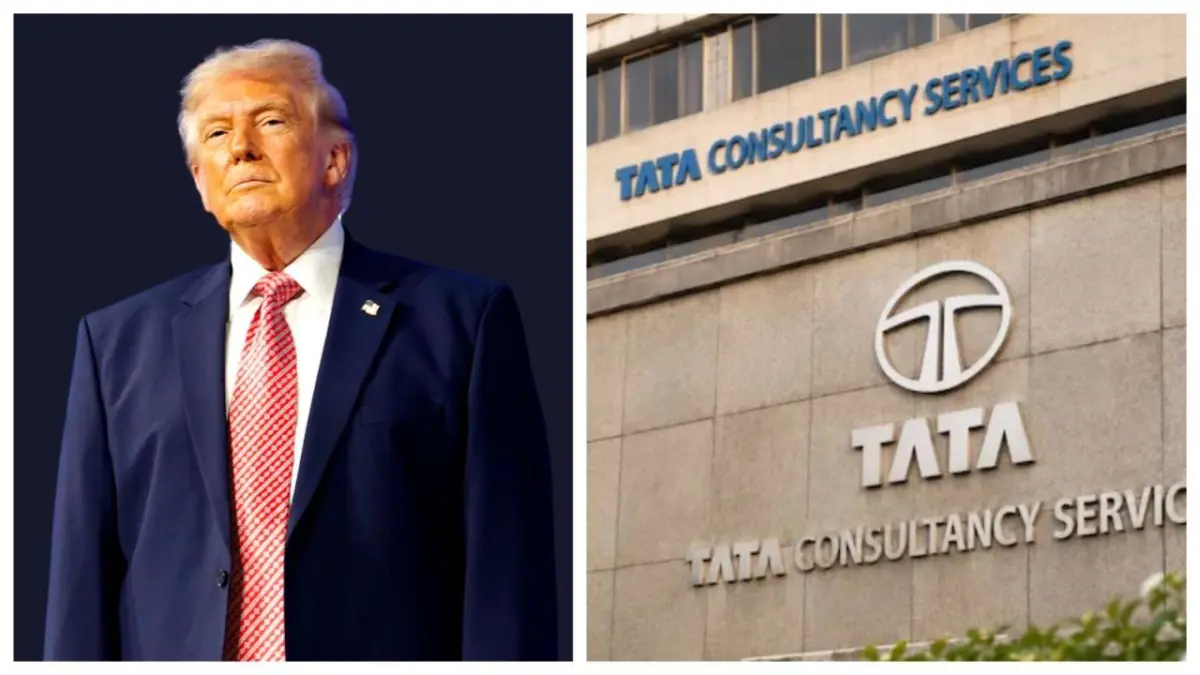
Hyderabad, India / Washington D.C., USA – Tata Consultancy Services (TCS), one of India’s leading IT services conglomerates, has moved swiftly to reassure stakeholders following an announcement from the U.S. government regarding its suspension from the Permanent Labour Certification (PERM) program. The company stated unequivocally that this development is not anticipated to significantly alter its established workforce strategy or impact its crucial customer engagements, primarily because its PERM applications have been in "single digits" over the past two years. This assertion comes as the IT giant reaffirms its ambitious plan to hire an additional 15,000 individuals in the United States over the next five years, underscoring a pronounced pivot towards local talent acquisition.
The U.S. government’s decision, which came to light on October 8, affects eight prominent technology companies, including several major players in the Indian IT services sector. Alongside TCS, companies such as Infosys, Wipro, HCLTech, Cognizant, Capgemini, Microsoft, and Adobe have also been temporarily suspended from the PERM program. This action signals an intensified scrutiny by the U.S. administration concerning the alleged misuse of employment-based immigration pathways and a renewed focus on safeguarding American jobs. For TCS, a company with a significant footprint and investment in the U.S., the immediate response has been one of compliance and strategic re-emphasis rather than alarm.
Unpacking the Suspension: Main Facts and Immediate Repercussions
The core of the recent announcement revolves around the Permanent Labour Certification (PERM) program, a foundational step for many foreign workers seeking permanent residency in the United States through employer sponsorship. The U.S. Department of Labor (DOL) oversees this program, which requires employers to demonstrate that there are no qualified U.S. workers available and willing to fill a position before they can sponsor a foreign national for a green card. The suspension of these eight major companies from such a critical program sent ripples across the global technology and immigration landscape.
For TCS, however, the implications are presented as largely contained. In a detailed filing to stock exchanges on Friday, the company articulated that its PERM application volume had remained exceptionally low – specifically, in "single digits" – throughout the preceding two years. This data point is central to TCS’s argument that the suspension will have a negligible effect on its operational model and its ability to serve clients effectively. The IT major highlighted that its workforce strategy in the U.S. has already been proactively recalibrated to prioritize domestic talent, a strategy that predates this latest government directive.
)
This proactive stance is further evidenced by TCS’s reiterated commitment to substantial local hiring. The company had previously announced its intention to onboard 15,000 new employees within the U.S. over the next half-decade. This long-term recruitment goal, coupled with its current low reliance on the PERM program, forms the bedrock of TCS’s confidence in maintaining business continuity and growth trajectory within the American market despite the regulatory change. The company’s significant presence, spanning 31 offices and delivery centers across the U.S., further solidifies its argument of a deeply localized operational structure.
A Deeper Dive: Chronology of U.S. Immigration Scrutiny and Industry Evolution
The U.S. government’s decision on October 8, 2026, did not emerge in a vacuum. It is the latest in a series of actions reflecting a sustained and often bipartisan effort to reform and tighten the country’s employment-based immigration programs. The PERM program itself, established in 2005, aimed to streamline the labor certification process, replacing a more cumbersome system. However, like its predecessors, it has periodically faced criticism regarding its implementation and perceived vulnerabilities to misuse.

Historically, the Indian IT services sector, often referred to collectively as "body shoppers" by critics, has been a significant user of U.S. temporary work visas, particularly the H-1B visa, which allows U.S. employers to temporarily employ foreign workers in specialty occupations. The H-1B visa is often a precursor to seeking permanent residency through programs like PERM. For years, these companies faced accusations of undercutting American wages, displacing U.S. workers, and exploiting loopholes in the system. While the companies consistently denied these allegations, the political rhetoric surrounding "America First" and "protecting American jobs" has intensified, particularly in recent administrations.
This heightened scrutiny has already prompted a strategic shift among leading Indian IT firms. Over the past decade, and particularly in the last five years, companies like TCS, Infosys, and Wipro have significantly ramped up their local hiring efforts in the U.S. This shift has been driven by multiple factors: increasing difficulty and uncertainty in obtaining H-1B visas, rising visa processing costs, client demands for closer proximity and faster response times, and a desire to mitigate political and regulatory risks. The strategy has involved investing in U.S. university partnerships, establishing local delivery centers in secondary cities, and hiring directly from the American workforce. This current PERM suspension, therefore, can be seen less as a sudden crisis for these companies and more as an acceleration of an already ongoing trend. The U.S. government’s action serves as a definitive signal that the era of heavy reliance on offshore talent brought in through immigration pathways is rapidly diminishing, compelling firms to embed themselves more deeply within the local talent ecosystem.
)
Supporting Data: The Mechanics of PERM and TCS’s Evolving Strategy
To fully grasp the significance of the PERM suspension, it’s essential to understand the program’s role. The Permanent Labor Certification (PERM) process is administered by the Employment and Training Administration (ETA) of the U.S. Department of Labor. Before an employer can file an immigrant petition (Form I-140) with U.S. Citizenship and Immigration Services (USCIS) for a foreign worker, they must obtain a certified labor certification from the DOL. The core purpose of PERM is to protect the U.S. labor market by ensuring that hiring a foreign worker will not adversely affect the wages and working conditions of U.S. workers.
The process involves several steps, including extensive recruitment efforts by the employer to test the U.S. labor market. This includes placing job advertisements in various media, posting notices, and documenting all recruitment steps and outcomes. If no qualified, willing, and available U.S. workers are found for the position, the employer can then file the PERM application. A certified PERM application is a prerequisite for the foreign worker to apply for an employment-based green card. Given the long backlogs for employment-based green cards for nationals from certain countries, particularly India, the PERM process itself can be a multi-year endeavor.
)
TCS’s statement that its PERM applications were in "single digits" over the last two years is highly revealing. This figure suggests a significant departure from historical practices where, at the peak of the H-1B and green card program usage, major IT firms would routinely sponsor hundreds, if not thousands, of employees for permanent residency. The low number indicates that TCS has already substantially diversified its approach to talent acquisition and retention in the U.S. market. This shift likely involves a combination of strategies:
- Increased Local Hiring: As stated, a direct focus on hiring U.S. citizens and permanent residents, including recent graduates from American universities.
- H-1B Optimization: A more targeted use of H-1B visas for highly specialized skills where local talent is genuinely scarce, with less emphasis on using it as a direct pipeline to green cards for a broad base of employees.
- Global Delivery Model: Leveraging a distributed global delivery model where work can be performed from other geographies (e.g., India, nearshore locations in Latin America or Eastern Europe) without requiring permanent relocation to the U.S.
- Talent Mobility: Utilizing other non-immigrant visa categories or internal transfers for short-term project needs, reducing the imperative for permanent residency sponsorship for all U.S.-based foreign employees.
The decision to focus on local recruitment is not merely a reaction to external pressures but also a strategic business imperative. Clients increasingly prefer local teams for better communication, cultural alignment, and responsiveness. Moreover, having a stable, locally based workforce reduces the administrative burden and uncertainty associated with navigating complex immigration policies. The announced hiring target of 15,000 new employees in the U.S. over the next five years, which translates to an average of 3,000 new hires annually, further solidifies this commitment. This expansion is designed to augment TCS’s existing "significant local workforce" across its widespread U.S. operations, reinforcing its long-term investment in the American economy.
)
Official Responses: Compliance, Reassurance, and Government Rationale
Following the U.S. government’s announcement, TCS’s official response was swift and clear, emphasizing compliance and continuity. "We have noted the announcement by the US Government on the Permanent Labour Certification Program (PERM) and TCS will comply with any directive from the Department of Labour," the company stated. This immediate commitment to adherence is crucial for maintaining good standing with U.S. regulatory bodies and demonstrating corporate responsibility.
The company’s communication strategy also heavily leaned on reassuring investors, employees, and clients. By immediately disclosing the low volume of its PERM applications and reiterating its robust local hiring strategy, TCS aimed to preempt any potential concerns about its operational stability or its ability to deliver on projects in the U.S. market. The explicit mention of "single digits" was a calculated move to quantify the minimal direct impact, distinguishing itself from companies that might have a higher dependency on the program.
)
On the U.S. government’s side, the rationale behind the suspension was framed around "alleged misuse of employment-based immigration programmes and concerns about protecting American jobs." While specific details of the alleged misuse leading to the suspension of these eight companies were not immediately disclosed in the original article, such allegations typically involve concerns over:
- Wage depression: Claims that foreign workers are paid less than their U.S. counterparts, thereby depressing overall wages in specific sectors.
- Circumvention of recruitment rules: Allegations that companies do not genuinely attempt to recruit U.S. workers before applying for PERM, or that job requirements are tailored to exclude U.S. applicants.
- Fraudulent applications: In more severe cases, outright fraud in the application process.
The U.S. Department of Labor, responsible for PERM, has the authority to conduct audits and investigations, and if significant non-compliance or fraudulent activity is found, it can lead to suspension or debarment from the program. This latest action signals a proactive and aggressive stance by the administration to enforce the integrity of its immigration systems, particularly in the context of a competitive job market and ongoing debates about the role of foreign talent in the American workforce. While TCS’s response focuses on its own compliance and minimal impact, the broader message from the U.S. government is a warning shot to the entire industry to ensure scrupulous adherence to immigration regulations.
)
Far-Reaching Implications: Future Outlook for IT, Talent, and Policy
The suspension of major tech companies from the PERM program, while perhaps having a limited direct impact on TCS due to its proactive strategy, carries significant implications for various stakeholders and the broader technology landscape.
For Tata Consultancy Services:
The incident reinforces and validates TCS’s long-term strategic shift towards localization. It strengthens the company’s narrative as a responsible global employer deeply integrated into the economies where it operates. While the immediate financial impact may be negligible, the move could subtly enhance TCS’s brand image among U.S. clients and policymakers who prioritize domestic job creation. It also ensures operational resilience against future regulatory changes, further cementing its competitive advantage in a highly scrutinized industry.
)
For the Indian IT Services Sector:
This development will likely accelerate the ongoing transformation of the Indian IT services business model. Companies that may have been slower to adopt a robust local hiring strategy will now face increased pressure to do so. It will encourage greater investment in training and upskilling U.S. talent, diversifying their global delivery footprint beyond traditional offshore models, and exploring alternative talent acquisition methods. The era of primarily relying on H-1B visas and subsequent green card sponsorships for a large portion of their U.S. workforce is unequivocally drawing to a close. This could lead to higher operating costs in the short term due to higher U.S. wages, but potentially more stable and predictable operations in the long run.
For Foreign Workers and H-1B Visa Holders:
For foreign professionals currently working in the U.S. on H-1B visas, particularly those from India facing already extensive green card backlogs, this suspension adds another layer of uncertainty. While individual companies like TCS may have reduced their PERM filings, the collective impact of several major employers being suspended could further constrain the pathways to permanent residency. This might prompt some skilled foreign workers to re-evaluate their long-term career plans in the U.S. or seek employment with companies less affected by such restrictions. It underscores the precarious nature of relying solely on employer-sponsored immigration pathways.
)
For U.S. Immigration Policy and the Tech Sector:
The U.S. government’s action signals a continued, stringent approach to employment-based immigration. It suggests that regulators are willing to take decisive steps to enforce compliance and address perceived abuses. This could pave the way for further audits, increased enforcement, or even legislative reforms aimed at overhauling the H-1B and green card programs. For the broader U.S. tech sector, which relies heavily on foreign talent, this move highlights the importance of ethical recruitment practices and genuine efforts to hire American workers. While some argue that strict immigration policies stifle innovation and economic growth by limiting access to global talent, the government’s stance prioritizes the protection of domestic jobs and the integrity of its immigration system.
For Client Relationships:
TCS’s proactive communication is vital for maintaining client confidence. In an industry where trust and reliability are paramount, any perception of regulatory issues could be detrimental. By demonstrating compliance and an unaffected operational strategy, TCS aims to ensure that its clients view this as a minor, well-managed external event rather than an internal systemic issue.
)
In conclusion, the U.S. government’s suspension of TCS and other major tech firms from the PERM program marks a significant moment in the ongoing evolution of global talent mobility and U.S. immigration policy. While TCS asserts a minimal direct impact owing to its forward-looking strategy of localization, the broader implications for the Indian IT sector, foreign workers, and the future direction of employment-based immigration are profound. This event serves as a powerful reminder that global businesses must remain agile, adaptable, and deeply attuned to the regulatory and political landscapes of their key markets, consistently prioritizing compliance and strategic foresight.
