

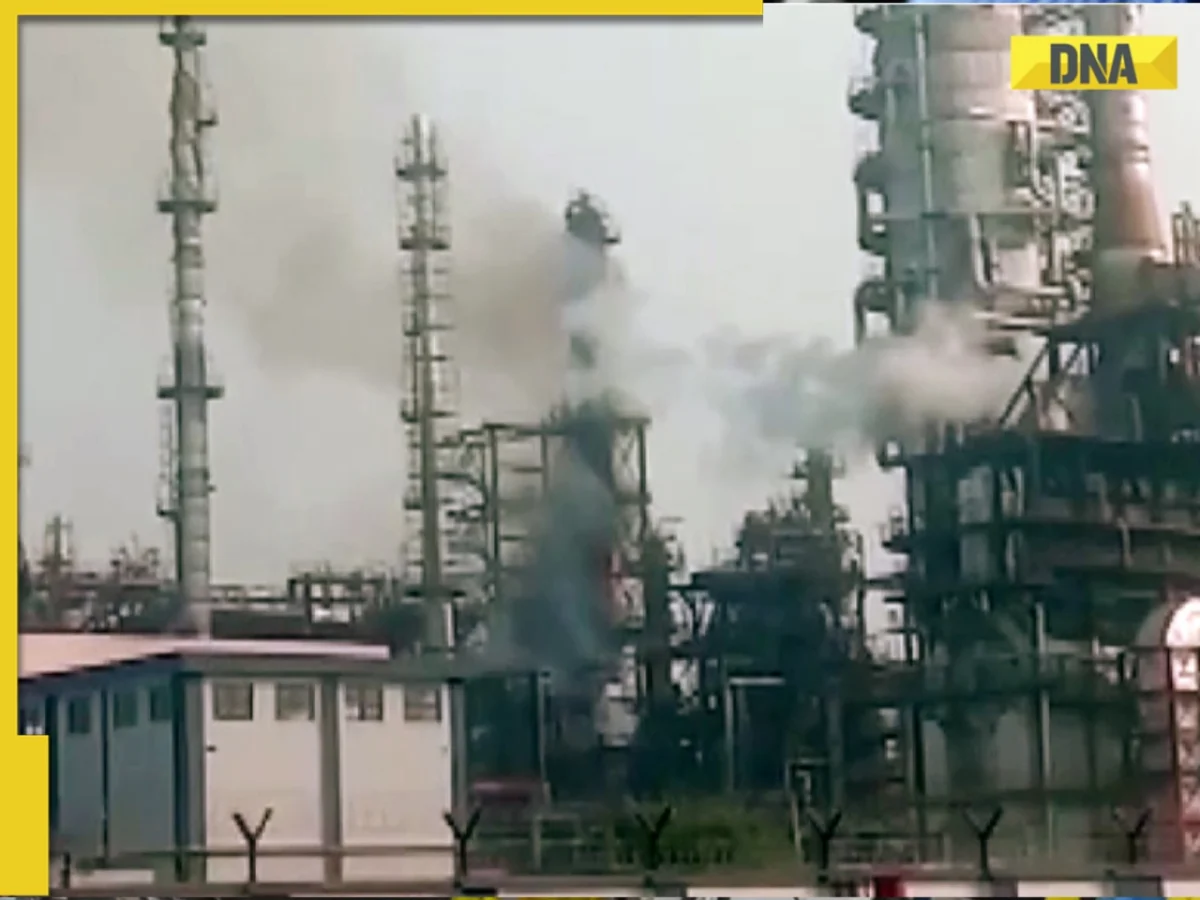
New Delhi, India – May 15, 2026 – India’s state-run Oil Marketing Companies (OMCs) are staring down the barrel of a financial crisis, losing an staggering Rs 1000 crore daily despite a recent Rs 3/litre hike in petrol and diesel prices. The marginal adjustment, analysts warn, is critically insufficient to stem the bleeding, with global crude oil benchmarks like Brent consistently trading above the $100 per barrel mark. Experts are now sounding alarm bells, suggesting a much larger increase, potentially up to Rs 10/litre in total, is imperative to avert the very real threat of bankruptcy for these vital public sector undertakings. The pressing question now reverberating across economic corridors and political spheres is: Will the Indian government be compelled to hike fuel prices yet again, navigating a treacherous path between economic stability and public sentiment?
The recent surge in crude oil prices, a direct consequence of escalating geopolitical tensions in West Asia and disruptions in critical shipping lanes like the Strait of Hormuz, has plunged India into a difficult fiscal and inflationary position. While the government has publicly reiterated its commitment to ensuring energy supply security, the current strategy of price suppression appears unsustainable in the long run. The financial health of OMCs – Indian Oil Corporation (IOCL), Bharat Petroleum Corporation (BPCL), and Hindustan Petroleum Corporation (HPCL) – is rapidly deteriorating, pushing them to the brink.
"At the current levels, the OMCs would go bankrupt without the increase in fuel price, so this bails out state-run fuel retailers," explains Ishank Gupta, Analyst, Banking and Financial Services, Choice Institutional Equities, underscoring the severity of the situation. This partial intervention, while providing a momentary reprieve, merely scratches the surface of a deep-seated problem exacerbated by global volatility.
The Geopolitical Crucible: A Chronology of Rising Costs
India, as the world’s third-largest oil importer, is acutely vulnerable to fluctuations in international crude oil prices. The current crisis is not an isolated event but rather the culmination of a series of geopolitical developments that have significantly tightened global oil markets since early 2026.
)
Early 2026: Renewed tensions in West Asia, particularly involving maritime security in the Red Sea and Gulf regions, began to impact shipping routes. Attacks on commercial vessels prompted major shipping companies to reroute, leading to longer transit times and increased insurance premiums for crude oil shipments. These logistical challenges inherently added to the cost of crude.
February – March 2026: The Strait of Hormuz, a critical choke point through which a significant portion of the world’s seaborne oil passes, experienced heightened security concerns and intermittent disruptions. While not a complete blockade, the perceived threat and increased operational risks contributed to a "risk premium" being built into crude prices. Supply chain anxieties mounted, pushing Brent crude consistently above $90/bbl.

April 2026: The confluence of these factors, coupled with robust global demand forecasts and cautious supply increases from OPEC+ nations, propelled Brent crude firmly past the $100/bbl threshold. This benchmark, which serves as a key indicator for Indian crude oil purchases, remained stubbornly high, directly impacting the import bill for OMCs.
Early May 2026: Faced with mounting losses and the unsustainable burden on OMCs, the Indian government greenlit a modest increase of Rs 3 per litre for petrol and diesel. This was presented as a necessary step to mitigate the financial distress of the public sector fuel retailers. However, the immediate reaction from analysts was one of skepticism regarding its efficacy in addressing the root cause of the OMCs’ predicament.
)
Historically, India has grappled with the delicate balance of fuel pricing. Prior to 2010 for petrol and 2014 for diesel, prices were administered by the government, often leading to massive "under-recoveries" – the difference between the international market price and the subsidised retail price – which were borne by the government or OMCs. While deregulation aimed to link domestic prices to global rates, the government has often intervened, either directly or indirectly, to shield consumers from sharp spikes, particularly during periods of high inflation or ahead of crucial elections. The current situation echoes these past challenges, placing the government in a familiar, yet increasingly difficult, bind.
Unpacking the Under-recoveries: Expert Analysis and Stark Realities
The Rs 3/litre fuel hike, while politically significant, is proving to be a mere drop in the ocean compared to the monumental losses faced by India’s OMCs. Understanding the scale of this financial haemorrhage requires delving into the mechanics of fuel pricing and the expert assessments.
)
The Anatomy of Under-recoveries
"Under-recoveries" occur when the revenue generated from selling refined petroleum products (petrol, diesel, kerosene, LPG) falls short of the cost incurred in procuring, refining, transporting, and marketing these products. This gap is primarily driven by:
- High Crude Oil Prices: The cost of raw material (crude oil) is the largest component. When international prices soar, OMCs pay more for imports.
- Weak Rupee: A depreciating Indian Rupee against the US Dollar further inflates the cost of dollar-denominated crude oil imports.
- Refining and Logistics Costs: Operational expenses for refining and distribution networks.
- Taxes and Duties: Central and state taxes (excise duty, VAT) are significant components of the final retail price, but they don’t contribute to OMC recovery directly.
- Fixed Retail Price: When retail prices are held artificially low despite rising input costs, under-recoveries mount.
The current situation sees OMCs absorbing nearly all of this under-recovery, leading to the staggering Rs 1000 crore daily loss. This translates to an annualised loss nearing Rs 3.65 lakh crore, a figure that is simply unsustainable for any commercial entity, let alone public sector behemoths crucial to the nation’s energy security.
)
The Insufficiency of the Rs 3/Litre Hike
Dhaval Popat, an Energy Analyst at Choice Institutional Equities, meticulously breaks down the impact of the recent price adjustment. "While the current hike of up to INR3/litre increase in petrol and diesel prices provides partial relief to the profitability pressures faced by state-run OMCs (ONGC, BPCL, IOCL, HPCL), the magnitude of current under-recoveries remains significantly elevated," he states.
Popat further quantifies the limited benefit: "Based on industry sales volumes, every INR1/litre increase in fuel prices can improve annualised EBITDA by roughly INR15,000–16,000 crore for the three PSU OMCs combined, implying that the latest hike could translate into an annualised earnings benefit of nearly INR45,000–48,000 crore across OMCs."
)
While an annualised earnings benefit of nearly Rs 48,000 crore might seem substantial in isolation, its inadequacy becomes glaringly obvious when juxtaposed against the actual losses. "However, against estimated industry-wide losses currently running at nearly INR1 lakh crore monthly, the present hike only offsets a limited portion of the earnings erosion," Mr Popat adds. This comparison reveals a critical disparity: the monthly losses are approximately Rs 100,000 crore (Rs 1 lakh crore), while the annual benefit from the hike is less than half of one month’s losses. This stark reality underscores why the Rs 3/litre hike is merely a temporary bandage on a gaping wound.
The Call for a Rs 10/Litre Increase
To restore OMCs to a semblance of financial health and prevent them from spiralling into insolvency, analysts are advocating for a much more aggressive intervention. Mr. Popat warns, "To restore profitability to pre-crisis levels and fully neutralise current marketing losses, a substantially larger increase in retail fuel prices would likely be required, potentially well beyond the current INR3/litre adjustment, unless accompanied by a meaningful correction in crude prices, reduction in product cracks, or government-led compensation measures."
)
He further clarifies the magnitude needed: "In the above backdrop, provided there is no change in the global scenario, and the crude price continues to build, a rise of Rs 10/litre overall, which includes a Rs 3/litre hike, would be required to offset the losses." This means an additional Rs 7/litre hike beyond the recent adjustment would be necessary to bring OMCs back to a break-even point or minimal profitability, preventing them from bleeding cash daily. Such a move, however, would have profound implications for the broader economy and public.
Divergent Fates: Upstream vs. Downstream
The crisis also highlights a critical divergence in fortunes within India’s oil and gas sector, as explained by Abhishek Bhilwaria, an AMFI-registered MFD. "Rs 3 per litre hike is inadequate to bridge the severe under-recovery gap created by Brent crude soaring past $100 per barrel," he asserts.
)
- Beneficiaries (Upstream): Bhilwaria points out that "upstream giant ONGC remains the primary beneficiary due to expanding profit margins on exploration, making it a stronger choice for capital appreciation." Upstream companies like Oil and Natural Gas Corporation (ONGC) are involved in exploration and production of crude oil. When global crude prices rise, their realised prices for the oil they extract also increase, directly boosting their revenues and profit margins. They sell their crude to downstream OMCs, benefiting from the higher global rates.
- Sufferers (Downstream): Conversely, "downstream oil marketing companies like IOCL, BPCL, and HPCL will continue to face depressed earnings, potential analyst downgrades, and dividend cuts until global oil prices stabilise or the Indian government grants them a multi-billion-dollar fiscal bailout package," Bhilwaria cautions. These OMCs are caught in a squeeze: they buy crude at high international prices (from upstream companies or imports) but are forced to sell refined products at artificially suppressed domestic prices. This creates the under-recovery gap, directly eroding their profitability, leading to poor financial performance, and potentially impacting their ability to pay dividends to shareholders, including the government itself.
The only alternatives for these OMCs, short of further price hikes, are substantial fiscal bailouts from the government, which would place an immense burden on the national exchequer.
Government’s Tightrope Walk: Policy Dilemmas and Potential Paths
The Indian government finds itself in an unenviable position, balancing conflicting priorities. On one hand, it must ensure the financial viability of its state-owned OMCs, which are critical for the nation’s energy supply. On the other, it faces immense pressure to control inflation and protect consumers from further price shocks, especially given the socio-political sensitivities surrounding fuel prices.
)
The Dilemma: Economics vs. Politics
The decision to implement a Rs 10/litre hike, as recommended by analysts, would be an economically rational step to stabilise OMCs. However, it would be a politically contentious move, particularly in a country where even marginal increases in fuel prices can trigger widespread protests and opposition criticism. The government’s past actions indicate a tendency to absorb shocks or delay price revisions, often leading to a build-up of under-recoveries that eventually require larger, more painful adjustments.
Potential Policy Levers
To address the crisis, the government has several policy options, each with its own set of advantages and disadvantages:
)
- Further Retail Price Hikes: This is the most direct way to bridge the under-recovery gap. However, it risks stoking public discontent and accelerating inflation. The political will to implement such a substantial hike, especially in a potentially election-sensitive period, remains a major question mark.
- Tax Cuts: Both the central government (excise duty) and state governments (Value Added Tax – VAT) levy significant taxes on petrol and diesel. A reduction in these taxes could lower retail prices without OMCs incurring losses or increase the OMCs’ margin without raising consumer prices. However, this would entail a substantial loss of revenue for both the Union and state exchequers, impacting public spending on infrastructure, welfare, and other crucial sectors.
- Direct Subsidies/Grants to OMCs: The government could provide direct financial assistance or grants to OMCs to compensate for their under-recoveries. While this would protect OMCs and consumers from price hikes, it would significantly strain the government’s fiscal deficit, potentially leading to increased borrowing and long-term economic instability. This mirrors the old subsidy regime, which was financially burdensome.
- Strategic Crude Oil Management: India maintains strategic petroleum reserves. Utilising these reserves or negotiating favourable long-term supply contracts with oil-producing nations could offer some insulation from extreme price volatility, though it’s not a complete solution to persistent high prices.
- Diversification of Energy Basket: In the long term, accelerating the transition to renewable energy sources and promoting electric vehicles can reduce India’s reliance on imported crude oil, offering structural relief from global price shocks. However, this is a multi-decade strategy and offers no immediate solution.
The government’s current stance, while maintaining "supply security," does not explicitly outline a long-term strategy for OMC profitability in the face of sustained high crude prices. Any future decision will be a finely calibrated act, weighing economic imperatives against socio-political realities.
Wider Repercussions: Inflation, Monetary Policy, and the Common Citizen
The fuel price dilemma extends far beyond the balance sheets of OMCs; it has profound and pervasive implications for India’s economy, monetary policy, and the daily lives of its citizens.
)
The Spectre of Inflationary Pressures
One of the most immediate and concerning impacts of rising fuel prices is their contribution to inflation. Ishank Gupta highlights this, stating, "Based on the weightage of Fuel in the new CPI series 2024, this indicates a potential increase in CPI inflation by ~60 bps." He projects a more significant impact over the coming fiscal year: "The FY27E CPI inflation is expected to increase by 90 bps to 5.5%, factoring in second and third order impact of overall supply chain and the increase in prices of goods and services."
Prof. Debasis Rooj, Faculty of Economics, FLAME University, elaborates on these "multiplier effects of persistently high fuel prices." He explains, "Elevated fuel costs do not merely increase household expenditure at the pump; they transmit inflationary pressures across the economy through higher transportation costs, squeezed manufacturing margins, and rising prices of essential commodities. Over time, these indirect effects can quietly but steadily intensify generalised inflationary pressures and weaken household purchasing power."
)
Let’s break down these multiplier effects:
- Transportation Costs: Nearly all goods and services involve transportation. Higher diesel prices directly increase freight costs for trucks, trains, and buses. This cost is inevitably passed on to consumers.
- Manufacturing Margins: Industries rely on fuel for logistics, operating machinery, and as a feedstock for some processes. Increased fuel costs squeeze manufacturing margins, forcing producers to raise prices for their products.
- Essential Commodities: Food, vegetables, milk, and other daily necessities become more expensive as their production, processing, and transportation costs rise due to fuel price hikes.
- Services Sector: Even services, from ride-hailing to delivery, see increased operational costs, leading to higher consumer charges.
- Weakened Purchasing Power: As prices for everything from groceries to daily commutes rise, the disposable income of households diminishes, leading to reduced consumption and a potential slowdown in economic growth.
The Central Bank’s Stance: Monetary Policy Implications
The Reserve Bank of India’s (RBI) Monetary Policy Committee (MPC) closely monitors inflation. Ishank Gupta points out the critical link between fuel prices and monetary policy: "If the retail fuel price hikes are contained, no increase in repo rates is observed." The repo rate is the interest rate at which the RBI lends money to commercial banks, influencing overall interest rates in the economy.
)
However, the risk remains substantial: "Further increase in retail fuel prices has upside risks to our inflation forecast and would lead to appropriate action by the MPC committee," he adds. "Appropriate action" in this context almost invariably means an increase in the repo rate. Higher interest rates are a conventional tool to curb inflation by making borrowing more expensive, thereby slowing down economic activity and reducing demand.
An increase in interest rates would have its own set of repercussions:
)
- Higher Loan EMIs: Home loans, car loans, and business loans would become more expensive, impacting household budgets and corporate investment.
- Slower Economic Growth: Higher borrowing costs can deter new investments, potentially slowing down job creation and overall economic expansion.
- Impact on Equities: Companies facing higher input costs and borrowing costs may see their profitability eroded, affecting stock market performance.
Impact on Various Sectors and the Common Citizen
The ripple effects of sustained high fuel prices would be felt across the entire economic spectrum:
- Logistics and Transport: This sector is directly and immediately impacted, facing reduced profit margins or forced price increases.
- Agriculture: Farmers rely on diesel for irrigation pumps, tractors, and transporting produce. Higher costs could lead to increased food prices or reduced farmer incomes.
- Manufacturing: Industries across the board will see increased operational costs, affecting competitiveness.
- Daily Commuters: For millions who rely on personal vehicles or public transport, higher fuel prices mean a significant chunk of their monthly budget is diverted, leaving less for other necessities or discretionary spending.
- Small Businesses: Many small and medium-sized enterprises (SMEs) operate on thin margins and are highly vulnerable to increased operational costs, potentially leading to closures or reduced expansion.
In conclusion, India stands at a critical juncture. The current Rs 3/litre fuel hike is woefully inadequate, leaving OMCs in a perilous financial state. The choice before the government is unenviable: either implement further substantial price increases, risking public backlash and heightened inflation, or provide massive fiscal bailouts, straining public finances. Both paths present significant challenges, and the decision will undoubtedly shape India’s economic trajectory and the daily lives of its citizens for the foreseeable future. The global crude oil market, dictated by geopolitical currents, continues to hold India’s economic stability hostage, demanding a strategic, comprehensive, and politically astute response from its leadership.
