

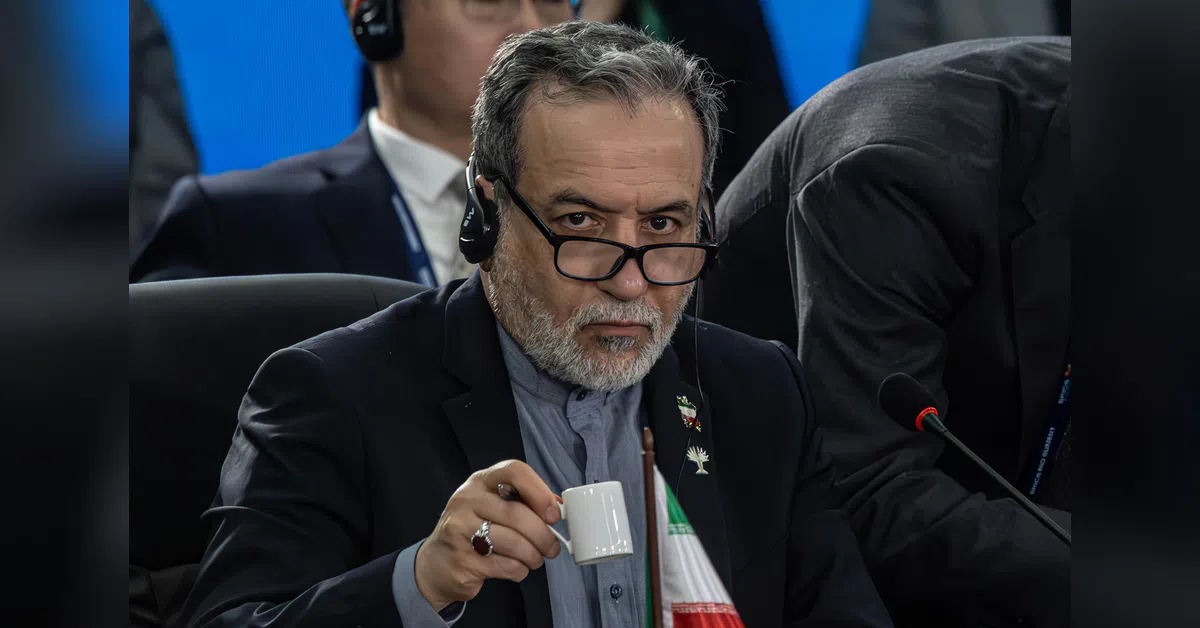
New Delhi, May 15, 2026 – Amidst the high-stakes diplomatic backdrop of the BRICS foreign ministers’ meeting in New Delhi, Iranian Foreign Minister Seyed Abbas Araghchi delivered a stark message on Friday, asserting Tehran’s profound lack of trust in the United States and conditioning future talks on Washington’s demonstrable seriousness. His pronouncements, made from a platform increasingly seen as an alternative to Western-dominated forums, underscored the enduring chasm in US-Iran relations while simultaneously signaling a pragmatic openness to de-escalation and regional cooperation.
Araghchi’s statements resonated through the corridors of international diplomacy, drawing attention to a critical juncture in West Asian geopolitics. While emphasizing Iran’s commitment to maintaining existing ceasefires to foster an environment conducive to diplomatic progress, he also called upon India to assume a more prominent, constructive role in resolving the protracted crises plaguing the region. The Iranian top diplomat further confirmed that Pakistan’s ongoing mediation efforts, though complex, had not faltered. Crucially, Araghchi reiterated Iran’s long-held position that there can be no military solution to the region’s intricate problems, stressing that dialogue remains the only viable pathway forward for all parties involved.
A Diplomatic Overture Amidst Lingering Skepticism
The Iranian Foreign Minister’s address was a carefully calibrated blend of defiance and conciliation. On one hand, his unequivocal declaration of "no trust" in the United States served as a powerful reminder of the deep-seated historical grievances and recent policy shifts that have poisoned bilateral relations. This sentiment, deeply ingrained in Iranian political discourse, frames any engagement with Washington through a lens of skepticism, demanding concrete assurances and a departure from what Tehran perceives as unreliable and hostile policies.
On the other hand, Araghchi’s emphasis on maintaining ceasefires and his call for diplomacy to "move forward" indicated a clear strategic objective: to create space for de-escalation and negotiation. This dual approach reflects Iran’s complex geopolitical calculus, navigating both internal hardline pressures and the external realities of economic sanctions and regional rivalries. By leveraging the BRICS platform, Iran sought to convey its message to a broader audience, appealing to nations that often share its critique of unilateral Western foreign policy and advocate for a more multipolar world order. His direct appeal to India, a rising global power with significant stakes in regional stability and energy security, highlighted Tehran’s recognition of New Delhi’s growing diplomatic weight and its potential as an impartial facilitator.
A Complex Chronology of Distrust and De-escalation Efforts
The current state of US-Iran relations, as articulated by Foreign Minister Araghchi, is a culmination of decades of tumultuous interactions, punctuated by periods of intense confrontation and fleeting moments of engagement. Understanding the historical context is crucial to appreciating the depth of the "trust deficit" he described.
The Shadow of Past Dealings: US-Iran Relations
The distrust between Tehran and Washington traces its roots back to the 1953 US-backed coup that overthrew Iran’s democratically elected Prime Minister Mohammad Mosaddegh, followed by decades of US support for the Shah’s authoritarian rule. The 1979 Islamic Revolution and the subsequent hostage crisis cemented an adversarial relationship that has largely persisted. Decades of sanctions, allegations of state-sponsored terrorism, and proxy conflicts across the Middle East have only deepened this animosity.
A pivotal moment in recent history was the 2015 Joint Comprehensive Plan of Action (JCPOA), a multilateral agreement that saw Iran limit its nuclear program in exchange for sanctions relief. However, the unilateral withdrawal of the United States from the JCPOA in 2018 under the Trump administration, followed by the re-imposition and escalation of "maximum pressure" sanctions, was a severe blow to any nascent trust. From Iran’s perspective, this act validated its long-held suspicion that the US cannot be relied upon to uphold international agreements. As of May 2026, efforts to revive the JCPOA have remained fraught with challenges, characterized by intermittent indirect talks and a persistent inability to bridge fundamental disagreements over sequencing, guarantees, and the scope of sanctions relief. Araghchi’s statement thus comes at a time when the very architecture of nuclear diplomacy with Iran is fragile, demanding a renewed commitment from all parties.
Regional Quagmire: West Asia’s Enduring Crises
The call for maintaining ceasefires by Araghchi is particularly pertinent given the myriad ongoing conflicts and proxy battles across West Asia. Iran plays a significant, albeit often controversial, role in several regional flashpoints, including:
- Yemen: Iran is widely perceived to support the Houthi rebels, who have been locked in a protracted civil war with the Saudi-led coalition. While sporadic ceasefires have been attempted, a lasting peace remains elusive.
- Syria: Iran has been a steadfast ally of the Assad regime, providing military and economic support, and its presence there is a source of tension with Israel and the United States.
- Iraq: Iranian-backed militias wield significant influence, complicating Iraq’s efforts to establish stable governance and remain neutral amidst regional power struggles.
- Lebanon: Hezbollah, a powerful political and military force, receives substantial Iranian backing, contributing to internal Lebanese political paralysis and cross-border tensions with Israel.
Araghchi’s emphasis on a "ceasefire" could be a broad reference to de-escalation efforts across these fronts, or perhaps a more specific nod to ongoing, albeit unpublicized, negotiations regarding particular conflicts. The underlying message is that Iran is willing to contribute to stability if its legitimate security concerns and regional influence are acknowledged.
The Ceasefire Imperative and Pakistan’s Ongoing Role
The mention of Pakistan’s ongoing mediation efforts highlights the complex web of diplomatic engagement aimed at de-escalating tensions. Pakistan, with its historical ties to both Saudi Arabia and Iran, has long sought to play a constructive role in reducing animosity between the regional rivals. These efforts often involve facilitating back-channel communications and exploring common ground for dialogue, particularly between Tehran and Riyadh. While such mediations rarely yield immediate breakthroughs, their continuation, as affirmed by Araghchi, signifies a persistent diplomatic track that seeks to prevent outright conflict and foster a more stable regional environment. The fact that these efforts are still "ongoing" in May 2026 underscores the enduring need for third-party facilitation in a region where direct communication channels between adversaries remain limited.
India’s Ascendant Role in Regional Peace
Araghchi’s specific appeal to India to play a "greater role for peace in the region" is a testament to New Delhi’s growing geopolitical stature and its unique diplomatic position. India maintains robust relations with all major regional players, including Iran, Saudi Arabia, the UAE, and Israel, and has historically pursued a policy of non-alignment. Its energy security is deeply intertwined with the stability of West Asia, making it a natural stakeholder in peace efforts.
India’s appeal as a mediator stems from several factors: its economic might, its historical cultural ties, and its perception as a neutral, non-interventionist power. Iran likely views India as a credible interlocutor capable of bridging divides without imposing external agendas. For India, such a role aligns with its broader foreign policy objectives of promoting multilateralism and enhancing its global influence, particularly within its extended neighborhood. The invitation from Tehran places a significant diplomatic onus on New Delhi, challenging it to translate its rising influence into tangible contributions towards regional de-escalation.
Underlying Dynamics: Analyzing the Statements and Context
Araghchi’s statements at the BRICS meeting were not merely off-the-cuff remarks but rather a carefully crafted message reflecting Iran’s strategic outlook in a rapidly evolving global landscape.
The BRICS Platform: A Stage for Alternative Narratives
Iran’s choice to air its grievances and proposals at the BRICS forum is highly symbolic. BRICS (Brazil, Russia, India, China, South Africa) represents a bloc of emerging economies increasingly challenging the unipolar world order dominated by Western powers. For Iran, which has long faced isolation and sanctions from the West, the BRICS platform offers an opportunity to:
- Legitimize its position: Present its narrative to a sympathetic audience that often critiques Western foreign policy.
- Seek economic alternatives: Explore avenues for trade and cooperation that circumvent US sanctions, particularly with major economies like China and India.
- Build alliances: Strengthen ties with nations advocating for a multipolar world, thereby reducing its reliance on Western-led international institutions.
The meeting in New Delhi provided Araghchi with a high-profile stage to articulate Iran’s foreign policy priorities and signal its willingness to engage on its own terms, particularly concerning its contentious relationship with the United States.

Iran’s Nuclear Stance: Reiteration and Reality
Araghchi’s repeated assertion that "Iran has never sought to develop nuclear weapons" is a cornerstone of Tehran’s official narrative. This statement is consistently made in response to international concerns, particularly from the US and Israel, regarding the scope and intent of its nuclear program. While Iran maintains that its program is purely for peaceful civilian purposes, including energy production and medical research, its uranium enrichment activities, particularly beyond the limits set by the JCPOA following the US withdrawal, continue to fuel proliferation anxieties.
As of May 2026, the International Atomic Energy Agency (IAEA) would likely still be reporting on Iran’s enrichment levels, the status of its centrifuges, and its cooperation (or lack thereof) with international inspections. The "breakout time" – the theoretical period Iran would need to produce enough fissile material for a single nuclear weapon – remains a critical metric for policymakers globally. Araghchi’s reiteration is an attempt to shape the narrative, emphasizing Iran’s sovereign right to peaceful nuclear technology while denying any military ambitions, even as diplomatic efforts to restore full compliance with the JCPOA languish.
The Strategic Chokepoint: Navigating the Strait of Hormuz
The Foreign Minister’s comments on the Strait of Hormuz – affirming Iran’s readiness to help all vessels pass through while acknowledging the "highly complex" situation – underscore the critical importance of this waterway. The Strait is a narrow maritime passage between the Persian Gulf and the Gulf of Oman, through which a significant portion of the world’s seaborne oil and liquefied natural gas (LNG) passes daily. Its strategic significance makes it a flashpoint in times of regional tension.
In recent years, the Strait has witnessed numerous incidents, including tanker seizures, attacks on shipping, and heightened military presence, largely attributed to the escalating tensions between Iran and Western powers, particularly the US. Iran’s statement can be interpreted in several ways: as a reassurance to global shipping that it does not intend to disrupt trade arbitrarily; as a subtle warning against provocations in its territorial waters; and as an assertion of its role as a key player in the security of this vital artery. The "highly complex" situation implies that while Iran pledges cooperation, the underlying geopolitical tensions could quickly lead to renewed instability.
The Trust Deficit: A Fundamental Obstacle
Araghchi’s eloquent articulation of the trust deficit between Iran and the United States – "Iran has every reason not to trust the US, while Americans have every reason to trust Iran" – encapsulates the core psychological barrier to diplomatic progress.
- Iran’s reasons not to trust the US: Beyond the historical context of intervention and sanctions, the unilateral withdrawal from the JCPOA, despite Iran’s compliance (as certified by the IAEA at the time), deeply entrenched the belief in Tehran that US commitments are unreliable and subject to domestic political whims. This sentiment is often reinforced by aggressive rhetoric and military posturing from Washington.
- Why Americans "have every reason to trust Iran": This part of Araghchi’s statement is a rhetorical challenge. From Iran’s perspective, its adherence to previous agreements (before the US withdrawal), its stated commitment to regional stability (albeit from its own vantage point), and its consistent denial of nuclear weapon ambitions should, theoretically, build trust. However, the US and its allies cite Iran’s ballistic missile program, support for proxy groups, and human rights record as reasons for their mistrust. Bridging this fundamental philosophical divide on what constitutes trustworthiness is arguably the greatest hurdle to any meaningful diplomatic breakthrough.
Anticipated Responses and Diplomatic Fallout
Araghchi’s statements are unlikely to exist in a vacuum. Given the sensitive nature of US-Iran relations and regional stability, various international actors would be closely monitoring and formulating their responses.
Washington’s Expected Stance
The US administration, irrespective of who occupies the White House in May 2026, would likely respond with a combination of caution and firmness. Official statements would probably reiterate concerns about Iran’s nuclear program, its regional activities, and human rights record. While acknowledging the need for diplomacy, Washington would almost certainly emphasize that the onus is on Iran to demonstrate its "seriousness" through concrete actions, such as full compliance with the JCPOA (if still relevant), de-escalation of regional proxies, and improved human rights. Any offer of talks would likely come with preconditions, mirroring the cyclical nature of US-Iran diplomatic overtures.
New Delhi’s Measured Engagement
India, caught between its strategic partnership with the US and its historical ties and energy dependence on Iran, would likely issue a carefully worded diplomatic response. New Delhi would welcome any commitment to dialogue and de-escalation, emphasizing the importance of peaceful resolution of disputes. While open to facilitating talks, India would likely refrain from taking sides, instead focusing on its traditional role as a proponent of multilateralism and non-interference. Its engagement would be pragmatic, aimed at protecting its own regional interests, ensuring energy security, and promoting trade.
Regional Repercussions
Regional rivals like Saudi Arabia, the UAE, and Israel would view Araghchi’s statements with a mixture of skepticism and apprehension. While any talk of ceasefires and de-escalation would be nominally welcomed, these nations would remain wary of Iran’s intentions, particularly regarding its regional influence and ballistic missile capabilities. Israel, in particular, would likely reiterate its concerns about Iran’s nuclear program and its support for groups like Hezbollah, maintaining its stance that military options remain on the table if diplomacy fails to curb what it perceives as an existential threat. The statements would likely fuel further diplomatic maneuvering and possibly renewed calls for international pressure on Tehran.
Implications for a Fragile Future
The Iranian Foreign Minister’s address at the BRICS meeting paints a vivid picture of a region teetering on the brink, where calls for peace are intertwined with deep-seated mistrust. The implications of his statements extend far beyond the immediate diplomatic exchanges.
The Elusive Path to "Serious" Talks
The fundamental question remains: how likely are "serious" talks between Iran and the United States in the near future? Araghchi’s condition that the US must demonstrate seriousness is a high bar, likely requiring significant policy shifts from Washington, including durable guarantees regarding future adherence to agreements and a willingness to lift a substantial portion of sanctions. Given the entrenched positions and domestic political considerations on both sides, a direct and unconditional return to the negotiating table remains a formidable challenge. The path forward will likely involve continued indirect diplomacy, possibly facilitated by third parties like India or Oman, with incremental steps towards confidence-building.
Geopolitical Realignments and Regional Stability
The ongoing tensions between Iran and the US, coupled with Iran’s active role in regional conflicts, continue to destabilize West Asia. Araghchi’s call for dialogue, while hopeful, underscores the deep fractures that threaten broader peace and economic prosperity. The continued interplay of regional rivalries, proxy conflicts, and the looming specter of a nuclear arms race could have profound implications for global energy markets and international security. The increasing assertiveness of non-Western blocs like BRICS, where Iran seeks greater alignment, suggests a shift in geopolitical gravity, potentially offering new avenues for conflict resolution but also introducing new complexities.
Iran’s Evolving Strategic Posture
Araghchi’s statements reflect Iran’s evolving strategic posture: a nation under immense pressure but unwilling to capitulate. By simultaneously expressing deep mistrust and calling for diplomacy, Iran signals its readiness to engage on its own terms, projecting strength while seeking avenues for de-escalation. This posture is likely influenced by internal economic challenges, the need to alleviate sanctions, and a desire to consolidate its regional influence without triggering a wider conflict. Its engagement with BRICS also indicates a strategic pivot towards stronger ties with non-Western powers, diversifying its diplomatic and economic relationships.
The Broader Multilateral Landscape
Ultimately, Foreign Minister Araghchi’s remarks from New Delhi highlight the enduring challenges to international cooperation in a world characterized by increasing multipolarity. The BRICS platform, offering a space for dialogue outside traditional Western-centric frameworks, signifies a broader trend towards a more diverse and complex global diplomatic landscape. While the road to genuine trust and lasting peace between Iran and the United States, and across West Asia, remains arduous, Araghchi’s statements serve as a potent reminder that even amidst profound skepticism, the door to diplomacy, however narrow, is not entirely closed. The onus now rests on all stakeholders to find the seriousness and political will to walk through it.
