

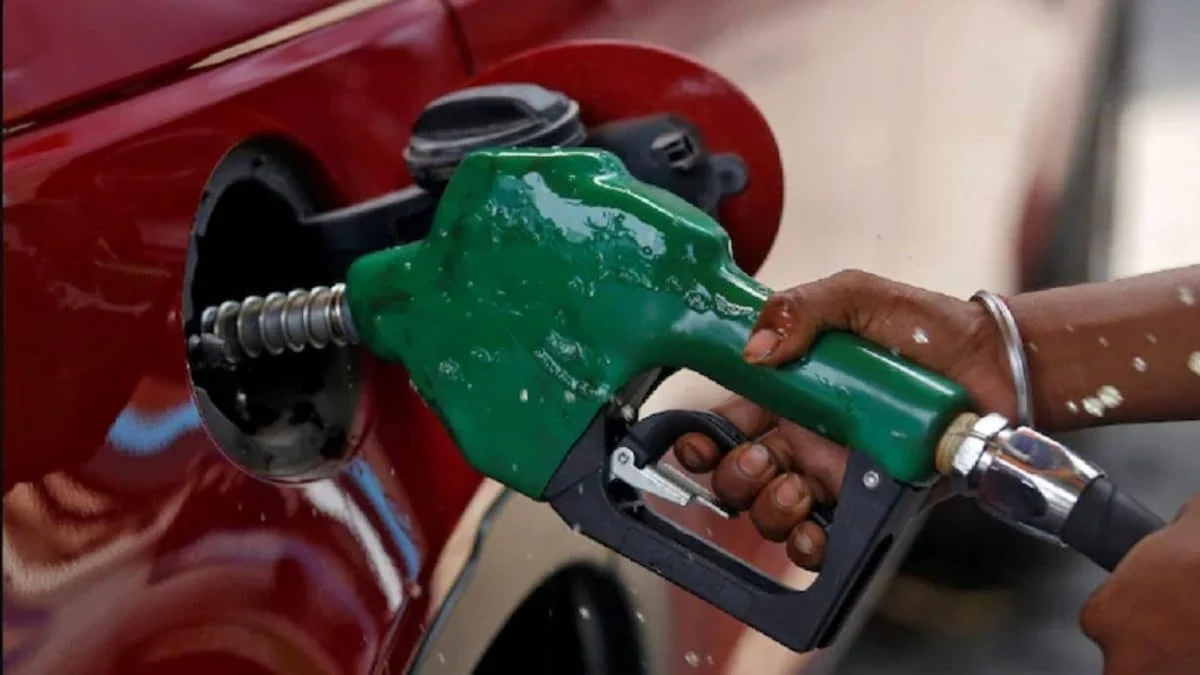
New Delhi, India – May 15, 2026 – In a significant move aimed at bolstering domestic fuel availability and moderating the substantial profits of energy exporters, the Indian government on Friday announced the imposition of a special additional excise duty (SAED) of Rs 3 per litre on the export of petrol. Concurrently, the Centre also reduced the existing windfall gains tax on the export of diesel and aviation turbine fuel (ATF), signaling a dynamic and adaptive approach to energy taxation amidst ongoing global geopolitical turmoil. These revised rates are slated to become effective from May 16, 2026.
This marks the first instance since the onset of the escalating West Asia conflict that petrol exports have been brought under the ambit of the windfall tax mechanism. The decision underscores the government’s proactive stance in managing its energy security and ensuring price stability within the domestic market, particularly as global crude oil prices continue their upward trajectory following intensified hostilities in the Middle East.
According to a notification released by the Ministry of Finance, the windfall tax on diesel exports has been lowered to Rs 16.5 per litre, a notable reduction from the previous rate of Rs 23 per litre. Similarly, the levy on ATF exports has been decreased to Rs 16 per litre, down from Rs 33 per litre. The notification also clarified that the road and infrastructure cess applicable to exports of both petrol and diesel will remain nil. Crucially, there has been no alteration in the current excise duty rates on petrol and diesel designated for domestic consumption, indicating a targeted approach to influence export-oriented activities rather than directly impacting local consumer prices.
This recalibration of export duties reflects the government’s continuous efforts to strike a delicate balance between leveraging India’s refining capacity for global markets and safeguarding national interests by ensuring adequate domestic supply and mitigating inflationary pressures fueled by international energy price volatility.
The Unfolding Chronology of India’s Windfall Tax Policy
India’s journey with the windfall gains tax on petroleum products began in July 2022, initially as a measure to tap into the extraordinary profits reaped by domestic refiners and oil producers amidst a surge in global crude oil prices, particularly in the wake of the Russia-Ukraine conflict. The premise was simple: when global crude prices soar, Indian refiners, who largely import crude but export refined products, benefit from a widening gap between their input costs and export realizations. This "windfall" profit, if not taxed, could lead to a scenario where exporters prioritize lucrative international markets over domestic supply, potentially creating shortages or price hikes at home.
The current round of adjustments, however, is directly linked to the more recent and severe escalation of the West Asia conflict, which has injected fresh volatility into the global energy landscape. The critical timeline leading up to the May 15 announcement highlights the government’s responsive policy adjustments:
-
February 28, 2026: A pivotal date marked by the United States and Israel launching airstrikes against Iran, triggering swift and widespread retaliation from Tehran. This geopolitical event immediately sent shockwaves through the global oil markets, pushing crude oil prices significantly higher. Prior to this escalation, crude oil prices were hovering around USD 73 per barrel, but within days, they surged past the USD 100 per barrel mark, fundamentally altering the profit calculus for fuel exporters.
-
March 26, 2026: Following the initial surge in crude prices and growing concerns over domestic fuel security, the government imposed an export duty on diesel at Rs 21.50 a litre and on ATF at Rs 29.5 a litre. This early intervention was designed to temper export enthusiasm and ensure sufficient supply for the Indian market, reflecting the nascent stages of geopolitical risk premium being factored into global energy prices.
-
April 11, 2026: As the West Asia conflict intensified and global crude prices maintained their elevated levels, the government undertook a significant upward revision of these duties. The levy on diesel exports was hiked substantially to Rs 55.5 per litre, and on ATF to Rs 42 per litre. This aggressive increase underscored the government’s apprehension regarding the sustained high global prices and the potential for domestic fuel shortages if exporters were left entirely free to capitalize on the widening international price differentials. The aim was clearly to disincentivise exports more strongly and ensure domestic market stability.
-
April 30, 2026: In a subsequent review, the government initiated a partial rollback of the hiked duties, reducing the levy on diesel to Rs 23 per litre and on ATF to Rs 33 per litre. This adjustment suggested a recalibration based on market dynamics, perhaps reflecting a slight stabilization in crude prices or a reassessment of the immediate threat to domestic supply. It demonstrated the government’s intent to maintain flexibility and avoid over-taxation that could stifle the refining industry.
-
May 15, 2026: The latest announcement, introducing a Rs 3 per litre windfall tax on petrol exports for the first time in this current crisis, while further cutting duties on diesel and ATF to Rs 16.5 and Rs 16 per litre respectively. This indicates a nuanced approach. The petrol tax suggests a new area of concern for the government regarding its availability or export profitability, while the continued reduction in diesel and ATF duties might imply that the previous, higher levies were deemed too restrictive, or that the market conditions for these fuels have evolved differently. The dynamic nature of these adjustments highlights the government’s proactive management of energy policy in an unpredictable global environment.
Supporting Data and Market Dynamics: The Calculus of Energy Security
The decision to impose and adjust windfall taxes is deeply rooted in India’s energy consumption patterns, its refining capabilities, and the volatile dynamics of global crude oil markets. India is the world’s third-largest consumer and importer of crude oil, making its economy highly susceptible to international price fluctuations. However, it is also a significant refiner and exporter of petroleum products, boasting some of the most advanced and complex refining facilities globally.
The recent surge in crude oil prices, from approximately USD 73 per barrel before the West Asia conflict to consistently above USD 100 per barrel, presents a dual challenge and opportunity for India. On one hand, higher crude prices inflate India’s import bill, straining its current account deficit and potentially weakening the rupee. On the other hand, for integrated oil companies and independent refiners, high global product prices (which typically track crude prices with a lag) translate into robust refining margins. When domestic retail prices are either regulated or adjust slower than international benchmarks, these refiners stand to make substantial "windfall gains" by exporting refined products rather than selling them domestically.
The government’s windfall tax mechanism aims to capture a portion of these extraordinary profits. The rationale is to ensure that while refiners benefit from global market conditions, a part of that benefit is channeled back to the exchequer, which can then be used to cushion the economy from the broader inflationary impact of high energy prices, or to fund public welfare schemes. It also acts as a disincentive for excessive exports, thereby safeguarding domestic fuel supply.
India’s refining sector plays a crucial role in its energy security. Companies like Reliance Industries, Nayara Energy (formerly Essar Oil), and public sector undertakings such as Indian Oil Corporation (IOC), Bharat Petroleum Corporation Limited (BPCL), and Hindustan Petroleum Corporation Limited (HPCL) operate massive refineries that not only cater to domestic demand but also supply refined products to international markets. When global prices for petrol, diesel, and ATF are exceptionally high, these companies naturally find it more profitable to export. The windfall tax intervenes in this economic calculus, making domestic sales relatively more attractive by narrowing the profit differential between domestic and international markets.
The stability of domestic fuel prices is paramount for India’s economy. Fuel costs are a significant component of inflation, directly impacting transportation, logistics, manufacturing, and ultimately, the cost of living for ordinary citizens. By ensuring adequate domestic availability and moderating exporter profits, the government aims to exert some control over this critical inflationary driver. Furthermore, the revenue generated from these taxes provides the government with additional fiscal space, which can be strategically deployed to support various economic initiatives or manage unforeseen expenditures. The dynamic adjustment of these taxes reflects a granular understanding of the market, attempting to fine-tune the balance without severely impacting the competitiveness or investment appetite of the refining sector.
Official Responses and Industry Reactions
The Indian government has consistently articulated the rationale behind the windfall tax as a measure of national energy security and fiscal prudence. Officials from the Ministry of Finance and the Ministry of Petroleum and Natural Gas have emphasized that these taxes are not punitive but rather a responsive mechanism to extraordinary market conditions. They highlight the "calibrated approach" of frequent reviews and adjustments, asserting that the policy is designed to be flexible, adapting to the ebb and flow of global crude oil prices and geopolitical developments. The imposition on petrol exports for the first time is presented as an extension of this flexible policy, targeting a specific product segment where export profitability might have become disproportionately high.
The government’s stance is to maintain a balance: allowing refiners to operate profitably and contribute to India’s export economy, while simultaneously ensuring that domestic consumers and industries are not unduly penalized by global price spikes or potential supply shortfalls. The assurance that domestic excise duties remain unchanged is a key message aimed at reassuring the public that the burden of these taxes is primarily on exporters’ super-normal profits, not directly on the common consumer at the pump.
Industry reactions, particularly from major refiners and oil marketing companies (OMCs), have been varied and often nuanced. While the industry acknowledges the government’s prerogative to manage national energy security, there are underlying concerns regarding policy predictability. Frequent adjustments, even if aimed at flexibility, can introduce an element of uncertainty into long-term investment planning and export strategies.
Energy analysts and economists generally concur that windfall taxes, when applied judiciously, can serve as an effective tool for governments to manage fiscal revenues and energy security during periods of extreme market volatility. However, they also caution against making such taxes a permanent feature or implementing them without clear triggers and thresholds.
"The government’s dynamic approach to the windfall tax is a double-edged sword," stated a leading energy economist, requesting anonymity due to ongoing client relations. "On one hand, it allows for quick adjustments to protect domestic interests. On the other, it can make it challenging for refiners to plan their export schedules and long-term investments. A more transparent framework with predefined price bands for tax adjustments could offer greater predictability."
Refining companies, especially private players like Reliance Industries, which have significant export capacities, are likely to assess the impact on their refining margins. While the tax aims to moderate "windfall" profits, it inevitably reduces the overall profitability of exports. Public sector OMCs, which have a primary mandate to serve domestic demand, might find the adjustments less impactful on their core business, though their export ventures would also be affected. The industry will closely monitor the review cycles, hoping for stability and a clear direction on when and how these levies might be further adjusted or eventually phased out as global markets stabilize.
Implications and Future Outlook
The imposition of a windfall tax on petrol exports and the recalibration of duties on diesel and ATF carry significant implications across various facets of the Indian economy and its energy policy.
Economic Implications:
- Inflation Management: By disincentivising exports and promoting domestic availability, the government aims to stabilize local fuel prices, which in turn helps in combating inflation. High fuel costs directly translate to higher transportation costs, impacting the prices of goods and services across the economy.
- Fiscal Revenue: The windfall tax provides a significant revenue stream for the government, which can be utilized to offset the fiscal burden of high crude oil import bills or to fund other developmental projects and social welfare schemes.
- Refiner Profitability: While designed to target "windfall" profits, the tax will inevitably reduce the overall profitability of refined product exports. This could influence investment decisions in refining capacity in the long term, especially if the tax regime is perceived as overly volatile or unpredictable.
- Balance of Trade: While the primary goal is domestic supply, any dampening of exports will have a marginal impact on India’s overall export earnings, though this is considered a necessary trade-off for energy security.
Geopolitical Implications:
- Energy Security: The policy underscores India’s strong commitment to energy security, demonstrating its willingness to take decisive action to protect domestic supply amidst global crises. This reinforces India’s strategic autonomy in managing its energy needs.
- Global Market Player: As a major refiner, India’s export policies have an impact on global refined product markets. The windfall tax signals India’s active role in navigating and responding to global energy market disruptions.
- Adaptability: The frequent adjustments highlight the Indian government’s agility in adapting its energy policy to rapidly changing international geopolitical and economic landscapes.
Future of Windfall Tax:
The dynamic nature of the windfall tax mechanism raises questions about its long-term future. Will it become a permanent fixture in India’s energy taxation framework, acting as a flexible instrument to manage commodity price volatility? Or is it a temporary measure, to be phased out once global crude oil prices stabilize and geopolitical tensions subside?
The government’s repeated emphasis on its "calibrated" and "responsive" nature suggests that it is likely to remain in place as long as global crude oil prices exhibit extreme volatility or remain significantly elevated due to geopolitical factors. Future adjustments will likely be dictated by:
- Global Crude Prices: The benchmark for any future review will undoubtedly be the sustained movement of international crude oil prices (e.g., Brent crude).
- Refining Margins: The profitability of refiners, specifically their gross refining margins (GRMs), will be a key indicator for the government.
- Domestic Demand and Supply: Any signs of domestic fuel shortages or significant price disparities will trigger further reviews.
- Geopolitical Stability: A de-escalation of the West Asia conflict or other major geopolitical events could lead to a significant easing or even a complete removal of these duties.
In conclusion, the Indian government’s decision to impose a windfall tax on petrol exports, alongside cuts to diesel and ATF levies, is a calculated maneuver in a complex global energy chess game. It reflects a multi-faceted strategy aimed at protecting domestic consumers, ensuring energy security, and leveraging fiscal policy to manage the economic fallout of international conflicts. As the world grapples with persistent geopolitical uncertainties, India’s adaptable windfall tax mechanism stands as a testament to its commitment to navigating these challenges with a blend of economic prudence and strategic foresight. The continuous reviews and adjustments will be crucial in demonstrating the government’s ability to balance the interests of its citizens with the broader objectives of its industrial and economic policies.
