

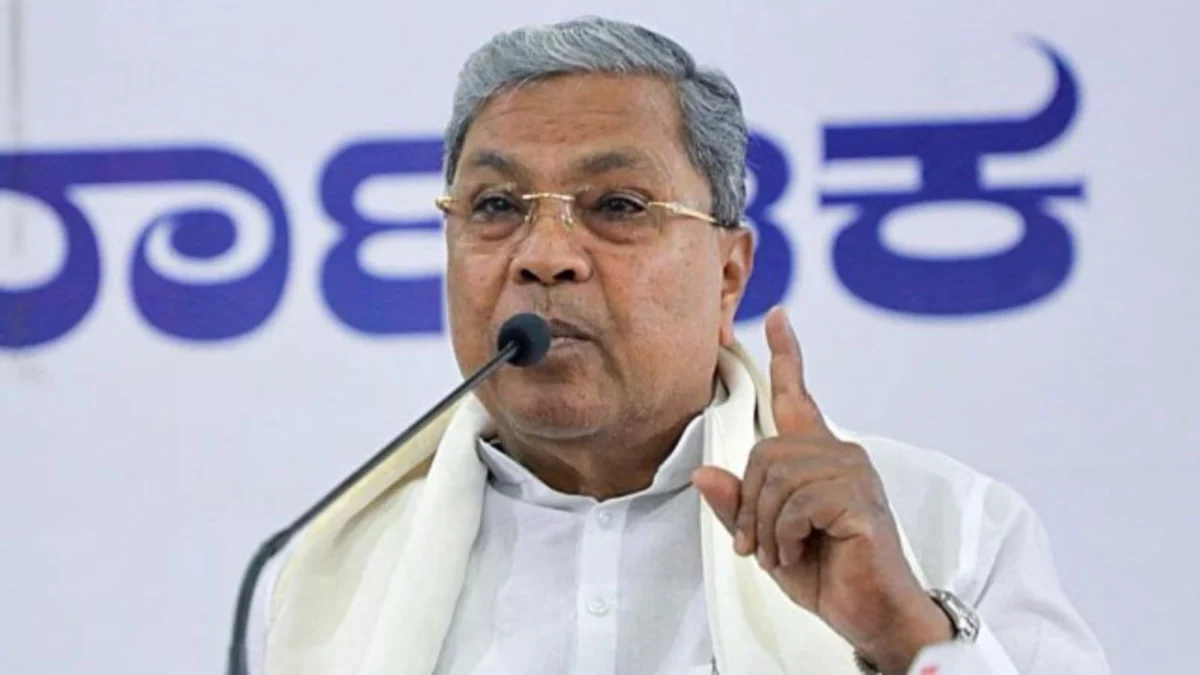
Bengaluru, Karnataka – In a move that has swiftly polarized the political landscape and reignited a simmering debate over religious freedom and secularism in educational institutions, the Congress-led Karnataka government has officially withdrawn the previous BJP administration’s 2022 order banning the wearing of hijabs in schools and pre-university colleges (classes 11 and 12). The decision, announced by Chief Minister Siddaramaiah’s government, has triggered sharp reactions from the Opposition BJP-led NDA in the state, who have decried it as "appeasement" and "vote bank politics," while the Janata Dal (Secular) has questioned the timing and underlying motivations.
The new directive, issued on a Wednesday, aims to restore a sense of cultural and traditional inclusivity, allowing students to wear "tradition and culture-based symbols commonly worn by students," including but not limited to "peta/turban, janivara/holy thread, Shivadara, Rudraksha, headscarf/hijab," provided they do not impede discipline, safety, or student identity. The Congress government has vigorously defended its stance, asserting that the move is not solely about Muslim students but is a broader affirmation of diverse cultural practices across all communities. However, the BJP and JD(S) have accused the ruling party of exploiting a sensitive issue for electoral gain, especially in the wake of recent by-election results and upcoming community rallies.
Chronology: The Genesis of a Controversy
The journey of the hijab controversy in Karnataka has been fraught with legal battles, social unrest, and intense political posturing, tracing its origins back to late 2021.
December 2021: The controversy first erupted in the coastal district of Udupi when a few Muslim girl students of a pre-university college were barred from attending classes for wearing a hijab, which the college management deemed a violation of the prescribed uniform policy. This initial incident quickly escalated, with other colleges adopting similar restrictions and protests breaking out across the state, particularly in communally sensitive coastal Karnataka.
February 5, 2022: The then Basavaraj Bommai-led BJP government issued a contentious order stipulating that students must adhere strictly to the uniform prescribed by schools and pre-university colleges. The order effectively banned the hijab in educational institutions where uniforms were mandated, citing the need to ensure equality and public order. This governmental decree further inflamed tensions, leading to widespread protests by Muslim students and counter-protests by Hindu groups. The visual of hijab-clad girls being denied entry to classrooms or having to sit for exams separately became a defining, and often distressing, image of the period.
The consequences of the ban were immediate and severe for many Muslim girls. Reports emerged of numerous students being compelled to discontinue their schooling or seek admission in institutions that permitted the hijab, disrupting their academic pursuits weeks ahead of crucial annual examinations. This generated significant concern among civil rights groups and international observers about the right to education and religious freedom.
February 2022 onwards: Several petitions challenging the government’s order were filed in the Karnataka High Court, arguing that the ban infringed upon fundamental rights, including the right to education, freedom of speech and expression, and freedom of religion.
March 15, 2022: A full bench of the Karnataka High Court delivered its verdict, upholding the state government’s ban. The High Court ruled that wearing the hijab was not an "essential religious practice" in Islam and that the prescription of school uniforms was a reasonable restriction on fundamental rights, permissible under constitutional provisions. This judgment was a significant setback for those advocating for the right to wear the hijab in schools.
October 13, 2022: The Karnataka High Court’s decision was subsequently challenged in the Supreme Court of India. A two-judge bench of the apex court delivered a split verdict, reflecting the complex legal and constitutional questions at play. Justice Hemant Gupta upheld the ban, concurring with the High Court’s reasoning, while Justice Sudhanshu Dhulia set aside the ban, emphasizing the importance of individual choice and the right to education. Given the divergence of opinion, the case was referred to a larger bench of the Supreme Court for a definitive resolution, where it currently remains pending.
May 2023: In the run-up to the state assembly elections, the Congress party included the revocation of the hijab ban as one of its manifesto pledges, signaling its intent to reverse the BJP’s policy if elected to power.
Current Withdrawal: The Siddaramaiah government’s recent decision to withdraw the 2022 ban marks the latest, and perhaps most significant, turn in this protracted saga, fulfilling a key electoral promise but simultaneously plunging the state into renewed political contention.
The New Directive: Embracing Cultural Plurality
The latest order from the Siddaramaiah government represents a distinct pivot from the previous administration’s stance, aiming to foster an environment of inclusive cultural recognition within educational settings. Issued on a Wednesday, the directive explicitly permits students to wear a range of "tradition and culture based symbols commonly worn by students."
The order meticulously lists several such symbols, illustrating the breadth of its intended scope. These include:
- Peta/Turban: Traditional headwear often associated with various communities, particularly in northern Karnataka and among certain caste groups.
- Janivara/Holy Thread: A sacred thread worn by Brahmin males and some other Hindu communities, symbolizing spiritual purity and commitment.
- Shivadara: A symbol or mark associated with Shaivism, a major tradition within Hinduism.
- Rudraksha: Beads from the Rudraksha tree, worn by devotees of Lord Shiva, believed to possess spiritual and medicinal properties.
- Headscarf/Hijab: A veil worn by Muslim women, symbolizing modesty and religious devotion.
Crucially, the order also includes a catch-all phrase, "or any such similar symbols associated with culture and tradition," indicating a broad intention to accommodate diverse practices. However, this permission is not without its caveats. The directive clearly states: "These should not be a deterrent for the discipline, safety and identity of the student." This clause aims to balance individual expression with the need to maintain an orderly and secure educational environment, leaving some room for interpretation and potential future disputes regarding what constitutes a "deterrent."
Chief Minister Siddaramaiah has been vocal in his defense of this inclusive approach, asserting that the policy is not designed to appease any single community. "This is not a dress code intended to appease or hurt anyone; it is a dress code that respects the practices and traditions of all castes and religions," he articulated, emphasizing the pluralistic nature of Indian society. By explicitly mentioning a range of symbols from different religious and cultural backgrounds, the government seeks to frame the withdrawal of the hijab ban not as a concession to one group, but as a broader commitment to upholding the cultural rights of all students within the state’s educational framework. This approach aims to counter the "appeasement" narrative propagated by the opposition by highlighting the universal applicability of the new guidelines.
Political Slugfest: A Battle of Ideologies
The Congress government’s decision has immediately plunged Karnataka into a fervent political slugfest, with the Opposition BJP and JD(S) launching scathing attacks, accusing the ruling party of political opportunism and jeopardizing the secular fabric of education.
Union Minister for Consumer Affairs, Food and Public Distribution, Prahlad Joshi, who is also the Dharwad MP, was among the first to lambast the Congress government’s move. He termed the decision "unfortunate," particularly given that the contentious issue remains sub judice before a Constitution Bench of the Supreme Court. Joshi did not mince words, charging the Congress with adopting a "divide and rule" policy, reminiscent of colonial tactics, at a time when the nation is witnessing discussions around a Uniform Civil Code (UCC). "When Uniform Civil Code (UCC) is being implemented across the country, Karnataka has adopted the policy of divide and rule… To appease one particular group, the education system is being spoiled," he alleged, implying that the decision undermines national unity and secular principles for narrow electoral gains. The mention of UCC, a highly debated topic aiming to replace personal laws based on religion with a common set of laws, further elevates the political rhetoric, linking the hijab issue to broader nationalistic agendas.
Karnataka BJP president B Y Vijayendra echoed these sentiments, demanding an immediate withdrawal of the order and warning the Siddaramaiah government of "consequences." Vijayendra emphasized the symbolic importance of school uniforms as a representation of equality, fostering a sense of unity among students regardless of their backgrounds. "Rather than instilling the feeling of ‘we are all one’ among students, to appease its vote bank, the corrupt Congress government is trying its hands at communal division at school premises," he asserted, painting the Congress as a party willing to sow discord for electoral benefits. The BJP’s consistent argument centers on the idea that religious symbols in uniform spaces undermine the secular nature of public education and create divisions among students.
Adding another layer to the political criticism, JD(S) leader and Union Minister for Steel and Heavy Industries, H D Kumaraswamy, questioned the timing of the government’s order, directly linking it to the results of the recent Davangere South by-election. Kumaraswamy claimed that the Congress government’s action stemmed from a perceived fear of losing support among Muslim voters. He also referenced an incident from April in Bengaluru, where a Brahmin PU student was reportedly asked to remove his ‘janivara’ (sacred thread) before an entrance exam. Kumaraswamy suggested that this isolated incident was strategically leveraged by the government to justify broader revised guidelines for school uniforms. "I don’t know whether the Supreme Court has vacated the case. I am surprised that the government has announced it… What were they doing for three years? Post Davanagere results, they have done this," he remarked, implying a cynical calculation behind the timing. The JD(S) leader’s critique focuses less on the principle of the ban itself and more on the alleged political expediency driving the Congress’s decision.
These strong reactions underscore the deep ideological chasm between the ruling Congress and the opposition BJP-JD(S) alliance, transforming the hijab issue from a question of individual rights and educational policy into a high-stakes political battleground ahead of future elections.
Supporting Data: The By-election Shadow and Community Concerns
The political accusations of "appeasement" and "vote bank politics" leveled against the Congress government are largely underpinned by recent electoral outcomes and mounting pressure from within the Muslim community. The Davangere South by-election, held in April, serves as a crucial piece of supporting evidence for the opposition’s claims regarding the timing of the hijab ban withdrawal.
In this by-election, while the Congress party successfully retained its seat, winning by approximately 5,700 votes, the victory margin represented a sharp plunge from the roughly 27,900-vote lead it secured in the 2023 general elections. This significant reduction in margin immediately raised eyebrows and prompted internal scrutiny within the Congress. A critical factor identified was the apparent dissatisfaction among a section of Muslim voters, who constitute over a third of the constituency’s electorate. Their discontent reportedly stemmed from the party’s decision not to field a candidate from their community in the bypoll. This perceived slight led to a rebellion among some Muslim leaders, culminating in disciplinary actions, including the suspension of MLC Abdul Jabbar from the party and the removal of another MLC, Naseer Ahmed, from his cabinet rank as the Chief Minister’s political secretary. The by-election results therefore provided a tangible metric for the Congress to gauge potential erosion of its traditional Muslim vote bank.
Further compounding the pressure, the Federation of Karnataka Muslim Organisations is slated to hold a significant rally in Bengaluru on May 16. The rally’s primary objective is to release a comprehensive report on the "state of Muslims" during the Congress’s three-year rule, highlighting various grievances. Among the key issues expected to be raised by the Federation is the "delay" in lifting the hijab ban in schools, indicating a growing impatience within the community regarding the fulfillment of the Congress’s electoral promises.
Speaking to The Indian Express, a Muslim leader from the Congress, requesting anonymity, candidly acknowledged the political calculations at play. The leader pointed to the symbolic presence of School, Education and Literacy Minister Madhu Bangarappa, flanked by Health and Family Welfare Minister Dinesh Gundu Rao and MLA Rizwan Arshad, at the press conference announcing the new uniform order. This visible display, according to the source, was a deliberate signal aimed at assuaging the concerns of the Muslim community. "There were some concerns over the fallout of the Davanagere South bypoll, as SDPI (a Muslim outfit) gained the votes and reduced our margin. The decision will send a message that the government is not ignoring the community," the leader stated, confirming the link between electoral performance and policy decisions. This internal perspective lends credence to the opposition’s narrative of "vote bank politics."
However, MLA Rizwan Arshad, one of the key figures at the announcement, strongly dismissed these claims, asserting that the order was neither linked to the bypoll results nor a pre-emptive measure against the Federation’s upcoming rally. Arshad clarified that revoking the hijab ban was a clear commitment in the Congress’s 2023 election manifesto. He explained that the delay in implementation was due to the complex and sensitive nature of the "Hijab decision," which "was a little complicated and had to be taken delicately." According to Arshad, the Chief Minister had thoroughly reviewed the entire issue after multiple consultations before arriving at the current resolution. He further countered the bypoll narrative by arguing that a lower margin of victory for the Congress in Davanagere South was not unprecedented, citing instances where Muslim candidates from other parties had performed well in previous elections. "Even during this bypoll, 70% of Muslims voted for Congress," Arshad claimed, attempting to downplay the significance of the reduced margin and emphasize continued community support. These differing internal perspectives highlight the tightrope walk the Congress government is undertaking in balancing its electoral promises with political realities and the broader implications of its policy decisions.
Official Responses: CM Siddaramaiah’s Firm Stance
Chief Minister Siddaramaiah has emerged as the principal defender of his government’s decision, vehemently refuting the opposition’s accusations of appeasement and asserting the policy’s foundation in respect for diverse cultural practices. His official responses aim to reframe the narrative, moving away from a religious concession to a broader commitment to cultural inclusivity and constitutional principles.
The Chief Minister’s core argument is that the new dress code is inherently neutral and inclusive, designed neither to favor nor to offend any specific group. "This is not a dress code intended to appease or hurt anyone; it is a dress code that respects the practices and traditions of all castes and religions," he stated unequivocally. By framing it as a universally applicable policy that accommodates symbols like ‘peta/turban’ and ‘janivara/holy thread’ alongside the ‘headscarf/hijab,’ Siddaramaiah seeks to demonstrate that the move is not solely for Muslim students but for all students who wish to express their cultural or traditional identity through attire.
To further bolster his defense, Siddaramaiah drew a comparison with the dress code followed in Kendriya Vidyalayas (KVs) – a system of central government schools known for their standardized curriculum and national character. He asserted that the dress code implemented in state educational institutions under the new order is in line with the practices in Kendriya Vidyalayas. This comparison is strategically significant, as KVs operate under the Central government, often seen as a benchmark for national policies. By invoking this parallel, the Chief Minister aims to legitimize his government’s decision by associating it with a widely accepted and centrally administered educational framework, implying that if KVs can accommodate such symbols, state schools should too.
Siddaramaiah then turned the tables on his critics, particularly the BJP, by challenging their interpretation of "appeasement." "If allowing the hijab is considered appeasement of Muslims, then is allowing the wearing of the sacred thread or turban also appeasement of those respective religions?" he questioned, highlighting the perceived hypocrisy in the opposition’s stance. This rhetorical question forces critics to confront whether their objections are genuinely about secularism or selectively targeted at one community.
The Chief Minister also launched a direct attack on the BJP, accusing them of deliberately fomenting communal hatred during the initial hijab controversy in 2022. He recalled instances where sacred threads were reportedly removed in some places and how BJP leaders allegedly capitalized on Muslim girl students wearing hijabs in a few Udupi schools to ignite statewide communal tensions. "Siddaramaiah alleged that when sacred threads were removed in some places, or when Muslim girl students wore hijabs in a few schools in Udupi, the BJP leaders attempted to ignite communal hatred across the state," the article states. He further contrasted this alleged focus on communal issues with what he perceives as a lack of concern for more pressing educational matters, such as the recent NEET examination cancellation due to an alleged paper leak. "Do they not see the tears of students crying due to the cancellation of the recent NEET examination (following alleged paper leak)?" he added, attempting to redirect public and political attention to issues of broader student welfare and educational integrity, while simultaneously portraying the BJP as politically opportunistic and divisive.
Through these robust official responses, CM Siddaramaiah is attempting to firmly anchor his government’s decision in principles of cultural respect, constitutional fairness, and responsible governance, while simultaneously discrediting the opposition’s criticisms as politically motivated and communally charged.
Implications: Navigating Legal and Societal Waters
The Karnataka government’s decision to withdraw the hijab ban carries significant implications that ripple across legal, educational, and socio-political spheres, promising further debate and potential challenges.
Legal Ramifications: The most immediate legal implication is the complex interplay with the ongoing Supreme Court case. With the apex court having delivered a split verdict and the matter referred to a larger bench, the legal status of the hijab in educational institutions remains undecided at the highest judicial level. The Siddaramaiah government’s withdrawal of the state order effectively pre-empts the Supreme Court’s final ruling, at least within Karnataka. This could lead to fresh legal challenges, as those who supported the ban might now petition the Supreme Court to expedite its hearing or challenge the state’s new order. Conversely, the state government might argue that its new order aligns with the spirit of individual freedom and constitutional rights, potentially influencing the larger bench’s considerations. The Supreme Court’s eventual ruling will have far-reaching consequences, potentially setting a national precedent on religious attire in secular educational spaces.
Educational Impact: For thousands of Muslim girl students, the withdrawal of the ban offers immediate relief and the opportunity to return to mainstream education without compromising their religious beliefs. The 2022 ban had led to many discontinuing their studies or seeking admission in alternative institutions, causing significant academic and psychological distress. The new order is expected to facilitate their reintegration, potentially reducing dropout rates and promoting inclusivity. However, the caveat that symbols "should not be a deterrent for the discipline, safety and identity of the student" could still be a point of contention in individual institutions, requiring clear guidelines and sensitive implementation to avoid arbitrary interpretations. The broader implication for the education system is a renewed focus on balancing individual rights with institutional regulations, a debate that is far from settled globally.
Socio-Political Landscape: The decision is certain to exacerbate communal polarization in Karnataka, a state that has witnessed increasing religious tensions in recent years. The BJP and JD(S) have already branded the move as "appeasement politics," a narrative that resonates with certain sections of the electorate. This could lead to heightened communal rhetoric and potentially social unrest, especially in communally sensitive regions like coastal Karnataka, where the issue first flared up. The BJP, with its strong Hindutva plank, is likely to use this decision to mobilize its base, portraying the Congress as anti-Hindu or overly accommodating to minority demands.
Conversely, the Congress’s move is likely to consolidate its support among Muslim voters, fulfilling a key manifesto promise and addressing a significant grievance. This could be a strategic electoral calculation, aiming to shore up its minority vote bank ahead of upcoming local body elections and the 2024 Lok Sabha elections. However, the party risks alienating sections of the Hindu majority who might view the decision as a compromise on secular principles or a capitulation to minority demands.
The debate also touches upon the larger philosophical question of secularism in India – whether it means strict separation of state from religion (as in the Western model) or equal respect for all religions (as often interpreted in India). The Congress’s move leans towards the latter, advocating for an inclusive secularism that accommodates religious symbols.
Future Challenges: The path ahead is unlikely to be smooth. The BJP is expected to keep the issue alive, potentially through protests, legal challenges, or by making it a central theme in future election campaigns. The implementation of the new order at the ground level will also be crucial. Schools and colleges will need clear directives to ensure uniform application and prevent any new forms of discrimination or conflict. The ultimate resolution of the issue may still depend on the larger bench of the Supreme Court, whose verdict could either validate or overturn the state government’s current position, thereby shaping the future of religious freedom and educational policies across India. The Karnataka government’s decision, while fulfilling an electoral pledge, has opened a new chapter in a contentious national debate, whose final pages are yet to be written.
