

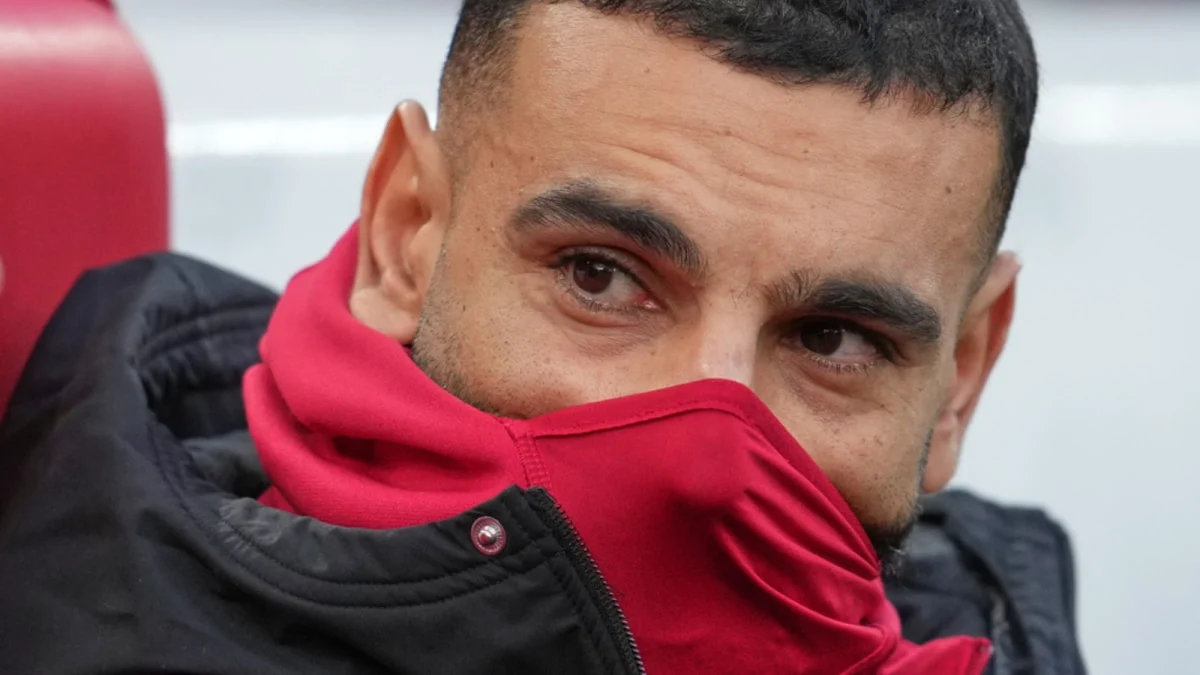
Anfield Idol Mohamed Salah Demands Return to Fear-Inducing Attacking Identity in Emotional Farewell Address, With Champions League Qualification Hanging by a Thread
LIVERPOOL, UK – May 16, 2026 – In an impassioned and remarkably candid statement delivered via social media, Liverpool’s talismanic forward, Mohamed Salah, has issued a searing indictment of the club’s disastrous 2025-26 season, imploring the Reds to rediscover their "heavy metal attacking team" identity. The Egyptian King’s heartfelt plea comes at a pivotal, and likely final, juncture of his illustrious Anfield career, with Liverpool facing the unprecedented prospect of missing out on Champions League football and concluding a campaign trophyless despite a staggering £442 million investment.
Salah’s words, broadcast on X (formerly Twitter) in the immediate aftermath of a humiliating 4-2 away defeat to Aston Villa, laid bare the frustration simmering within the club and resonated deeply with a disillusioned fanbase. The loss has left Liverpool’s hopes for a top-six finish, and crucially, a coveted spot in Europe’s elite competition, hanging precariously ahead of his impending final game against Brentford. For a club that began the season as defending champions – a title earned in the 2024-25 season, making their current predicament all the more shocking – the fall from grace has been precipitous and painful.
Salah’s Fiery Call for Revival: A Legacy’s Last Stand
Mohamed Salah’s carefully chosen words were not merely a lament; they constituted a powerful manifesto for change, delivered with the authority of a legend whose contributions have indelibly shaped Liverpool’s modern era. His statement on X was a rare public display of raw emotion and strategic intent from a player typically reserved in his commentary on club affairs, particularly one on the cusp of departure.
"I have witnessed this club go from doubters to believers, and from believers to champions. It took hard work and I always did everything I could to help the club get there. Nothing makes me prouder than that," Salah began, invoking the golden age of Jurgen Klopp’s reign, an era he was central to forging. This opening served as a stark contrast to the present reality, setting the stage for his critique.
He continued, articulating the collective pain: "Us crumbling to yet another defeat this season was very painful and not what our fans deserve." This acknowledgment of the fans’ suffering, who have endured a season far below expectations, underscored the gravity of the situation. Salah then pivoted to his core demand, the philosophical cornerstone of Liverpool’s recent successes: "I want to see Liverpool go back to being the heavy metal attacking team that opponents fear and back to being a team that wins trophies. That is the football I know how to play and that is the identity that needs to be recovered and kept for good. It cannot be negotiable and everyone that joins this club should adapt to it."
This phrase, "heavy metal attacking team," harks back directly to the tactical philosophy espoused by former manager Jürgen Klopp, characterized by relentless pressing, high energy, rapid transitions, and an unwavering attacking mindset. Salah’s insistence that this identity "cannot be negotiable" and that "everyone that joins this club should adapt to it" serves as a direct challenge to the current coaching staff, the recruitment department, and potentially, the ownership. It suggests a perceived deviation from these core principles, leading to the current malaise.
Concluding his plea, Salah emphasized the club’s inherent winning mentality and the non-negotiable standard for European football. "Winning some games here and there is not what Liverpool should be about. All teams win games. Liverpool will always be a club that means a great deal to me and to my family. I want to see it succeed for long after I have moved on. As I’ve always said, qualifying to next season’s Champions League is the bare minimum and I will do everything I can to make that happen." His commitment to achieving Champions League qualification in what will be his final game speaks volumes about his professional integrity and enduring loyalty, even as his chapter at Anfield draws to a close.
The Unraveling of a Season: A Chronicle of Disappointment
The 2025-26 season, which began with such fanfare and optimism, has devolved into a nightmare for Liverpool. The team, having clinched the Premier League title in the 2024-25 season, entered this campaign as defending champions, their coffers bolstered by success and the promise of continued dominance. The club’s significant transfer outlay of approximately £442 million (equivalent to Rs. 4,928 crore at current exchange rates) was widely seen as a statement of intent, designed to consolidate their position at the summit of English and European football. Yet, the investment has yielded disastrous returns.
High Hopes and Heavy Investment
The summer transfer window preceding the 2025-26 season saw Liverpool embark on an ambitious spending spree. Reports indicated significant outlays on a marquee central defender to partner Virgil van Dijk, an energetic midfielder to replace an ageing contingent, and a versatile forward to augment an already potent attack. The scale of the investment, rivaling some of the largest in the club’s history, fueled expectations of a relentless pursuit of further silverware. Fans envisioned a squad deep enough to compete on all fronts, embodying the "heavy metal" intensity that had defined their championship-winning years. However, from the opening weeks of the season, a disconnect between the tactical blueprint and player execution became glaringly apparent. Early results were inconsistent, marked by uncharacteristic defensive lapses and a noticeable bluntness in attack.
The Shadow of Injury and Tragedy: The Jota Incident
Compounding the tactical struggles and a dip in collective form were a series of unfortunate events, both on and off the pitch. The article specifically references the "Diogo Jota tragedy," a phrase that evokes a profound sense of loss and difficulty. While specific details remain private, this incident, understood to be a significant personal and professional setback for the Portuguese international, cast a pall over the squad. Jota, a vital component of Liverpool’s attacking dynamism, saw his season severely curtailed or perhaps even ended prematurely, depriving the team of his crucial goals and relentless pressing.
Beyond Jota, the squad was plagued by "several key injuries." Midfield linchpins, defensive stalwarts, and other attacking options spent significant time on the sidelines. The cumulative effect of these absences disrupted squad cohesion, forced makeshift lineups, and denied the coaching staff the ability to field a consistent, settled side capable of building momentum. The relentless demands of modern football, combined with a perceived lack of depth in certain areas despite the heavy spending, stretched the squad thin, leading to player fatigue and increased susceptibility to further injuries.
A Collective Dip in Form
Crucially, even those who remained fit, including Salah himself, struggled to find their rhythm. Salah, usually a beacon of consistency and goal-scoring prowess, endured one of his least prolific seasons at Anfield. His trademark bursts of pace, clinical finishing, and creative spark appeared diminished, often leading to frustrated gestures and isolated moments rather than sustained periods of influence. This individual dip mirrored a broader collective malaise. Key players across the pitch, who had previously been lauded as "mentality monsters," seemed to lack the intensity, conviction, and collective hunger that had characterized Liverpool’s most successful periods. The famed gegenpressing system often looked disjointed, the intricate attacking movements lacked precision, and the defensive solidity that had once been a hallmark evaporated with alarming regularity.
Reclaiming the "Heavy Metal" Identity: A Tactical and Philosophical Imperative
Salah’s demand for a return to "heavy metal attacking football" is not merely nostalgic; it is a profound call for a re-evaluation of the club’s tactical and philosophical direction. This style of play, synonymous with Jürgen Klopp, was the engine of Liverpool’s resurgence.
Defining the Kloppian Era
"Heavy metal football" was more than just a catchy phrase; it was a comprehensive tactical system built on several pillars:
- Gegenpressing: Immediately pressing the opponent after losing possession to win the ball back high up the pitch, preventing counter-attacks, and creating new attacking opportunities.
- High Intensity: A relentless, non-stop approach to every minute of every game, overwhelming opponents physically and mentally.
- Verticality and Directness: Moving the ball forward quickly, minimizing sideways passes, and prioritizing attacking thrust.
- Aggressive Attacking: Overloading the opposition box, encouraging full-backs to join the attack, and creating numerous goal-scoring chances.
- Collective Effort: Every player, from goalkeeper to striker, was expected to contribute to both defense and attack with unwavering commitment.
This philosophy transformed Liverpool into a formidable force, feared by opponents across Europe. It bred a culture of relentless pursuit of victory, where "doubters became believers" and then "champions."
The Erosion of a Philosophy
The 2025-26 season has seen a noticeable departure from these tenets. Analysts and fans have pointed to several key areas where the "heavy metal" intensity has waned:
- Pressing Inconsistency: The collective press often appeared uncoordinated, allowing opponents to play through midfield with relative ease. The energy levels required for sustained gegenpressing seemed absent for prolonged periods.
- Defensive Fragility: The concession of 4 goals to Aston Villa was emblematic of a season where the defense struggled to maintain solidity. Individual errors became more frequent, and the collective defensive shape often broke down under pressure.
- Lack of Attacking Fluidity: While individual moments of brilliance still occurred, the intricate, free-flowing attacking patterns that once tore apart defenses were rarer. The team often struggled to break down resilient opponents, resorting to hopeful crosses or predictable passes.
- Mental Fortitude: The "mentality monsters" tag, once a badge of honour, seemed to have been replaced by a fragility. The team often struggled to recover from conceding an early goal, and late collapses became a worrying trend.
Salah’s statement implies that this erosion is not accidental but perhaps a consequence of tactical choices, player recruitment that doesn’t fully align with the philosophy, or a gradual drift from the core identity. His insistence that this identity "needs to be recovered and kept for good" and "cannot be negotiable" suggests a fundamental belief that without it, Liverpool cannot thrive.
The Weight of the Shirt: Financial Outlay vs. On-Field Returns
The juxtaposition of Liverpool’s substantial £442 million investment and their current plight raises critical questions about the club’s transfer strategy, player evaluation, and overall financial management by Fenway Sports Group (FSG).
£442 Million Question
The colossal sum spent in the market was intended to build upon the previous season’s success, not prevent a catastrophic decline. This figure, roughly equivalent to the GDP of a small island nation, represents a massive vote of confidence – or perhaps a desperate gamble – in the club’s ability to maintain its elite status. Details of the specific players acquired for this sum remain confidential, but it is understood that the focus was on reinforcing key areas, particularly defensive midfield, central defense, and adding depth to the forward line. The expectation was that these new arrivals would seamlessly integrate into the squad, elevate the overall quality, and inject fresh impetus.
Investment vs. Impact
The reality, however, has been starkly different. The new signings, for various reasons – adapting to a new league, injury setbacks, or simply failing to meet expectations – have largely not delivered the anticipated impact. Instead of providing the necessary uplift, many have struggled to find their form or consistently contribute at the required level. This has left the team appearing disjointed, lacking cohesion, and crucially, short on the decisive match-winning contributions that such expensive acquisitions are expected to provide.
The failure of such significant investment to translate into on-field success puts immense pressure on the club’s sporting director, recruitment team, and ownership. It forces an uncomfortable re-evaluation of their talent identification processes, their ability to integrate new players, and whether the transfer policy truly aligns with the specific tactical demands of the "heavy metal" identity Salah champions. The current situation suggests a profound miscalculation, where financial might has not translated into competitive advantage, leaving the club in a worse position than before the spending spree.
A Club at the Crossroads: Leadership, Fans, and the Future
Salah’s public pronouncements have thrust Liverpool FC into an uncomfortable spotlight, exposing fault lines within the club and intensifying scrutiny on its leadership, particularly from the passionate Anfield faithful.
The Silence from the Top
In the wake of such a challenging season and Salah’s incendiary comments, the conspicuous silence from the club’s hierarchy – Fenway Sports Group (FSG) and the coaching staff – has been deafening. While Salah’s X post serves as a powerful, albeit unofficial, statement from a key figure, the absence of a clear message from the club’s ownership or the manager (who remains unnamed in the article, but clearly under pressure) has created a vacuum of leadership. This silence can be interpreted in several ways: a cautious approach to avoid further destabilization, internal deliberations on the path forward, or perhaps a lack of clear direction themselves. Regardless, it leaves fans yearning for clarity and accountability. The lack of a unified public front only exacerbates the sense of crisis.
The Anfield Faithful’s Discontent
Liverpool’s supporters are renowned for their unwavering loyalty and passionate backing, but their patience has been tested to its limits this season. From the initial optimism fuelled by the transfer spending to the gradual erosion of hope, culminating in the ignominy of a trophyless season, the mood has shifted from disappointment to palpable anger. Social media platforms are awash with debates, criticisms, and demands for change. Banners at Anfield have begun to appear, reflecting the growing discontent and echoing Salah’s sentiments about the need to reclaim the club’s identity. The prospect of missing out on Champions League football, a competition intrinsically linked to Liverpool’s prestige and financial health, is a bitter pill for supporters who have grown accustomed to seeing their team compete at the highest level. The emotional investment of the fanbase runs deep, and the current state of affairs represents a betrayal of the high standards they hold for their beloved club.
Salah’s Farewell: A Bitter End to an Illustrious Chapter
Mohamed Salah’s impending departure at the end of the season marks the closing of an extraordinary chapter in Liverpool’s history. His final game against Brentford next Sunday will be tinged with both celebration for his incredible contributions and profound sadness for how his time at Anfield concludes.
The Brentford Swansong
The fixture against Brentford at Anfield will be more than just a battle for European qualification; it will be Salah’s swansong. It will be an emotional occasion, a chance for the Anfield crowd to pay tribute to a player who has become a true legend. Since his arrival in 2017, Salah has redefined what it means to be a modern forward, breaking goal-scoring records, winning every major trophy, and captivating fans with his dazzling skill and relentless drive. His presence has been a constant source of inspiration, and his departure leaves an undeniable void. The bittersweet nature of the occasion will be amplified by the stakes: Salah, ever the professional, will be desperate to secure Champions League football as his final gift to the club, a testament to his enduring commitment.
A Legacy Defined Beyond Trophies
Salah’s legacy at Liverpool is immense and will endure long beyond his playing days. He was not just a prolific goalscorer; he was a cultural icon, a symbol of hope and excellence. He played a pivotal role in transforming Liverpool back into a dominant force, instrumental in winning the Premier League, Champions League, FA Cup, League Cup, and Club World Cup. His individual accolades are numerous, including multiple Golden Boots and Player of the Year awards. His final words, demanding a return to the club’s "heavy metal" identity, underscore his deep understanding of what makes Liverpool special and his desire for its continued success even in his absence. This outspoken farewell ensures his legacy is not just about the goals and trophies, but also about his unwavering belief in the club’s core values and identity.
Implications for Liverpool’s Immediate Future
Salah’s candid declaration and impending exit force Liverpool to confront a multifaceted crisis with significant implications for its immediate and long-term trajectory.
The Champions League Mandate: Bare Minimum, Massive Stakes
Qualifying for the Champions League is indeed the "bare minimum" for a club of Liverpool’s stature, as Salah rightly asserts. However, for the 2026-27 season, it represents a massive hurdle with far-reaching consequences. Missing out on Europe’s premier club competition would entail:
- Financial Repercussions: A significant loss of revenue from broadcasting rights, prize money, and matchday income, potentially running into tens of millions of pounds. This would severely impact the club’s ability to compete in the transfer market.
- Recruitment Challenges: Attracting top-tier talent without Champions League football becomes infinitely harder. Elite players often prioritize playing in the competition, making it difficult to replace departing stars or strengthen key areas.
- Brand Erosion: While Liverpool remains a global brand, consistent absence from the Champions League can diminish its appeal and standing among the European elite.
- Player Retention: Current star players might reconsider their futures if the club is not competing at the highest level, leading to potential departures.
Rebuilding the Squad and Identity
The task of rebuilding the squad and, more importantly, reclaiming its identity, is monumental. The next managerial appointment (if a change is indeed imminent, or a significant philosophical shift under the current one) will be critical. They must be someone who fully embraces and can implement the "heavy metal" philosophy, or at least a modern iteration of it that delivers similar intensity and attacking prowess.
Player recruitment will need to be highly strategic. The focus must shift from simply acquiring expensive talent to bringing in players who are not only technically proficient but also possess the physical attributes, mental resilience, and tactical understanding required for such an demanding system. This includes players capable of high-intensity pressing, rapid transitions, and relentless attacking. The club will need to conduct a thorough audit of its current squad, identifying those who can adapt to this demanding style and those who need to be moved on.
The Post-Salah Era: A New Dawn or Continued Decline?
The departure of Mohamed Salah signals the definitive end of an era. Replacing a player of his caliber, both in terms of goals and influence, is an almost impossible task. His exit, coupled with the current crisis, could mark a period of significant transition and uncertainty. The club faces the challenge of not only finding new goalscorers but also identifying new leaders and creative forces to drive the team forward.
The path Liverpool chooses in the coming months will determine whether the post-Salah era ushers in a new dawn of competitive success, or if it descends into a prolonged period of mediocrity. The stakes could not be higher.
Conclusion: A Defining Moment for Anfield
Mohamed Salah’s impassioned plea serves as a powerful, albeit painful, wake-up call for Liverpool Football Club. His words are not just those of a departing legend; they are a stark reflection of the club’s current predicament and a roadmap for its recovery. The 2025-26 season has been a catastrophic failure, marked by unprecedented financial outlay yielding minimal returns, a raft of injuries, and a concerning erosion of the very identity that propelled them to glory.
As Salah prepares for his final game, carrying the weight of Champions League qualification on his shoulders, the club stands at a critical juncture. The decisions made in the immediate aftermath of this season – regarding managerial direction, recruitment philosophy, and a renewed commitment to its core values – will define Liverpool’s trajectory for years to come. The challenge is immense, but the message from its departing King is clear: Liverpool must reclaim its "heavy metal attacking team" soul, instil fear in its opponents once more, and return to the relentless pursuit of trophies, or risk fading into a prolonged period of underachievement that its rich history and passionate fanbase simply do not deserve.
