

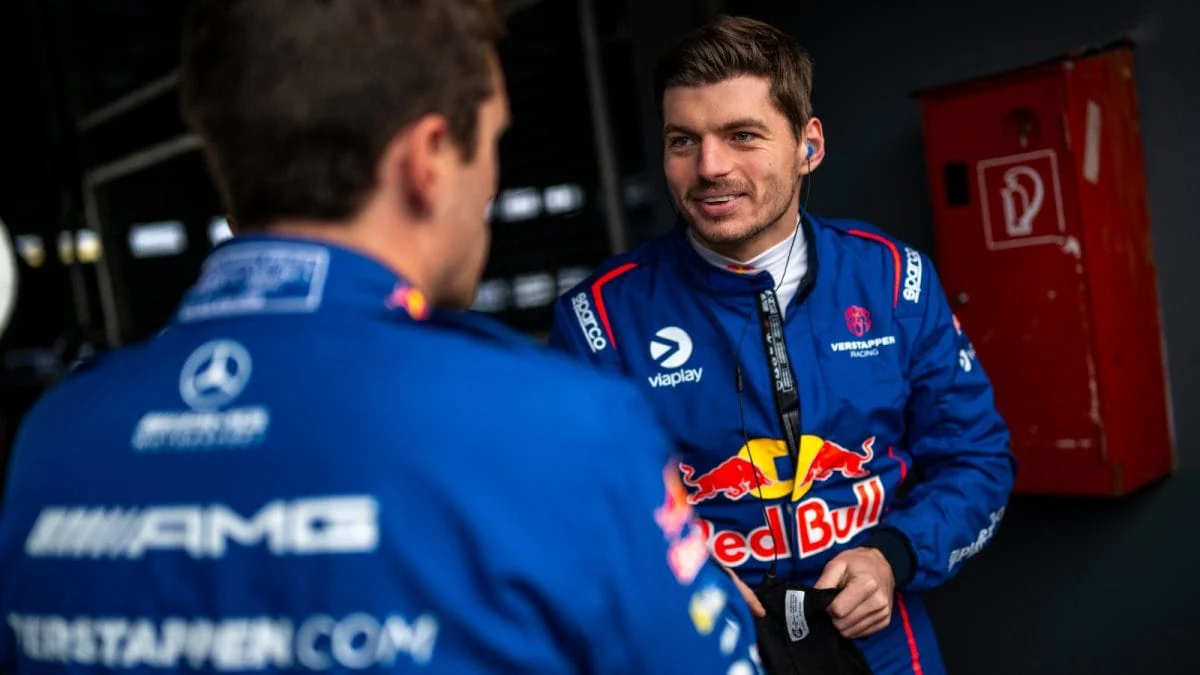
Nürburgring, Germany – May 16, 2026 – In a motorsport landscape often characterized by rigid specialization, four-time Formula 1 World Champion Max Verstappen is once again charting his own audacious course. On the eve of one of racing’s most brutal and revered challenges – the Nürburgring 24 Hours – the Red Bull Racing ace has defiantly declared his refusal to be confined solely to the pinnacle of single-seater racing. “I don’t need to be only an F1 driver, I can also do other things,” Verstappen asserted, setting the stage for a monumental weekend where he aims to conquer the legendary Nordschleife in a Red Bull-backed Mercedes-AMG GT3 car.
Verstappen, whose relentless pursuit of victory has reshaped the F1 record books, has never been one to shy away from external scrutiny. Criticism, accusations of distraction, or concerns over his commitment to Formula 1 have consistently fallen on deaf ears. For the 28-year-old Dutchman, motorsport is a vast, interconnected realm, and his obsession stretches far beyond the confines of the Grand Prix grid. This weekend, his foray into the "Green Hell" is not merely a side project; it is a profound statement about his holistic vision for his career and his unwavering passion for every facet of racing.
The Main Facts: A Champion’s Unconventional Path
Max Verstappen’s decision to tackle the Nürburgring 24 Hours, a gruelling endurance race on arguably the world’s most demanding circuit, is a testament to his singular ambition. As a dominant four-time F1 World Champion by 2026, he has already achieved a level of success that many drivers only dream of. Yet, instead of resting on his laurels or focusing exclusively on securing further F1 titles, Verstappen is actively seeking new proving grounds.
His entry into the Nürburgring 24 Hours with a Red Bull-backed Mercedes-AMG GT3 car represents a significant departure from the norm for an active, top-tier Formula 1 driver. While F1 stars of yesteryear often dabbled in various disciplines, modern F1 drivers are typically bound by intense schedules and contractual obligations that discourage such ventures. Verstappen, however, is carving out an exception, driven by a deep-seated desire to emulate his father, Jos Verstappen, and to explore the broader spectrum of motorsport challenges he cherished as a child.
The Nürburgring Nordschleife, a 25.378-kilometre behemoth of a track combining the modern Grand Prix circuit with the historic "Green Hell," presents an unparalleled test of skill, endurance, and nerve. Over 24 hours, drivers contend with extreme weather shifts, dense multi-class traffic, undulating terrain, blind crests, and an unforgiving lack of run-off areas. Verstappen’s participation elevates the profile of the event and places him in a unique position: should he emerge victorious, he would become the first driver to win the Nürburgring 24 Hours as a Formula 1 world champion, a feat Niki Lauda accomplished before securing his F1 titles. This historical footnote underscores the rarity and significance of Verstappen’s endeavour.
His philosophy is clear: "I’ve done this already for a while, achieved everything I want to achieve. That’s why I want to explore other things and I don’t want to do them when I’m 40 years old. Now is the perfect age to do it." This proactive approach highlights a champion who is not content with singular glory but is instead striving for a comprehensive motorsport legacy.
Chronology: From Sim Rigs to the Green Hell
Verstappen’s journey to the Nürburgring 24 Hours is a fascinating blend of inherited passion, virtual mastery, and relentless real-world application.
The Early Influence of Jos Verstappen: Max’s interest in endurance racing is deeply rooted in his family history. His father, Jos Verstappen, a former Formula 1 driver himself, was also an accomplished endurance racer. Jos competed in events like the Le Mans 24 Hours, instilling in a young Max a broader appreciation for motorsport beyond the open-wheel world. Max has often spoken of watching his father compete in these longer races, igniting a dream to follow in those footsteps. This formative exposure to multi-class, multi-driver competition provided a foundational understanding and respect for endurance challenges that many of his F1 contemporaries might lack.
The Rise of a Virtual Champion: Before his real-world GT3 forays, Verstappen honed his multi-disciplinary racing skills in the virtual realm. A fervent sim racer, he is a prominent member of Team Redline, one of the most successful sim racing outfits globally. Through countless hours of virtual endurance races, often alongside professional sim racers and real-world drivers, Verstappen developed an acute understanding of strategy, traffic management, driver changes, and car behaviour across different categories. His dedication to sim racing is not merely a hobby; it is a serious training ground where he continuously sharpens his reflexes and strategic thinking, making the transition to real-world GT3 racing far more seamless than for someone without such extensive virtual experience. He often claims that his sim racing activities keep him sharp, even when not in the F1 car.
F1 Dominance and Shifting Horizons: Max Verstappen’s Formula 1 career has been nothing short of meteoric. Bursting onto the scene as a teenager, he quickly established himself as a prodigious talent. By 2026, he would have secured four World Championship titles, a testament to his raw speed, aggressive racecraft, and unwavering focus. Having conquered F1 with Red Bull Racing, racking up numerous wins, poles, and records, Verstappen has reached a point where his hunger for fresh challenges has intensified. The feeling of having "achieved everything" he set out to do in F1 is a powerful motivator for looking beyond the Grand Prix calendar.
Initial Forays into GT3 Racing: Verstappen’s real-world GT3 career began with an impressive debut. In September of the previous year (2025), he stunned the GT3 paddock by winning the NLS 9 four-hour race on the Nürburgring Nordschleife. Competing in a Ferrari 296 GT3 for Emil Frey Racing, his performance was met with widespread admiration, proving his virtual skills translated effortlessly to the demands of a powerful, heavy GT car on one of the world’s most unforgiving circuits. This victory was not a fluke; it demonstrated his adaptability and innate racing talent.
Earlier in the current year (2026), Verstappen continued his Nürburgring exploits. His team again crossed the line first in another NLS race at the Nürburgring. However, their triumph was later overturned due to a technical infringement, a minor setback that only fueled his determination rather than diminishing it. These experiences, both triumphant and challenging, have served as crucial preparation for the ultimate test that awaits him this weekend: the full 24-hour endurance race. His extensive preparation over the past 12 months, including these NLS outings and countless hours of simulator work, underscores his serious intent.
Supporting Data: Unpacking the Challenge
Verstappen’s ambition is set against the backdrop of one of motorsport’s most formidable arenas, demanding a deep dive into the nature of the Nürburgring, GT3 racing, and the historical context of his undertaking.
The Nürburgring Nordschleife: The Green Hell: The Nürburgring Nordschleife is not just a track; it’s a living legend. Spanning 20.8 kilometres with over 70 corners, dramatic elevation changes of 300 metres per lap, and narrow sections bordered by Armco barriers, it earned its infamous moniker "The Green Hell" from Sir Jackie Stewart. The 24 Hours race uses a combined circuit, incorporating parts of the modern Grand Prix track with the historic Nordschleife, bringing the total length to 25.378 km. Its sheer length means weather can vary dramatically from one section to another, with rain falling on one part while another remains dry. This requires constant adaptation from drivers and strategic agility from teams. The Nordschleife punishes mistakes ruthlessly, demanding absolute precision, bravery, and an intimate understanding of its nuances. It’s a circuit where local knowledge often proves invaluable, making Verstappen’s recent NLS outings even more critical for his preparation.
GT3 Racing vs. Formula 1: The transition from a Formula 1 car to a GT3 machine is significant. An F1 car is a lightweight, high-downforce, open-wheel prototype designed for ultimate speed and agility. GT3 cars, such as the Mercedes-AMG GT3 Verstappen will drive, are derived from production sports cars, albeit heavily modified for racing. They are significantly heavier, have less aerodynamic grip, and rely more on mechanical grip and robust braking. The driving style required is fundamentally different: F1 demands precision and exploiting every inch of track, while GT3 racing often involves more body roll, careful throttle application, and managing the car over long stints. Endurance racing also introduces variables like refuelling, tyre changes, driver changes, and dealing with significant traffic from slower classes, all of which are alien to F1. Verstappen’s adaptability to these differences highlights his comprehensive skill set.
The Demands of 24-Hour Endurance: A 24-hour race is a marathon, not a sprint. It tests every aspect of a racing team and its drivers. Beyond the mechanical stress on the car, drivers face extreme physical and mental fatigue, particularly during night stints when visibility is poor, and concentration must remain absolute. Strategy plays a crucial role: managing tyre wear, fuel consumption, and the optimal timing of pit stops and driver changes. The Nürburgring 24 Hours, with its multi-class field (often over 150 cars), adds another layer of complexity, requiring constant awareness and respectful overtaking of slower machinery, all while maintaining competitive pace against rivals in the same class.
Historical Context and F1 Driver Crossovers: While Verstappen’s active F1 participation makes his Nürburgring 24 Hours bid unique, F1 drivers crossing over into endurance racing is a storied tradition. Jim Clark, Graham Hill (who achieved the Triple Crown by winning the Monaco Grand Prix, Indianapolis 500, and Le Mans 24 Hours), and more recently Fernando Alonso (who won Le Mans and Daytona) are prime examples. Mark Webber, after his F1 career, found success in endurance prototypes. Juan Pablo Montoya has also competed in various endurance events. However, few active F1 world champions, especially in the prime of their dominant era, have attempted such a demanding event. Niki Lauda’s Nürburgring 24 Hours victory came in 1973, two years before his first F1 title. Verstappen’s attempt thus places him in a highly exclusive and historically significant category, further burnishing his credentials as a truly versatile racer.
Red Bull’s Strategic Support: The "Red Bull-backed Mercedes-AMG GT3 car" is a significant detail. While Mercedes-AMG is a rival manufacturer in F1, Red Bull’s support for Verstappen’s GT3 venture underscores their broader commitment to motorsport and their star driver’s personal ambitions. It’s not just a marketing exercise; it reflects a progressive understanding that allowing their top talent to pursue other racing passions can enhance, rather than detract from, their overall performance and motivation. This collaborative approach, even across brand lines, speaks volumes about the value Red Bull places on Verstappen’s well-being and satisfaction.
Official Responses: A Champion’s Conviction
Max Verstappen’s decision has naturally generated significant discussion within the motorsport community, prompting various responses.
Verstappen’s Unwavering Philosophy: At the core of the narrative are Verstappen’s own words, articulated with characteristic directness. His assertion, "I don’t need to be only an F1 driver, I can also do other things," is not merely a retort to critics but a deeply held conviction. He views motorsport as a holistic discipline, where skills learned in one category can enhance performance in another. His desire to tackle "all the big endurance races," a dream nurtured since childhood watching his father, speaks to a passion that transcends contractual obligations or perceived limitations. His insistence on pursuing these challenges "now" rather than waiting until he’s "40 years old" reflects a pragmatic understanding of a racing driver’s physical and mental prime. This is a champion taking control of his narrative and defining his legacy on his own terms.
Red Bull Racing’s Progressive Stance: While Christian Horner and Helmut Marko are renowned for their intense focus on Formula 1, Red Bull Racing’s apparent support for Verstappen’s Nürburgring venture signals a progressive approach. It suggests a recognition that a happy, motivated driver is a fast driver. Instead of viewing it as a distraction, Red Bull seems to embrace it as a way to keep their star sharp, engaged, and prevent burnout from the relentless F1 schedule. The fact that the GT3 car is "Red Bull-backed" indicates official endorsement and potentially even logistical support, showcasing a forward-thinking team management strategy that prioritizes driver satisfaction and personal growth alongside F1 success. While no direct quotes from Horner or Marko were in the original article, their implied approval through the branding is telling.
Paddock and Community Reactions: Within the Formula 1 paddock, reactions are likely mixed but largely respectful. Other drivers might express admiration for Verstappen’s courage and versatility, perhaps even envy for his ability to pursue such projects. Team principals might voice cautious concern over potential injury or fatigue, but given Verstappen’s proven resilience and the evident benefits to his motivation, any criticism would likely be muted. The endurance racing community, on the other hand, is generally welcoming of high-profile drivers. Verstappen’s participation brings global attention to the Nürburgring 24 Hours, validating the event’s stature and exciting fans of all motorsport disciplines. While there might be initial skepticism from seasoned GT3 racers about an F1 driver’s ability to adapt, his previous NLS successes have undoubtedly earned him respect.
Implications: Shaping a Legacy Beyond F1
Max Verstappen’s Nürburgring 24 Hours bid carries significant implications, not only for his personal career but also for the broader landscape of motorsport.
Impact on F1 Performance and Legacy: For Verstappen, this venture is unlikely to detract from his Formula 1 performance. If anything, the mental and physical demands of endurance racing, coupled with the varied driving styles required, could make him an even more complete and adaptable driver. The experience of managing traffic, different car characteristics, and extended stints in challenging conditions will only add to his already formidable skill set. It prevents stagnation and keeps his competitive fires burning fiercely. Furthermore, conquering disciplines beyond F1 will undoubtedly solidify his legacy as one of motorsport’s true greats, placing him in the pantheon of versatile champions who excelled across various categories, much like his heroes of the past. He wouldn’t just be an F1 champion; he’d be a racing legend.
Influence on Other Drivers: Verstappen’s bold move could serve as a powerful precedent for other Formula 1 drivers. If he continues to perform at the highest level in both F1 and endurance racing, it might encourage a new generation of F1 stars to explore similar multi-disciplinary careers. It challenges the modern F1 paradigm of hyper-specialization, potentially opening doors for drivers to pursue their diverse passions without necessarily sacrificing their F1 careers. This could lead to a resurgence of crossover talent, enriching both F1 and other racing series.
Future Aspirations: The Triple Crown and Beyond: This Nürburgring 24 Hours challenge is clearly part of a larger plan. Verstappen has explicitly mentioned wanting to do "all the big endurance races." This strongly hints at aspirations for events like the Le Mans 24 Hours and the Daytona 24 Hours, putting him on a potential path towards achieving motorsport’s unofficial "Triple Crown" (Monaco GP, Indy 500, Le Mans 24 Hours – though his focus might be on a different endurance-centric triple crown). His current age of 28 is indeed "perfect" for undertaking such a demanding multi-year project, allowing him to gain experience and chase these dreams while still at the peak of his physical and mental prowess.
Broader Motorsport Appeal: Max Verstappen’s participation undeniably shines a brighter spotlight on endurance racing and the Nürburgring 24 Hours itself. His global F1 fanbase will tune in, potentially exposing millions of new viewers to the thrill and complexity of GT racing and the unique spectacle of the Nordschleife. This increased visibility can attract new sponsors, talent, and interest to these crucial pillars of motorsport, benefiting the entire ecosystem.
The Outcome: A New Chapter, Regardless of Victory: Whether Max Verstappen lifts the trophy at the end of the Nürburgring 24 Hours or faces unforeseen challenges, the very act of competing is a victory in itself. It is a profound declaration of his identity as a racer, unbound by the conventional expectations of his primary discipline. He is not merely an F1 driver; he is a motorsport enthusiast, a challenger of limits, and a champion who seeks to conquer every facet of the sport he loves. The "Green Hell" awaits, and with Max Verstappen at the wheel, a new chapter in racing history is poised to be written.
