

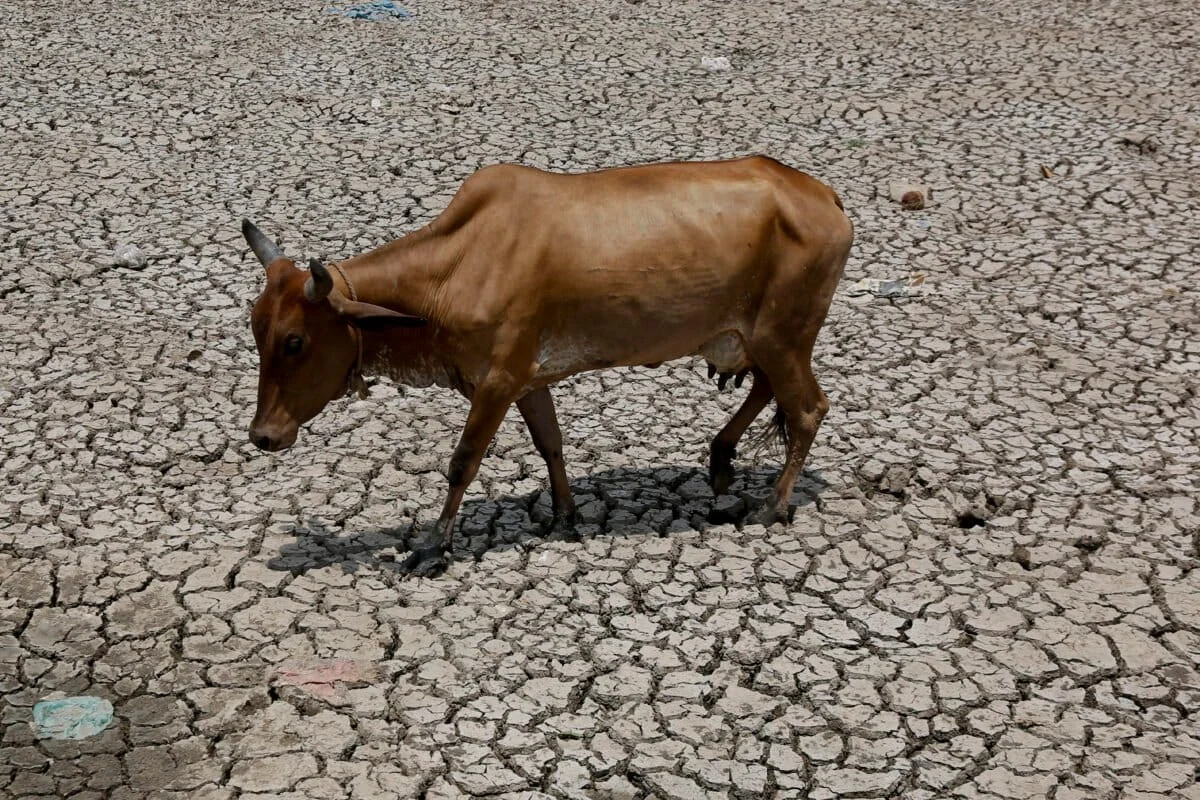
SULTANPUR, UTTAR PRADESH – For Jagdish Agrahari, a resident of Sultanpur in Ayodhya district, the dream of a stable secondary income through dairy farming is rapidly turning into a financial nightmare. In late 2024, Agrahari invested in a modest herd: four Jersey cows, one Holstein Friesian, and three buffaloes. By March 2025, the "weather-changing season"—once a predictable transition—became a lethal trap. A sudden, sharp spike in temperature proved too much for his high-yield Jersey cows.
Agrahari spent ₹20,000 on medical treatments in a desperate attempt to save his livestock. While he managed the costs by dipping into the earnings of his family’s scrap shop, his story is a microcosm of a much larger, systemic vulnerability. Across India, nearly 80 million rural households rely on cattle rearing as their primary livelihood. For the vast majority, there is no scrap shop to fall back on; there is only the dwindling yield of a heat-stressed animal.
As climate change accelerates, the backbone of India’s rural economy is fracturing. What was once the "White Revolution"—a success story that saw milk production leap from 80 million tonnes in 2000 to 239 million tonnes in 2023—is now facing an existential threat from rising mercury levels and ecological degradation.
Main Facts: A Sector Under Siege
The scale of the crisis is documented in a recent, comprehensive study by the Council on Energy, Environment and Water (CEEW). The findings are stark: 54% of buffalo rearers in India report significant climate-related impacts on their livestock. The vulnerability extends across breeds, with 50% of those rearing crossbred or exotic cattle (like Agrahari’s Jerseys) and 41% of indigenous cattle rearers reporting similar distress.
The impacts are multi-dimensional. Climate change is not merely "making it hot"; it is triggering a cascade of biological and economic failures:

- Reduced Productivity: Heat stress directly suppresses milk yield.
- Health and Mortality: Increased rates of skin infections, respiratory distress, and calf mortality.
- Reproductive Failure: A phenomenon known as "silent heat" is making breeding nearly impossible during summer months.
- Economic Attrition: Shorter lactation periods and earlier animal "retirement" are forcing farmers to abandon cattle, fueling India’s growing stray cattle crisis.
In Uttar Pradesh, the nation’s leading milk producer, the stakes are highest. The state’s bovine population is currently the frontline in a battle against a warming atmosphere.
Chronology of a Changing Climate
The destabilization of the dairy sector has followed a predictable yet accelerating timeline over the last two decades.
2000–2015: The Growth Phase
India solidified its position as the world’s largest milk producer. High-yield exotic breeds like Holstein Friesians and Jerseys were widely introduced to boost output. During this period, climate fluctuations were viewed as manageable anomalies.
2016–2021: The Emergence of Heat Stress
Extended summers and "short winters" began to impact the health of exotic breeds. Reports of reduced fat content in milk during peak summer months became common. Farmers began reporting higher expenditures on cooling (fans and water) and veterinary care.
2022–2024: The Breaking Point
In 2022, extreme weather events killed over 69,000 livestock animals across India. The frequency of heatwaves in March and April—months previously considered temperate—shattered the traditional agricultural calendar.
2025 and Beyond: The New Normal
By early 2025, as reported from districts like Agra, Moradabad, and Ghazipur, the "seasonal" drop in milk production has become a permanent economic depression for small-scale farmers. The window for successful breeding has narrowed, and the cost of fodder has reached record highs.
Supporting Data: The Biological and Economic Toll
The biological vulnerability of cattle is particularly acute in buffaloes. Despite being indigenous to the region, buffaloes possess thick, dark skin that absorbs more solar radiation and fewer sweat glands than cows. According to the CEEW report, this limits their ability to thermoregulate, leading to severe distress.
The Yield Gap
Anil Tyagi, who operates a dairy cooperative in Agra, notes that during peak summer, a buffalo’s daily yield typically drops from five liters to three. Crossbred cows see a similar 25% reduction. For Nipendra Kumar, a dairy farmer in Moradabad with 15 animals, the financial blow is devastating. "If I make a profit of ₹50,000 in the winter, it drops to ₹25,000 in the summer," he says. He also reports alarming symptoms in his herd: "Sometimes, traces of blood appear in the milk, and heatwaves lead to cases of sour milk and breathlessness."
The Fodder and Land Crisis
The heat is compounded by a scarcity of nutrition. Approximately 70% of households in Uttar Pradesh report that dry fodder is now unaffordable. Green fodder is equally out of reach for 48% of the state’s farmers.
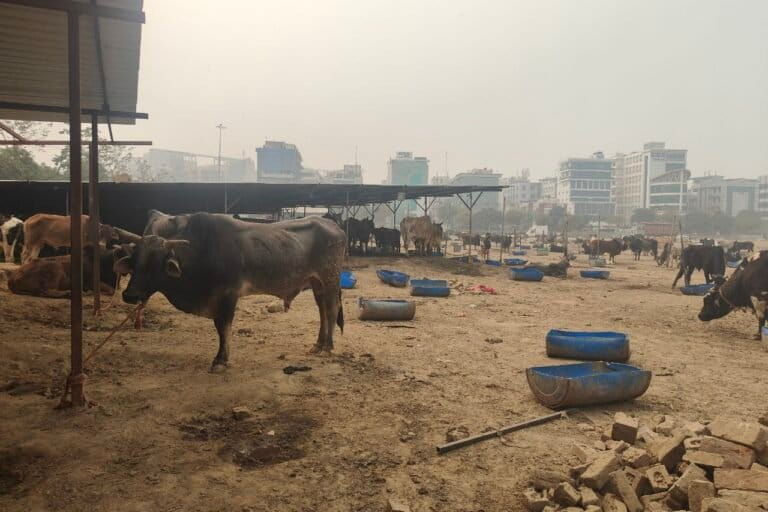
This scarcity is driven by the loss of common grazing lands. Dhananjay Goutam, a rearer from Ghazipur, points out that traditional water bodies where buffaloes once cooled off have dried up or been encroached upon for infrastructure projects like the Purvanchal Expressway. Deprived of natural cooling and grazing, cattle are now confined to brick sheds with tin or cement roofs that act as heat traps, further exacerbating their stress.
The Logistics Chain
The heat also ravages the supply chain. Rahul Kumar, a milk procurement officer in Amroha, reports that daily collection on his route drops from 35,000 liters to 20,000 liters in the summer. To prevent the milk from spoiling in the heat, transit routes must be shortened, and unloading times have been slashed from ten minutes to seven.
Official Responses and Adaptation Strategies
Government agencies and research institutes are scrambling to provide a roadmap for a "climate-smart" dairy sector.
The Push for Artificial Insemination (AI)
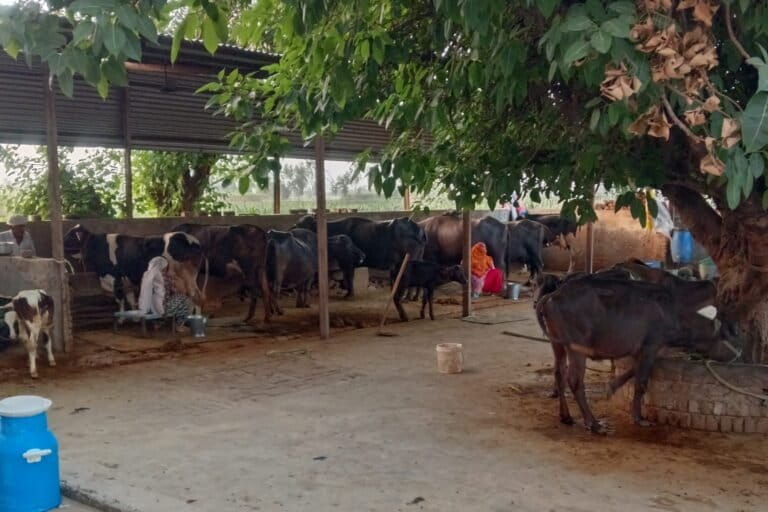
The Department of Animal Husbandry and Dairying (DAHD) is promoting AI not just for yield, but as a tool for climate adaptation. The goal is to produce high-quality female calves that can better withstand local conditions. However, adoption remains lopsided. While 94% of UP farmers are aware of AI, only 48% utilize it, often due to the high failure rate during heatwaves.
The "Silent Heat" Challenge
Experts like Ashutosh Tripathi from Sardar Vallabhbhai Patel University of Agriculture explain that heat stress causes "silent heat," where animals ovulate but do not show the behavioral signs (like grunting or mounting) that farmers use to time insemination. This biological "cloaking" makes breeding a game of chance between April and September.
The Return to Indigenous Breeds
A growing chorus of scientists is advocating for a shift away from exotic breeds. Dr. Tripathi emphasizes that indigenous Indian breeds possess a natural, evolutionary resilience. "I have been able to get my indigenous cattle conceived even in May and June, which is not possible in Holstein Friesian cows," he notes. His recommendation is a shift in philosophy: prioritizing sustained, average yields over a lifetime rather than chasing peak outputs from fragile, high-maintenance exotic breeds.
Institutional Gaps
Despite the urgency, the Vasudha Foundation finds that only 44 of Uttar Pradesh’s 75 districts have heat action plans or advisories. The implementation of these plans remains uneven, leaving the most vulnerable small-scale farmers without a safety net.
Implications: A Precarious Future
The long-term outlook for India’s dairy sector is sobering. The Food and Agriculture Organization (FAO) and the World Meteorological Organisation (WMO) warn that by 2100, up to 75% of global livestock could be exposed to dangerous heat conditions. More specifically, a study published in The Lancet projects that rising temperatures could slash milk production by 25% in India’s arid and semi-arid regions by 2085.
The implications extend beyond the economy to nutritional security. For millions of Indians, milk is the primary source of animal protein. A collapse in production would lead to price volatility and increased malnutrition in rural areas.

Furthermore, the "retirement" of unproductive, heat-stressed cattle is accelerating the stray cattle crisis. This creates a vicious cycle: abandoned animals damage crops, leading to further economic loss for farmers already struggling with livestock yields.
The story of Jagdish Agrahari ended in tragedy. By the final week of April 2025, the Jersey cow he had spent ₹20,000 to save succumbed to the heat. For Agrahari, it was a loss of capital; for India, it is a warning. As the planet warms, the "White Revolution" requires a second, more resilient act—one that prioritizes the biological limits of the animal and the economic limits of the farmer over the pursuit of sheer volume. Without a rapid shift toward climate-resilient breeds and infrastructure, the milk that fueled India’s growth may soon become a luxury of the past.
