

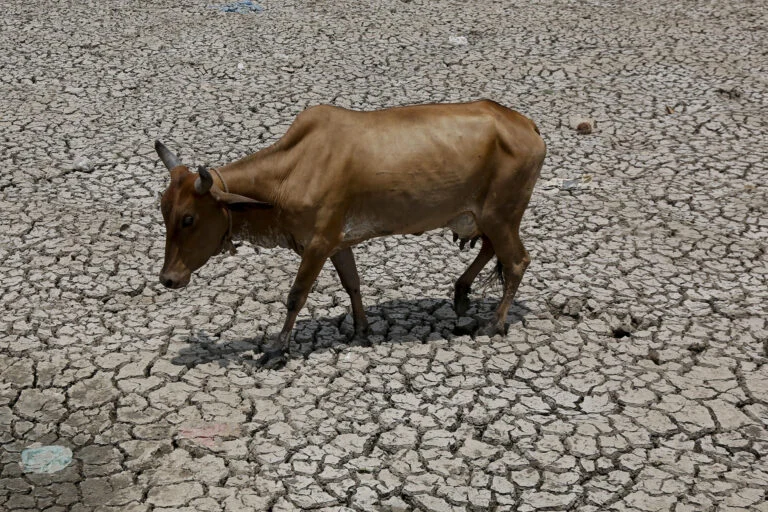
The "White Revolution" that transformed India into the world’s largest milk producer is facing its most formidable adversary to date: a rapidly warming planet. For millions of rural households, the bovine population is not just a source of nutrition but a living bank account. However, as temperatures soar and traditional seasons blur, the biological limits of these animals—and the financial limits of their owners—are being pushed to the breaking point.
Main Facts: A Sector Under Siege
India has maintained its position as the global leader in milk production since 1998. The scale of the industry is staggering, with production surging from approximately 80 million tonnes in 2000 to 239 million tonnes in 2023. This growth has been anchored by nearly 80 million rural households, many of whom are small-scale or marginal farmers with fewer than five animals.
In states like Uttar Pradesh, the nation’s top milk producer, the dairy sector is the backbone of the rural economy. Yet, a recent study by the Council on Energy, Environment and Water (CEEW) reveals a troubling trend: 54% of buffalo rearers and 50% of those with crossbred or exotic cattle report significant climate-related impacts on their livestock. These impacts are not merely statistical; they manifest as increased mortality, reduced milk yields, and a breakdown in the reproductive cycles of the animals.
The crisis is characterized by three primary stressors:

- Thermal Stress: High ambient temperatures and humidity that exceed the animal’s ability to regulate body heat.
- Resource Scarcity: A burgeoning fodder crisis where both green and dry fodder have become prohibitively expensive or unavailable.
- Biological Disruption: The emergence of "silent heat" and other reproductive failures that shorten the productive lifespan of cattle.
Chronology: From Seasonal Shifts to Year-Round Crisis
The struggle of Jagdish Agrahari, a resident of Sultanpur in Ayodhya district, serves as a poignant timeline for the current crisis. In August 2025, Agrahari invested in a mixed herd—Jersey cows, a Holstein Friesian, and buffaloes—to supplement his income. By March, typically a transition month, a sudden and premature spike in temperature devastated his herd.
Historically, the Indian dairy calendar followed a predictable rhythm. Winter was the season of abundance, with high milk yields and successful breeding. Summer was a period of management, where farmers used traditional methods like thatch roofing and proximity to water bodies to keep animals cool.
However, the timeline has shifted:
- The Early Heat (March–April): As seen in Agrahari’s case, the "weather-changing season" now features extreme temperature spikes. Exotic breeds like Jerseys and Holstein Friesians, prized for high yields, are the first to succumb as they lack the genetic resilience to handle sudden heat. Agrahari spent ₹20,000 on treatment in April; by the end of the month, his cow was dead.
- The Peak Summer (May–June): This period has become a survival gauntlet. Temperatures in Uttar Pradesh now frequently hover near 45–48°C. During these months, daily milk collection drops precipitously. Procurement officers in districts like Amroha report collection falling from 35,000 litres to 20,000 litres—a 43% decline in just a few weeks.
- The Monsoon Disruption: Anticipated El Niño patterns and erratic monsoons now prolong the heat stress well into what should be the cooling rainy season, preventing animals from recovering their body condition.
Supporting Data: The Science of Thermal Stress
The vulnerability of India’s cattle is rooted in biology. Buffaloes, which contribute significantly to India’s milk pool, are particularly disadvantaged. Their thick, dark skin absorbs more solar radiation, and they possess fewer sweat glands than cattle. According to the CEEW report, this makes them highly susceptible to heat-induced restlessness and reduced productivity.
Yield and Profit Loss
Data from individual farmers paints a grim picture of the economic fallout:
- Yield Reduction: Anil Tyagi, a dairy cooperative lead in Agra, notes that buffaloes yielding five litres daily drop to three litres during heatwaves. Cows producing four litres typically lose at least 25% of their output.
- Profit Margins: Nipendra Kumar, a dairy farmer in Moradabad, reports that his winter profit of ₹50,000 collapses to ₹25,000 during the summer. This 50% reduction is driven by the dual blow of lower yields and higher input costs for cooling and nutrition.
The Fodder Inflation
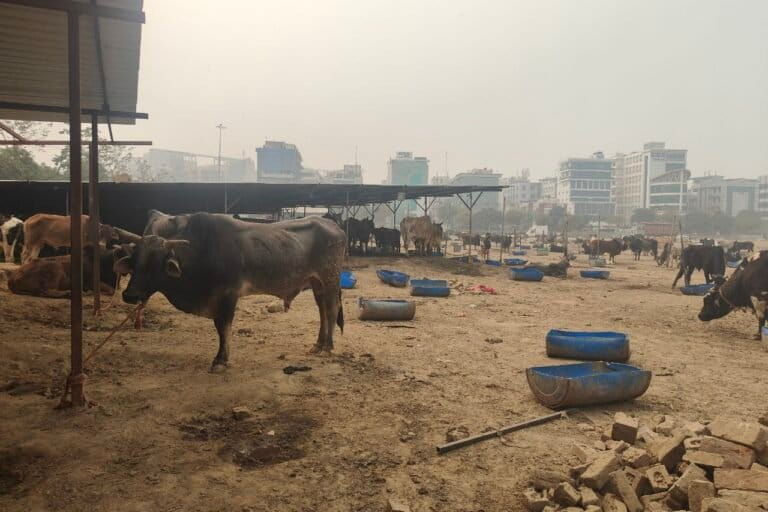
The CEEW study highlights a deepening "fodder famine." In Uttar Pradesh, 48% of households find green fodder unaffordable, while a staggering 70% report dry fodder as being beyond their financial reach. This is compounded by the loss of common grazing lands. In districts like Ghazipur, massive infrastructure projects like the Purvanchal Expressway have claimed the open spaces and water bodies that buffaloes traditionally used for wallowing—a vital natural cooling mechanism.
The Reproductive Wall
Climate change is also a "silent" killer of future yields. "Silent heat" occurs when high temperatures suppress the behavioral signs of ovulation. Farmers rely on grunting or mounting behavior to time Artificial Insemination (AI). When these signs vanish, the window for breeding is missed. A study projected in The Lancet warns that rising temperatures could slash milk production by 25% in India’s arid regions by 2085 if these reproductive and thermal stressors are not addressed.
Official Responses: Policy vs. Implementation
The Indian government and various state agencies have recognized the threat, but the response remains a work in progress.
Artificial Insemination (AI) and Breed Management
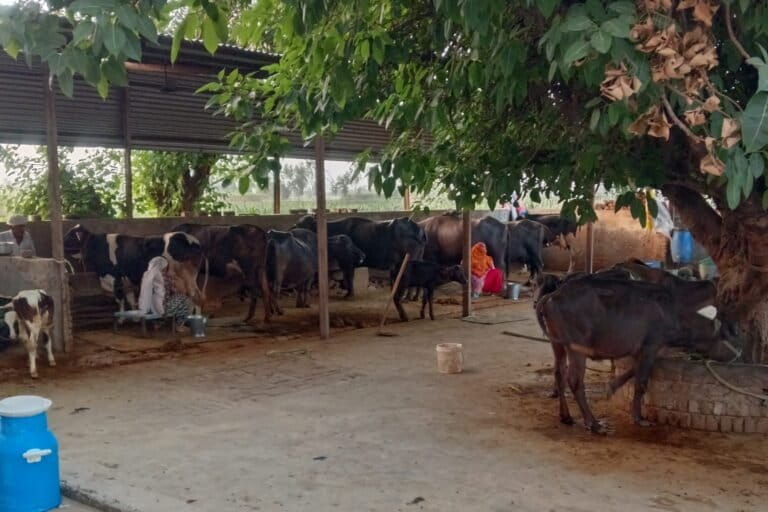
The Department of Animal Husbandry and Dairying (DAHD) is aggressively promoting AI, not just for yield, but as a tool for climate resilience. The goal is to produce high-quality female calves and potentially shift the genetic makeup of the national herd. While 94% of farmers in Uttar Pradesh are aware of AI, only 48% currently utilize it, suggesting a gap in trust or accessibility.
Heat Action Plans (HAPs)
Uttar Pradesh is one of 23 states identified as heatwave-prone by the India Meteorological Department (IMD). However, a Vasudha Foundation analysis found that while 44 districts have some form of heat advisory, only two of the state’s 75 districts have comprehensive, district-based climate action plans. This indicates a lag between national policy and local execution.
The Push for Indigenous Breeds
Experts like Ashutosh Tripathi from Sardar Vallabhbhai Patel University of Agriculture and Technology are advocating for a "return to roots." Indigenous Indian breeds (Desi cows) have evolved over millennia to survive the subcontinent’s harsh climate. While their peak milk yield may be lower than a Holstein Friesian, their "lifetime yield" is often higher because they do not require expensive cooling infrastructure and are resistant to local diseases that thrive in the heat.
Implications: The Future of the White Revolution
The intersection of climate change and the dairy economy has far-reaching implications for India’s social and economic fabric.

The Stray Cattle Crisis
One of the most visible and politically sensitive implications is the rise of stray cattle. When a cow’s lactation period shortens or it fails to conceive due to heat stress, it becomes a financial liability. Small-scale farmers, unable to afford the "dry" period (when the cow is not producing milk), often have no choice but to abandon the animal. This has led to a surge in stray populations, which in turn damage crops and cause road accidents, creating a vicious cycle of rural distress.
Nutritional and Livelihood Security
For the 80 million households involved, cattle are a "buffer stock" against crop failure. As climate change makes farming more unpredictable, the failure of the dairy sector removes the last safety net for the rural poor. The loss of income directly impacts nutritional security, as milk is a primary protein source for millions of Indian children.
The Infrastructure Gap
The "cooling divide" is becoming a new form of economic inequality. Large-scale dairy farms can afford industrial fans, misting systems, and high-quality protein supplements to mitigate heat stress. Smallholders, like Dhananjay Goutam in Ghazipur, are forced to keep animals in tin-roofed sheds that act as ovens. Without state-supported cooling centers or subsidized "green" housing for cattle, the dairy industry may undergo a painful consolidation, pushing small farmers out of the market.
Conclusion
India’s dairy success story was built on the resilience of the smallholder. However, the current trajectory of global warming suggests that resilience has a thermal limit. To save the White Revolution, the focus must shift from merely increasing "yield per animal" to ensuring "climate-resilience per household." This will require a massive investment in fodder banks, the revitalization of common grazing lands, and a strategic pivot toward indigenous breeds that can stand the heat of a changing world. As Jagdish Agrahari’s experience shows, the cost of inaction is not just measured in litres of milk, but in the very survival of the rural economy.
