

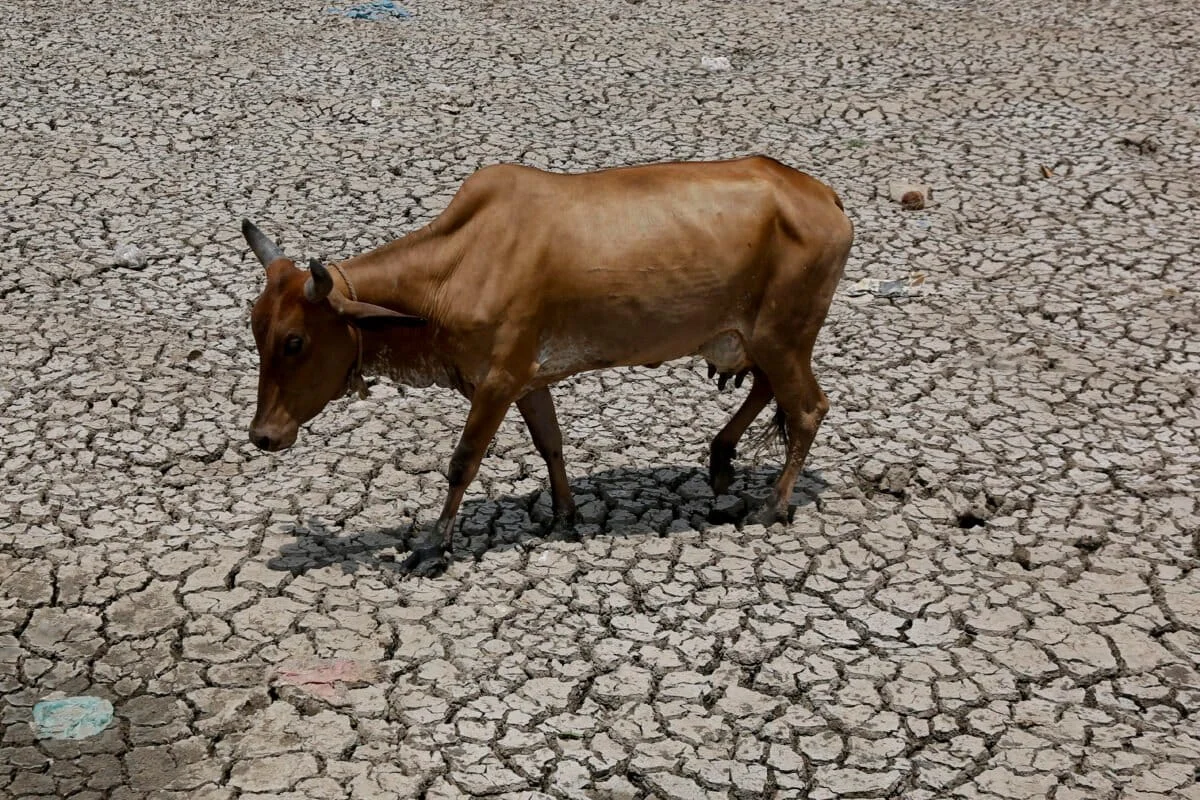
SULTANPUR, UTTAR PRADESH – For Jagdish Agrahari, a resident of Sultanpur in Uttar Pradesh’s Ayodhya district, the dream of a stable supplementary income through dairy farming is cooling as fast as the rising mercury. In August 2025, Agrahari invested in a modest herd: four Jersey cows, one Holstein Friesian, and three buffaloes. By March, during the volatile transition into the summer season, his Jersey cows—a breed prized for high yield but sensitive to environmental shifts—began to falter.
As temperatures surged, the animals failed to acclimatize. The resulting veterinary bill reached ₹20,000, a staggering sum for a rural entrepreneur. While Agrahari managed to cover the costs through a family-run scrap business, he represents a fortunate minority. For the nearly 80 million rural households across India that rely on cattle rearing as their primary or sole lifeline, the intersection of climate change and animal husbandry is becoming a financial abyss.
Main Facts: A Sector at the Breaking Point
India has been the world’s leading milk producer since 1998, a testament to a "White Revolution" that transformed rural landscapes. Between 2000 and 2023, milk production skyrocketed from approximately 80 million tonnes to 239 million tonnes. However, this growth trajectory is now colliding with the harsh realities of a warming planet.
The crisis is particularly acute in Uttar Pradesh, the nation’s top milk-producing state. Here, the "heat stress" on bovines is no longer a seasonal inconvenience but a systemic threat. According to a landmark study by the Council on Energy, Environment and Water (CEEW), the impact is widespread:
- 54% of buffalo rearers report climate-related distress in their herds.
- 50% of those rearing crossbred or exotic cattle (like Jerseys and Holstein Friesians) report similar impacts.
- 41% of indigenous cattle rearers are also seeing changes, though these breeds remain more resilient.
The biological toll on the animals includes increased disease rates, chronic restlessness, and rising mortality. Economically, this translates to reduced productivity, shorter lactation periods, and the premature "retirement" of cattle, which is inadvertently fueling India’s burgeoning stray cattle problem.

Chronology: From Seasonal Fluctuations to Year-Round Distress
The dairy crisis in India follows a predictable but intensifying annual timeline, where the window of "optimal production" is shrinking.
The Winter Peak and the March Pivot
Traditionally, the winter months represent the "flush season" for Indian dairy. Cooler temperatures allow for maximum milk yield and higher fat content. For farmers like Nipendra Kumar of Moradabad, a member of the Banas Dairy cooperative, winter can yield a monthly profit of ₹50,000. However, as March approaches, the "weather-changing season" now brings sudden, extreme temperature spikes rather than a gradual transition. This is when exotic breeds, unsuited to the sub-tropical heat, begin to fall ill.
The Summer Slump (April – June)
During the peak summer months, the dairy economy enters a state of emergency. Buffaloes, which possess thicker, darker skin and fewer sweat glands than cows, struggle to regulate their body temperature. Anil Tyagi, who runs a dairy cooperative in Agra, notes that buffaloes typically producing five liters a day drop to three liters during heatwaves.
The supply chain also feels the heat. Rahul Kumar, a milk procurement officer in Amroha, oversees a 50-kilometer route. In the winter, his route collects 35,000 liters daily. By June, that figure plummets to 20,000 liters—a 43% decrease. To prevent the milk from curdling in the heat, transit times are slashed, and cans are draped in wet jute bags, a desperate race against the sun.
The Long-Term Erosion
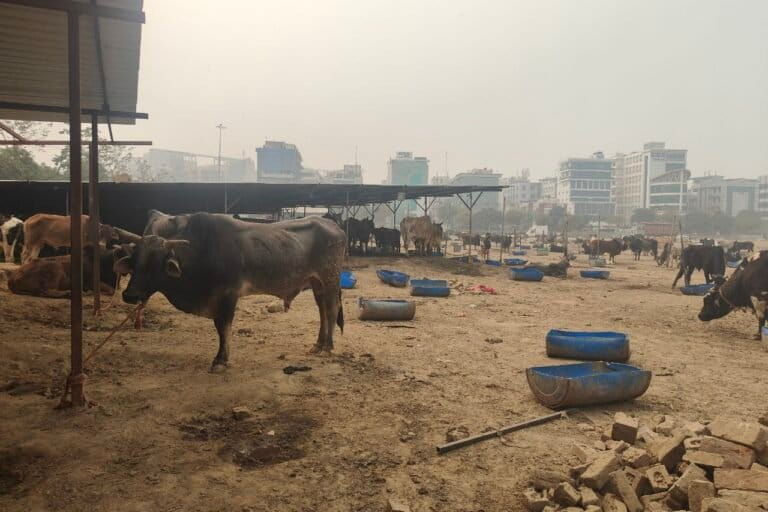
The chronology of this crisis extends beyond a single year. Over the last decade, the loss of common grazing lands and the drying of traditional water bodies (where buffaloes would "wallow" to cool down) has removed the natural infrastructure of heat management. Infrastructure like the Purvanchal Expressway has claimed grazing lands, forcing cattle into cramped, tin-roofed sheds that act as heat traps.
Supporting Data: The Economics of Heat and Fodder
The CEEW study and data from the National Dairy Research Institute (NDRI) provide a sobering statistical backbone to the anecdotes of farmers.
The Fodder Inflation
Heat stress is inextricably linked to a nutrition crisis. When temperatures rise, green fodder becomes scarce and prohibitively expensive.
- 48% of cattle-rearing households in Uttar Pradesh find green fodder unaffordable.
- 70% of households report that dry fodder (husk) has become a major financial burden.
Farmers are forced to switch to sugarcane husk—a low-cost, fibrous alternative that is unfortunately low in protein and difficult for the animals to digest, further lowering milk quality.
The "Silent Heat" Phenomenon
One of the most insidious impacts of climate change is the disruption of the bovine reproductive cycle. Heat stress leads to "silent heat," where an animal ovulates but does not display the behavioral signs (such as grunting or mounting) that farmers use to time breeding.
- Reproductive Failure: Between April and September, buffaloes show almost no visible signs of being ready to breed.
- Financial Loss: A missed breeding cycle means more months of feeding an animal that isn’t producing milk, a cost many small farmers cannot bear.
Productivity Projections
The long-term outlook is increasingly grim. A study published in The Lancet projects that by 2085, rising temperatures could slash milk production by 25% in India’s arid and semi-arid regions. Furthermore, the Food and Agriculture Organization (FAO) warns that by 2100, up to 75% of global livestock could be exposed to dangerous heat conditions.
Official Responses: Policy vs. Reality on the Ground
The Indian government and regional authorities have recognized the threat, but implementation of mitigation strategies remains uneven.
Artificial Insemination (AI) and Breed Management
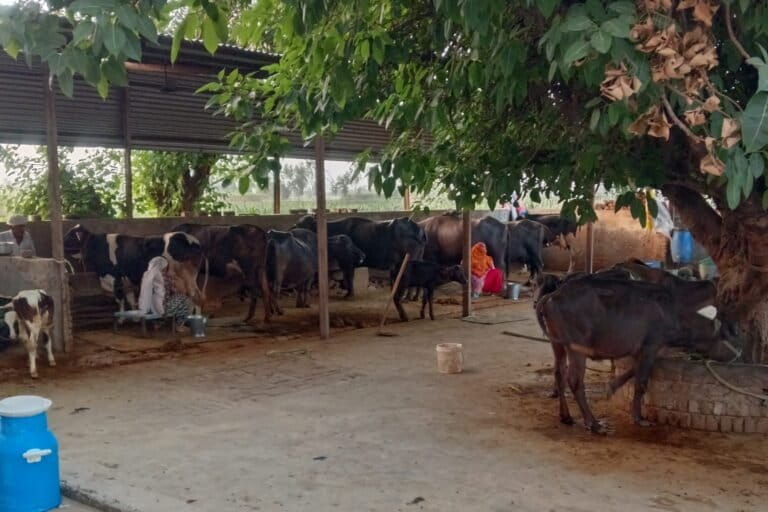
The Department of Animal Husbandry and Dairying (DAHD) is aggressively promoting Artificial Insemination (AI). The goal is twofold: to improve the genetic stock of the cattle for higher yields and to produce more female calves, thereby reducing the number of "unproductive" male cattle that end up as strays. In Uttar Pradesh, 94% of farmers are aware of AI, but only 48% currently utilize it, often due to the difficulty of timing the procedure during periods of heat stress.
Heat Action Plans (HAPs)
The India Meteorological Department (IMD) has categorized Uttar Pradesh as one of 23 heatwave-prone states. While the state has collaborated with national disaster authorities to create Heat Action Plans, the Vasudha Foundation found a significant gap in local implementation. Of Uttar Pradesh’s 75 districts, only 44 have district-level heat advisories, and a mere two have comprehensive climate action plans.
The Push for Indigenous Breeds
Experts like Ashutosh Tripathi from the Sardar Vallabhbhai Patel University of Agriculture and Technology are advocating for a strategic retreat from high-output exotic breeds. Indigenous Indian breeds, while producing less milk per day, possess a natural climate resilience and disease resistance that Jerseys and Holstein Friesians lack. Tripathi’s recommendation is a shift toward "sustained lifetime output" rather than "peak output," arguing that indigenous cattle can conceive even in the height of May and June.
Implications: The Fading Safety Net of Rural India
The crisis in the dairy sector has profound implications for India’s socioeconomic stability. For decades, livestock has served as a "living bank" for the rural poor—an insurance policy against crop failure. Unlike the seasonal income from harvests, milk provides a daily cash flow.
The Collapse of the Buffer
As climate change makes crop farming more volatile, the livestock buffer is simultaneously being eroded. When a cow dies or stops producing milk due to heat, the household loses its primary defense against poverty. The livestock sector’s growth has recently outpaced crop agriculture, making its potential collapse even more dangerous for the national economy.

The Stray Cattle Crisis
There is a direct link between heat stress and the stray cattle roaming India’s highways. When an animal’s productive life is shortened by heat-induced illness or reproductive failure, and when fodder costs become unbearable, many farmers have no choice but to abandon their cattle. This creates a secondary crisis of road accidents and crop damage by stray herds.
Nutritional Security
Beyond economics, the dairy crisis threatens the nutritional security of millions. Milk is a primary source of protein in the Indian diet. A 25% drop in production would not only drive up prices for urban consumers but would likely lead to reduced consumption in the very rural households that produce it.
Conclusion
The story of Jagdish Agrahari ended in tragedy. Despite his investment and his efforts to save his Jersey cow, the animal succumbed to the heat in late April. His experience is a microcosm of a national emergency. As India continues to lead the world in milk production, the foundation of that success—the small-scale rural farmer—is being pushed to the limit. Without rapid adaptation, improved cooling infrastructure, and a potential shift back to indigenous breeds, the "White Revolution" may find itself defeated by a warming world. For the 80 million households watching the mercury rise, the threat is no longer a projection for 2085; it is a reality that is claiming their livelihoods today.
