

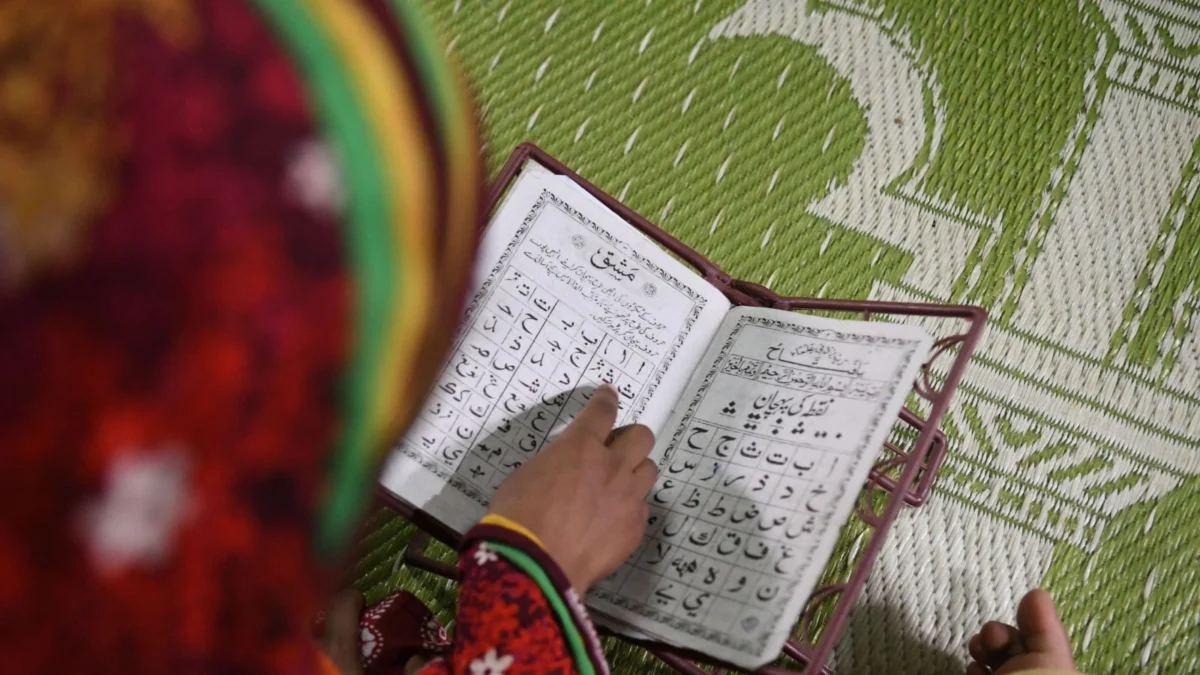
Kolkata, West Bengal – The West Bengal government has sparked a significant controversy by making the singing of "Vande Mataram" mandatory for students in all madrasas across the state during morning assembly prayers. The directive, issued on May 19 and effective immediately, follows a similar order a week prior that mandated the recital of six stanzas of the national song in all schools under the Department of Education. This move, coming amidst a series of policy changes by the newly installed state government, has reignited long-standing debates about national identity, secularism, and minority rights in India.
The order explicitly states: "I am directed to order that in supersession of all previous orders and practices, singing of Vande Mataram during assembly prayers, prior to the commencement of classes, is hereby made mandatory in all Madrasahs [Govt. Model Madrasahs (English Medium)/Recognized Govt. Aided Madrasahs /Approved MSKs / Approved SSKs / Recognized Unaided Madrasahs) under the Minority Affairs and Madrasah Education Department, across the State of West Bengal, with immediate effect." The directive encompasses a wide spectrum of Islamic educational institutions, from community-managed primary schools (Shishu Shiksha Kendras or SSKs) to secondary education centres (Madhyamik Shiksha Kendras or MSKs) and various government-aided and unaided madrasas. This sweeping mandate affects the daily routine and cultural practices of hundreds of thousands of students and educators within the state’s minority community.
Historical Echoes: The Contentious Legacy of Vande Mataram
The national song, "Vande Mataram," meaning "Mother, I bow to you," carries a rich but complex history, deeply intertwined with India’s struggle for independence and its subsequent communal divisions.
Origins and Nationalistic Surge
Composed by Bankim Chandra Chattopadhyay in 1875 and later incorporated into his 1882 Bengali novel "Anandamath," "Vande Mataram" quickly transcended its literary origins to become a powerful anthem of Indian nationalism. Its widespread adoption as a rallying cry gained immense momentum during the anti-Partition of Bengal movement in 1905, orchestrated by Lord Curzon. The song galvanized revolutionaries and freedom fighters, symbolizing the zeal to liberate the motherland from British colonial rule. It invoked a deep sense of patriotism, equating the nation with a divine mother, specifically the Hindu goddess Durga, a powerful symbol in Bengali culture. This imagery resonated deeply with many, cementing the song’s place in the nationalist consciousness.
The Divide: Religious Objections and Political Compromise
However, the very imagery that made "Vande Mataram" so potent for a large section of society also became a point of contention for others. Sections of the Muslim community raised objections, arguing that the song’s invocation of a Hindu goddess was idolatrous and contrary to Islamic monotheistic principles. They perceived it as a religious hymn rather than a purely secular national song.
This religious discomfort led to significant debate within the independence movement. To accommodate these concerns and maintain unity, the Congress Working Committee (CWC) in 1937 adopted a crucial resolution. It decided that only the first two stanzas of "Vande Mataram," which are free from overt religious imagery and focus solely on the beauty of the motherland, would be sung at national gatherings. This compromise was an attempt to bridge the communal divide and ensure broader acceptance, acknowledging the diverse religious sentiments within the burgeoning nation. This historical precedent highlights the long-standing recognition of the song’s divisive potential and the political efforts made to mitigate it. Interestingly, state BJP president Samik Bhattacharya later controversially claimed that if the Congress had not "divided Vande Mataram" in 1937, the country would not have been divided, linking the song’s full recital to a unified India – a perspective that simplifies and reinterprets complex historical events. Netaji Subhas Chandra Bose, a revered figure, also reportedly did not support the partition of the song.
A String of Directives: The New Government’s Policy Shift
The West Bengal government’s "Vande Mataram" mandate is not an isolated incident but part of a broader series of policy shifts introduced by the new administration, which has brought about a palpable sense of unease within the state’s minority community.
Central Impetus: 150th Anniversary Commemoration
The immediate impetus for the renewed focus on "Vande Mataram" at the state level can be traced to a directive issued by the BJP-led Central government in February earlier this year. This directive mandated the full six-stanza recital of "Vande Mataram" at official functions to commemorate the song’s 150th anniversary. While the Supreme Court later clarified that this central directive was "purely advisory" and carried "no penal consequences" for non-compliance, it undoubtedly set a precedent and signaled a national emphasis on the song that state governments, particularly those aligned with the BJP’s ideology, might seek to emulate or even intensify.
West Bengal’s Recent Legislative Landscape
The "Vande Mataram" order follows closely on the heels of several other significant policy changes initiated by the new government in West Bengal, contributing to a perceived pattern of actions impacting minority communities:
Animal Slaughter Control Act, 1950 (Strict Enforcement from May 13):
Just days before the "Vande Mataram" order, on May 13, the government announced the strict imposition of the state’s Animal Slaughter Control Act, 1950. This move caused immediate confusion and apprehension in cattle markets, particularly ahead of Bakr-i-Eid, a major Muslim festival involving animal sacrifice. The new norms are stringent: only animals aged 14 years and above can be legally slaughtered, and crucially, each animal must possess a joint certificate issued by the head of a municipality or panchayat samiti and a government veterinary surgeon, declaring it "fit for slaughter." This directive has not only complicated religious practices but has also severely affected the livelihoods of both Hindu and Muslim cattle traders, who now face increased bureaucratic hurdles and potential economic losses due to reduced market activity and stricter regulations. Critics argue that while the stated aim might be animal welfare, the timing and strictness disproportionately impact minority communities whose religious and economic practices are closely tied to cattle trade and sacrifice.
Discontinuation of Religion-Based Assistance Schemes (May 18):
On May 18, a pivotal decision was made by the Suvendu Adhikari-led Cabinet to discontinue, effective June 1, all assistance schemes based on religious classification. These schemes, previously run by the Information and Culture Department and the Minority Affairs and Madrasa Education Department, were often seen as initiatives by the former Mamata Banerjee government to support various religious communities. Sources indicate that schemes providing allowances to imams, muezzins (callers to prayer in mosques), and purohits (Hindu priests) – which the previous Trinamool Congress (TMC) government had introduced – would be among those affected. Additionally, scholarships specifically tailored for minority students are also expected to be impacted. While the government might frame this as moving towards a more uniform, religion-neutral approach, it is perceived by many within the minority community as a withdrawal of vital support and a direct reversal of policies designed to uplift marginalized groups.
Overhauling OBC Reservation List (May 18):
In the same Cabinet meeting, a significant decision was taken to cancel the existing Other Backward Classes (OBC) reservation list with immediate effect. The government announced plans to revise reservation percentages for backward classes in jobs and government posts and abolish existing sub-categories. This move directly reverses a policy of the previous Trinamool Congress (TMC) government, which had included several Muslim communities in the OBC list. The BJP had vehemently criticized the TMC’s policy, labeling it as "Muslim appeasement." By revoking these inclusions, the new government is effectively altering the landscape of affirmative action, potentially impacting the educational and employment opportunities for specific Muslim groups who had previously benefited from OBC status. This action is seen as a clear ideological statement, challenging the previous administration’s approach to minority welfare and social justice.
Taken together, these recent orders – from the "Vande Mataram" mandate to changes in slaughter regulations, welfare schemes, and reservation policies – paint a picture of a government actively re-shaping the state’s socio-political fabric, often in ways that are perceived by minority communities as challenging their established rights and cultural practices.
Voices of Dissent and Defense: The Political Battleground
The West Bengal government’s directive has predictably opened a chasm of opinions, with the ruling BJP defending its stance as a matter of national integration, while opposition parties and religious leaders decry it as an imposition that undermines the state’s secular fabric and cultural diversity.
BJP’s Stance: National Unity vs. Divisive Politics
Samik Bhattacharya, the state BJP president, vehemently denied any controversy, framing the issue as one of national unity rather than religious division. "It is not an issue of Hindus and Muslims. Such divisive politics had destroyed the country. It led to the division of the country. In 1937, had the Congress not divided Vande Mataram, then the country would not have been divided. Netaji Subhas Chandra Bose did not support it. During protests against the Nizam of Hyderabad, students and Congress youth leaders chanted Vande Mataram," he asserted. Bhattacharya’s statement attempts to rewrite history, suggesting that the 1937 compromise by the Congress was a precursor to partition, thereby absolving the BJP of any current divisive intent and positioning the full song as a symbol of undivided India.
Jishnu Basu, the RSS joint publicity in-charge for the eastern zone, echoed this sentiment, alleging that opposition to singing the song in its entirety stemmed from "self-interest." He drew a historical parallel, stating, "In 1930, Kazi Nazrul Islam published Anandamoyeer Agomone (an anti-colonial poem that invoked Goddess Durga and compared her to the motherland, something for which Nazrul faced sedition charges) in Dhumketu (a bi-weekly nationalist magazine). If a luminary like Kazi Nazrul Islam revered Vande Mataram and had no objection, those who are opposing it now are just doing so because of self-interest." Basu’s argument suggests that historical figures like Nazrul, revered by both Hindus and Muslims, found no contradiction in embracing such nationalist expressions, thereby questioning the legitimacy of contemporary Muslim objections.
Opposition’s Critique: Undermining Secularism and Diversity
The Trinamool Congress (TMC), the former ruling party now in opposition, was quick to criticize the mandate. Pradeepta Mukherjee, a TMC spokesperson, emphasized that while "Vande Mataram is respected," forcing it upon minority institutions is "improper" in a multicultural country like India. His statement acknowledges the song’s historical significance but draws a clear line at its compulsory imposition on specific religious groups.
Ahmed Hassan Imran, a former TMC Rajya Sabha MP and the ex-chairperson of the West Bengal Minority Commission, provided a historical perspective on Muslim objections. "Muslims have objected long back to singing the song. There are portions which Muslims cannot sing. Our appeal to the state government will be to let Muslim students stand during the morning prayer, but exempt them from singing the song," he told The Indian Express. Imran’s appeal highlights a potential compromise, drawing parallels to past legal precedents regarding the national anthem, where respectful standing without singing has been deemed acceptable.
Soumya Aich Roy, the state Congress spokesperson, accused the BJP of "destroying" cultural diversity and unity. "Bengal was untouched because it was out of reach. Now, they have started it when in power. Forcefully implementing their politics is a characteristic of the BJP," he stated, suggesting that the BJP is extending its ideological agenda to West Bengal after gaining power, thereby undermining the state’s unique syncretic culture.
Md Salim, CPI(M) state secretary and Politburo member, voiced strong objections, emphasizing that patriotism cannot be coerced. "Love for the country cannot be enforced through a circular or government order. Everybody can pray in his or her own way. There is the national anthem, and then there are so many nationalistic songs from Bengal. Anyone can sing anything. But when the government makes it mandatory, the move may be counterproductive. It is a question of the rights of people, the right to choose which song to sing and what to wear," Salim told Express, underlining the fundamental rights of individuals and the potential for such mandates to backfire.
Religious Leaders’ Concerns: A "Confrontational" Move
Maulana Muhammed Shafiq Qasmi, the Imam of Kolkata’s Nakhoda Masjid, one of the most prominent mosques in the city, described the government’s move as "confrontational." He articulated the concerns from a religious standpoint: "India is a secular country. Everyone has the right to worship freely. However, a song of a particular religion should not be imposed on others. Making it mandatory goes against the secular fabric of the country. This is a confrontational and forceful move. If it had been a fact that the country would have benefitted somehow with the move, then people would have considered," he told Express. The Imam’s statement underscores the perception that the order infringes upon religious freedom and the secular principles enshrined in the Indian Constitution.
The Broader Implications: Education, Law, and Society
The West Bengal government’s "Vande Mataram" directive extends far beyond a simple school assembly instruction; it delves into complex questions of educational autonomy, legal interpretation, and the delicate balance of societal harmony in a diverse nation.
The Role of Madrasas in West Bengal
West Bengal is home to a significant number of Islamic educational institutions. Currently, there are 609 recognized madrasas in the state, with 102 operating under the Senior Madrasa education system and the remainder under the High Madrasa education system. These institutions play a crucial dual role: they provide religious instruction alongside mainstream academic curricula, serving as vital community hubs for minority education and cultural preservation. For students and educators within these madrasas, the morning assembly is not merely a ritual but often incorporates prayers and recitations aligned with their religious practices. Mandating "Vande Mataram," particularly the full version which has historically been a point of contention, directly challenges these established practices and raises questions about the government’s understanding and respect for minority educational autonomy and cultural sensibilities. It places students and teachers in a difficult position, potentially forcing them to choose between adhering to a government order and their religious convictions.
Legal Precedents and Advisory Nature
The legal landscape surrounding national symbols and compulsory recitations offers important context. In March, the Supreme Court of India declined to entertain a petition challenging the Central government’s circular on singing the national song at official events. Crucially, the Court clarified that the directive was "purely advisory" and carried "no penal consequences" for those who chose not to follow it. This ruling reinforced the idea that while national symbols should be respected, their observance cannot always be coerced.
The Supreme Court also drew a parallel with the landmark Bijoe Emmanuel case (1986), where three children belonging to the Jehovah’s Witness sect were expelled from school for refusing to sing the national anthem, though they stood respectfully. The Supreme Court ruled in their favour, affirming their fundamental right to freedom of speech and expression and freedom of conscience and religion. The Court stated that there was no law compelling anyone to sing the national anthem and that standing respectfully was sufficient.
The West Bengal government’s order, by contrast, explicitly makes "singing of Vande Mataram… hereby made mandatory." This mandatory nature, especially given the historical and religious objections, potentially sets it on a collision course with the spirit of the Supreme Court’s pronouncements and fundamental rights enshrined in the Constitution. Legal challenges to the West Bengal government’s directive seem highly probable, as the "mandatory" imposition directly contrasts with the "advisory" nature recognized by the highest court of the land and the precedents set regarding freedom of conscience.
Societal and Political Ramifications
The "Vande Mataram" mandate, coupled with other recent policy changes, carries significant societal and political ramifications for West Bengal. It risks deepening polarization within the state, potentially alienating a substantial portion of the minority community and fostering a sense of marginalization. Instead of promoting national integration, such moves can be perceived as an imposition of a majoritarian cultural narrative, thereby exacerbating inter-community tensions.
The debate also highlights the ongoing national conversation about the nature of Indian nationalism. Is it an inclusive concept that embraces diverse religious and cultural expressions, or one that demands conformity to a singular, culturally specific interpretation? The West Bengal government’s actions suggest a leaning towards the latter, using education as a battleground for ideological shifts. The potential for protests, non-compliance, and legal battles underscores the gravity of the situation, signaling that this directive is unlikely to be implemented without significant resistance and continued public debate. The long-term impact on the social fabric of West Bengal, known for its syncretic traditions, remains to be seen.
Conclusion: Awaiting Further Developments
The West Bengal government’s decision to make "Vande Mataram" mandatory in madrasas marks a significant moment in the state’s political and cultural landscape. It encapsulates the ongoing tensions between national identity, religious freedom, and government policy in contemporary India. With strong opposition from various political parties and religious leaders, and clear legal precedents suggesting the advisory nature of such directives, the future of this mandate is uncertain. The coming weeks and months will likely witness further legal challenges, political maneuvering, and public discourse, as West Bengal grapples with the implications of a policy that touches upon the fundamental rights and cherished beliefs of its citizens. The outcome will undoubtedly set a precedent for how issues of national symbols and minority rights are navigated in a diverse and democratic India.
