

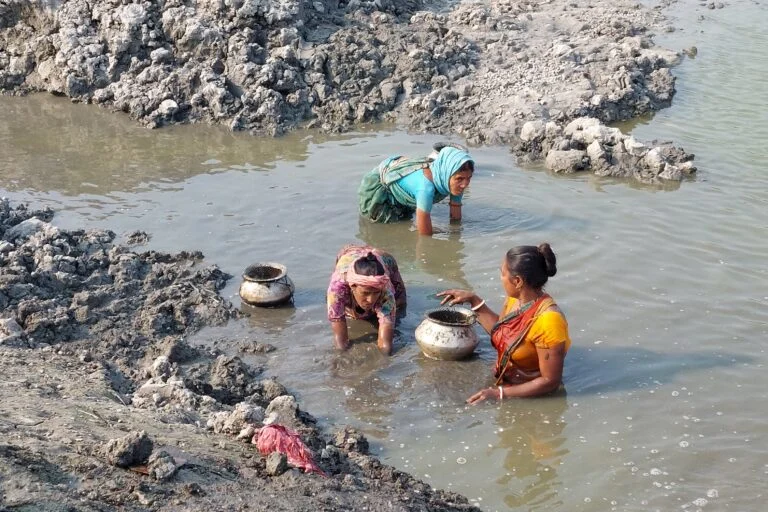
At 4:00 a.m., while the high-rise towers of Kolkata are still shrouded in the pre-dawn mist, the East Kolkata Wetlands are already bustling with a quiet, purposeful energy. Before the city’s professional class stirs, women from nearby informal settlements are already waist-deep in the water. They are not there for recreation or exercise; they are harvesting. With practiced ease, they collect crabs, mussels, and a variety of small fish. By 7:00 a.m., these women have changed into dry clothes and are heading to work as domestic helps in the very "lake-view" apartments that overlook their morning foraging grounds.
This scene, captured by Sukanya Basu, a researcher and faculty member at Azim Premji University, is the starting point for a groundbreaking study that challenges the way India perceives its urban water bodies. Published in the journal Nature Cities, the study titled “Widespread Practices and Sustainability Benefits of Foraging in Urban Blue Spaces of India” reveals a hidden economy and a critical food security net that exists right under the noses of urban planners.
Main Facts: The Hidden Economy of Foraging
The study, conducted by Basu alongside colleagues Brenda Maria Zoderer, Harini Nagendra, Peter H. Verburg, and Tobias Plieninger, surveyed over 1,200 individuals across four major Indian metropolises: Kolkata, Kochi, Bengaluru, and Mumbai. The findings were startling: more than half of the people using these "blue spaces"—rivers, lakes, and wetlands—frequently collect edibles for personal consumption, sale, or community sharing.
Despite its prevalence, this practice is almost entirely absent from urban policy, city planning, and the public imagination. In the eyes of the state, urban water bodies are valued as recreational amenities, ecological buffers, or flood management infrastructure. They are rarely, if ever, recognized as active food systems. For a significant portion of the urban population, however, these wetlands are essentially "supermarkets" that provide high-quality protein and micronutrients free of charge.
The research highlights a massive disconnect between how cities are designed and how they are actually used. While "lake restoration" projects often focus on jogging tracks and ornamental lighting, they frequently destroy the very habitats that support urban foraging, thereby stripping marginalized communities of a vital resource.

Chronology: From Fieldwork to Publication
The study was born out of months of intensive fieldwork conducted between March and September 2023. During this period, researchers embedded themselves in the daily rhythms of urban water bodies, observing the nuances of who forages, what they collect, and why.
The timeline of the research reflects a growing global interest in "Urban Blue Spaces"—the aquatic equivalent of urban green spaces. While Western research has often focused on the mental health benefits of being near water, the Indian study sought to document the "provisioning services"—the tangible goods like food and medicine—that these spaces provide in a Global South context.
By late 2023, the data from 1,200 surveys (comprising 799 women and 391 men) began to paint a clear picture of socioeconomic stratification in foraging. The team analyzed the data throughout the latter half of the year, leading to the publication in Nature Cities in early 2025. This chronology marks a shift in academic discourse, moving from seeing urban nature as a "view" to seeing it as a "vessel" for survival.
Supporting Data: A Socioeconomic Breakdown
The study identified three distinct tiers of foragers, categorized by the frequency and intent of their activities:
1. Frequent Foragers: The Survivalists
This group is the most active and is overwhelmingly composed of women, the elderly, daily wage laborers, and members of Scheduled Castes and Scheduled Tribes.

- Demographics: Households with annual incomes below ₹7 lakh.
- Activities: Regular collection of fish, crabs, greens, and snails for personal meals, local sale, and communal cooking.
- Gender Split: 63% of women surveyed fell into this category, compared to only 26% of men.
2. Occasional Foragers: The Traditionalists
These individuals are typically better educated and belong to higher-income brackets.
- Motivation: They forage for specific seasonal delicacies or to maintain a connection with traditional culinary roots. They rarely sell what they find.
3. Rare Foragers: The Disconnected
Mostly men under 31 with university educations and the highest household incomes.
- Activity: They view water bodies almost exclusively as recreational spaces. In Bengaluru, a city undergoing rapid gentrification of its lakes, 67% of users were classified as rare foragers.
The Nutritional Gap
The data suggests that for frequent foragers, these wild edibles are not just "supplemental"—they are essential. Harini Nagendra, Director of the School of Climate Change and Sustainability at Azim Premji University, points out that market-bought vegetables are often limited to a few generic staples like spinach or fenugreek.
"What these women forage is far more diverse and nutritive," Nagendra explains. "Many of the species are bitter, seasonal, and largely absent from urban markets. These are probably what keep them healthy." For instance, in Bengaluru, the ponnangante keerai (sessile joyweed) is so valued for its health properties that it is named after "gold" in several South Indian languages.
The Paradox of Restoration: Case Studies in Conflict
The study reveals a bitter irony: the more a city "restores" its lakes, the less useful they become for the people who need them most.

Bengaluru: The Fenced-Off Commons
Once known as the "City of Lakes," Bengaluru has seen numerous restoration projects. However, these projects often involve "beautification" that is hostile to foragers. Concrete bunds replace muddy banks, and "No Plucking" signs are installed.
"Where would you forage?" asks Nagendra. "That bund is now all stone. Restored lake paths are planted with ornamental, non-native species chosen because no insects eat them. There is nothing for us, and not even for the insects."
Mumbai: The Adivasi Supermarket
In contrast, Mumbai’s blue spaces—which expand during the monsoon into a network of streams and floodplains—remain vital for Adivasi communities. Sanjiv Valsan, founder of the Waghoba Habitat Foundation, works with Adivasis in the Aarey Forest who harvest Chimburi crabs and Tadgola palms. "For an Adivasi, the forest and the water body within it is the supermarket, the pharmacy, and the hardware store," Valsan says. In Mumbai, 65% of blue space users are frequent foragers, reflecting a more resilient, albeit threatened, connection to the land.
Official Responses and Expert Perspectives: A Call for Recognition
The research has drawn commentary from leading scientists who argue that foraging should be integrated into urban policy rather than criminalized or ignored.
Shalini Dhyani, a Principal Scientist at CSIR-NEERI and a lead author of the IPBES global assessment on the sustainable use of wild species, has documented 130 plant species and 16 fungal species being foraged across 15 Indian cities. She emphasizes the social cohesion foraging provides. "Urban foraging is one of the things that keeps people connected to their local ecosystems; it gives you a sense of place," she notes.
However, Dhyani also raises a critical warning regarding contamination. Many urban water bodies are ecologically stressed by sewage and industrial runoff. "Water hyacinth, for example, is known to absorb heavy metals," Dhyani explains. "Fish in these water bodies may accumulate contaminants. The communities most dependent on them are the least equipped to absorb that risk."

The official response from urban planning bodies has historically been one of "benign neglect." Foraging is seen as a vestige of rural life that has no place in a "Smart City." Experts argue this must change. Suresh Kumar, founder of Sarjapur Curries, notes that the knowledge of these edible landscapes resides almost exclusively with women, and ignoring them means losing a repository of climate-resilient food knowledge.
Implications: Reimagining the Urban Blue
The implications of this study are profound for the future of Indian urbanism. If cities continue to prioritize the "recreational economy"—fencing off lakes for joggers and cafes—they will systematically disenfranchise the urban poor and diminish the city’s overall nutritional resilience.
1. Inclusive Planning
Planners must move away from the "manicured park" model. Instead of concrete edges, lakes should maintain "wild" margins—muddy banks and seasonal floodplains—where edible greens and mollusks can thrive.
2. Public Health and Safety
Rather than banning foraging due to pollution, the state should focus on cleaning the water sources. If a lake is a food source, the impetus to prevent sewage inflow becomes a matter of public health and food security, not just aesthetics.
3. Legal Frameworks
The "No Plucking" signs found in many Indian cities highlight a legal gray area. Sanjiv Valsan points out the absurdity of jamun trees dropping fruit that rots on the pavement while the same fruit sells for ₹600 a kilo in markets. "Nobody knows who has the right to collect them," he says. Establishing "Edible Commons" could provide a legal framework for sustainable urban harvesting.

Conclusion: Making Foraging the "Hero"
The study concludes with a provocative suggestion: what if foraging wasn’t a hidden, desperate act, but the centerpiece of urban ecology?
"Why not make foraging the hero ingredient of a water body; the reason why people come to a lake?" asks Harini Nagendra. By recognizing these spaces as food systems, cities can foster a "circular relationship" where residents protect the ecosystems that feed them.
As India’s cities continue to expand, the lesson from the East Kolkata Wetlands is clear: the most sustainable and resilient parts of our cities may not be the ones we build with concrete, but the ones we allow to stay wild. The woman wading into the lake at 4:00 a.m. is not a relic of the past; she is a practitioner of a sophisticated, low-carbon food system that the modern city has forgotten how to value.
