

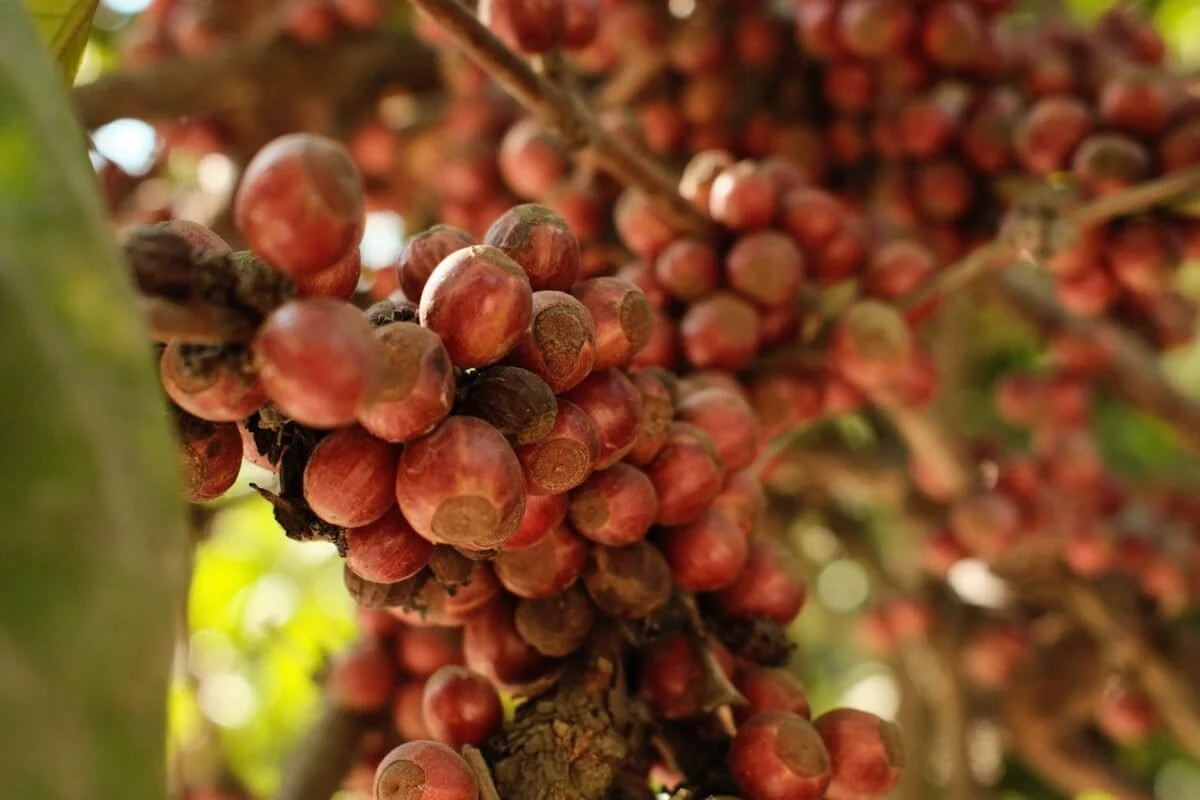
For Akshay Vaidyanathan, a Carnatic musician and coffee roaster, the intersection of art and agriculture is a space of constant improvisation. In 2019, he founded Kapikottai, a coffee brand that began as a "fun entrepreneurial experiment." However, within a year, the experiment took a serious turn toward the botanical. Vaidyanathan launched a specialty roast using Excelsa coffee beans—a species largely forgotten by the commercial world.
"It’s been an institution since then, and sells out fast," Vaidyanathan observes. "A lot of people don’t realize it is another species. They feel it’s just good coffee."
That lack of realization may soon become a luxury of the past. As the global climate crisis intensifies, the two species that provide nearly 99% of the world’s coffee—Arabica and Robusta—are under unprecedented physiological stress. In the rolling hills of India’s Western Ghats and across the tropical belts of Africa and Southeast Asia, a quiet revolution is brewing. To save the future of the morning cup, researchers and farmers are looking backward, resurrecting "forgotten" species like Excelsa and Liberica to build a more resilient agricultural portfolio.
Main Facts: The Fragile State of the Global Bean
The global coffee industry is currently built on a precarious duopoly. Arabica (Coffea arabica), prized for its nuanced acidity and sweetness, is notoriously finicky, requiring cool tropical climates and specific elevation. Robusta (Coffea canephora), while hardier and higher in caffeine, is increasingly vulnerable to extreme drought.

Recent data indicates that temperatures exceeding 30°C are becoming a death knell for traditional yields. High heat reduces the quality of the bean, stunts plant growth, and increases the prevalence of pests. In India, where both varieties are grown—though Robusta dominates the landscape—the Western Ghats are experiencing erratic rainfall and "heat spikes" that the traditional biological clocks of these plants cannot handle.
Enter Excelsa (Coffea dewevrei). Long relegated to the margins of coffee history, Excelsa is now being re-evaluated not just as a novelty, but as a survival strategy. Unlike Arabica, which shrivels under intense heat, Excelsa trees are robust, deep-rooted, and capable of thriving in conditions that would decimate a standard plantation.
Chronology: From Colonial Boundary Marker to Climate Savior
The history of Excelsa in India is one of accidental preservation. To understand its current resurgence, one must look at the timeline of its introduction and subsequent marginalization.
The Late 1800s: The Arrival
Excelsa was introduced to India in the late 19th century by a British planter, Colonel Benson. At the time, the coffee industry was reeling from devastating outbreaks of leaf rust and pests. Benson sought an alternative to the fragile Arabica. However, Excelsa presented a logistical nightmare for the era’s plantation model. The trees could grow between six and 15 meters tall, with dense, unruly branching that made harvesting labor-intensive and expensive.

1950s – 2010s: The "Forgotten" Years
Throughout the mid-20th century, Excelsa was largely ignored by commercial interests. On many Indian estates, such as the Kerehaklu Estate in Karnataka, the trees were used merely as boundary markers or for shade. In the eyes of the Indian Coffee Board, Excelsa was often viewed as a liability because it could host the coffee berry borer. Farmers were frequently advised to cut the trees down to protect their "valuable" Arabica and Robusta crops.
2018 – 2020: The Specialty Pivot
The tide began to turn when the South India Coffee Company (SICC) introduced Excelsa to specialty roasters in the United Kingdom. Labeled as a "climate-resilient specialty coffee," it caught the attention of an industry looking for sustainable narratives. In India, boutique roasters like Vaidyanathan’s Kapikottai began proving that there was a domestic market for the bean’s unique, tart, and fruity profile.
2024 – 2026: Systematic Revaluation
By 2024, the SICC began a formal re-evaluation of Excelsa across five different coffee estates. What was once a "wild" tree was now being genotyped and tracked for yield consistency. By 2025, SICC reported selling over four tonnes of green Excelsa coffee, with projections for 2026 reaching five tonnes and a demand for over 4,000 saplings from curious growers.
Supporting Data: The Science of Resilience
The shift toward Excelsa and its cousin, Liberica, is backed by a growing body of genomic and environmental research.

Thermal Tolerance
Research from the Royal Botanic Gardens, Kew, led by Aaron Davis, highlights a grim reality: Arabica needs a cool tropical climate with distinct dry periods, while Robusta needs warmth but cannot tolerate drought. In contrast, species like Stenophylla (another "lost" coffee) and Liberica show a much higher threshold for heat and water stress.
The Hybrid Frontier: "Libex"
Recent breakthroughs in genomic research have clarified that Liberica and Excelsa are distinct species, yet they possess the ability to hybridize. A new interspecies hybrid, proposed as Coffea X libex (or "Libex"), is being studied for its ability to combine the high yield of Liberica with the climate hardiness of Excelsa. These hybrids are noted for their resistance to common diseases and their ability to thrive in "disturbed" climates where rainfall patterns are no longer predictable.
Yield and Market Growth
In Uganda, a major coffee-producing nation, the National Agricultural Research Organisation (NARO) reports that smallholders are increasingly adopting Excelsa. Kiwuka Catherine, a senior research officer at NARO, notes that farmers find Excelsa more productive and thus more profitable than Robusta under current climate stresses. In India, the jump from a few hundred kilograms to multi-tonne exports within a three-year window signals a significant commercial "proof of concept."
Official Responses: A Tale of Two Approaches
The transition to new coffee species has met with varying levels of institutional support.
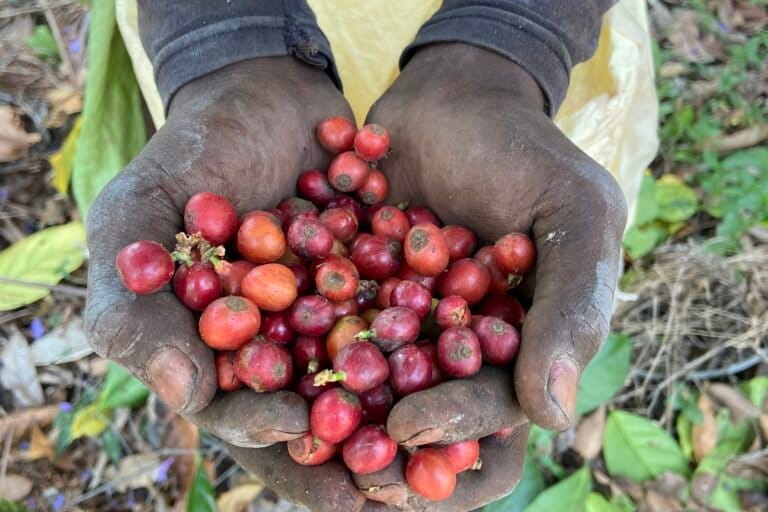
In Uganda, the response has been proactive. Government researchers are actively working with farmers to scale Excelsa production, viewing it as a primary adaptive response to climate change. They have facilitated exports to high-value markets in the UK, providing a blueprint for how a "minor" species can become a major economic driver.
In India, the situation is more opaque. The Central Coffee Research Institute (CCRI), the primary body responsible for coffee innovation in the country, has remained largely silent on the specific potential of Excelsa. Despite multiple inquiries regarding their research into climate-resilient species in early 2026, the CCRI did not provide a response. This institutional inertia has left the heavy lifting to private estates and entrepreneurial roasters.
However, the collaboration between private entities like the SICC and global institutions like Kew Gardens suggests that the "bottom-up" approach is currently driving the agenda. Farmers are not waiting for official policy; they are planting for survival.
Implications: The Future of the Global Palate
The rise of Excelsa and other alternative species carries profound implications for the economy, the environment, and the consumer.

1. The Diversification of the "Coffee Portfolio"
Aaron Davis of Kew Gardens emphasizes that the future of coffee depends on a "portfolio" approach. Relying on just two species is an invitation to systemic collapse. By integrating Excelsa, Liberica, and eventually Stenophylla into the global supply chain, the industry creates a buffer against the total crop failures that are becoming more common in traditional Arabica-growing regions.
2. Regenerative Agriculture
Excelsa trees, due to their size and deep root systems, lend themselves to more biodiverse, "forest-like" farming. Unlike the monoculture rows of Arabica, Excelsa can be grown as part of a multi-story canopy, providing habitat for birds and insects and helping to sequester carbon more effectively than smaller shrubs. This aligns with the global shift toward regenerative agriculture.
3. A Change in Taste
For the consumer, the "Excelsa era" will bring new flavors. Excelsa is known for a profile that some describe as "tealike" or "fruity," with lower caffeine content than Robusta. As it moves from niche specialty shops to mainstream supermarket shelves—a transition Davis predicts could happen within the next decade—the global palate will have to adapt. The dominance of the "classic" Arabica taste may give way to a broader spectrum of flavors.
4. Economic Security for Farmers
For farmers like Pranoy Thipaiah of the Kerehaklu Estate, the move to Excelsa is about timing. Excelsa and Liberica have longer gestation periods, with harvests occurring in March and April. This avoids the unseasonal monsoon rains that often ruin Arabica harvests in January and February. By spreading the harvest window, farmers can stabilize their income and protect themselves from single-season weather catastrophes.

Conclusion
The story of Excelsa is a testament to the necessity of looking at what was once discarded. In the late 1800s, its height and wild nature made it a nuisance; in 2026, those same traits make it a lifeline.
As Akshay Vaidyanathan’s "entrepreneurial experiment" continues to sell out, it serves as a microcosm of a much larger shift. The coffee industry is waking up to the reality that the beans of the past cannot survive the heat of the future. The survival of the world’s most popular beverage may well depend on these towering, resilient trees that have stood silently on the edges of Indian estates for over a century, waiting for their moment to return to the cup.
