

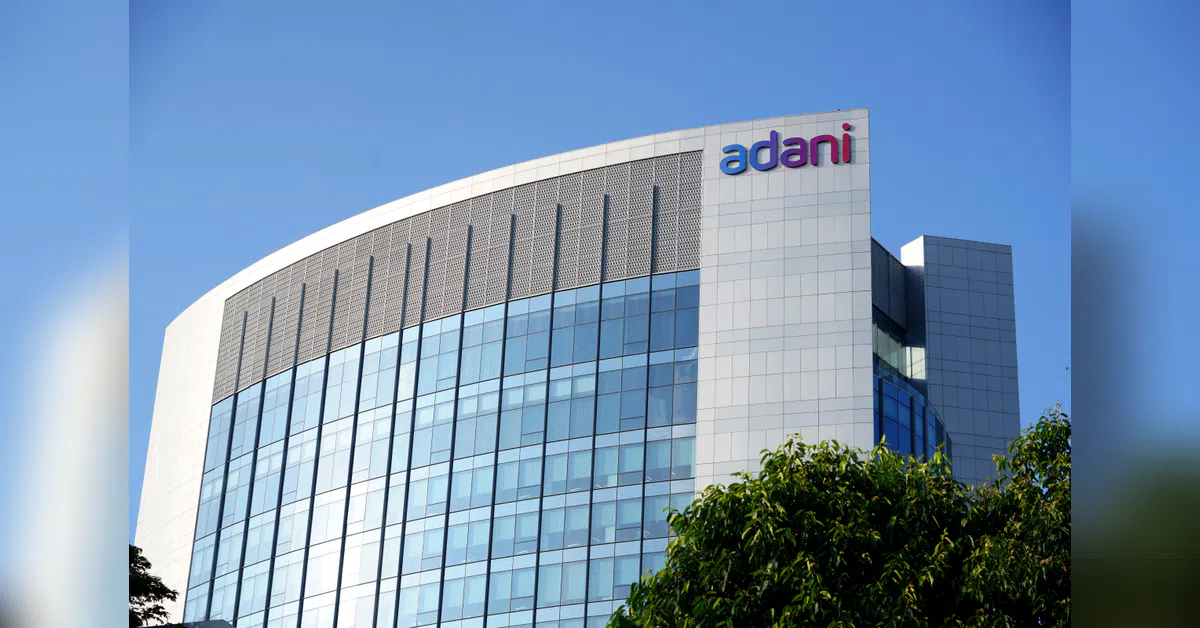
Mumbai, India – [Current Date] – The turbulent waters that have engulfed the Adani Group over the past two years may finally be receding, according to a recent report by global brokerage Bernstein. In a significant shift in sentiment, Bernstein has declared that "the worst may be over" for the Indian conglomerate, citing a substantial easing of concerns around leverage, share pledges, and access to crucial overseas funding. This optimistic outlook comes on the heels of the resolution of recent US-related legal challenges, which had cast a long shadow over the group’s prospects.
Bernstein, in its report titled "India Infra: Adani Group – The ‘Hard-Bank’…", underscored that despite navigating multiple crises in recent years, the Adani Group’s fundamental strengths – its unparalleled execution capabilities and dominance in critical infrastructure businesses – have remained intact. The brokerage’s assessment signals a potential turning point for the embattled conglomerate, paving the way for renewed investor confidence and a clearer growth trajectory.
Main Facts: A Resurgent Adani Amidst Clearing Skies
The core of Bernstein’s revised assessment rests on the recent resolution of significant legal uncertainties emanating from the United States. Specifically, the dropping of charges by US prosecutors and the settlement of an SEC case related to certain allegations have effectively removed what the brokerage termed "a key overhang." This development is expected to unlock a cascade of positive effects, primarily by alleviating concerns that had kept a significant portion of global capital at bay.
Bernstein highlights that the Adani Group’s inherent ability to conceptualize, develop, and operate large-scale infrastructure projects across diverse sectors, including ports, airports, power generation, transmission, and renewable energy, has never been seriously questioned. This operational prowess, coupled with strategic advantages such as access to vast land parcels, an aptitude for capturing market share from traditionally government-dominated sectors, and remarkable execution efficiency, forms the bedrock of its long-term viability.
Furthermore, the report meticulously addresses the financial health of the group, a point of intense scrutiny following the Hindenburg Research report in January 2023. Bernstein notes a significant improvement in the group’s leverage profile and a drastic reduction in pledged promoter shares, both of which were major flashpoints during the previous crises. These financial de-risking efforts, combined with a projected reopening of international funding avenues, paint a picture of a conglomerate poised for a strong resurgence.
Chronology: From Rapid Ascent to Crisis and Recovery
The journey of the Adani Group from a relatively obscure trading firm to a global infrastructure behemoth has been nothing short of extraordinary. Founded by Gautam Adani in 1988, the group diversified rapidly, establishing a dominant presence in sectors critical to India’s economic growth. Its aggressive expansion strategy, often involving large-scale projects, positioned it as a pivotal player in India’s infrastructure development, aligned with national priorities. By the early 2020s, Adani Group companies had achieved staggering valuations, making Gautam Adani one of the wealthiest individuals globally.
The Hindenburg Onslaught (January 2023)
The group’s meteoric rise faced its most severe challenge in January 2023, when US-based short-seller Hindenburg Research published a scathing report. The report leveled serious allegations, including stock manipulation, accounting fraud, excessive leverage, and opaque ownership structures, particularly concerning promoter share pledges. The fallout was immediate and dramatic. Adani Group companies experienced an unprecedented market rout, losing billions of dollars in market capitalization within days. Investor panic spread globally, raising questions about the group’s financial stability and corporate governance practices. Credit rating agencies placed several Adani entities on watch, and the group’s ability to raise capital, particularly from international markets, was severely hampered. This period marked the deepest crisis in the group’s history, threatening to derail its ambitious expansion plans.
Resilience and Initial Recovery Efforts
In the immediate aftermath of the Hindenburg report, the Adani Group mounted a robust defense, denying all allegations and labeling the report a "malicious attack." Simultaneously, it initiated decisive measures to restore investor confidence. A key strategy involved pre-paying significant portions of its debt and actively engaging with investors and lenders to demonstrate its financial resilience. The group also successfully raised capital from strategic investors, notably GQG Partners, which acquired substantial stakes in several Adani entities, signaling a vote of confidence from a prominent global fund. These actions, coupled with a renewed focus on operational performance and transparency, helped stabilize the group’s stock prices and bond yields, albeit at significantly lower levels than their pre-Hindenburg peaks.
The US Legal Overhang Emerges (Late 2023 – Early 2024)
Just as the Adani Group was showing signs of recovery from the Hindenburg fallout, new concerns emerged related to potential US investigations. Reports surfaced in late 2023 and early 2024 indicating that the US Department of Justice (DoJ) and the Securities and Exchange Commission (SEC) were looking into allegations concerning potential bribery by Adani entities in India for power projects. While the group maintained its innocence and stated it was unaware of any such investigations, the prospect of US legal proceedings created a fresh layer of uncertainty. This "legal overhang" was particularly detrimental, as it caused many global institutional investors to remain on the sidelines, awaiting clarity on the potential implications of these probes. The uncertainty meant that Adani stocks, despite showing some recovery, remained "under-owned" by a significant segment of the international investment community.
Resolution and the Turning Point (Recent Developments)
The turning point, as highlighted by Bernstein, has arrived with the recent resolution of these US legal concerns. The decision by US prosecutors to drop charges in a related case and the settlement of the SEC investigation have effectively lifted the cloud of uncertainty that lingered over the group. This development is crucial because it addresses a primary reason for many global funds’ reluctance to invest, signaling a significant de-risking for the Adani Group. With this "key overhang removed," the path for the group to fully re-engage with international capital markets and continue its growth trajectory appears significantly clearer.
Supporting Data: A Deeper Dive into Financials and Strengths
Bernstein’s report delves into specific financial metrics and structural advantages that underpin its optimistic assessment. The detailed analysis provides concrete evidence of the group’s improved health and inherent capabilities.
Alleviating Leverage Concerns
Leverage has been a persistent concern for the Adani Group, especially given its capital-intensive infrastructure projects. Bernstein acknowledges that net group debt has risen by approximately ₹1 trillion since September 2024, primarily due to aggressive capital expenditure in high-growth businesses like Adani Green and Adani Enterprises. However, the brokerage emphasizes that this increase in debt has been matched by robust earnings growth. Group EBITDA (Earnings Before Interest, Taxes, Depreciation, and Amortization) has demonstrated a strong 22 percent Compound Annual Growth Rate (CAGR) between fiscal year 2023 (FY23) and projected fiscal year 2026 (FY26). This significant earnings expansion indicates the group’s ability to service its growing debt obligations.
Crucially, Bernstein highlights the trajectory of the group’s net debt-to-EBITDA ratio, a key indicator of financial leverage. This ratio, which soared to 4.4 times during the peak of the Hindenburg crisis, had sharply declined to a more manageable 2.7 times by September 2024. While it is projected to rise again to 3.9 times by March 2026 due to ongoing expansion, Bernstein notes that this level remains comfortably below the peaks observed during the short-seller crisis. This indicates a more stable and sustainable debt profile compared to the period of maximum investor anxiety.
Drastic Reduction in Pledged Promoter Shares
Another major concern during the Hindenburg episode revolved around the significant pledging of promoter shares, which raised fears of margin calls and forced selling, potentially destabilizing the stock prices. Bernstein’s report offers a reassuring update on this front. It states that pledged shares across group companies have declined sharply since 2022 and are now considered "negligible." This substantial reduction is a critical factor in rebuilding investor confidence, as it removes a major source of perceived risk associated with promoter financing and potential stock market volatility. It also reflects a concerted effort by the promoters to de-risk their personal holdings and reduce potential pressure on the group’s market valuation.
Reopening Avenues for Dollar Funding
The Hindenburg report and the subsequent US legal developments had severely impacted the Adani Group’s access to international bond markets and dollar funding. In response, the group strategically pivoted, relying more heavily on domestic lenders, including Public Sector Undertaking (PSU) banks and Non-Banking Financial Companies (NBFCs), to meet its capital requirements. With the legal uncertainty now significantly easing, Bernstein expects overseas fundraising avenues to reopen. This is a crucial development for a conglomerate with vast capital expenditure plans, as access to diversified and often cheaper international capital is vital for long-term growth.
Further evidence of improving creditworthiness comes from the bond markets. The report notes that bond yields for Adani entities have improved significantly and are now trading below India’s five-year government bond yields. This inversion is a powerful signal of restored investor confidence in the group’s ability to meet its debt obligations, indicating that the market perceives Adani bonds as carrying less risk than previously thought, and potentially even less than sovereign debt in some contexts.
Structural Advantages: The "Hard-Bank" of Indian Infrastructure
Bernstein’s report emphasizes that beyond the financial metrics, the Adani Group possesses fundamental structural advantages that continue to be its "core strengths." These are key differentiators that allow the group to thrive in India’s complex infrastructure landscape:
-
Access to Large Contiguous Land Parcels at Strategic Locations: This advantage is particularly critical for large-scale infrastructure projects, especially in the renewable energy sector. Bernstein points to Adani Green’s impressive roughly 250,000-acre renewable land bank as a prime example. Securing such vast, contiguous land is a significant hurdle for many developers in India, making Adani’s existing holdings a massive competitive edge, enabling rapid deployment of solar and wind projects.
-
Ability to Take Market Share from Government-Run Businesses: The Adani Group has demonstrated a remarkable capability to compete effectively and gain market share from historically dominant, often less efficient, government-run enterprises. Adani Ports’ dominance in container traffic across India’s coastline serves as a stellar illustration. The group’s agility, private sector efficiency, and focus on operational excellence often give it an edge over state-owned competitors, allowing it to capture a larger portion of critical infrastructure markets.
-
Execution Efficiency in Large-Scale Projects: India’s infrastructure development requires the ability to execute mega-projects on time and within budget, often in challenging environments. Adani Group has built a reputation for its strong project execution capabilities, a factor that was never seriously questioned even during the height of its crises. This efficiency translates into faster project commissioning, quicker revenue generation, and better returns on capital, cementing its position as a preferred developer for complex national projects.
Official Responses: Bernstein’s Endorsement and Adani’s Implicit Affirmation
Bernstein’s report serves as a strong endorsement of the Adani Group’s operational resilience and its proactive measures to address financial and legal challenges. The brokerage’s detailed analysis, backed by financial data and strategic insights, offers a professional perspective that is likely to influence a broader spectrum of institutional investors. By maintaining "Outperform" ratings on key entities like Adani Ports and Adani Power, Bernstein is explicitly signaling its belief in their strong competitive positioning and clear growth visibility.
While the article does not contain direct quotes from Adani Group officials in response to Bernstein’s report, the group’s consistent actions over the past year implicitly affirm the findings. Its focus on debt reduction, capital expenditure in core businesses, and engagement with legal processes to clear its name demonstrate a strategic commitment to strengthening its financial foundation and restoring its market reputation. The group’s operational performance, particularly the robust EBITDA growth, speaks volumes about its ability to generate value even amidst external pressures. The improvement in bond yields and the stabilization of stock prices further underscore market participants’ acknowledgment of the group’s efforts and the positive impact of the recent legal resolutions.
Implications: A Path to Renewed Growth and Investor Interest
The implications of Bernstein’s revised outlook are far-reaching, not only for the Adani Group but also for the broader Indian infrastructure landscape and the investor community.
For the Adani Group: Reaccelerated Growth and Re-rating Potential
With the "key overhang" of US legal proceedings removed and financial concerns significantly eased, the Adani Group is now better positioned to reaccelerate its ambitious growth plans. Renewed access to diversified capital sources, particularly international dollar funding, will be crucial for its extensive pipeline of projects in green energy, ports, airports, and other core sectors. This clarity could lead to a significant re-rating of Adani stocks and bonds, as the risk premium associated with the group diminishes. Investors who had previously adopted a wait-and-watch approach may now reconsider their positions, potentially driving fresh capital inflows.
For Indian Infrastructure Development: A Vital Cog
The Adani Group plays a critical role in India’s infrastructure development agenda. Its continued stability and growth are vital for the nation’s progress towards ambitious targets in renewable energy capacity, logistics efficiency, and digital connectivity. A financially robust and operationally strong Adani Group can contribute significantly to the government’s vision of a modern, infrastructure-driven economy, particularly in areas like the green energy transition where Adani Green is a major player.
For Investors: Shifting Risk-Reward Dynamics
For investors, Bernstein’s report offers a compelling re-evaluation of the risk-reward dynamics associated with Adani Group companies. Global funds, which had largely stayed away due to legal uncertainties, now have a clearer path to consider investments. The report’s specific stock recommendations provide a nuanced perspective:
- Adani Ports and SEZ (APSEZ) and Adani Power: Both receive an "Outperform" rating, reflecting Bernstein’s confidence in their strong competitive positioning, consistent operational performance, and clear growth visibility. Adani Ports, in particular, benefits from its strategic asset base and market dominance.
- Ambuja Cements: Rated "Market-Perform." While part of the Adani Group, its operational performance is noted to be weaker relative to peers, suggesting a more cautious approach. Bernstein points out that Ambuja Cements currently trades at a discount to large cement companies, potentially offering value if operational efficiencies improve.
- Adani Green Energy (AGEL): Retains an "Underperform" rating despite a correction from its pre-Hindenburg valuation peaks. Bernstein argues that valuations for Adani Green remain expensive compared to renewable energy peers, suggesting that while the long-term growth story is compelling, the current price may not offer sufficient upside.
The report indicates that Adani Ports is currently trading broadly in line with its peers, despite a sharp rally, while Ambuja Cements remains undervalued. Adani Green, however, continues to command a significant premium relative to other renewable energy companies, reflecting high investor expectations for its growth trajectory, but also potential overvaluation according to Bernstein.
Broader Market Impact: Lessons in Resilience
The Adani Group’s journey through multiple crises and its current trajectory towards recovery offer valuable lessons in corporate resilience and market dynamics. The episode highlighted the importance of robust corporate governance, transparent financial reporting, and effective communication with stakeholders. As one of India’s largest conglomerates, its stabilization is a positive signal for overall market sentiment, reinforcing confidence in the ability of large Indian businesses to navigate significant challenges and emerge stronger. The market’s positive reaction to the legal resolutions underscores the premium investors place on certainty and the removal of regulatory ambiguities.
