

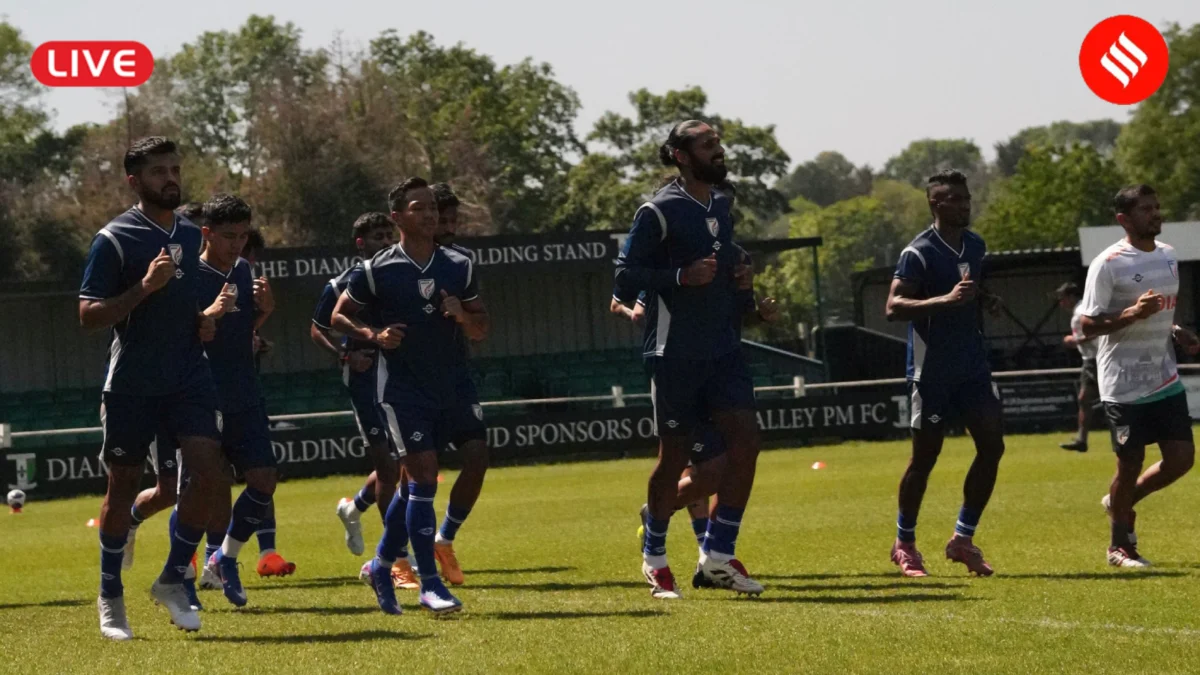
LONDON, England – May 28, 2026 – In a moment steeped in both anticipation and controversy, the Indian men’s national football team is poised to make a historic return to English soil, squaring off against Jamaica in the semi-final of the Unity Cup. The clash, scheduled for Wednesday at The Valley, marks the first time in 24 years that the Blue Tigers will compete in England, a rare and significant opportunity for exposure on the international stage. However, the build-up to this landmark fixture has been overshadowed by a contentious dispute with one of India’s premier clubs, Mohun Bagan Super Giant, raising pertinent questions about player welfare and the delicate balance between club and national team commitments.
The Unity Cup, a four-nation invitational tournament, features India, Jamaica, Nigeria, and Zimbabwe. While India (ranked 136th globally) faces the formidable challenge of 71st-ranked Jamaica, the other semi-final on Tuesday pits Nigeria against Zimbabwe. The winners of these encounters will battle for the coveted Unity Cup on May 30, with the losing teams competing in a third-place play-off on the same day. For India, this tournament represents not just a chance to test themselves against higher-ranked opponents, but a crucial step in their long-term development trajectory, particularly as they aim to improve their FIFA ranking and gain valuable experience outside of their traditional Asian fixtures.
Jamaica, fresh off a narrow miss for the 2026 FIFA World Cup qualification after a spirited campaign that ended against DR Congo, presents a formidable challenge. Their squad is expected to feature a blend of seasoned professionals playing in European leagues and emerging talent, offering a stark contrast to India’s predominantly domestic-league based contingent. The match at The Valley, a stadium with a rich history in English football, promises to be an intriguing contest, albeit one where India enters as the clear underdog.
Chronology: A Journey Marred by Discord
The path to this historic fixture has been anything but smooth for the Indian national team, a narrative punctuated by high hopes, logistical hurdles, and a significant club-country standoff.
Early 2026 – The Vision of International Exposure: The All India Football Federation (AIFF) initiated discussions for an invitational tournament in Europe, aiming to provide the national team with crucial exposure against strong, non-Asian opposition. The Unity Cup, conceptualized as a platform for football development and cultural exchange, materialized with London as the host city, igniting excitement among Indian football enthusiasts. The prospect of playing in England, a country synonymous with football, was seen as a major coup.
May 2026 – Squad Announcement and Initial Enthusiasm: Head coach Khalid Jamil, tasked with assembling the best possible squad, initially named a robust 28-member provisional contingent for the Unity Cup. The squad featured a mix of experienced veterans and promising youngsters, carefully selected to provide depth and tactical flexibility for the challenging encounters ahead. The players were eager for the opportunity, particularly the chance to represent their nation on such a prestigious stage.
May 2026 – The Mohun Bagan Standoff Emerges: Just days before the team’s scheduled departure, a major crisis erupted. Mohun Bagan Super Giant, one of India’s most successful and influential clubs, issued a startling directive to its players selected for the national squad. Citing concerns over player welfare, potential injuries, and the timing of the tournament relative to their club commitments (despite the ISL season concluding), Mohun Bagan informed its players that they could participate in the Unity Cup "at their own risk." Crucially, the club stated it would not be liable for any injuries sustained during the national camp or the tournament, nor would it cover medical expenses. This unprecedented move sent shockwaves through the Indian football fraternity.
May 26, 2026 – Departure with a Reduced Contingent: The ramifications of Mohun Bagan’s stance became immediately apparent. Seven key players from the Kolkata giants, including several first-team regulars and integral members of Coach Jamil’s plans, were compelled to withdraw from the national squad. This drastically altered the team’s composition, forcing Jamil to rethink his strategies and rely on a significantly leaner squad. The Blue Tigers, a day later than initially planned, departed for London with just 17 players, a clear indication of the impact of the withdrawals.
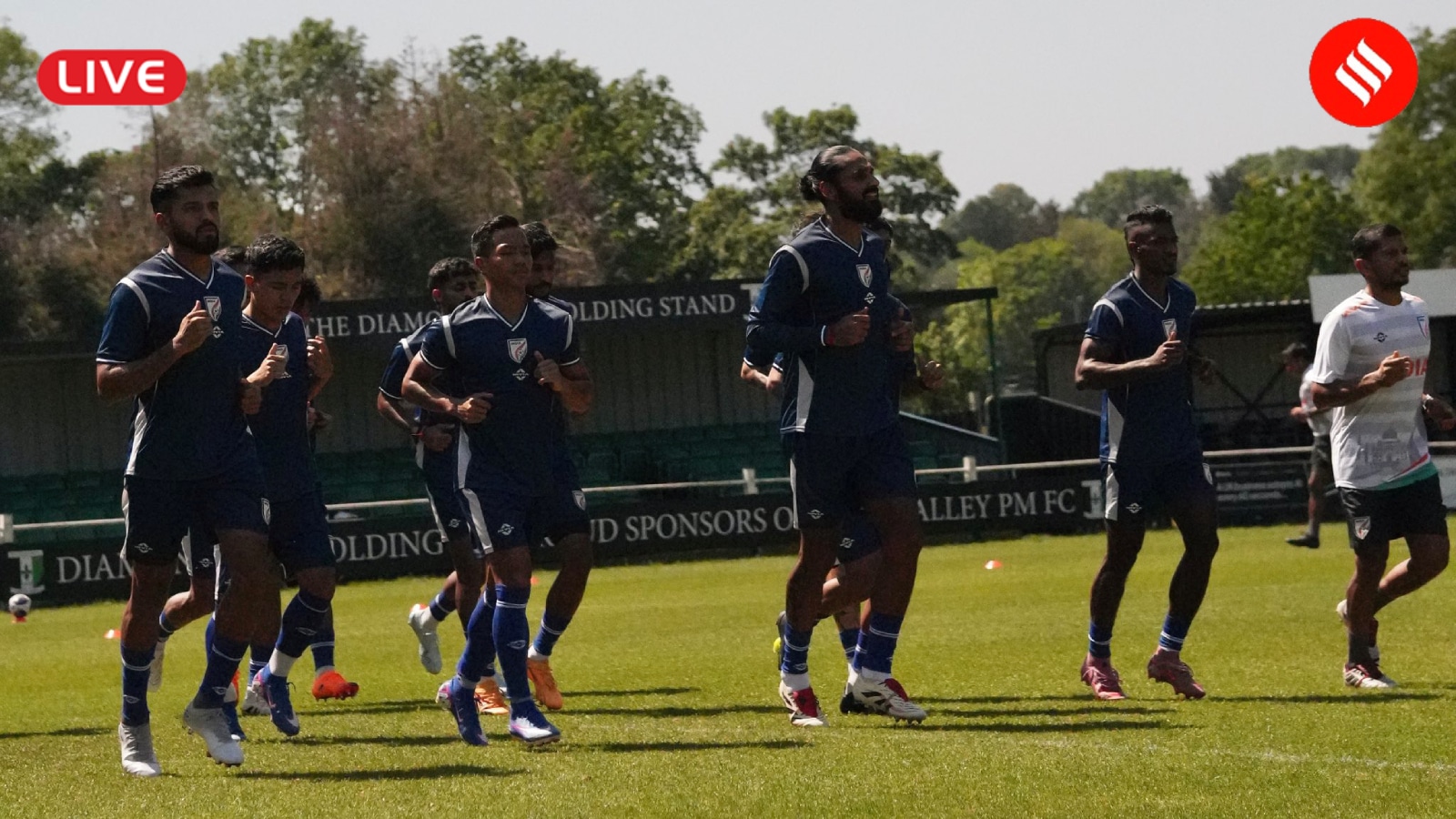
May 27-28, 2026 – Reinforcements and Pre-match Preparations in London: Upon arrival in the British capital, efforts were made to bolster the depleted squad. Goalkeeper Hrithik Tiwari joined the camp a day after the initial contingent. Coach Jamil also made urgent call-ups for midfielder Macarton Nickson and defender Nikhil Barla, who swiftly reached London on Tuesday to integrate with the team. These late additions, while necessary, highlight the challenges faced by the coaching staff in preparing a cohesive unit under pressure. Despite the setbacks, training sessions commenced with an intense focus on tactical drills, set-piece routines, and team cohesion, as the squad raced against time to be match-ready for the Jamaican challenge. The players present showed commendable spirit, determined to make the most of this unique opportunity regardless of the off-field distractions.
Supporting Data: A Tale of Disparity and Opportunity
The Unity Cup presents a fascinating juxtaposition of footballing realities, particularly concerning India’s current standing in the global landscape.
FIFA Rankings and Global Standing: India’s current FIFA ranking of 136th underscores the immense challenge ahead. Jamaica, at 71st, is a full 65 places higher, reflecting a significant gap in recent international performances and overall footballing infrastructure. This disparity is not merely a number; it translates to differences in player exposure, league quality, and tactical sophistication. Jamaica’s near-qualification for the 2026 FIFA World Cup, where they advanced deep into the CONCACAF qualifiers before falling to DR Congo, is a testament to their competitive edge and the quality of their players, many of whom ply their trade in top European leagues or Major League Soccer (MLS). For India, these matches are invaluable for understanding the pace, physicality, and technical demands of football at a higher international level. Each competitive minute against such opposition provides a steep learning curve for the players and coaching staff.
The Significance of Playing in Europe: The rarity of playing on European soil cannot be overstated for Indian football. Prior to this tournament, the last instance was 24 years ago, a testament to the logistical and financial challenges involved in arranging such fixtures. Playing in England, specifically, offers a unique blend of cultural immersion and exposure to a highly developed football ecosystem. It allows players to experience different training facilities, match-day atmospheres, and officiating styles, all of which contribute to their holistic development. Such exposure is crucial for the AIFF’s long-term vision of elevating Indian football, providing benchmarks for improvement, and attracting greater investment.
Impact of Player Withdrawals on Squad Dynamics: The absence of seven key Mohun Bagan players creates significant tactical headaches for Coach Jamil. These players often form the backbone of the national team, contributing in crucial areas such as defense, midfield control, and attacking impetus. Their withdrawal not only reduces the overall quality and experience of the squad but also severely limits Jamil’s options for rotation and tactical adjustments during the tournament. This situation forces younger or less experienced players to step into larger roles, presenting a double-edged sword: an unexpected opportunity for individuals to prove their mettle, but also a potential weakening of the team’s collective strength against superior opposition. The challenge now is to quickly foster chemistry and understanding among the available players, especially with late arrivals.
The Unity Cup – Beyond the Scoreline: While competitive, the Unity Cup is fundamentally an invitational tournament designed to foster international camaraderie and provide valuable match practice. For India, it’s not solely about winning, but about performance, learning, and gaining confidence. The opportunity to play against teams like Nigeria (ranked 26th) or Zimbabwe (ranked 123rd) in subsequent matches, regardless of the semi-final outcome, offers diverse footballing challenges. These games are critical for accumulating experience, experimenting with tactics, and identifying future talent for upcoming Asian Cup qualifiers and other international assignments.
Official Responses: Navigating the Club-Country Conundrum
The dispute between the AIFF and Mohun Bagan Super Giant has necessitated careful navigation from all parties, bringing to light long-standing issues within Indian football.
AIFF’s Position: The All India Football Federation has expressed its disappointment and concern over Mohun Bagan’s stance. While refraining from outright condemnation, sources within the AIFF indicated that the federation views national duty as paramount. They emphasize that player release for international windows is typically a standard procedure under FIFA regulations. The AIFF is understood to be reviewing its policies regarding player insurance and club obligations to prevent similar incidents in the future. Their primary focus, however, has remained on ensuring the national team’s participation and providing the best possible support to Coach Jamil and the available players, minimizing the public fallout as much as possible to maintain focus on the tournament.
Coach Khalid Jamil’s Perspective: Coach Jamil has publicly maintained a pragmatic and stoic front. While undoubtedly frustrated by the significant reduction in his squad, he has chosen to focus on the players who are present. "This is an opportunity for those who are here to step up," Jamil reportedly told the squad. "Every player who wears the national jersey carries the hopes of a billion people. We will give our best, regardless of the challenges. We have faith in the abilities of every single player in this squad." His leadership in managing morale and quickly integrating new players will be crucial for the team’s performance. Jamil’s strategy is now less about his initial plans and more about adapting to the available resources, potentially focusing on a more defensive and counter-attacking approach given the circumstances.
Mohun Bagan SG’s Justification: Mohun Bagan Super Giant has defended its decision by citing player welfare and the lack of comprehensive insurance coverage from the AIFF for injuries sustained during national camps. Club officials have argued that given the physical demands of a long season and the financial implications of a key player suffering a long-term injury without adequate protection, they had no choice but to safeguard their assets. They assert that their primary responsibility is to their players and the club’s sporting objectives. This stance, while seemingly self-serving, highlights a critical gap in the existing framework for player protection and compensation in Indian football, opening a broader debate about club responsibilities versus national commitments.
Player Perspectives: For the players caught in the middle, the situation has been deeply challenging. Those who withdrew faced the agonizing choice between club loyalty and national pride, a decision often influenced by contractual obligations and the perceived lack of support from the federation. For those who made the journey, there is a renewed sense of purpose and determination to prove their worth, not just for themselves but for their teammates who couldn’t join. The incident undoubtedly adds an emotional layer to their performance, fueling a desire to overcome adversity.
Implications: Shaping the Future of Indian Football
The Unity Cup, and the contentious build-up to it, carries significant implications for the future trajectory of Indian football, touching upon various facets from player development to administrative policy.
For Indian Football’s Performance and Reputation: A strong showing, even without key players, against higher-ranked teams like Jamaica and potentially Nigeria, would be a massive boost for India’s international reputation and FIFA ranking. It would demonstrate resilience, tactical adaptability, and the growing potential of Indian players. Conversely, a series of heavy defeats, especially if attributed to squad weaknesses, could dampen spirits and set back the progress made in recent years. The performances here will be closely scrutinized by football federations globally, influencing future invitations to similar tournaments and the willingness of stronger nations to schedule friendlies.
Player Development and Exposure: For the younger and less experienced players who have been called upon, this tournament is an unparalleled opportunity. Playing against physically superior and technically adept opponents from different footballing cultures offers invaluable on-field education. It will expose them to the demands of international football, accelerate their development, and provide a platform to cement their place in future national squads. This "baptism by fire" could forge a new generation of resilient Indian footballers.
The Club vs. Country Debate: The Mohun Bagan incident has starkly brought the perennial club-vs-country debate to the forefront of Indian football. It underscores the urgent need for a clear, comprehensive policy framework from the AIFF that addresses player release, injury insurance, and compensation for clubs. Without such a robust policy, similar disputes are likely to recur, jeopardizing national team preparations and creating unnecessary friction. This situation demands a collaborative dialogue between the AIFF, the Indian Super League (ISL) organizers, and the clubs to establish a mutually agreeable protocol that prioritizes both national team success and club stability. This could involve exploring models adopted by other footballing nations where federations provide insurance coverage or compensation to clubs for national team call-ups.
AIFF’s Governance and Policy Making: The incident serves as a critical test for the AIFF’s governance. How they manage this fallout, address the concerns raised by clubs, and implement preventative measures will define their leadership in the coming years. It highlights the necessity for proactive engagement with clubs, transparent communication, and robust administrative structures to support the national team’s aspirations. A stronger, more unified approach is essential for Indian football to reach its full potential on the global stage.
Fan Engagement and Morale: Indian football fans, known for their passionate support, will be watching closely. The initial excitement for the Unity Cup has been tempered by the squad issues, but a spirited performance, regardless of the outcome, can reignite enthusiasm. The ability of the team to fight against adversity and represent the nation with pride will resonate deeply with the supporters, fostering a stronger connection between the fans and the Blue Tigers.
As India prepares to kick off against Jamaica at The Valley, the stakes extend far beyond the Unity Cup semi-final itself. This match is not just a game; it is a significant chapter in India’s ongoing footballing journey, a test of its players’ resolve, its coach’s tactical acumen, and its federation’s ability to navigate complex challenges. The outcome, both on and off the pitch, will undoubtedly shape the narrative of Indian football for years to come.
