

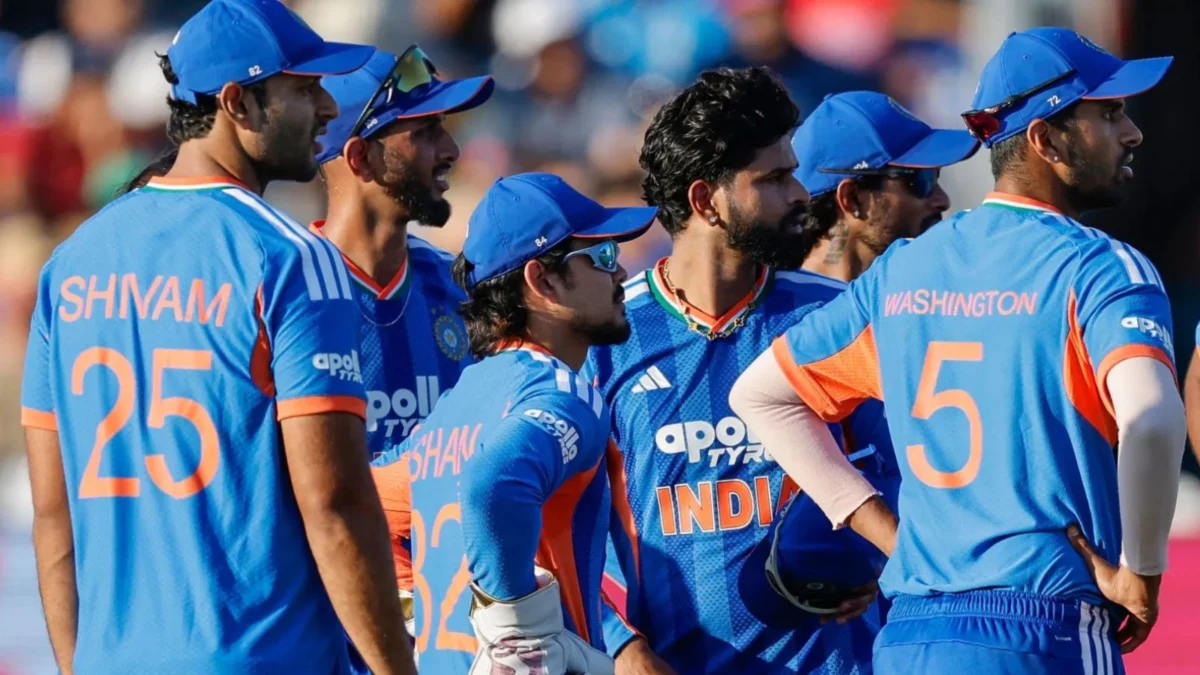
Southampton, England – July 27, 2026 – The Rose Bowl in Southampton is poised to host a high-stakes, if somewhat deflated, encounter this Saturday as Shreyas Iyer’s India confronts Harry Brook’s triumphant England in the fifth and final T20 International. For the visitors, the series has already slipped irrevocably from their grasp, marked by a disappointing loss in the previous game at Bristol that confirmed England’s unassailable lead. What was once heralded as a clash of T20 titans has, for India, devolved into a desperate quest for pride and a crucial opportunity to salvage their dented reputation on the global stage.
The air around the Indian camp is thick with introspection and an undeniable sense of crisis. Four months ago, India basked in the glory of lifting the T20 World Cup, a testament to their dynamic brand of cricket. Today, that golden glow has faded, replaced by the stark reality of consecutive series defeats and a disquieting dip in form. The batting lineup, once considered impregnable and a benchmark for aggressive intent, has paradoxically struggled to adapt when confronted with surfaces offering even the slightest assistance to bowlers. Compounding these woes, the bowling unit has faltered, unable to deliver the consistent breakthroughs or contain opposition scoring that characterised their World Cup triumph. The absence of spearhead Jasprit Bumrah has left a gaping void in the pace department, rendering it, at times, regrettably toothless, while the spinners, despite flashes of brilliance, have largely failed to produce match-winning spells under pressure.
Conversely, England, under the astute leadership of Harry Brook, has showcased a formidable and clinical performance throughout the bilateral series. Their campaign has been a testament to collective strength and individual brilliance, with various players stepping up at crucial junctures to deliver decisive results. Skipper Brook himself has led from the front, notably with a magnificent and series-defining innings in Bristol, and will undoubtedly be looking to cap off a stellar series with another commanding display on home soil. As India grapples with a perceived "method problem" and an urgent need for recalibration, England appears to be a well-oiled machine, reinforcing their status as a formidable force in the shortest format of the game.
A Series of Unraveling: The Road to Southampton
The journey to this dead-rubber fifth T20I has been a painful one for India, painting a stark picture of a team struggling to rediscover its identity and form. The issues that plague them did not emerge suddenly in England; rather, they were foreshadowed by a prior, equally jarring capitulation.
The Irish Wake-Up Call: A Precursor to Trouble
Before arriving on English shores, the Indian squad endured a shocking whitewash against a spirited Ireland side. This unexpected defeat, coming just months after their T20 World Cup triumph, sent tremors through the cricketing establishment. The margins of defeat were not always wide, but the manner in which India struggled to impose themselves, particularly with the bat on slightly greener Irish pitches, was alarming. It highlighted a worrying inflexibility in their approach, an inability to shift gears or adapt to conditions that favoured swing and seam. The team’s reliance on a singular, aggressive batting template, which had served them so well on flat tracks during the World Cup, proved to be their undoing against disciplined Irish bowling attacks exploiting home advantage. This series was the first clear indication that something was fundamentally amiss, a warning sign that went largely unheeded or perhaps underestimated.
England Series Progression: A Narrative of Dominance
The T20I series against England only amplified these concerns, evolving into a narrative of English dominance and Indian disarray.
- 1st T20I, Old Trafford: England opened the series with a convincing victory. Opting to bowl first, their pace attack, spearheaded by the likes of Reece Topley and Mark Wood, exploited the early swing, restricting India to a sub-par total. India’s top order crumbled, unable to counter the pace and movement. England chased the target comfortably, laying down an early marker.
- 2nd T20I, Edgbaston: Hopes of an Indian comeback were dashed in Birmingham. While India’s batting showed marginal improvement, they failed to post a truly challenging score. England’s middle order, displaying characteristic depth and aggression, absorbed the pressure and accelerated in the latter half of their chase, securing another comfortable win. This match saw early signs of Harry Brook’s exceptional form, with a crucial cameo.
- 3rd T20I, Trent Bridge: The Trent Bridge encounter proved to be the most frustrating for India. Despite glimpses of individual brilliance – a valiant half-century from a struggling Indian batsman – the collective effort was lacking. England’s bowlers maintained tight lines and lengths, forcing errors, and their batsmen chased down a competitive total with surprising ease, showcasing their power-hitting prowess. This defeat pushed India to the brink of a series loss.
- 4th T20I, Bristol: The series-decider in Bristol was a stark illustration of India’s current predicament. Batting first, India once again failed to put up a formidable total, losing wickets at regular intervals. The middle order lacked cohesion, and the lower order offered little resistance. Harry Brook then delivered his magnificent, series-clinching innings, dismantling the Indian bowling attack with a blend of power and precision, guiding England to an unassailable 3-1 lead. The disappointment in the Indian camp was palpable, signalling not just a series loss, but a deeper structural issue.
Each match in the series served as a grim reminder of India’s declining fortunes, contrasting sharply with England’s growing confidence and strategic superiority.
India’s Conundrum: A Deep Dive into the ‘Method Problem’
The "bad phase" that the BCCI has reluctantly acknowledged is more accurately described as a profound "method problem," as suggested by observations from Trent Bridge and other venues. This issue permeates various facets of the team’s performance, from batting strategy to bowling execution and even leadership.
Batting Blight: From Impregnable to Indecisive
During their World Cup triumph, India’s batting lineup was a force of nature, blending aggressive starts with ruthless middle-order acceleration. The current iteration, however, appears to be suffering from a crisis of confidence and a troubling lack of adaptability. On pitches that offer any semblance of movement or grip, India’s top order has consistently struggled to rotate the strike effectively, often getting bogged down and then attempting risky shots under scoreboard pressure. This has led to a pattern of early collapses or a failure to capitalize on good starts.
The middle overs, once India’s stronghold for building momentum, have become a period of stagnation. Batters seem hesitant to take calculated risks, and their inability to find boundaries against disciplined bowling has allowed opposition teams to dictate terms. The over-reliance on a few key players to provide the fireworks has been exposed, with the collective failing to step up when those individuals misfire. The World Cup-winning strategy of ‘go hard or go home’ seems to have lost its nuance, resulting in either reckless dismissals or painfully slow scoring, rather than the balanced aggression required in T20 cricket. The art of adapting to different surfaces and varying bowling attacks, a hallmark of champion teams, appears to have eluded them.
Bowling’s Blunted Edge: The Bumrah Void and Spin Struggles
The absence of Jasprit Bumrah has undeniably left a colossal void in India’s pace attack. Bumrah’s unique ability to bowl economically in the powerplay, pick up crucial wickets in the middle overs, and deliver pinpoint yorkers at the death provided both control and wicket-taking prowess. Without him, the pace department has looked alarmingly toothless. The new ball bowlers have struggled to provide early breakthroughs, often leaking runs in the powerplay, putting immense pressure on the middle overs. At the death, the lack of a consistent wicket-taking option or a bowler capable of stifling boundaries has seen oppositions regularly accelerate in the final overs, transforming chaseable totals into daunting ones or inflating scores beyond reach.
While the spinners have shown flashes of individual brilliance – a deceptive delivery here, a tight over there – they have largely failed to deliver the match-winning spells expected of them. On pitches that haven’t offered extravagant turn, they have struggled to impose themselves, often being targeted by aggressive English batsmen. The strategic deployment of spin, which often dictates the tempo of T20 innings, has also seemed less effective, with captaincy changes potentially playing a role in the lack of consistent support or tactical shifts for the spin bowlers. The overall bowling unit appears to be lacking a cohesive plan and the individual brilliance required to compensate for Bumrah’s absence.
The Leadership Labyrinth: Suryakumar’s Demise and Iyer’s Baptism by Fire
The most significant internal tremor within the Indian setup has been the dramatic shift in captaincy. Just four months after leading India to T20 World Cup glory, Suryakumar Yadav has been stripped of the captaincy and, even more strikingly, dropped from the playing XI for this crucial final match. This decision, while harsh on an individual who previously delivered silverware, underscores the BCCI’s deep concern and the perception that Suryakumar, despite his batting brilliance, became a scapegoat for an overly rigid Indian side. His captaincy, perhaps, was deemed too inflexible, unable to inspire the necessary adaptation when the team’s core strategy faltered.
Stepping into this maelstrom is Shreyas Iyer, a capable batsman but now burdened with the unenviable task of leading a struggling side in a dead rubber. For Iyer, this is a baptism by fire, a chance to demonstrate leadership under immense pressure. His immediate challenge is not just to win the match, but to instil a sense of belief and tactical flexibility into a team that appears to have lost its way. This captaincy merry-go-round, while perhaps necessary in the eyes of the board, further highlights the instability and uncertainty gripping the Indian T20 setup.
England’s Ascendancy: A Masterclass in Adaptability
In stark contrast to India’s struggles, England has presented a masterclass in modern T20 cricket, showcasing adaptability, depth, and aggressive intent. Their performances throughout the series have been nothing short of superb, both with bat and ball.
Brook’s Brilliance and Collective Contribution
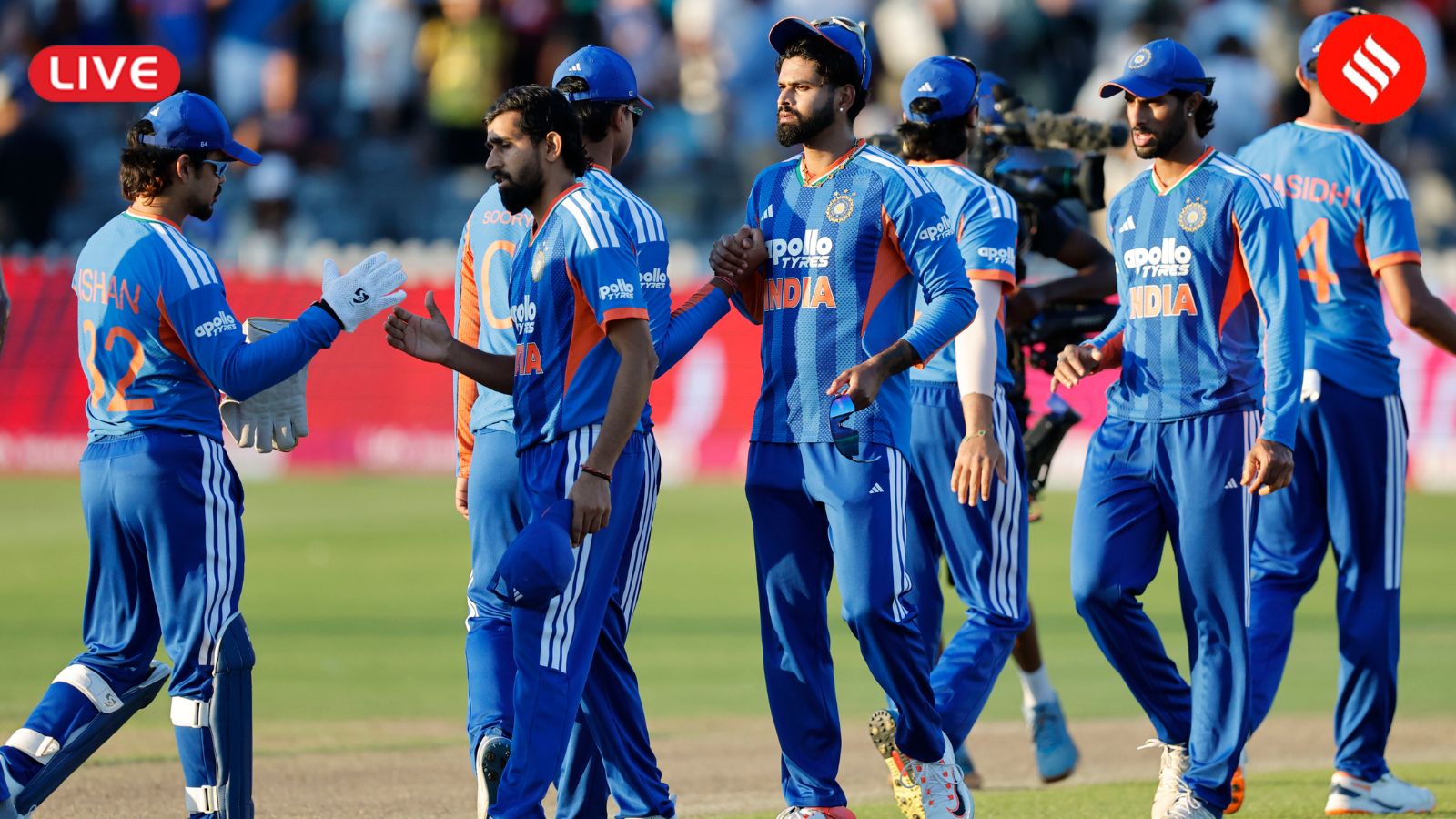
Harry Brook has emerged as the undisputed star of the series, leading his team with maturity beyond his years and delivering pivotal performances with the bat. His magnificent innings in Bristol, under pressure, epitomized his class and ability to accelerate when needed. However, England’s success is far from a one-man show. Different players have consistently stepped up throughout the series, highlighting the depth of talent within the squad. Whether it’s the explosive starts provided by their openers, the calm finishing of their middle order, or the crucial breakthroughs delivered by their bowlers, England has operated as a cohesive and well-drilled unit. This collective responsibility and shared burden of performance have been key to their dominance.
Tactical Acumen and Home Advantage
England’s tactical approach has been exemplary. They have consistently read the pitches better, adjusted their bowling plans to exploit conditions, and batted with a clear strategy. Their bowlers have maintained relentless pressure, forcing Indian batsmen into mistakes, while their fielders have been sharp, converting half-chances into crucial wickets. The home advantage, undoubtedly, has played a role, allowing them to prepare pitches to their liking and acclimatize perfectly. However, it is their strategic execution and individual brilliance that truly set them apart. Their ability to switch gears, both in batting and bowling, and to remain aggressive yet calculated, has been a defining feature of their series win.
Voices from the Boardroom and Dressing Room
The disappointing series performance has naturally elicited responses from various stakeholders, reflecting concern, determination, and a degree of measured confidence.
BCCI’s Candid Assessment: Acknowledging the ‘Bad Phase’
Behind the scenes, the Board of Control for Cricket in India (BCCI) has been in intense discussions, grappling with the team’s downturn. A senior BCCI official, speaking anonymously, acknowledged the gravity of the situation: "This is undoubtedly a bad phase for Indian T20 cricket. We cannot deny the results. The T20 World Cup win was fantastic, but complacency can creep in. We are actively reviewing all aspects – player fitness, strategy, coaching staff. The decision to change captaincy was not taken lightly; it was a move to inject fresh perspective and accountability. We understand the fans’ disappointment, but we are committed to rebuilding and identifying the root causes of these struggles. India remains the number one T20I team, and we intend to protect that ranking fiercely."
Another board member added, "We believe in the talent we have. Sometimes, teams go through cycles. What’s crucial now is learning from these defeats, adapting our strategies, and ensuring we are prepared for future challenges. There will be tough conversations, but the focus remains on long-term success."
Team Management’s Resolve: Focusing on Rebuilding
From the Indian dressing room, the mood is one of quiet determination rather than outright despair. Head Coach Rahul Dravid, addressing the media before the final T20I, emphasized the learning aspect. "It’s been a tough series, no doubt. We’ve been outplayed in crucial moments. But every defeat offers lessons. We need to be more adaptable, especially with our batting on different surfaces. Our bowling needs more bite, and we’re working on finding that consistent rhythm. Shreyas [Iyer] has a big responsibility, and we have full faith in his leadership for this match. The focus for Southampton is to play with pride, execute our plans, and finish the series on a positive note. This is a young team, and they will grow from these experiences."
Shreyas Iyer, in his pre-match press conference, echoed a similar sentiment. "It’s a challenging time, but we are professional cricketers. We owe it to ourselves and our fans to give our absolute best. We’ve had honest conversations within the team about where we went wrong. My role is to bring a sense of calm and clarity, and to encourage fearless cricket. We still have the World No. 1 ranking to protect, and that’s a huge motivation for us."
England’s Measured Confidence
The English camp, naturally, exudes a more confident air, but one tempered with professionalism. Captain Harry Brook reflected on their success: "It’s been a fantastic series for us. The lads have been brilliant, everyone has contributed. We’ve stuck to our game plans, played aggressive cricket, and adapted well to the conditions. India is a world-class side, and we knew it wouldn’t be easy, but we’ve executed our skills superbly. We want to finish strong at The Rose Bowl and carry this momentum forward. There’s no complacency; we respect India and expect them to come hard at us in the final game."
Head Coach Matthew Mott praised the team’s depth: "The beauty of this squad is that we don’t rely on just one or two individuals. When someone has an off day, someone else steps up. That’s a great sign of a healthy team culture and a strong talent pool. We’re very pleased with the series win, but the focus is always on continuous improvement."
Beyond the Boundary: Implications for Two Cricketing Giants
The outcome of this series, regardless of the final match’s result, carries significant implications for both India and England, shaping their immediate future and potentially influencing the global T20 landscape.
India’s Immediate Future: Reclaiming Pride and Pondering Strategy
For India, the immediate task is to reclaim some pride in Southampton. A victory, even in a dead rubber, would provide a much-needed morale boost and prevent a complete rout. Beyond this match, the implications are far-reaching. The team’s T20 World Cup defense, despite their recent triumph, now faces serious scrutiny. The "method problem" requires immediate attention. This could lead to a strategic overhaul, potentially impacting player selections, coaching philosophies, and even the approach to developing young talent. The loss of Suryakumar Yadav’s captaincy, even temporarily, signals a shift in leadership strategy, suggesting the BCCI is willing to make tough calls. Maintaining their World No. 1 T20I ranking, held since 2022, will be a significant challenge if current form persists. Fan sentiment, a powerful force in Indian cricket, will undoubtedly demand answers and visible signs of recovery. The pressure is now squarely on the team management and players to demonstrate resilience and adaptability in the upcoming fixtures.
England’s Reinforced Dominance: A Blueprint for Success
For England, this series victory against the reigning T20 World Champions serves as a powerful validation of their T20 prowess and strategic blueprint. It reinforces their position as one of the most formidable teams in the format, boasting incredible depth in both batting and bowling. The consistent performance of their younger talents, particularly Harry Brook, indicates a robust pipeline of players ready to step onto the international stage. This triumph will undoubtedly boost their confidence significantly heading into future tournaments and bilateral series. It provides a clear blueprint for success: aggressive cricket, tactical flexibility, and reliance on collective contributions rather than individual heroics. England has demonstrated how to dismantle a top-ranked side, offering lessons not just to India, but to the wider cricketing world.
The Global T20 Landscape: Shifting Power Dynamics
This series could also signal a subtle shift in the global T20 power dynamics. While India remains a cricketing powerhouse, their recent struggles highlight the competitive nature of the format and the importance of continuous evolution. England, on the other hand, has cemented its place at the pinnacle, demonstrating that consistent performance and tactical innovation are key to sustained success. Other cricketing nations will be observing these trends closely, learning from both India’s challenges and England’s triumphs. The unpredictability and rapid evolution of T20 cricket ensure that no team can rest on its laurels, and this series is a potent reminder of that ever-present truth.
As the teams prepare for their final showdown at The Rose Bowl, the stage is set not just for a cricket match, but for a moment of truth for Shreyas Iyer’s India – a chance to prove that their recent struggles are merely a blip, not a systemic decline. For Harry Brook’s England, it is an opportunity to cement their dominance and further underscore their credentials as a truly formidable force in the world of T20 cricket. The cricketing world watches, eager to see which narrative prevails.
Stay updated with the latest sports news across Cricket, Football, Chess, and more. Catch all the action with real-time live cricket score updates and in-depth coverage of ongoing matches.
