

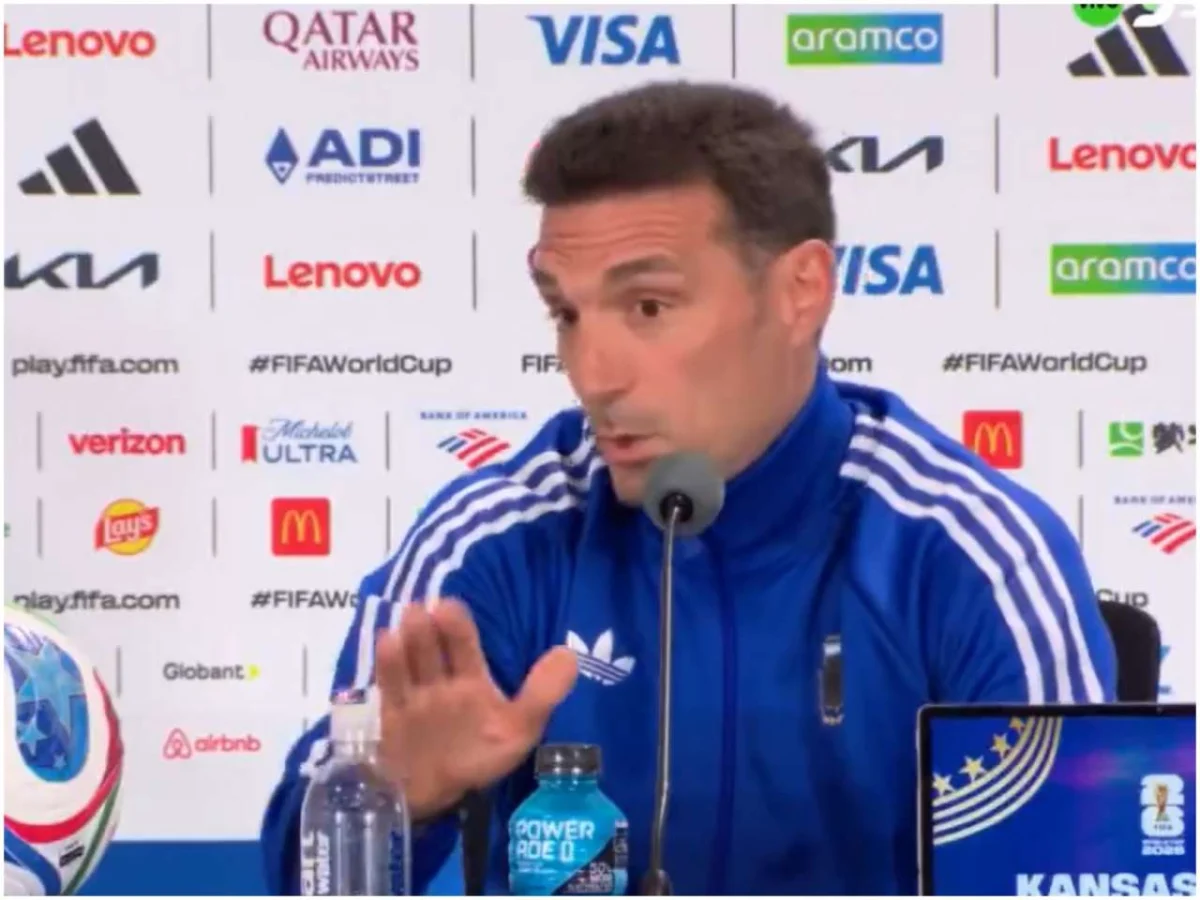
Doha, Qatar – July 11, 2026 – As the FIFA World Cup 2026 reaches its fever pitch, defending champions Argentina find themselves at the epicentre of a swirling controversy. Claims of receiving preferential treatment from tournament organizers, particularly concerning officiating and VAR decisions, have intensified with each passing match. Now, amidst the mounting pressure and ahead of a crucial quarter-final clash, Argentina’s head coach, Lionel Scaloni, has finally addressed these allegations head-on, delivering a defiant and insightful response that aims to galvanize his squad.
Scaloni, the architect of Argentina’s triumphant 2022 campaign, dismissed the accusations not as baseless, but as a familiar narrative that has historically accompanied his nation’s presence on the grandest footballing stage. Far from being a deterrent, he asserted that such criticism only serves to ignite a "rebellion" within his players, propelling them to perform even better. His comments come at a pivotal moment, with La Albiceleste preparing to face a formidable Switzerland in their quarter-final encounter on Saturday, July 12th.
Main Facts: Defending Champions Under Scrutiny
The core of the unfolding drama revolves around persistent whispers and outright accusations that FIFA, the global governing body of football, is subtly — or not so subtly — favouring Argentina in the ongoing World Cup. These claims have permeated social media, sports talk shows, and rival fanbases, painting a picture of a tournament where the reigning champions operate under a different set of rules.
Lionel Scaloni’s response marks a significant turning point in how Argentina is handling the external noise. Speaking to reporters with a composed yet resolute demeanour, Scaloni acknowledged the prevalence of these claims, linking them directly to his team’s status as defending champions. "The thing is, we might have a lot more people who don’t want us to win because we won the last one, and well, we take that into account," he stated. His strategy is clear: rather than shy away from the criticism, he intends to harness it as a potent motivational tool. "And yeah, it gets to the players. We use criticism or comments to rebel. To stage a rebellion and make the players play even better."
)
The allegations have largely centred on contentious Video Assistant Referee (VAR) decisions and perceived leniency in refereeing calls during Argentina’s matches, with their last knockout game against Egypt being cited as a particular flashpoint. However, Scaloni vehemently denied any notion of VAR favouritism, emphasizing the stringent protocols in place. "I think with VAR and all these things, it’s very hard for them to help you. Very hard, very hard. There’s no double interpretation with VAR." He further elaborated on the pre-tournament briefings given to teams: "Plus, they made it crystal clear to us in that course they gave us before the World Cup started. They showed us all the footage. This is how it’s going to be, it’s going to be like this, like that. And it’s been followed to the letter."
These statements underscore a deliberate attempt by the Argentine camp to reclaim the narrative, transforming perceived negativity into a collective drive for success as they navigate the treacherous knockout stages.

Chronology: A History of Allegations and Argentina’s Path to the Quarter-Finals
The notion of Argentina receiving special treatment is not a novel concept in the annals of World Cup history. Scaloni himself drew parallels to the legendary 1986 tournament, a generation before his own, where similar accusations shadowed Diego Maradona’s iconic performances. "It’s been a long time—40 years as you just said, since 1986, right? They were saying we were favoured back then, too. So it’s not something new," Scaloni recounted. This historical perspective suggests a deep-seated perception, perhaps rooted in Argentina’s passionate football culture, their knack for producing generational talents, and the sheer drama that often accompanies their tournament runs.
Argentina’s 2026 World Cup Journey to Date:
Argentina’s path through the group stage of the FIFA World Cup 2026 was not without its moments of tension and brilliance. Having entered the tournament as defending champions, the weight of expectation was immense. They navigated a challenging Group C, securing victories against Saudi Arabia (2-0) and Poland (3-1), but drawing against Mexico (1-1) in a hard-fought contest. These results saw them top their group, albeit with performances that, at times, hinted at the pressure they were under.
)
The Round of 16 pitted La Albiceleste against a determined Egypt. This match, as highlighted by the ongoing controversy, became a focal point for the favoritism claims. While Argentina ultimately triumphed, securing a 2-1 victory, several key moments drew significant attention. A disallowed goal for Egypt early in the second half due to a marginal offside call, confirmed by VAR, and a penalty awarded to Argentina for a seemingly soft foul within the box, which was upheld after a VAR review, fueled the narrative of biased officiating. Social media platforms erupted with debates, with rival fans and pundits dissecting every frame of the controversial incidents. Screenshots and slow-motion replays became viral content, igniting fervent discussions about the impartiality of the referees and the application of VAR.
Escalation of Claims:
The claims gained significant traction not just from the specifics of the Egypt match but from a broader pattern perceived by critics. Beyond VAR, some pointed to a perceived leniency from referees in handling Argentina’s more aggressive tackles or a tendency for opponents to receive harsher bookings for similar infractions. The sheer volume of online discussion and media analysis following each Argentina game compounded the perception, creating an echo chamber where every favourable decision was amplified as evidence of a grander conspiracy. This cumulative effect built significant pressure on the Argentine camp, making Scaloni’s recent address all the more imperative.
)
Supporting Data: Deconstructing the Allegations
To properly understand the dynamics at play, it’s crucial to examine the nature of the allegations and the counter-arguments presented by Scaloni. The debate largely hinges on two primary areas: VAR controversies and general refereeing decisions.
Analyzing VAR Controversies:
VAR, introduced to football to minimize clear and obvious errors, has itself become a source of contention in tournaments worldwide, and the 2026 World Cup is no exception. Scaloni’s comments on VAR are particularly illuminating. He firmly believes that the technology, with its multiple camera angles and objective review process, makes it "very hard" for officials to deliberately favour one team. His reference to the pre-tournament course for teams is significant. These sessions typically involve detailed explanations of VAR protocols, decision-making processes, and the types of incidents that warrant review. If, as Scaloni suggests, these guidelines have been "followed to the letter," it implies a degree of systemic integrity that would make overt manipulation incredibly difficult.
)
However, the human element in VAR interpretation remains a grey area. While the technology provides objective footage, the decision to review an incident, the angle chosen for review, and the ultimate judgment on subjective calls (e.g., handball interpretation, intensity of a foul) still rest with human officials. Critics of Argentina have argued that while VAR might be "followed to the letter," the interpretation of those letters seems to consistently lean in Argentina’s favour during close calls. For instance, the penalty awarded against Egypt, while technically falling within the VAR guidelines, was considered by many to be a marginal call that might not have been given to a less high-profile team. Similarly, offside calls, while seemingly binary, can involve millimetre-level precision where the exact moment of the pass and the player’s position can be debated.
It is important to note that VAR controversies are not exclusive to Argentina. This World Cup, like its predecessors, has seen numerous teams complain about VAR decisions, highlighting the ongoing challenge of achieving perfect officiating even with technological aid. The difference for Argentina lies in the narrative that has been built around them, where every contentious call is immediately viewed through the lens of presumed favouritism.
)
Refereeing Decisions Beyond VAR:
Beyond the specific realm of VAR, claims have also extended to the general tenor of refereeing. Some observers suggest that referees might be more hesitant to issue yellow or red cards to Argentine players, particularly their star individuals, compared to their opponents. Conversely, rival teams might face quicker bookings for similar infringements. This perceived imbalance, even if subtle, can accumulate over a match, influencing its flow and tactical dynamics.
While proving such subtle biases is exceedingly difficult, the perception alone can be damaging. High-profile teams, by virtue of their global appeal and the commercial interests surrounding them, often face intense scrutiny. There is a subconscious, and sometimes conscious, pressure on officials in such high-stakes environments. Scaloni’s counter-argument, rooted in the historical context of Argentina always being a team that "stirs up the tournament," suggests that this scrutiny is simply the price of being a perennial powerhouse.
)
Historical Precedent and Psychological Warfare:
Scaloni’s invocation of the 1986 World Cup is a powerful rhetorical device. By reminding critics that such claims are not new, he attempts to normalize the situation and strip the current allegations of their unique potency. In 1986, Maradona’s infamous "Hand of God" goal, followed by his sublime solo effort against England, sparked a firestorm of controversy and admiration. The narrative of a single player carrying a team, sometimes with a little help from perceived divine intervention or lenient officiating, became ingrained in football folklore. By linking the current situation to this historical precedent, Scaloni effectively frames the criticism as an inevitable byproduct of Argentina’s footballing identity and success.
This strategy also hints at a form of psychological warfare. By openly acknowledging the "people who don’t want Argentina to win," Scaloni turns external negativity into an internal rallying cry. It creates an "us against the world" mentality, which can be incredibly powerful in motivating a team in a high-pressure tournament.
)
Official Responses: Scaloni’s Defiance and the FIFA Stance
Lionel Scaloni’s response is not merely a defensive posture; it is a calculated act of leadership designed to protect and inspire his squad. His direct quotes reveal a multi-faceted approach:
- Dismissal through Normalization: By stating "it’s not something new" and referencing 1986, he attempts to defuse the accusations by presenting them as a recurring, almost traditional, aspect of Argentina’s World Cup journey. This minimizes the perceived novelty and weight of the current claims.
- Motivational Catalyst: The core of his message is the transformation of criticism into motivation. "We use criticism or comments to rebel. To stage a rebellion and make the players play even better." This is a classic motivational tactic, turning external hostility into internal solidarity and determination. It suggests that the team thrives under adversity.
- Defense of VAR Integrity: His detailed explanation of VAR’s implementation, stressing the lack of "double interpretation" and adherence to pre-tournament guidelines, is a direct challenge to those who claim technological manipulation. This aims to restore faith in the system, or at least, in its application to his team’s matches.
- Acknowledgement of Rivalry: Scaloni pragmatically acknowledges that "there will be people who don’t want another national team to win." This broadens the scope, implying that such sentiments are inherent in competitive sports, thus making Argentina’s situation less unique and less conspiratorial.
Scaloni’s overall stance is one of defiance mixed with strategic pragmatism. He isn’t denying the existence of the claims, but rather reframing their impact and validity. His leadership style, which has often been characterized by a calm yet firm approach, shines through in this response. He shields his players while simultaneously injecting a dose of fighting spirit.
)
From FIFA’s perspective, the organization generally maintains a public stance of neutrality and adherence to fair play. While they will not comment on specific allegations of favouritism towards a particular team, their communication around VAR and refereeing protocols consistently emphasizes impartiality and the integrity of the game. Any formal investigation into such claims would require compelling evidence, which, in the realm of subjective officiating, is often hard to procure definitively. The very existence of VAR and the detailed training given to officials are FIFA’s primary mechanisms to ensure perceived fairness.
Implications: Impact on the Tournament and Argentina’s Legacy
The ongoing controversy and Scaloni’s response carry significant implications, both for Argentina’s immediate World Cup campaign and for the broader perception of the tournament.
)
Impact on Team Morale and Performance:
Scaloni’s assertion that the criticism "gets to the players" but is used to "rebel" suggests a controlled emotional response within the squad. If genuinely adopted, this "us against the world" mentality could forge an even stronger bond among the players, leading to heightened focus and intensity on the pitch. For a team boasting superstar talents like Lionel Messi (if still playing in 2026) and other seasoned professionals, channelling external negativity into positive aggression can be a powerful psychological edge. However, there’s always a fine line; excessive focus on external factors could also lead to distractions or an over-reliance on perceived injustices, potentially affecting performance negatively.
Impact on Public Perception and Legacy:
These claims, regardless of their veracity, undoubtedly affect Argentina’s global image. While their legions of fans will rally behind them, rival supporters and neutral observers might view their successes with a lingering sense of doubt. If Argentina were to go on and win the World Cup again, the "favoritism" narrative could potentially diminish the perceived purity of their achievement in the eyes of some, adding an asterisk to their legacy. This is a battle for hearts and minds as much as it is for trophies.
)
Impact on the Tournament and Refereeing:
The persistent claims of favouritism, especially regarding VAR, highlight the ongoing challenges in officiating and technology in modern football. While VAR aims for transparency and accuracy, it has inadvertently opened new avenues for debate and skepticism. The pressure on referees in Argentina’s upcoming matches, particularly the quarter-final against Switzerland, will be immense. Every close call, every VAR review, will be scrutinized with an even finer tooth comb, potentially leading to more cautious or, conversely, overly compensatory decisions.
The Quarter-Final Against Switzerland:
The upcoming clash against Switzerland on Saturday, July 12th, is now imbued with an additional layer of drama. Switzerland, a notoriously organized and resilient team, reached the quarter-finals through disciplined performances and tactical acumen. They will be aware of the narrative surrounding Argentina and might even try to exploit it, perhaps by appealing more vociferously for fouls or VAR reviews. For Argentina, this match is not just about overcoming a strong opponent; it’s about making a definitive statement against the backdrop of the controversy. A convincing victory, free of contentious decisions, would be the ideal rebuttal. The match, scheduled for 6:30 AM IST (Indian Standard Time), promises to be a captivating encounter watched by millions globally.
)
Future of Football Governance:
Ultimately, the controversy surrounding Argentina serves as a reminder of the inherent difficulties in maintaining absolute impartiality in a sport driven by passion, national pride, and immense commercial interests. It underscores the continuous need for FIFA and other governing bodies to refine officiating protocols, enhance VAR transparency, and address perceptions of bias to ensure the integrity and credibility of the beautiful game for all participants.
Scaloni’s defiant response is more than just a press conference; it’s a declaration of intent. It encapsulates Argentina’s historical relationship with scrutiny and sets the stage for what promises to be an intensely watched and debated climax to their World Cup journey. Whether this "rebellion" culminates in further glory or merely adds another chapter to their storied, and often controversial, history, remains to be seen.
