

By [Your Name/Agency]
Published: October 9, 2026
In a move set to redefine the structural backbone of the world’s fifth-largest economy, the Indian Union Cabinet, on October 6, 2026, officially sanctioned the creation of the Integrated Transport and Logistics Authority (ITLA). Positioned as a "Special Purpose Vehicle" (SPV) and the supreme apex body for the nation’s infrastructure planning, the ITLA is being hailed as the "referee" for India’s sprawling network of roads, rails, and ports.
This institutional overhaul aims to synchronize the often-fragmented efforts of various transport ministries, ensuring that the trillions of rupees poured into infrastructure translate into a seamless, multi-modal reality. For an economy striving for a "Viksit Bharat" (Developed India) status by 2047, the ITLA represents more than just a new committee; it is a fundamental shift toward data-driven, long-term strategic planning.
1. Main Facts: The Mandate of the ITLA
The establishment of the ITLA marks the culmination of years of internal policy debate regarding "siloed" infrastructure development. As a statutory body, the ITLA is tasked with three primary functions that will govern the future of Indian movement:
The Ten-Year National Transport Master Plan
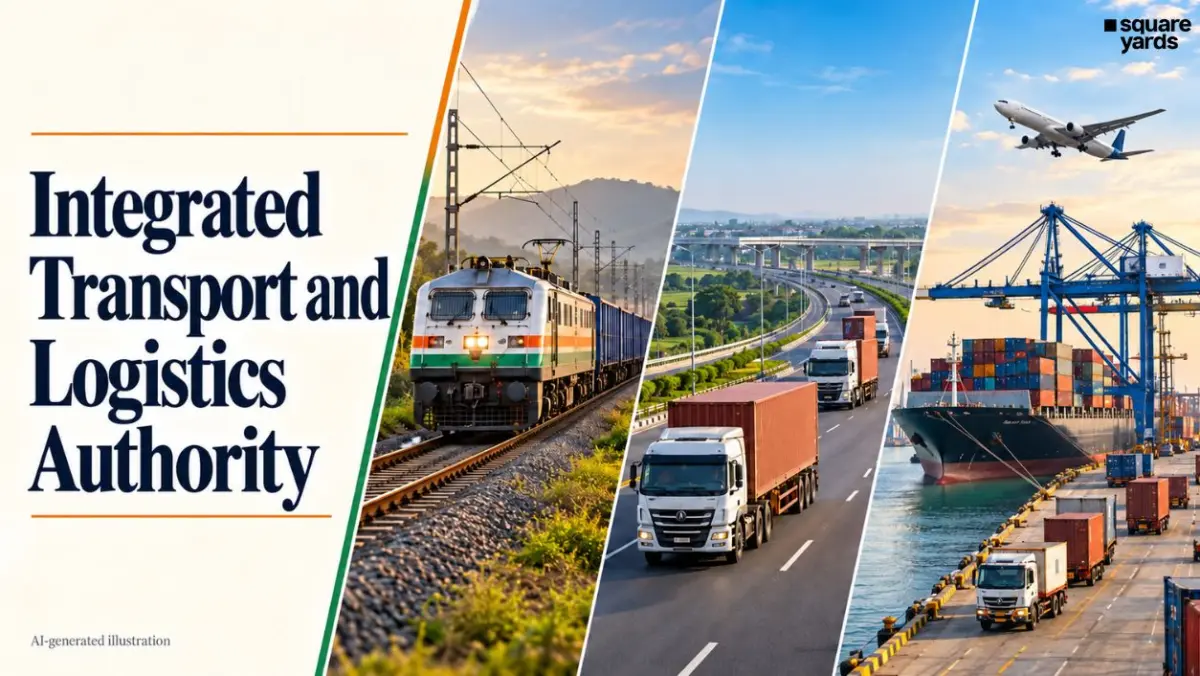
The ITLA’s flagship responsibility is the formulation and maintenance of a National Transport Master Plan with a minimum horizon of ten years. Unlike previous five-year plans that often focused on individual sectors (such as the Ministry of Railways or the Ministry of Road Transport and Highways), this master plan will integrate:
- Roads and National Highways
- Railway Networks and Freight Corridors
- Major and Minor Ports
- Civil Aviation and Regional Connectivity (UDAN)
- Inland Waterways and Coastal Shipping
- Urban Mobility and Logistics Hubs
Technical Appraisal and Monitoring
Effective immediately, the ITLA will serve as the technical gatekeeper for all central infrastructure projects with an estimated cost of ₹500 crore or more. While financial appraisals will remain under the purview of existing mechanisms (like the Public Investment Board), the ITLA will evaluate projects based on their technical viability and, crucially, their alignment with the National Master Plan. Furthermore, it will conduct post-completion impact assessments to ensure that the promised benefits of connectivity are actually realized.
The National Transport Data Repository
Perhaps the most technologically ambitious aspect of the ITLA is the creation of a National Transport Data Repository. By aggregating data from GST e-way bills, FASTag, the Vahan database, GPS tracking on commercial vehicles, and real-time urban traffic feeds, the ITLA will create a "digital twin" of India’s logistics landscape. This will allow planners to see exactly where goods and people move, identifying bottlenecks with surgical precision.
2. Chronology: The Decade-Long Journey to Integration
The birth of the ITLA did not happen in a vacuum. It is the result of a deliberate, decade-long effort to modernize India’s logistics and transport framework.
- 2014–2019: The Capacity Building Phase. This period saw a massive surge in capital expenditure, focusing on doubling the pace of highway construction and revitalizing the railway network. However, development remained largely "siloed."
- 2019–2021: The Birth of Multi-Modality. The launch of the National Common Mobility Card (2019) and the announcement of the PM Gati Shakti National Master Plan (2021) signaled a shift toward integrated planning. Gati Shakti provided the digital mapping tools, but lacked a central "referee" to enforce the plan.
- 2022–2025: Efficiency Gains. During these years, India’s logistics costs began a steady decline. Industry reports from FY26 suggest costs fell to approximately 10-10.7% of GDP, down from the 13-14% range seen a decade prior. This was fueled by roughly $360 billion in cumulative infrastructure investment.
- October 6, 2026: The ITLA Milestone. The Union Cabinet officially transitions from a "coordination" model to an "authority" model by approving the ITLA, giving the vision of integrated transport a permanent institutional home.
3. Supporting Data: The Economic Engine Behind the Move
The urgency behind the ITLA’s formation is underscored by the sheer scale of India’s logistics market. According to recent economic surveys and industry data:
- Logistics Cost Reduction: The drop in logistics costs to 10% of GDP represents a multi-billion dollar saving for the Indian manufacturing sector, making Indian exports more competitive globally.
- Investment Magnitude: The $360 billion invested over the last decade has increased the national highway network by over 60% and electrified nearly 95% of the broad-gauge railway network.
- The ₹500 Crore Threshold: By focusing on projects above this value, the ITLA will oversee approximately 80% of the central government’s infrastructure budget, ensuring that high-impact projects are not built in isolation.
- Growth in Emerging Corridors: Cities like Ahmedabad and Kolkata have seen logistics leasing grow at rates exceeding 30% year-on-year, highlighting the need for coordinated planning in regions that are rapidly outgrowing their current infrastructure.
4. Official Responses and Strategic Vision
While the official notification emphasizes "administrative efficiency," the broader strategic vision is clear. Senior officials within the Ministry of Finance and the NITI Aayog have long advocated for a body that can prevent "white elephant" projects—infrastructure built at high cost that remains underutilized due to lack of last-mile connectivity.
The ITLA is expected to work in tandem with PM Gati Shakti. While Gati Shakti remains the "Geospatial Platform" (the map), the ITLA will be the "Executive Body" (the planner). This distinction is vital: Gati Shakti shows where the pipes and cables are; ITLA decides where the next major highway should go to ensure it meets the railhead.
In urban centers, the ITLA is expected to provide a template for Unified Metropolitan Transport Authorities (UMTAs). In Delhi, efforts have already been renewed to set up a singular authority to manage the capital’s overlapping metro, bus, and regional rail systems, mirroring the ITLA’s national-level mandate.
5. Implications: Property Markets and the "Connectivity Dividend"
For investors, developers, and homeowners, the ITLA is a game-changer. Real estate value is inherently tied to accessibility. The ITLA’s mission to eliminate "weakest links" in the transport chain directly impacts property valuations.
Strengthening Established Logistics Clusters
Established hubs like Delhi-NCR, Chennai, Mumbai, Pune, and Bengaluru are currently the kings of industrial leasing. However, they often suffer from congestion at the "last mile." ITLA’s focus on interlinking rail terminals with existing warehouse belts is expected to solidify these regions’ dominance, potentially leading to a premium in industrial land rates.
The Rise of Emerging Freight Corridors
The data-driven approach of the ITLA will likely shine a spotlight on cities like Ahmedabad and Kolkata. As these cities grow at 30%+, the ITLA’s intervention can ensure that infrastructure is built ahead of the demand curve, rather than in response to it. This provides a "first-mover advantage" for warehouse developers who align their projects with the 10-year National Transport Master Plan.
The Premium on Transit-Oriented Development (TOD)
In the residential sector, the ITLA’s influence on urban mobility will be felt through the promotion of well-connected interchanges. History shows that homes near multi-modal hubs—where a metro station meets a bus rapid transit (BRT) system and a regional rail terminal—command a significant price premium. By reducing commute times, the ITLA helps mitigate the primary trade-off buyers make: price versus distance.
6. The Fine Print: Why Caution is Warranted
Despite the optimistic outlook, seasoned observers point to several hurdles that the ITLA must overcome to avoid becoming just another layer of Indian bureaucracy.
The "Advisory" Trap
India has a history of creating coordination bodies that lack "teeth." If the ITLA’s technical appraisals are merely advisory and do not have the power to veto or redirect funding for poorly planned projects, it risks becoming a "consultation layer" that adds time but no value. The success of the ITLA depends on its ability to influence the Ministry of Finance during the budget allocation process.
Implementation Lag
The National Common Mobility Card (NCMC) serves as a cautionary tale. Launched with great fanfare in 2019, it was functional in only 13 metro projects and 11 bus corporations as of July 2026. Data integration is notoriously slow in a federal structure where states control significant portions of the transport network.
The Scale Gap
The ₹500 crore threshold means the ITLA will focus on "mega-projects." However, for the average citizen or small-scale developer, the "last mile"—the local roads and neighborhood connectivity—is what matters most. These remain under the jurisdiction of local municipal bodies, which may not always align with the ITLA’s grand 10-year vision.
7. Conclusion: Navigating the New Infrastructure Era
The creation of the ITLA is a recognition that India can no longer afford to build in fragments. The "Connectivity Dividend"—the economic boost provided by efficient transport—will go to those who can read and respond to the ITLA’s National Transport Master Plan first.
For property buyers and business leaders, the sensible approach is one of "informed patience." The master plan will take time to materialize, and speculative pricing often runs ahead of actual construction. However, by watching the ITLA’s technical appraisals, stakeholders can gain early, reliable signals about which regions are set to become the next hubs of Indian commerce.
The ITLA is not just a referee; it is intended to be the choreographer of India’s future growth. If it succeeds in aligning planning with execution, the next property and industrial boom will be found exactly where the ITLA’s maps say the roads, rails, and ports finally meet.
