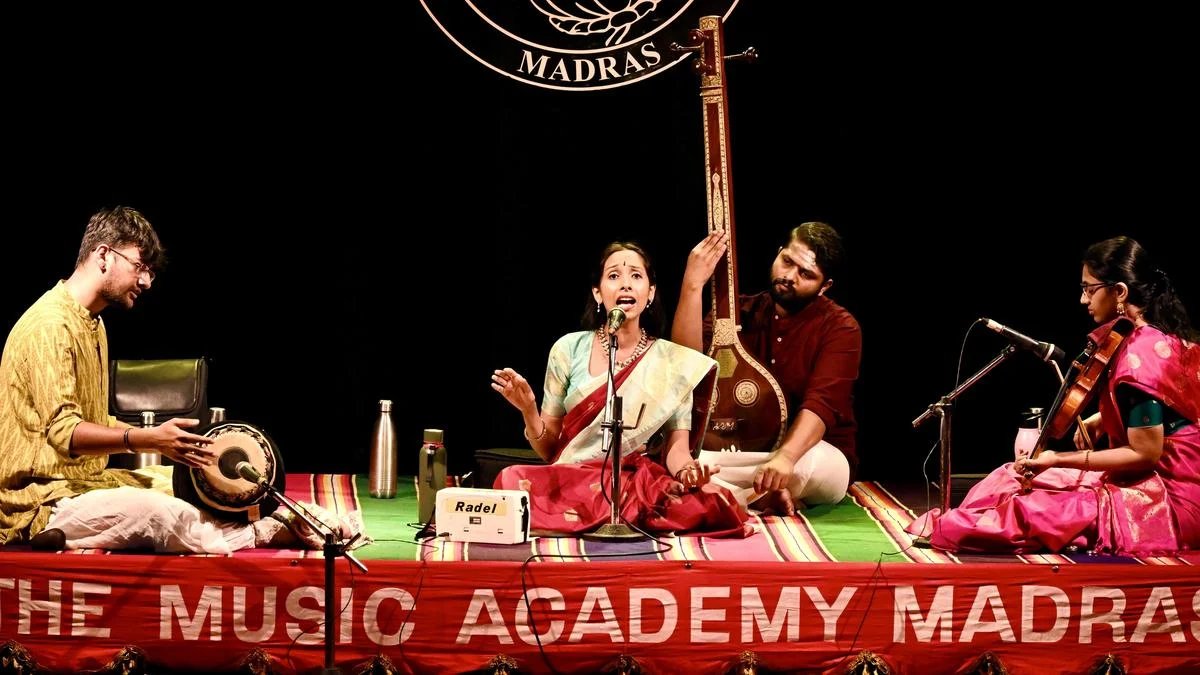
Chennai, India – The hallowed halls of The Music Academy recently resonated with a profound exploration of devotional poetry, as vocalist V. Subashri presented a meticulously crafted thematic concert dedicated to the timeless compositions of Purandaradasa. Hailed across centuries as the "Sangita Pitamaha" (Father of Music), Purandaradasa, a 16th-century saint-composer from Karnataka, left an indelible mark on Indian classical music with his profound insights into life, spirituality, and the human condition. Subashri’s performance was not merely a rendition of songs, but a deeply felt journey through the spiritual evolution and philosophical depth of this revered figure.
The Genesis of a Saint: From Moneylender to Mystic
The concert served as a poignant reminder of Purandaradasa’s extraordinary life journey. Born Srinivasa Nayaka, he was initially a prosperous and famously frugal moneylender in Karnataka. His transformation into a wandering saint-poet was a pivotal moment, reportedly sparked by his wife’s unwavering devotion to Lord Vittala. This profound spiritual awakening led him to renounce his material wealth and dedicate his life to composing verses that articulated a rare depth and immersive quality. Unlike many devotional poets whose works stem from pure piety, Purandaradasa’s kritis are imbued with the raw, honest struggle of someone who grappled with the allure of material existence. This inherent tension – the persistent tug-of-war between worldly attachments and the yearning for spiritual surrender – forms the bedrock of many of his most enduring compositions. Subashri’s selection of pieces masterfully captured this nuanced emotional landscape, allowing the audience to connect with the very human core of Purandaradasa’s spiritual quest.
A Journey Through Sound and Spirit: The Performance Unfolds
Subashri’s recital, ably supported by Mantha Sriramya on the violin and Kaushik Sridhar on the mridangam, commenced with an invocatory plea, "Sharanu Siddhi Vinayaka," in the melodious raga Sowrashtram. The choice of this particular composition, beginning with the word "sharanu" (refuge, surrender), was deliberate and set the overarching theme of the concert. Purandaradasa frequently initiated his works with an act of surrender, and Subashri’s rendition perfectly captured this spirit without unnecessary embellishment. The violin accompaniment was commendably restrained, mirroring the devotional tone, while Kaushik Sridhar’s mridangam playing was marked by its clarity and precision, particularly in the rhythmic interplay of sollukattu (spoken syllables).
The concert then flowed into "Nimma Bhagya Doddado," a piece set in the evocative raga Begada. Here, the kalpanaswaras (extemporaneous melodic passages) were intricately woven around the concept of Rama Nama (the name of Rama), reinforcing the devotional framework of the composition. Sriramya’s violin once again provided sensitive support, echoing the vocal lines with grace, and Sridhar’s mridangam playing maintained an unhurried, steady rhythm, allowing the devotional essence of the piece to fully resonate. The composition concluded with the artist’s mudra charanam (a verse bearing the composer’s signature), a recurring feature that added a sense of authenticity and reverence to each piece.
The momentum of the concert was further amplified by the briga-rich (rapid melodic flourishes) rendition of "Dayamado Ranga Dayamado" in Kalyani. This piece, with its plea for divine mercy, offered a moment of intense emotional expression, and Subashri’s vocal delivery conveyed a palpable sense of earnest supplication.
A welcome shift in mood and energy was ushered in with a brisk alapana (improvisational melodic exploration) in Atana, preceding the rendition of "Sakala Graha Balaneene." This composition, known for its philosophical depth, provided a platform for Subashri to showcase her interpretative skills. The niraval (a section where the vocalist improvises on a specific line of the composition) at "Pakshi Vahana Deena" was particularly noteworthy. Here, the violin, under Sriramya’s skilled hands, acted as a seamless extension of Subashri’s vocal line, responding with remarkable sensitivity to the nuanced contours of the phrase. The kalpanaswaras that followed were concise and purposeful, leading once again to the characteristic mudra charanam.
The pace quickened with "Rama Rama Rama Rama Rama Ennire Sita" in Vasanta. This piece, characterized by its rapid melodic development, saw the mridangam effectively capturing the inherent spirit of the raga through its tonal quality and rhythmic patterns.
The Heart of the Concert: A Deep Dive into Bhairavi
The raga Bhairavi served as the thematic and emotional centerpiece of the evening. Subashri’s alapana in Bhairavi was an expansive and deeply evocative journey, traversing the raga’s vast emotional and melodic landscape. While occasional subtle breaks in the lower register of her voice were noticeable, they did not detract from the overall emotional coherence and profound spiritual resonance of the exploration. This masterful unfolding of Bhairavi paved the way for the rendition of the composition "Odi Barayya Vaikunta Pathi." The niraval at "Nodi Mathadi" allowed for a sustained exploration of the lyrical and philosophical content, and the subsequent kalpanaswaras were skillfully executed, with the violin continuing to hold its own distinct charm throughout the passage. Kaushik Sridhar’s tani avartanam (percussion solo) in Bhairavi was earnest and engaging, adding a dynamic rhythmic dimension to the performance.
The Meditative Finale: Ugabhogas and the Power of Surrender
As the concert approached its conclusion, the musical landscape shifted towards the quietly meditative world of ugabhogas (short, devotional verses often interspersed with melodic passages). Subashri presented "Anuvige Anuvagi" in Desh, followed by "Hari Embodhe" in Kalyana Vasantam and Durga. These ugabhogas, with their praise of Lord Hari, showcased the subtle shifts in mood and color provided by the distinct ragas, creating a tapestry of devotion that was both intricate and deeply moving.
These meditative pieces gracefully led into "Mandamatiyu Nanu," a composition characterized by its frank self-deprecation and unreserved surrender to Purandaravittala. This piece belongs to the venerable tradition of Bhakti poetry that embraces the dasya disposition – the stance of a humble servant. Here, the devotee approaches the divine not with any claim of merit or worthiness, but with the simple, profound reality of longing. After the emotional intensity that had been carefully built throughout the evening, this composition arrived with the quiet, yet potent, force of a profound conclusion. It was a moment of profound introspection, allowing the audience to absorb the essence of Purandaradasa’s humility and absolute faith.
The concert culminated with the universally beloved "Bhagyada Lakshmi Baramma" in Madhyamavati. This iconic piece, a prayer for prosperity and divine grace, was rendered with a warmth and sincerity that resonated deeply with the audience. The enthusiastic reception given to each of Subashri’s selections underscored Purandaradasa’s enduring and cherished place in the musical memory of every Carnatic music enthusiast.
Supporting Data and Contextual Significance
Purandaradasa’s influence extends far beyond his immediate time. His innovative use of simple vernacular language, coupled with profound philosophical content, made his compositions accessible to the masses, fostering a widespread devotional movement. He is credited with systematizing the melodic structure of Carnatic music, establishing a pedagogical framework that continues to be followed. His emphasis on bhakti (devotion) as a path to salvation and his critique of caste distinctions and empty rituals were revolutionary for his era. V. Subashri’s concert served as a vital contemporary platform to reintroduce these foundational principles to a modern audience, demonstrating their continued relevance and power. The choice of The Music Academy as the venue further amplified the significance of the performance, placing it within a lineage of esteemed artistic presentations that have shaped and preserved classical Indian music.
Implications and Future Resonance
V. Subashri’s thematic concert dedicated to Purandaradasa is more than just a musical performance; it is a cultural reaffirmation. In an era often characterized by rapid change and fragmented attention, such curated experiences offer a crucial opportunity for introspection and connection to heritage. By focusing on the thematic unity of Purandaradasa’s works, Subashri highlighted the composer’s consistent message of surrender, self-reflection, and the pursuit of spiritual liberation. This approach not only educated the audience about the depth and breadth of Purandaradasa’s contribution but also provided a spiritual anchor. The success of such concerts underscores a growing appreciation for classical arts that offer not just aesthetic pleasure but also intellectual and spiritual nourishment. It suggests a sustained interest in engaging with the philosophical underpinnings of Indian culture, ensuring that the wisdom of figures like Purandaradasa continues to inspire and guide future generations. The performance serves as a potent reminder that the melodies of the past, when interpreted with understanding and passion, can resonate powerfully in the present and offer a timeless path to inner peace.