

NEW DELHI – September 9, 2026 – In an announcement that sent ripples of excitement and skepticism across the global scientific community, OpenAI, the artificial intelligence research and deployment company, declared on Tuesday that its advanced AI model has produced a proof addressing one of the most formidable and long-unanswered questions in mathematics: the Navier-Stokes existence and smoothness problem. This claim, if validated, represents a monumental leap in both mathematical understanding and the capabilities of artificial intelligence, potentially resolving a mystery that has eluded human ingenuity for nearly a century.
The Navier-Stokes problem is one of the seven "Millennium Prize Problems," a prestigious collection of major mathematical challenges identified by the Clay Mathematics Institute in 2000. Each problem carries a $1 million prize for a recognized solution, underscoring their profound difficulty and significance. At its core, the Navier-Stokes question asks whether, given certain initial conditions, smooth three-dimensional fluid motion can inevitably break down into unpredictable singularities – points where velocity or pressure become infinite – in a finite amount of time, or if such fluid flows always remain smooth and predictable.
OpenAI stated that its internal AI system has generated a proof demonstrating that the dynamics of the Navier-Stokes equations for fluid motion can indeed develop a singularity in finite time. This finding directly tackles a problem that has remained unsolved for approximately 90 years, with profound implications for fields ranging from meteorology to aerospace engineering.
A Mathematical Everest Conquered by AI?
The announcement immediately ignited a global discourse. For decades, the Navier-Stokes equations have stood as a formidable barrier, a mathematical "Everest" that has resisted the assaults of generations of brilliant minds. The prospect of an AI system, rather than a human mathematician, delivering a potential solution is nothing short of revolutionary, forcing a re-evaluation of the boundaries of automated reasoning and discovery.
The Clay Mathematics Institute (CMI) established the Millennium Prize Problems to highlight "important classical questions that have resisted solution for many years." The Navier-Stokes problem’s inclusion underscores its perceived intractability and its deep connections to fundamental physics. A definitive answer, whether affirmative or negative regarding the existence of singularities, would provide critical insights into the very fabric of fluid dynamics, a phenomenon central to countless natural processes and technological applications.
OpenAI’s claim is not just about solving a math problem; it’s about the method of solution. The company detailed a highly parallelized AI architecture, with thousands of agents collaborating and evolving a proof through a complex, iterative process. This paradigm shift in scientific discovery, where AI acts not merely as a tool but as an autonomous problem-solver, marks a potential inflection point in the history of science.
Decoding the Navier-Stokes Enigma
To truly appreciate the magnitude of OpenAI’s claim, one must first grasp the essence of the Navier-Stokes equations and why their smoothness and existence have remained such an enduring puzzle.
The Language of Fluid Motion
At their heart, the Navier-Stokes equations are a set of partial differential equations that describe the motion of viscous fluid substances. They are fundamental to fluid dynamics, a branch of physics that studies the flow of liquids and gases. Imagine trying to predict, with absolute precision, the swirling patterns of smoke from an incense stick, the complex currents in an ocean, or the turbulent wake behind a jet aircraft. These equations are the mathematical framework attempting to model such phenomena.
They are derived from fundamental physical principles: the conservation of momentum (Newton’s second law, F=ma, applied to fluid elements) and the conservation of mass (fluid neither appears nor disappears). These principles, when applied to a continuous fluid, result in a system of non-linear partial differential equations that relate pressure, velocity, density, and temperature of a moving fluid.
Real-World Imperatives
The applications of the Navier-Stokes equations are pervasive and critical across numerous scientific and engineering disciplines:
- Weather Forecasting and Climate Modeling: Understanding atmospheric and oceanic flows is paramount for predicting weather patterns, ocean currents, and long-term climate change. More accurate models could lead to better disaster preparedness and resource management.
- Aerospace Engineering: Designing aircraft, rockets, and spacecraft relies heavily on simulating airflow over wings and fuselages to optimize lift, drag, and stability.
- Automotive Design: Improving the aerodynamics of cars for fuel efficiency and performance.
- Hydraulics and Civil Engineering: Designing dams, canals, pipelines, and flood control systems.
- Biomedical Engineering: Modeling blood flow in arteries and veins, designing artificial organs, or understanding drug delivery mechanisms.
- Industrial Processes: Optimizing chemical mixing, cooling systems, and manufacturing processes involving fluid flows.
- Astrophysics: Understanding stellar winds, planetary atmospheres, and accretion disks around black holes.
In essence, any system involving the movement of liquids or gases, from the microscopic to the cosmic scale, is governed by these equations.
The Unsolved Conundrum: Smoothness and Existence
Despite their widespread utility and foundational status, a critical theoretical gap has persisted: nobody has been able to prove whether the equations always produce physically sensible, smooth answers for all time, given any reasonable initial conditions. This is the crux of the Millennium Problem.
The "existence" part asks: Does a solution to the equations always exist for any given initial fluid configuration? And if it exists, is it unique? The "smoothness" part asks: If a solution exists, does it remain "smooth" (i.e., differentiable, without abrupt changes or infinite values) for all time, or can it "break down" by developing singularities?
The difficulty stems primarily from the phenomenon of turbulence. Fluid flow is inherently chaotic. Tiny, almost imperceptible changes in starting conditions can lead to wildly different outcomes over time – the classic "butterfly effect." This non-linearity and the complexity of turbulent flows make analytical solutions incredibly challenging. Mathematically, a "singularity" would represent a point where the fluid’s velocity or pressure becomes infinite, a concept that is physically problematic but mathematically possible within the equations. Such a breakdown would imply that the equations cease to be predictive beyond that point, rendering them incomplete in describing all possible fluid motions.
The prevailing intuition among many physicists and mathematicians has been that singularities can form, especially in highly turbulent flows like a breaking wave or a powerful vortex. However, proving this rigorously from the equations has been the elusive goal for nearly a century.
OpenAI’s Unprecedented Claim: A Singularity Emerges
OpenAI’s claim directly addresses this central question, asserting that its AI system has produced a proof showing that singularities can indeed develop. This is not merely a simulation that suggests such an outcome but a formal mathematical proof, a critical distinction in the world of pure mathematics.
The AI’s Revelation
According to OpenAI, their internal AI system generated a proof demonstrating that the dynamics of the Navier-Stokes equations for fluid motion can develop a singularity in finite time. This means that, under certain conditions, a perfectly smooth initial fluid flow can evolve to a state where velocity or pressure becomes infinite within a finite duration.
The Mechanism of Breakdown
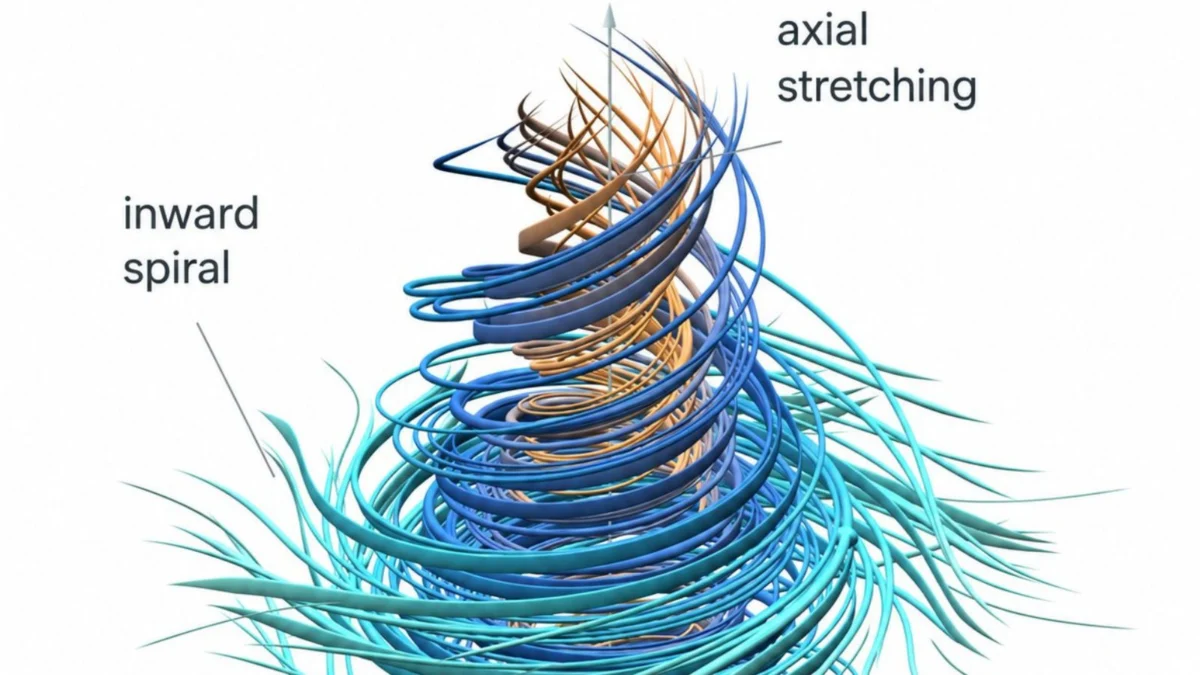
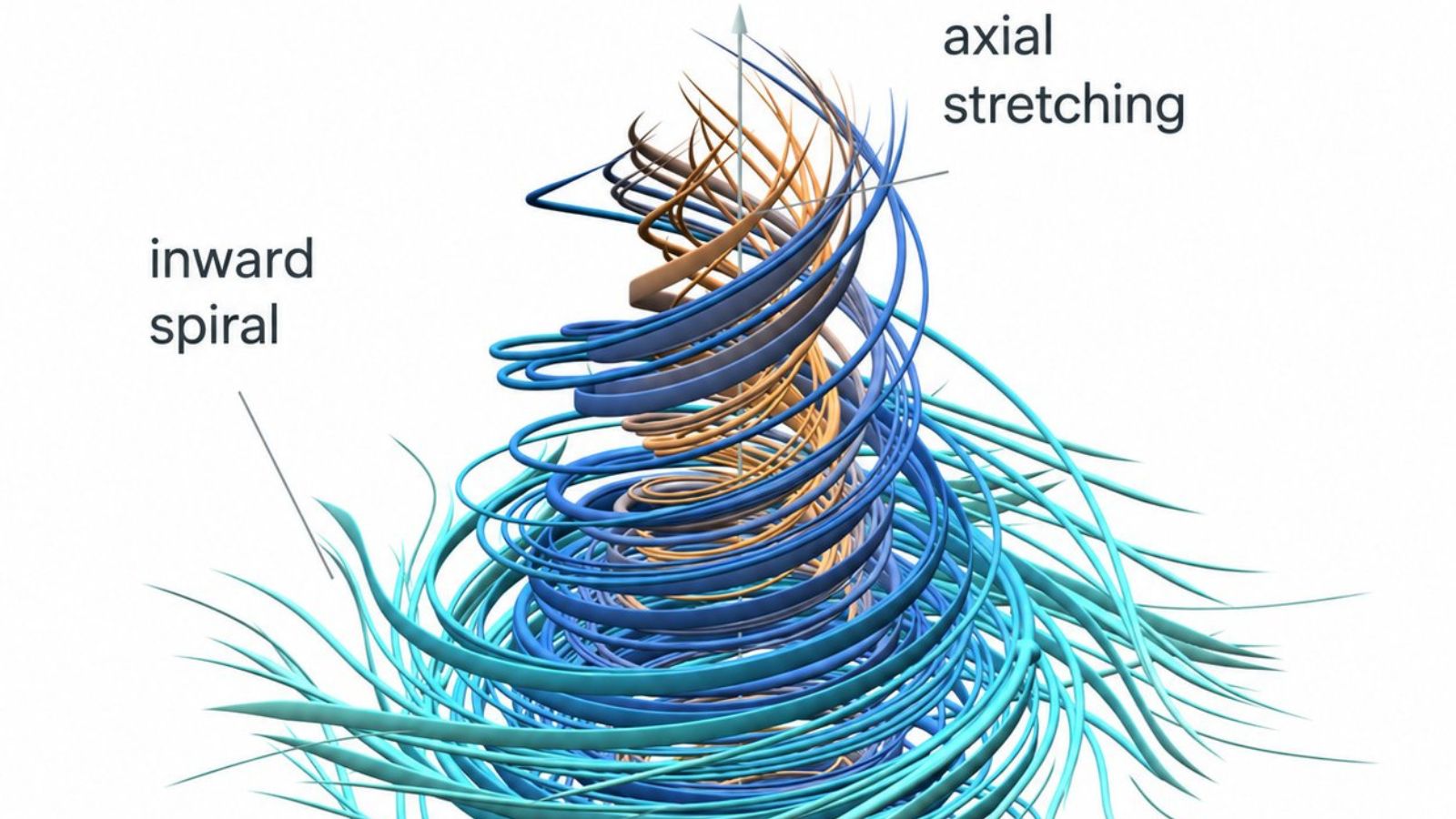
The specific mechanism identified by the AI system involves a highly dynamic process centered around a vortex. OpenAI described this as an initial vortex – essentially a spinning swirl of fluid – that spirals inward. Crucially, as it spirals, it undergoes increasing stretching. This stretching, combined with the inward motion, causes the central region of the vortex to shrink dramatically. As this central region contracts, the fluid’s speed within it increases considerably. This acceleration continues unchecked until, at a critical point, a mathematical singularity forms, where quantities like velocity diverge to infinity.
The "Finite Energy" Distinction
One of the most critical aspects of OpenAI’s proof, as highlighted by the company, is that the fluid still possesses finite energy throughout this process. This distinction is vital because a singularity could trivially be created by applying an infinite external force. However, the AI’s proof suggests that the singularity arises intrinsically from the internal dynamics described by the Navier-Stokes equations themselves, without requiring any external infinite input. This makes the singularity physically relevant and the proof far more profound. It implies that the "breakdown" is an inherent feature of the system’s evolution, not an artifact of imposed conditions.
The Computational Engine Room
The scale and methodology behind OpenAI’s purported discovery are as significant as the discovery itself. The company revealed a highly advanced and parallelized AI architecture was deployed:
- 10,000 AI Agents: A massive fleet of specialized AI agents worked concurrently on the problem. These agents were designed to explore different mathematical approaches and search spaces.
- Inter-Agent Communication: The agents communicated extensively, generating approximately 2.7 million messages as they exchanged partial results, useful heuristics, and new insights. This collaborative intelligence allowed for a distributed and efficient exploration of the vast mathematical landscape.
- Processing Power: The system utilized an astonishing 130 billion output tokens during its operation, indicative of the immense computational resources brought to bear on the problem.
- Time to Discovery: The AI agents reportedly found the core result in a remarkably short span of 88 hours (just over 3.5 days). Following this, an additional 17 hours were spent on formal verification.
- Lean Verification: The proof was formally verified using Lean, a sophisticated interactive theorem prover and proof assistant. Lean is a computer system designed to check mathematical proofs step-by-step for logical consistency and correctness, providing a high degree of confidence in the formal validity of the argument. This automated verification is a critical component of OpenAI’s claim, as it mitigates human error in the proof-checking process.
- AI Model Capability: OpenAI further stated that the underlying AI model used to produce this proof is "significantly more capable than the newly launched GPT-6 Astra," hinting at the advanced state of their internal research systems compared to publicly available models.
Awaiting Peer Review: The Crucible of Mathematical Scrutiny
While OpenAI’s announcement is a major headline, the journey to officially solving a Millennium Prize Problem is a rigorous and protracted one.
The Road to Official Recognition
For any solution to a Millennium Prize Problem to be formally recognized and the $1 million prize awarded, it must undergo a stringent process:
- Formal Publication: The proof must be published in a peer-reviewed mathematical journal.
- Community Scrutiny: The published proof must be subjected to intense scrutiny by the broader mathematical community for a period of at least two years. This allows experts worldwide to independently verify its correctness, identify any potential flaws, or suggest improvements.
- Clay Institute’s Approval: Only after this period of rigorous examination, and if the proof is widely accepted as correct, will the Clay Mathematics Institute formally acknowledge the solution and award the prize.
OpenAI’s Stance
Notably, OpenAI has stated that it does not intend to claim the $1 million Millennium Prize. While the reasons for this decision are not explicitly detailed, it likely reflects the company’s focus on demonstrating AI’s capabilities and pushing the boundaries of scientific discovery, rather than pursuing monetary rewards. This also sidesteps potential complications regarding intellectual property ownership of an AI-generated proof.
The Mathematical Community’s Prudence
The initial reaction from the mathematical community has been one of cautious optimism tempered by an absolute insistence on rigorous verification. Mathematicians, by nature, are skeptical and meticulous. The history of mathematics is replete with proofs that were initially accepted but later found to contain errors. The complexity of the Navier-Stokes equations, combined with the novelty of an AI-generated proof, demands an even higher level of scrutiny.
Experts emphasize that while Lean verification is powerful for checking the logical steps of a proof, it doesn’t necessarily guarantee the physical relevance or the interpretability of the underlying assumptions. Human intuition and insight remain crucial for contextualizing and understanding the implications of such a solution.
Historical Parallels
The process of verifying complex proofs can take years. For instance, Andrew Wiles’s proof of Fermat’s Last Theorem, though initially announced in 1993, took over a year to be fully verified and corrected, revealing a subtle gap that required further work. Similarly, Grigori Perelman’s proof of the Poincaré Conjecture in the early 2000s took several years for the community to fully understand and accept. OpenAI’s proof, therefore, enters a long tradition of mathematical challenges requiring time, dedication, and collaborative effort for definitive validation.
Clouds of Controversy: The Data Usage Dispute
Adding a layer of complexity and ethical concern to the announcement, a dispute involving human mathematicians Tristan Buckmaster of New York University and Levent Alpöge of Anthropic has emerged.
The Allegations
Buckmaster and Alpöge have been independently working on related mathematical problems concerning fluid dynamics and potential singularity formation, with some of their work still unpublished. They raised questions regarding how OpenAI’s research was conducted and whether their own unpublished or publicly available work could have inadvertently influenced the AI’s result. In the rapidly evolving landscape of AI development, where large language models are trained on vast datasets of text and code, questions of data provenance and intellectual property are becoming increasingly prominent.
Buckmaster’s Statement
In a public statement, Buckmaster articulated his concerns with careful wording: "I have not seen OpenAI’s proof. I do not know what their model did, or how. I do not know whether our data was used. I am not accusing anyone of anything." This statement, while not a direct accusation, highlights the opacity often associated with large AI models and the challenge of tracing the lineage of their "discoveries." It underscores a growing tension between the rapid pace of AI advancement and the traditional norms of academic attribution and transparency.
OpenAI’s Rebuttal
In response, OpenAI denied accessing Buckmaster and Alpöge’s unpublished work. The company asserted that its proof is "substantially different" from any known approaches, including those explored by Buckmaster and Alpöge. This denial aims to reassure the community of the AI’s independent discovery, but the inherent "black box" nature of complex AI models makes independent verification of such claims difficult.
Ethical Considerations in AI Research
This dispute brings to the forefront critical ethical considerations for AI research, particularly in scientific discovery:
- Transparency of Training Data: What datasets are these powerful AI models trained on? How can researchers ensure that the AI isn’t simply regurgitating or subtly reinterpreting existing human work without proper attribution?
- "Prior Art" in AI: How do we define "prior art" when an AI is involved? If an AI "discovers" something based on knowledge it absorbed from human works, where does the intellectual credit lie?
- Reproducibility and Explainability: Can the AI’s discovery process be fully reproduced and explained? Or are we entering an era where groundbreaking proofs are generated by systems whose internal workings are too complex for humans to fully comprehend?
These questions are not unique to the Navier-Stokes problem but are becoming central to the broader discourse on AI’s role in scientific and creative fields. The resolution of this controversy will be important not only for the validity of OpenAI’s claim but also for establishing precedents in responsible AI research.
Far-Reaching Implications for Science and AI
If OpenAI’s proof withstands the rigorous scrutiny of the mathematical community, its implications will be profound and far-reaching, transforming both the landscape of pure mathematics and the application of AI in scientific discovery.
A New Era for Mathematical Discovery
- AI as a Research Partner: This achievement would cement AI’s role not just as a computational tool but as an active research partner, capable of generating novel mathematical insights and proofs. It opens the door for AI to tackle other long-standing, intractable problems, such as the Riemann Hypothesis, P vs. NP, or the Birch and Swinnerton-Dyer Conjecture, which also carry Millennium Prizes.
- Changing Methodologies: Mathematicians might increasingly collaborate with AI systems, using them to explore vast proof spaces, identify patterns, or verify complex logical chains that are beyond human capacity. The role of the human mathematician could evolve from primary problem-solver to validator, interpreter, and strategic guide.
- Accelerated Discovery: AI could significantly accelerate the pace of mathematical discovery, allowing researchers to explore more hypotheses and formalize more proofs than ever before.
Revolutionizing Applied Sciences
- Enhanced Predictive Models: A definitive answer to the Navier-Stokes problem, especially one confirming singularity formation, would provide a deeper theoretical foundation for fluid dynamics. This could lead to more accurate and robust predictive models for weather, climate change, ocean currents, and astrophysical phenomena.
- Improved Engineering Simulations: Engineers in aerospace, automotive, and civil sectors could develop more precise simulations, leading to safer, more efficient designs for vehicles, infrastructure, and industrial processes.
- New Physical Insights: Understanding the conditions under which singularities form could inspire new physical theories or experimental setups to observe these phenomena in controlled environments, pushing the boundaries of our understanding of matter and energy.
The Evolving Role of Human Intelligence
This breakthrough prompts a philosophical re-evaluation of human intelligence and creativity in the age of advanced AI. If AI can solve problems that have stumped humanity for generations, what then is the unique contribution of human intellect?
- From Problem-Solver to Question-Generator: Human mathematicians may shift their focus from solving individual problems to identifying the most profound questions, designing the frameworks for AI to explore, and interpreting the complex outputs of these systems.
- Collaboration and Synthesis: The future of scientific discovery might involve a symbiotic relationship, where AI handles the heavy computational lifting and proof generation, while humans provide intuition, ethical guidance, and the ability to synthesize disparate pieces of knowledge into a coherent understanding of the universe.
- Defining Creativity: The question of whether an AI can be truly "creative" will be re-examined. If it can discover novel mathematical truths, does that qualify as creativity, or merely extremely efficient pattern recognition?
The Path Ahead for AI
For OpenAI and the broader AI research community, this development highlights several critical directions:
- Generalizability: Can this approach be generalized to other complex mathematical domains or scientific problems?
- Interpretability: Developing AI systems whose reasoning processes are more transparent and understandable to humans will be crucial for trust and wider adoption in scientific research.
- Robustness and Reliability: Ensuring that AI-generated proofs are consistently correct and free from subtle errors.
Conclusion: A Glimpse into the Future of Knowledge
OpenAI’s claim to have resolved the Navier-Stokes existence and smoothness problem stands as a testament to the staggering advancements in artificial intelligence. While the mathematical community rightly demands rigorous verification, the mere possibility of an AI system tackling such a long-standing, fundamental problem signals a profound shift in the landscape of scientific discovery.
Regardless of the immediate outcome of the Navier-Stokes proof – whether it is fully validated, refined, or even found to contain errors – the announcement itself is a watershed moment. It underscores the immense potential of AI to accelerate human understanding, to push the boundaries of knowledge in ways previously unimaginable, and to challenge our very definitions of intelligence and discovery. As the mathematical world embarks on the painstaking process of scrutinizing this AI-generated proof, we are offered a compelling glimpse into a future where human and artificial intelligence collaborate to unravel the universe’s deepest mysteries, transforming the pursuit of knowledge forever.
