

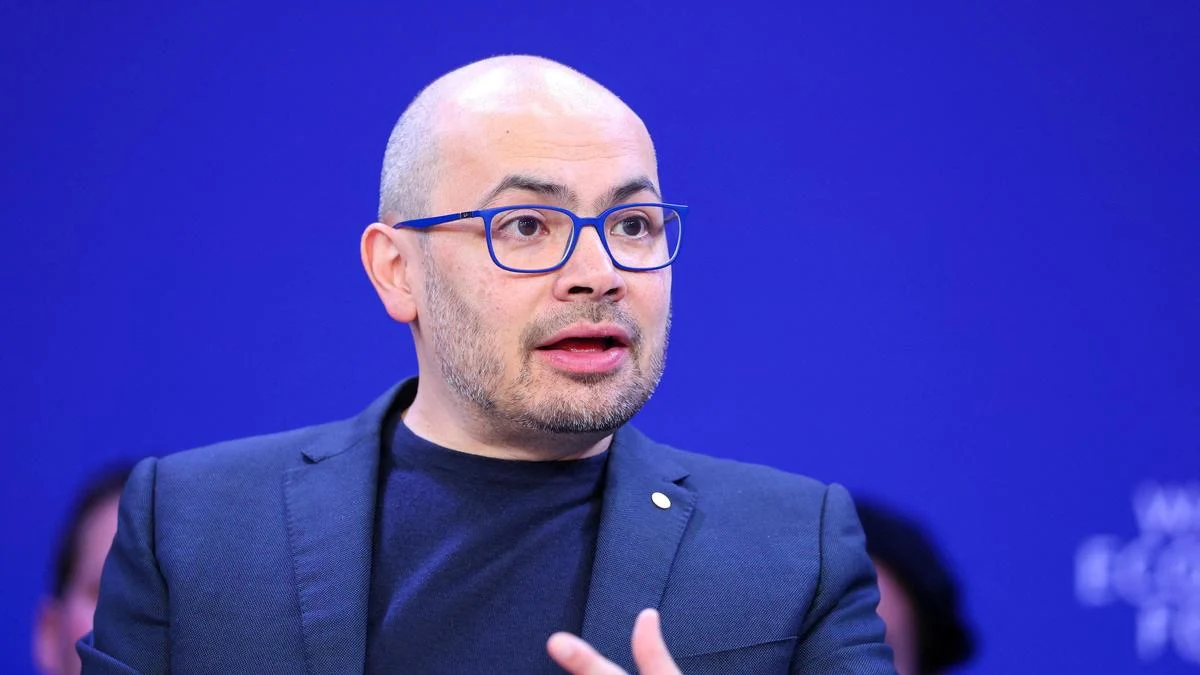
Menlo Park, California – August 5, 2026 – In a move sending ripples through the global technology landscape, Google parent company Alphabet today announced a sweeping leadership restructuring of its artificial intelligence division, Google DeepMind. The changes see Demis Hassabis, the celebrated AI pioneer and Nobel laureate, stepping back from his day-to-day managerial role as CEO of Google DeepMind to assume the newly created, more strategic position of Alphabet’s Chief Scientist and Chairman of Google DeepMind. Simultaneously, a cohort of Google’s most revered AI and engineering stalwarts, including veteran engineer Jeff Dean, are departing the company to launch a new venture.
This dramatic shakeup unfolds at a critical juncture for Google DeepMind, whose flagship Gemini model, particularly the highly anticipated Gemini 4, remains unreleased despite a previously slated June launch. The delay has fueled growing investor unease and industry speculation, suggesting Google may be struggling to maintain its competitive edge against formidable rivals such as Anthropic and OpenAI. These competitors have, notably, recently poached several star Google AI researchers, exacerbating concerns over a significant "brain drain" from the tech giant.
Following the announcement, shares of Alphabet experienced a notable decline, falling 4% in Wednesday’s trading, reflecting the market’s apprehension regarding the stability and future direction of the company’s pivotal AI initiatives.
Main Facts: A Seismic Shift in Alphabet’s AI Leadership
The restructuring announced today represents a profound reorientation of Alphabet’s strategic approach to artificial intelligence, impacting its leadership, research priorities, and competitive posture.
Demis Hassabis’s Elevated and Redefined Role: At the core of the overhaul is Demis Hassabis, a figure synonymous with groundbreaking AI research and co-founder of DeepMind. Hassabis, a recipient of the 2024 Nobel Prize for his contributions to AI, will transition from his operational role as Google DeepMind CEO. His new mandate will be twofold: taking on the prestigious, newly-minted title of Alphabet’s Chief Scientist, and simultaneously assuming the chairmanship of Google DeepMind. In an internal memo to staff, Hassabis articulated the impetus for this shift, citing the "closeness of artificial general intelligence (AGI)" – a state where AI achieves human-level cognitive abilities – as the primary driver behind his desire to dedicate his full attention to shaping AGI’s future. This move signifies a strategic pivot for Hassabis, moving him away from the immediate pressures of product development and commercialization towards a broader, more visionary role focused on foundational AI research and its societal implications. He also indicated an increased focus on Isomorphic Labs, a drug discovery company he founded that spun out of DeepMind, emphasizing his belief that AI’s paramount application lies in improving human health and "curing diseases like cancer."
High-Profile Departures and the Genesis of Discovery Loop: The leadership changes are further underscored by the departure of several of Google’s most distinguished and celebrated AI and engineering leaders. Jeff Dean, a legendary figure within Google revered for his contributions to its foundational infrastructure and AI systems, is leaving the company. He is joined by Sanjay Ghemawat, Oriol Vinyals, and Quoc Le – collectively representing an extraordinary concentration of AI talent and intellectual capital. This formidable quartet is embarking on a new venture, launching a startup named Discovery Loop. This new entity is poised to focus on cutting-edge research breakthroughs in machine learning, science, and engineering. Notably, Discovery Loop is structured as a public benefit corporation, signaling an intent to balance profit motives with broader societal impact. Intriguingly, the startup has already secured investment from Google itself and forged a partnership with Google’s cloud division to provide essential computing capacity, raising questions about Alphabet’s strategy in retaining ties with departing talent.
New Operational Head for Google DeepMind: Taking the reins of day-to-day operations at Google DeepMind will be Koray Kavukcuoglu, who previously served as the unit’s Chief Technology Officer. Kavukcuoglu will now hold the title of Senior Vice-President of the business unit, a departure from the CEO designation previously held by Hassabis. This role is parallel to his existing position as Alphabet’s Chief AI Architect, indicating a streamlined approach to AI leadership within the broader Alphabet ecosystem, consolidating technical and operational oversight.
Market Reaction and Broader Context: The market’s immediate response to these announcements was one of concern, with Alphabet’s shares declining by 4%. This financial reaction underscores the gravity of the leadership reshuffle and the intensifying competitive landscape in the AI sector. The timing of this shakeup is particularly salient, as it occurs amidst persistent industry chatter that Google is falling behind its primary rivals, Anthropic and OpenAI. These concerns have been amplified by recent high-profile defections of key Google AI personnel to these very competitors, as well as the protracted delay in the release of Google DeepMind’s next-generation Gemini model, which was initially expected in June. The confluence of these factors paints a picture of a company navigating significant internal transitions while battling fiercely for supremacy in the global AI arms race.
Chronology of the AI Exodus and Google’s Response
To fully appreciate the magnitude of today’s announcements, it is crucial to understand the historical trajectory of Google’s AI efforts, the rise of its competitors, and the gradual erosion of its top talent.
The Genesis of DeepMind and Google Brain
Google’s foundational AI endeavors were initially characterized by a bifurcated structure, fostering internal competition and diverse approaches.
DeepMind’s Visionary Beginnings: DeepMind was co-founded in 2010 by Demis Hassabis, Shane Legg, and Mustafa Suleyman in London. From its inception, DeepMind was driven by an ambitious vision: to "solve intelligence" and apply it to real-world problems. Its early breakthroughs in reinforcement learning and game-playing AI (most notably AlphaGo) quickly captured global attention, establishing it as a leading force in AI research. Recognizing its immense potential, Google acquired DeepMind in 2014 for an estimated $650 million, allowing Hassabis to continue leading the lab from London with a significant degree of autonomy.
Google Brain’s Pioneering Contributions: Concurrently, within Google’s Mountain View headquarters, another powerful AI research unit, Google Brain, was taking shape. Co-founded in 2011 by Jeff Dean, Andrew Ng, and Greg Corrado, Google Brain became a crucible for large-scale neural networks and machine learning applications. Jeff Dean, in particular, was already a legendary figure within Google, known for his instrumental role alongside Sanjay Ghemawat in developing many of the landmark infrastructure projects (like MapReduce and BigTable) that continue to power the company’s vast operations today. Google Brain’s research was instrumental in integrating AI into core Google products, from search to Android.
For years, these two powerhouses operated with a degree of separation, each pushing the boundaries of AI in distinct yet complementary ways.
The Rise of Rivalry and Talent Drain
The landscape of AI shifted dramatically in late 2022, ushering in an era of intense competition and a scramble for talent.
The ChatGPT Catalyst: The public launch of OpenAI’s ChatGPT in November 2022 sent shockwaves through the tech industry, catching Google, despite its deep AI expertise, largely off guard. The accessible and powerful conversational AI demonstrated a public-facing capability that Google had yet to fully commercialize, igniting an urgent internal mandate to accelerate its own generative AI efforts.
The DeepMind-Google Brain Merger (2023): In response to the burgeoning AI race, Sundar Pichai announced in 2023 the strategic merger of DeepMind and Google Brain into a single, unified organization: Google DeepMind. Demis Hassabis was appointed its CEO, tasked with leading the consolidated entity, while Jeff Dean took on the role of its Chief Scientist. This merger was intended to streamline research efforts, reduce internal redundancies, and present a united front against external competitors.
Gemini’s Development and Initial Success (November 2025): Under the stewardship of a formidable team that included Jeff Dean, Oriol Vinyals, and Noam Shazeer, Google DeepMind made significant strides. In November 2025, the company released Gemini 3, a multimodal AI model that was widely seen by the industry as effectively closing the gap with leading models from Anthropic and OpenAI. This release was met with cautious optimism, suggesting Google was back in the game.
A Resurgent Talent Exodus: However, the momentum from Gemini 3 proved fragile. Subsequent advances from rivals and the growing popularity of cheaper, open-source models (particularly from Chinese developers) put Google back on the defensive. The first clear signs of renewed trouble came in June 2026, when Noam Shazeer, a key co-leader in Gemini’s development and a researcher Google had reportedly spent billions to acquire along with his team less than two years prior, departed for OpenAI. In the same week, John Jumper, another 2024 Nobel Prize laureate alongside Hassabis for his work on AlphaFold (a protein-folding AI), announced his move to Anthropic. These back-to-back defections of foundational AI researchers were significant blows, underscoring Google’s struggles in talent retention. Adding to the historical context, Oriol Vinyals and Quoc Le, both among the departing leaders today, were co-authors (alongside former OpenAI chief scientist Ilya Sutskever) of a seminal 2014 research paper that laid crucial groundwork for modern AI by establishing the concept that scaling up data to "pre-train" AI systems would lead to unprecedented performance gains.
The Unreleased Gemini 4: The culmination of these pressures is the current predicament of Gemini 4. Despite a planned June 2026 launch, the flagship version of Google DeepMind’s latest model remains unreleased. This delay has intensified investor and industry concerns, fueling speculation about potential technical hurdles, strategic re-evaluations, or a simple inability to keep pace with the rapid advancements of competitors. At Google’s annual developer conference in May 2026, Sundar Pichai and other Google leaders conspicuously highlighted Gemini’s cost advantage rather than its state-of-the-art capabilities, a subtle but telling shift in messaging that did not go unnoticed.
The August 2026 Restructuring
Today’s announcement, therefore, is not an isolated event but the latest and most dramatic chapter in this unfolding narrative.

Hassabis’s Strategic Repositioning: Demis Hassabis’s transition to Alphabet Chief Scientist and Google DeepMind Chairman is framed internally as a move driven by the strategic imperative of AGI. It allows him to focus on long-term, fundamental research, potentially insulating him from the immediate product release cycles and competitive pressures that have plagued Google DeepMind recently.
The Formation of Discovery Loop: The departure of Jeff Dean, Sanjay Ghemawat, Oriol Vinyals, and Quoc Le to form Discovery Loop represents a significant loss of institutional knowledge and technical prowess. Their decision to establish a public benefit corporation, focused on fundamental breakthroughs, suggests a desire for a different operational model, potentially one with more autonomy and a specific mission beyond immediate corporate objectives. The fact that Google is investing in and partnering with Discovery Loop indicates an attempt to maintain a connection with this critical talent pool, perhaps as an acknowledgment of their continued value to the broader AI ecosystem.
Alphabet, for its part, has remained tight-lipped regarding the specific factors that precipitated these simultaneous moves or their exact timing, allowing for a wide range of interpretations.
Supporting Data: The High Stakes of the AI Arms Race
The leadership changes at Google DeepMind are not merely internal reorganizations; they reflect the enormous pressures and stakes involved in the global AI arms race, with tangible financial and strategic implications.
Market Performance and Investor Sentiment
The immediate 4% drop in Alphabet’s shares following the announcement translates into billions of dollars in lost market capitalization. This decline underscores a palpable anxiety among investors. Their concerns are multifaceted:
- Perceived Lagging: The unreleased Gemini 4, coupled with the consistent advances from rivals like OpenAI (backed by Microsoft) and Anthropic (which has secured significant investment from Amazon and Google itself), fosters a perception that Google is losing ground in the generative AI space. This directly impacts investor confidence in Google’s ability to monetize its vast AI research capabilities effectively.
- Talent Retention Crisis: The repeated departure of top-tier AI talent, particularly Nobel laureates and architects of Google’s core AI systems, signals a deeper problem with talent retention. Investors worry about Google’s ability to innovate and execute without these pivotal figures, especially given the fierce competition for skilled AI engineers and researchers.
- Strategic Clarity: The restructuring, while presented as a strategic move towards AGI, can also be interpreted by some as a symptom of internal disarray or a reactive measure to competitive pressures, leading to uncertainty about Google’s clear path forward in AI product development.
In an era where AI is seen as the next frontier of economic growth and technological dominance, any perceived weakness in this domain can have disproportionate effects on a company’s valuation.
The Gemini Dilemma
The fate of the Gemini model family is central to Google’s standing in the AI race.
- Gemini 3’s Promise: When Gemini 3 was released in November 2025, it was lauded for its multimodal capabilities and seen as a crucial step for Google to re-establish itself as a frontrunner. It demonstrated significant progress in understanding and generating various forms of data, from text to images to code.
- The Gemini 4 Delay: The prolonged delay of Gemini 4, however, has cast a long shadow. Industry analysts speculate on several possible reasons:
- Technical Challenges: The leap from Gemini 3 to Gemini 4 might have presented unforeseen technical hurdles, requiring more extensive development and fine-tuning than anticipated.
- Safety and Ethical Concerns: Given the increasing scrutiny on AI safety and alignment, Google might be investing significant time in ensuring Gemini 4 adheres to stringent ethical guidelines before public release.
- Competitive Pressure: The rapid evolution of rival models might have forced Google to re-evaluate Gemini 4’s capabilities, pushing for further enhancements to ensure it truly stands out. The pivot to highlighting Gemini’s "cost advantage" at the May developer conference, rather than its "state-of-the-art capabilities," was a telling sign that Google might be struggling to position Gemini 4 as the outright performance leader. This suggests a strategic concession in the face of rival advancements, potentially indicating a shift towards making AI more accessible and affordable, rather than always being the most powerful.
The Public Benefit Corporation Model of Discovery Loop
The decision by Jeff Dean and his colleagues to form Discovery Loop as a Public Benefit Corporation (PBC) is noteworthy. A PBC is a for-profit corporation that is intended to produce a public benefit and operate in a responsible and sustainable manner. This structure allows the company to pursue both financial returns and specific social or environmental goals, rather than solely maximizing shareholder value.
- Implications for Research: By adopting the PBC model, Discovery Loop might aim to conduct foundational AI research with a stronger emphasis on ethical considerations, long-term societal impact, and open science, potentially unburdened by the immediate commercial pressures of a large tech conglomerate.
- Google’s Investment and Partnership: Google’s investment in and cloud partnership with Discovery Loop is a nuanced move. It could be seen as:
- Damage Control: An attempt to maintain a relationship with invaluable talent and potentially benefit from their future breakthroughs, even if they are no longer directly employed by Alphabet.
- Strategic Hedge: A way to fund external research that might complement Google’s internal efforts, or to explore avenues that might be too speculative or long-term for direct corporate investment.
- Acknowledgement of Talent Autonomy: A recognition that some top researchers prefer an environment that offers more autonomy and a different mission than a large corporate structure.
This unique arrangement highlights the complex interplay between corporate innovation and independent research in the highly competitive AI ecosystem.
Official Responses and Internal Communications
The public statements and internal memos surrounding this restructuring offer crucial insights into Alphabet’s strategic thinking and the perspectives of its key leaders.
Sundar Pichai’s Vision for AGI
Alphabet CEO Sundar Pichai’s company-wide memo underscored the profound significance of Demis Hassabis’s new role. Pichai stated, "[And] I have been long discussing a role that allows him to put his full attention on actively shaping the future of AGI. It’s work that is vitally important to Alphabet and humanity, and I can’t imagine a better person than Demis to do it."
- Prioritizing Long-Term Vision: Pichai’s statement frames Hassabis’s transition not as a retreat, but as an elevation, redirecting his singular focus towards the ultimate goal of AGI. This suggests Alphabet is committing significant resources and its top intellectual capital to a long-term, potentially transformative endeavor, even if it means deprioritizing Hassabis’s direct involvement in day-to-day product management.
- Humanity-Centric AI: The emphasis on AGI being "vitally important to Alphabet and humanity" reinforces Google’s often-stated commitment to developing AI responsibly and for the benefit of all, aligning with the ethical considerations that are increasingly paramount in AI discourse.
Demis Hassabis’s Strategic Shift
In his memo to Google DeepMind staff, Hassabis provided his rationale for the change, focusing on the proximity of AGI and his desire to shape its future.
- The AGI Imperative: Hassabis’s assertion about the "closeness of AGI" is a powerful declaration, signaling his belief that the advent of human-level AI is no longer a distant prospect but a near-term reality. This conviction fuels his desire to dedicate himself to the foundational challenges and implications of such an advanced state of intelligence.
- Optimism Amidst Challenges: Despite the unreleased Gemini 4 and the ongoing talent drain, Hassabis touted "great progress" on Google’s AI models, specifically mentioning an "unreleased upgrade called Gemini 4." This duality – acknowledging internal challenges while maintaining an optimistic outlook on future breakthroughs – is characteristic of leaders navigating periods of intense transformation.
- Focus on Healthcare AI: Hassabis also highlighted his increased involvement with Isomorphic Labs, the drug discovery company he founded. His statement, "I’ve always believed the No.1 application of AI should be to improve human health. It’s time for AI to prove its unequivocal value to the world, and what better way to demonstrate that than to help finally cure diseases like cancer," clearly articulates a personal and strategic commitment to applying advanced AI to solve some of humanity’s most pressing problems. This provides a glimpse into the broader societal impact Hassabis envisions for his work beyond Google’s immediate commercial objectives.
Alphabet’s Official Statement (or lack thereof)
Notably, Alphabet did not provide explicit details regarding what precipitated these moves or their coincident timing. A Google spokesperson, speaking to Reuters, offered only that Hassabis, who has "long prioritized research over profits," would explore research and "strategy related to societal impacts of AGI and will have few direct reports."
- Strategic Ambiguity: The lack of detailed explanation from Alphabet fosters an environment of speculation. While the company may wish to project an image of strategic foresight, the absence of transparency can also be interpreted as an attempt to downplay the severity of the talent exodus or internal challenges.
- Research vs. Profit: The spokesperson’s comment about Hassabis prioritizing "research over profits" offers a subtle but important distinction. It hints at a potential divergence in priorities within Google DeepMind – between the pure, long-term research agenda championed by Hassabis and the more immediate commercialization and product launch demands that define the current AI race. This tension might have contributed to the need for a restructuring that allows Hassabis to focus on his core strength without being constrained by quarterly earnings.
Implications: Navigating the Future of AI at Alphabet
The leadership overhaul at Google DeepMind carries profound implications for Alphabet’s strategic direction, its competitive standing, and the broader trajectory of AI development.
The Redefinition of Google DeepMind’s Leadership
The shift in Google DeepMind’s operational leadership, from a CEO (Hassabis) to a Senior Vice-President (Kavukcuoglu), signifies a potential redefinition of the unit’s autonomy and strategic focus.
- Centralized AI Strategy: With Kavukcuoglu also serving as Alphabet’s Chief AI Architect, this structure suggests a more centralized, coordinated AI strategy across the entire Alphabet portfolio. It might mean tighter integration of DeepMind’s research into Google’s products and services, potentially sacrificing some of DeepMind’s traditional research independence for greater corporate synergy.
- Research vs. Product Velocity: Hassabis’s new role as Chairman is inherently more strategic and less operational. While he will still influence the direction of Google DeepMind, the day-to-day pressures of product development and release cycles will fall squarely on Kavukcuoglu. This could free Hassabis to pursue more ambitious, long-term research goals, but it also raises questions about the speed and agility of Google DeepMind’s commercial product launches, especially in a market that rewards rapid iteration.
The Brain Drain’s Lingering Effects
The departure of figures like Jeff Dean, Sanjay Ghemawat, Oriol Vinyals, Quoc Le, Noam Shazeer, and John Jumper constitutes an extraordinary loss of intellectual capital.
- Loss of Foundational Expertise: These individuals are not merely talented engineers; they are architects of modern AI and Google’s technological backbone. Dean’s work on Google’s infrastructure and his leadership in Google Brain, Vinyals and Le’s contributions to foundational AI papers (like the 2014 paper on pre-training systems), and Jumper’s Nobel-winning work on AlphaFold represent deep, irreplaceable expertise.
- Challenges in Replacement: Replacing such a concentration of talent is incredibly difficult, especially in the highly competitive AI labor market. It is not just about hiring new engineers, but about replacing institutional knowledge, established collaborative dynamics, and the unique visionary leadership that these individuals brought. This talent exodus could slow down research progress, disrupt ongoing projects, and potentially dilute Google’s innovative capacity.
Google’s Position in the Global AI Race
This shakeup directly impacts Google’s competitive standing in the rapidly evolving global AI race.
- Competitive Disadvantage? The perceived delays with Gemini 4, coupled with the talent drain, could reinforce the narrative that Google is struggling to keep pace with OpenAI and Anthropic. These rivals, unburdened by the legacy infrastructure and vast product portfolio of a company like Google, often appear more agile and focused in their AI pursuits.
- Strategic Re-evaluation: The emphasis on AGI through Hassabis’s new role suggests a possible strategic re-evaluation: perhaps Google is shifting its focus from immediate, incremental product releases to a more ambitious, long-term goal. While AGI could be a game-changer, its realization is years, if not decades, away, and the market demands immediate, tangible AI products. This could be a high-risk, high-reward strategy.
- Healthcare AI as a New Frontier: Hassabis’s renewed commitment to Isomorphic Labs and healthcare AI highlights a strategic diversification. If AI can indeed revolutionize drug discovery and disease treatment, Google could carve out a significant niche in a sector with immense societal and economic potential, providing a counterbalance to the fierce competition in general-purpose AI.
A New Era for AI Research and Development?
The creation of the "Chief Scientist" role for Hassabis at the Alphabet level, along with the emergence of Discovery Loop as a Public Benefit Corporation, could herald a new era in how AI research is conducted and valued.
- The Power of the Chief Scientist: Hassabis’s role as Alphabet Chief Scientist grants him unparalleled influence over the company’s long-term scientific agenda, transcending individual business units. This could empower him to direct resources towards fundamental breakthroughs that benefit the entire Alphabet ecosystem, fostering a culture of ambitious, curiosity-driven research.
- The Rise of PBCs in AI: The Public Benefit Corporation model adopted by Discovery Loop may signal a growing trend among top AI researchers to pursue their work in environments that prioritize ethical development, societal impact, and scientific openness alongside commercial viability. If successful, this model could attract more talent seeking purpose-driven innovation outside the traditional corporate structure, potentially leading to a fragmentation of leading-edge AI research.
- Long-Term Corporate Culture: For Google, the departures and restructuring will inevitably shape its corporate culture and its approach to talent acquisition and retention. The challenge will be to inspire and retain top AI talent while navigating the demands of both ambitious long-term research and immediate market competitiveness.
In conclusion, the leadership overhaul at Alphabet’s AI division is more than just an organizational change; it is a profound re-alignment in the face of intense global competition, a talent war, and the monumental pursuit of artificial general intelligence. The coming years will reveal whether this bold strategic pivot allows Google to reassert its dominance in the AI landscape or if it further complicates its quest for supremacy.
