


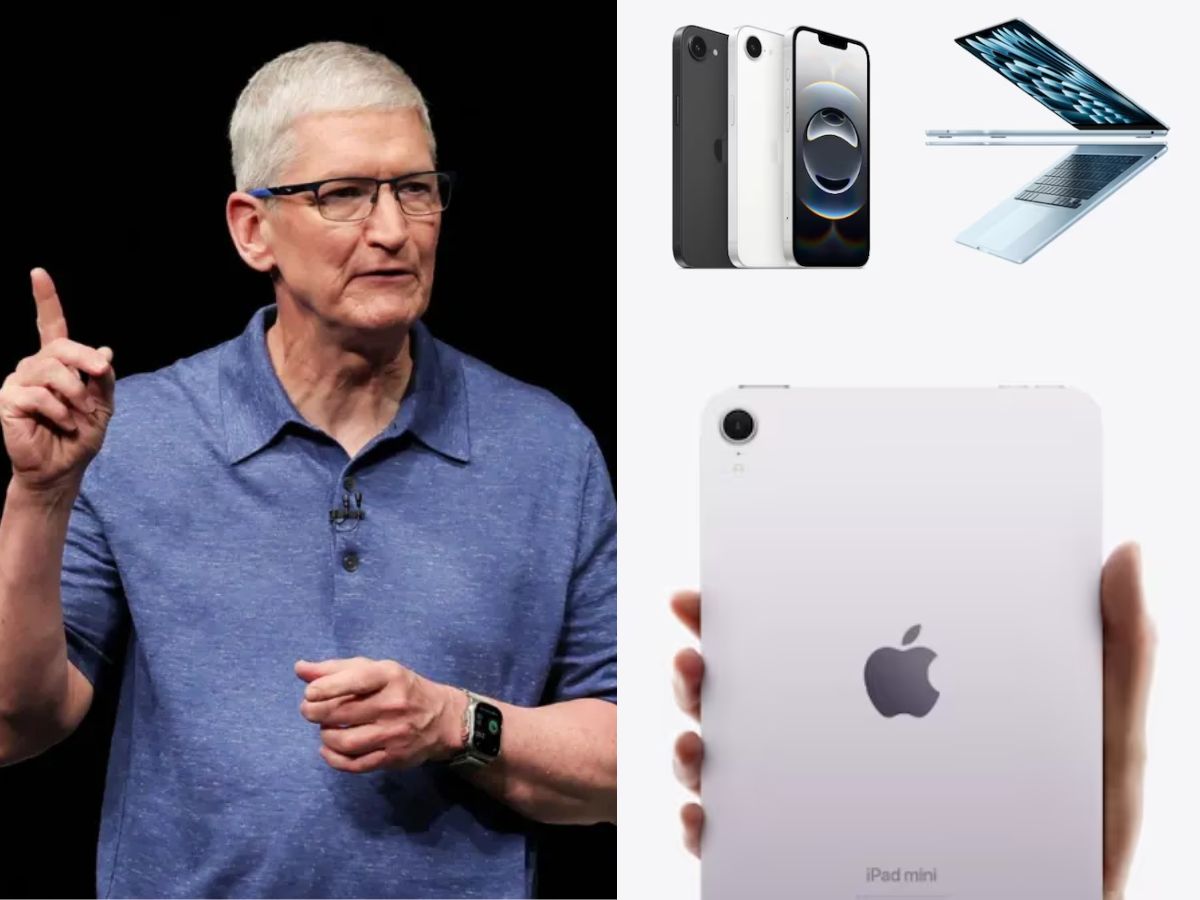
New Delhi, India – Consumers in India are facing a significant blow as tech giant Apple has substantially raised the prices of its MacBooks, iPads, and a range of other products, with certain high-end models now costing up to an astonishing Rs 1 lakh more. This drastic increase is a direct consequence of a deepening global memory chip shortage, exacerbated by the insatiable demand from the burgeoning Artificial Intelligence (AI) sector. Apple CEO Tim Cook has starkly characterized the situation as a "hundred-year flood," underscoring the severity of a crisis he claims is unparalleled in his four decades in the industry.
The price adjustments, which have rippled across Apple’s product portfolio in the Indian market, reflect a broader global trend where the foundational components of modern electronics are becoming scarcer and more expensive. As AI firms aggressively procure vast quantities of memory for their data centers and sophisticated large language models, the supply chain for consumer electronics is experiencing unprecedented strain, leading to higher manufacturing costs that companies like Apple are now passing on to the end-user.

The Unfolding Memory Crisis: A Confluence of Factors
The current predicament for Apple and the wider tech industry stems from a complex interplay of factors, primarily centered around a surging demand for memory chips – both RAM (Random Access Memory) and NAND (Non-Volatile NAND Flash Memory) – that has far outstripped existing manufacturing capacities. While semiconductor shortages are not new to the tech landscape, the current situation is unique in its intensity and the specific drivers behind it.
The bedrock of this crisis lies in the explosive growth of Artificial Intelligence, particularly generative AI, which burst into the mainstream consciousness in late 2022 with the advent of platforms like OpenAI’s ChatGPT. Training and running these colossal AI models require immense computational power and, crucially, vast amounts of high-performance memory. AI data centers are consuming memory at an unprecedented rate, necessitating specialized components like High Bandwidth Memory (HBM) alongside conventional DRAM and NAND. This sudden, exponential demand has caught the semiconductor industry off guard, leading to a scramble for resources.
)
Major AI players such as OpenAI, Google, Anthropic, and numerous others are investing billions in AI infrastructure, with memory chips forming a critical bottleneck. These companies are reportedly willing to pay premium prices to secure the necessary components, effectively outbidding consumer electronics manufacturers for available supply. This dynamic has created a fiercely competitive market where memory suppliers are naturally prioritizing the higher-margin, larger-volume orders from the AI sector.
Tim Cook’s "hundred-year flood" analogy is not merely hyperbole; it reflects a genuine concern about the magnitude of the cost increases. Having witnessed the ebb and flow of the tech industry for over 40 years, Cook’s statement suggests that the current spike in memory chip costs is unlike anything he has encountered, pointing to an extraordinary market dislocation. This has made the production of consumer devices "unsustainable" at previous pricing levels, leaving Apple with little recourse but to implement significant price hikes.

A Chronology of Supply Chain Strain and AI-Driven Demand
The path to the current memory crisis is a layered narrative, tracing back through several years of global economic and technological shifts. Understanding this chronology is crucial to grasping the depth of the challenge faced by companies like Apple.
Pre-Pandemic Cycles (Before 2020): The semiconductor industry has always been cyclical, characterized by periods of oversupply and undersupply, often driven by inventory adjustments, technological transitions, and macroeconomic trends. Memory, in particular, has seen volatile pricing. However, these fluctuations were generally predictable and manageable within established frameworks.
)
The COVID-19 Catalyst (2020-2021): The onset of the global pandemic triggered an initial surge in demand for personal electronics as remote work and online learning became the norm. This led to increased orders for laptops, tablets, and smartphones, putting pressure on existing chip manufacturing capacities. Simultaneously, lockdowns and logistical challenges created unprecedented supply chain disruptions, exacerbating component shortages across various industries. While memory prices saw an uptick, it was largely attributed to this demand-supply imbalance for consumer goods.
Post-Pandemic Normalization and Inventory Build-up (2022): As the initial pandemic-driven surge subsided and global economies began to reopen, some analysts predicted a return to normalcy, and even a potential oversupply in certain memory segments. Manufacturers, wary of future shortages, had often over-ordered components, leading to an inventory build-up for some consumer electronics. This period saw a brief stabilization, or even slight dip, in certain memory prices.
)
The Generative AI Explosion (Late 2022 – Present): The true inflection point arrived with the public debut and rapid proliferation of generative AI technologies. The launch of ChatGPT in November 2022 ignited a global race in AI development. Suddenly, companies across the spectrum, from tech giants to innovative startups, began pouring massive investments into building and expanding AI infrastructure. This required a monumental increase in high-performance GPUs (Graphics Processing Units) and, critically, the specialized memory that accompanies them.
High Bandwidth Memory (HBM), which is stacked vertically on a logic chip to provide ultra-fast data access for GPUs, became an instant hot commodity. While HBM is distinct from standard DRAM and NAND, the intense focus on HBM production by leading memory manufacturers like Samsung, SK Hynix, and Micron meant a diversion of resources and capital that might otherwise have gone into expanding capacity for conventional memory types used in consumer devices. Furthermore, AI data centers also require vast quantities of standard server DRAM and high-density NAND flash for storage, further tightening the overall memory market.
)
Suppliers Prioritize AI (2023-2024): With AI companies willing to pay significant premiums and commit to long-term, large-volume orders, memory suppliers naturally shifted their focus. The profit margins on AI-specific memory and enterprise-grade solutions are considerably higher than those for commodity memory destined for consumer devices. This strategic pivot by suppliers has left companies like Apple struggling to secure adequate quantities of memory at reasonable prices for their MacBooks, iPads, and other products. The result is a scenario where the availability of memory for consumer gadgets has become increasingly constrained, leading directly to the "huge price increases" that Apple is now forced to contend with.
Supporting Data: Quantifying the Impact and Market Dynamics
The current memory crisis is not merely anecdotal; it is underpinned by concrete market data and projections that highlight the scale of the challenge.
)
Memory Market Trends:
The global memory market, encompassing DRAM and NAND flash, is a multi-billion-dollar industry. Recent reports from market intelligence firms like TrendForce indicate a significant upward trend in memory chip prices. For instance, DRAM contract prices, which are crucial for devices like MacBooks and iPads, have seen sequential increases for several quarters. Analysts project further rises throughout the year, with some estimating a double-digit percentage increase in overall memory chip costs by the end of 2024. The shift towards higher-value HBM for AI applications has also led to a skew in production, making commodity memory scarcer. The overall memory market revenue is projected to grow substantially in the coming years, primarily driven by AI-related demand, but this growth comes with increased costs for traditional sectors.
AI Market Expansion:
The catalyst for this memory surge is the unprecedented growth in the AI sector. Investment in AI infrastructure, particularly data centers equipped with AI accelerators and memory, is booming. According to various industry forecasts, the global AI market size is expected to grow at a compound annual growth rate (CAGR) exceeding 35% in the coming years, reaching trillions of dollars by the end of the decade. Each new generation of large language models (LLMs) requires exponentially more parameters and, consequently, more memory for training and inference. A single high-end AI server can demand hundreds of gigabytes, if not terabytes, of HBM and conventional DRAM, dwarfing the memory requirements of even the most powerful consumer laptop. This scale of demand is creating an insatiable appetite for memory chips.
)
Apple’s Cost Structure and Profit Margins:
While Apple does not disclose the exact bill of materials (BoM) for its products, memory components (RAM and NAND storage) represent a significant portion of the cost, especially for devices with higher specifications. For a premium laptop like a MacBook Pro or a high-end iPad Pro, memory costs can easily account for 15-25% of the total component cost. When these component costs rise by 20%, 30%, or even more, the impact on Apple’s overall manufacturing expenses is substantial. Given Apple’s typically healthy but tightly managed profit margins, absorbing such "huge price increases" from suppliers for an extended period would severely impact their profitability, making price adjustments an unavoidable business decision.
Specific Price Hikes in India:
The original article provides clear figures for the price increases in the Indian market, illustrating the direct impact of the global memory crunch:
)
- iPad: Starting at approximately Rs 49,990.
- iPad Air: Now around Rs 89,900.
- iPad Pro: Priced at about Rs 1.39 lakh.
- MacBook Air: Increased to almost Rs 1.49 lakh.
- MacBook Pro M5: Costs around Rs 2.39 lakh.
- MacBook Pro M5 Max: The most affected, now approximately Rs 5 lakh, experiencing the largest absolute increase.
- Other Devices: The Mac mini has seen a significant increase. The Apple TV 4K and HomePod now cost approximately Rs 44,900 each.
These figures represent increases ranging from Rs 10,000 for entry-level models to a staggering Rs 1 lakh for top-tier configurations. The "up to Rs 1 lakh more" figure for certain models highlights the disproportionate impact on devices that integrate more memory or specialized, higher-performance components that are particularly affected by the shortage.
Geographic Considerations for India:
Beyond the global memory shortage, India’s market dynamics present additional challenges. High import duties on electronics, coupled with potential currency fluctuations, can amplify global price increases for imported goods. Therefore, while the core reason for the hike is global, the final retail prices in India might reflect a combination of the memory shortage, local taxation policies, and exchange rates. This makes the Indian market particularly sensitive to such global supply chain disruptions.
)
Official Responses and Industry Outlook
The official statements from Apple, particularly those attributed to Tim Cook, paint a stark picture of the company’s predicament and its outlook on the current memory market.
Tim Cook’s Candor:
Apple CEO Tim Cook’s description of the situation as a "hundred-year flood" and his assertion that he hasn’t witnessed such a sharp rise in costs in over 40 years are powerful statements. They convey not only the severity of the current market conditions but also a sense of helplessness on Apple’s part to fully mitigate these external pressures. His acknowledgement that the situation has become "unsustainable" for consumer goods, and that suppliers are passing on "huge price increases," indicates that Apple has exhausted its options for absorbing these additional costs without significantly impacting its own financial health. This public transparency is unusual for Apple, suggesting the crisis is truly exceptional.
)
Apple’s Strategy Amidst the Storm:
While forced to raise prices for MacBooks, iPads, and other devices, it’s noteworthy that Apple has "refrained from increasing iPhone prices for the time being." This strategic decision is likely aimed at safeguarding demand for its most popular product line, especially in anticipation of new iPhone releases. The iPhone remains Apple’s primary revenue driver, and price sensitivity in this segment is particularly high. However, analysts universally anticipate that if the memory shortage persists or worsens, price increases for iPhones will become inevitable in the future. This suggests Apple is selectively absorbing costs where it can afford to, to maintain market position for its flagship product.
Memory Manufacturers’ Position:
Leading memory manufacturers like Samsung Electronics, SK Hynix, and Micron Technology have largely focused on fulfilling the surging demand for HBM and enterprise-grade memory. Their official statements often highlight strong demand from the AI sector and robust sales in the server and data center segments. While they acknowledge the overall increase in memory prices, their strategy is clearly geared towards maximizing profitability by catering to the most lucrative parts of the market. Investment in new fabrication plants (fabs) and increased production capacity for memory is underway, but these are multi-year projects with significant lead times. Therefore, immediate relief from increased supply is not on the horizon.
)
Analyst Consensus:
Industry analysts largely concur with Apple’s assessment. They foresee the memory shortage persisting well into 2025, with prices remaining elevated. Companies like IDC, Gartner, and Counterpoint Research have all pointed to AI as the primary demand driver, predicting that the enterprise and data center segments will continue to command priority for memory supply. Analysts also suggest that the "AI premium" will become a lasting feature of the semiconductor market, meaning that high-performance components will inherently carry higher costs for the foreseeable future. This implies that the current price hikes are not a temporary blip but potentially a long-term adjustment to a new market reality.
Implications: Far-Reaching Consequences for Consumers, Industry, and Economy
The memory crisis and Apple’s subsequent price hikes carry significant implications that extend beyond individual product costs, impacting consumers, the broader tech industry, and even global economic trends.
)
For Apple:
- Sales Volume and Market Share: Higher prices, especially in price-sensitive markets like India, could lead to a decline in sales volume for MacBooks and iPads. Consumers might delay upgrades, opt for older models, or switch to more affordable alternatives from competitors (e.g., Windows laptops, Android tablets). This could erode Apple’s market share, particularly in segments where it faces strong competition.
- Profit Margins vs. Market Position: Apple faces a delicate balancing act between maintaining its premium profit margins and preserving its market position. Absorbing too much of the increased cost would hit profitability, while passing on all costs risks alienating customers. The current hikes indicate a leaning towards protecting margins.
- Supply Chain Resilience: The crisis highlights the need for greater supply chain diversification and resilience. Apple might explore new suppliers, invest in long-term contracts, or even consider vertical integration for certain components, though developing proprietary memory is a massive undertaking.
- Future Product Strategy: The ongoing shortage will influence future product roadmaps. Apple might optimize memory usage in its operating systems and applications, or strategically bundle more memory into its base models to justify higher price points. The timing and pricing of new iPhone releases will be closely watched.
For Consumers (Especially in India):
)
- Reduced Accessibility: The increased cost of premium tech devices raises the barrier to entry for many consumers. This could exacerbate the digital divide, making cutting-edge technology less accessible to a broader segment of the population.
- Delayed Upgrades and Longer Device Lifespans: Consumers may hold onto their existing devices for longer periods, delaying upgrades until prices potentially stabilize or until their current devices become genuinely obsolete.
- Shift to Alternatives: The price gap between Apple products and competitors might widen further, pushing some consumers towards more budget-friendly Windows or Android ecosystems. The refurbished market might also see increased activity.
- Impact on Students and Professionals: For students, creative professionals, and developers who rely on MacBooks and iPads for their work, the increased costs represent a significant financial burden.
For the Broader Tech Industry:
- Wider Price Hikes: Apple is a bellwether for the tech industry. It is highly probable that other PC and smartphone manufacturers will follow suit with their own price adjustments as they face similar memory procurement challenges. This could lead to a widespread increase in electronics prices globally.
- Innovation vs. Cost: The high cost of memory could put a damper on innovation in certain consumer electronics segments, as manufacturers struggle to integrate new features without further inflating prices.
- Investment in Capacity: The crisis will undoubtedly spur significant long-term investment in new semiconductor fabrication plants and memory production facilities. However, these investments take years to come online, meaning immediate relief is unlikely.
- Focus on Optimization: Companies might intensify efforts to optimize software and hardware to reduce memory requirements or to utilize less expensive, slower memory more effectively.
- The "AI Premium" as a Norm: The era of cheap, abundant memory might be over, at least for the foreseeable future. The "AI premium" for high-performance memory could become a permanent fixture, fundamentally altering the cost structure of advanced electronics.
Economic Impact:
)
- Inflationary Pressure: The rising cost of memory chips contributes to inflationary pressures on tech goods, potentially impacting overall consumer price indices in economies heavily reliant on imported electronics.
- Global Supply Chain Rethink: The crisis further highlights the vulnerabilities in global supply chains, prompting governments and corporations to consider strategies for greater regionalization or diversification of semiconductor manufacturing.
In conclusion, Apple’s recent price hikes in India are a tangible manifestation of a profound global shift in the technology landscape. The insatiable demand for memory driven by the AI boom has created a market dynamic unprecedented in recent history, as Tim Cook’s "hundred-year flood" analogy aptly describes. While Apple navigates this challenging environment by adjusting its pricing, the broader implications for consumer accessibility, industry innovation, and the future cost of technology are far-reaching and will likely reshape the digital world for years to come. Consumers, companies, and policymakers alike will need to adapt to a new era where the fundamental building blocks of advanced electronics are increasingly precious and expensive commodities.
