

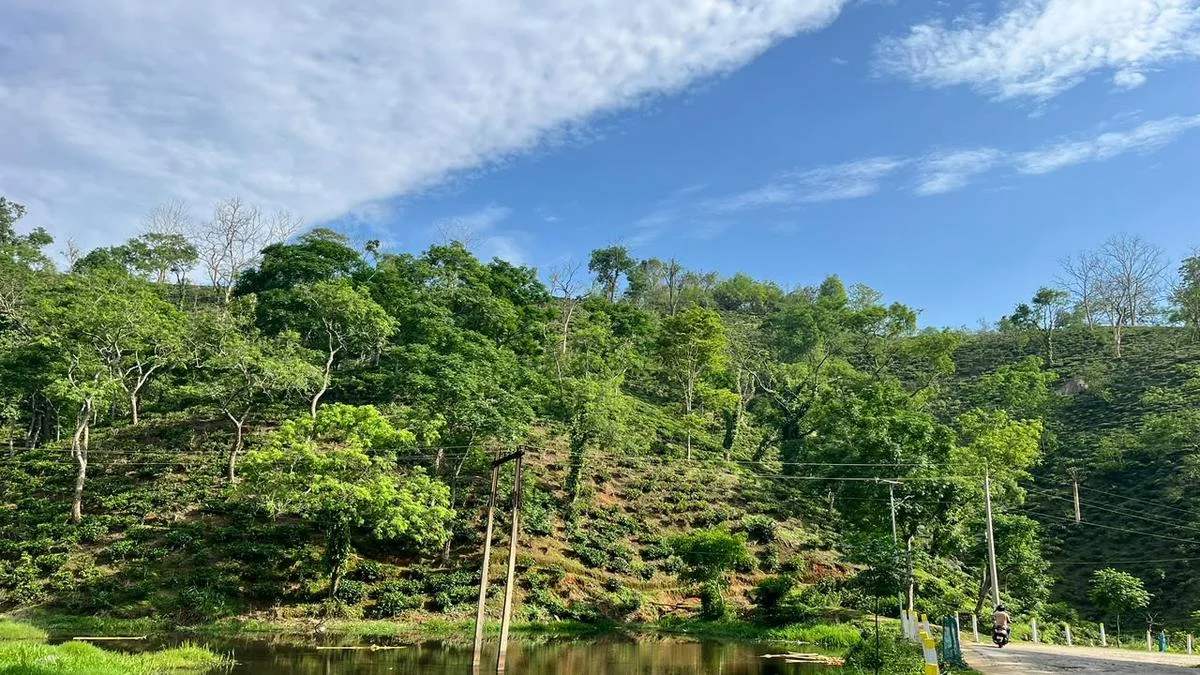
GUWAHATI — In the lush, rolling landscapes that fringe the edges of Guwahati, a silent revolution is brewing—one that blends nostalgia with modern experiential tourism. For decades, the tea estates of Assam were seen primarily as industrial hubs of production, sequestered behind colonial-era gates. However, as the global travel industry pivots toward "slow travel" and "authentic experiences," Amchong Tea Estate is emerging as a pioneer in bridging the gap between the tea cup and the tea garden.
Located just 40 minutes from the heart of Guwahati’s Chandmari district, the Amchong Tea Estate has recently undergone a metamorphosis. By launching "Amchong Leaf: A Tea Walkthrough Experience," the estate has transformed its 1,782-acre expanse into a living museum and a sensory playground, inviting visitors to move beyond the role of a consumer and into the role of a connoisseur.
Main Facts: A New Chapter in Tea Tourism
The Amchong Tea Estate, a third-generation enterprise under the Bhauram Jodhraj group, is currently the closest tea estate to Guwahati’s city limits. While its primary output remains the high-quality tea that Assam is famous for, its recent diversification into "agro-tourism" marks a significant shift in the region’s economic strategy.

Key highlights of the new initiative include:
- The "Amchong Leaf" Experience: An immersive, multi-sensory program launched in February 2026.
- Scale of Operation: Spread across 1,782 acres, featuring a modern processing unit, a viewing gallery, and specialized tasting rooms.
- Accessibility: Located near Narengi, it offers a rural escape within an hour’s drive of the urban bustle of Guwahati.
- Economic Impact: Since its launch, the estate has seen an average of 10,000 visitors per month, ranging from local day-trippers to international enthusiasts.
The estate offers a "leaf-to-cup" journey that demystifies the complex world of tea production, catering to a demographic that increasingly values transparency and origin stories in their food and beverage choices.
Chronology: From "Amsoi" to a Modern Landmark
The history of Amchong is a microcosm of Assam’s broader tea narrative. The estate’s roots trace back 68 years, making it one of the oldest established gardens within the immediate vicinity of the city. For many locals, the estate was once known by the name "Amsoi"—a place of childhood memories, school picnics, and the elusive scent of orange and mulberry trees.

The timeline of its evolution reflects a transition from traditional agriculture to a diversified experience economy:
- Mid-20th Century: Establishment of the garden, then known as Amsoi, focusing on traditional tea cultivation.
- Generational Transition: The estate passed through three generations of the Bhauram Jodhraj family, maintaining a focus on CTC (Crush, Tear, Curl) and Orthodox tea production.
- The 2020s Pivot: Recognizing the potential for tourism in Guwahati, the management began conceptualizing a dedicated visitor center that would not disrupt the factory’s industrial workflow but would allow for public engagement.
- February 2026: The official launch of "Amchong Leaf," introducing curated packages, a high-end restaurant, and an experiential center.
- The Present: Integration of advanced technology, such as projection-mapping installations, to tell the story of tea to a digital-native audience.
Supporting Data: The Anatomy of the Tea Experience
To accommodate a wide range of visitors, the estate has structured its offerings into several tiered packages, ranging from ₹599 to ₹2,499 per person. This tiered approach ensures that the experience remains accessible to local students while providing the depth required by serious tea buyers and corporate groups.
The Curated Packages
- T’Journ: An immersive deep-dive into the history, culture, and craft of tea. This includes a historical overview of how tea saplings were famously smuggled into India and the subsequent rise of the global tea trade.
- Blend n Sip: A guided session where visitors act as amateur blenders. Under the supervision of experts, guests learn to identify the nuances between CTC, Orthodox black, green, and oolong teas.
- The Factory Tour: A rare opportunity to observe the processing floor from a dedicated viewing gallery. Visitors witness the transition from the "two leaves and a bud" plucked in the fields to the dried, graded grains ready for the market.
Beyond the Leaf: Adventure and Gastronomy
Amchong’s data-driven approach to tourism recognizes that tea alone may not sustain a four-hour visit. Consequently, the estate has integrated lifestyle elements:

- Off-Roading: 4×4 Gypsy safaris through the rugged, hilly terrain of the estate, reaching vantage points that offer panoramic views of the Brahmaputra valley’s outskirts.
- Culinary Integration: The "Tea Leaf" and "Steep House" restaurants serve a dual purpose. They offer familiar "café fare" like wood-fired pizzas to attract the younger demographic, while simultaneously promoting traditional Assamese cuisine. Signature dishes include khorikat diya maas (fish cooked on skewers), maas pitika (mashed fish with mustard oil), and til chicken (chicken cooked with black sesame).
Official Responses: The Visionary Perspective
The management of Amchong views this initiative as more than just a business expansion; they see it as a cultural responsibility.
Ananya Khemka, Director of Bhauram Jodhraj and the driving force behind Amchong Leaf, emphasizes the timing of the project. "As Assam marks 200 years of its tea industry, the time felt right to create an experience that honours its legacy," Khemka stated. "Rather than simply talking about tea, we wanted visitors to walk through the gardens, see how fresh leaves are transformed, and interact with the people behind every harvest. Today’s travellers are looking for authentic, immersive experiences, and Assam is uniquely placed to offer them."
The technical side of the experience is managed by Zameer Sodhi, who heads the tea experience. Sodhi highlights the precision required in modern tea appreciation. "One can choose from CTC, orthodox black, green, and oolong teas. The process is surprisingly precise—the leaves are carefully measured and brewed according to the varietal," Sodhi explained. He notes that the use of borosilicate kettles and theatrical brewing methods helps elevate tea to the status usually reserved for specialty coffee or fine wine.

Implications: Tea Tourism as a Catalyst for Regional Growth
The success of Amchong Tea Estate has significant implications for the future of tourism in Northeast India.
1. Decentralization of Tourism
Traditionally, tea tourism in Assam was centered in Upper Assam, in districts like Jorhat and Dibrugarh, which are several hours away from the state capital. Amchong’s model proves that "urban tea tourism" is a viable niche. By providing a high-quality experience within 40 minutes of Guwahati’s international airport, the estate captures a segment of transit travelers who previously lacked the time to visit the classic tea belt.
2. Economic Diversification
The tea industry has faced volatile global pricing and climate change challenges in recent years. By diversifying into the service sector (hospitality and tourism), estates like Amchong create a secondary revenue stream that is less dependent on bulk commodity prices. This "value-add" model creates jobs in hospitality, tour guiding, and culinary arts for the local community.

3. Preservation of Heritage
As the industry hits the 200-year milestone, there is a risk of losing the historical narrative to modernization. Amchong’s experiential center, with its focus on the "smuggling of saplings" and the "rise of milk tea," ensures that the socio-political history of the region remains part of the public consciousness.
4. Educational Impact
The "leaf-to-cup" journey serves an educational purpose. By showing the labor-intensive nature of tea plucking and the scientific precision of the factory floor, the estate fosters a greater appreciation for the product. This can lead to a "premiumization" of the local market, where consumers are willing to pay more for high-quality, ethically produced tea.
Conclusion
Amchong Tea Estate is no longer just a plantation; it is a bridge between Guwahati’s past and its future. For the visitor who once knew it as "Amsoi," it is a place of rediscovered memories. For the modern tourist, it is a sophisticated introduction to the soul of Assam.

By marrying the rugged adventure of a 4×4 safari with the refined elegance of a tea-tasting session, Amchong has set a new benchmark for how traditional industries can evolve. As the sun sets over the emerald hills of Narengi, the aroma of brewing Oolong serves as a reminder that in the heart of Assam, the finest stories are still found in a cup of tea.
