

MALE, MALDIVES – As the global travel industry moves further into 2026, the definition of a "luxury getaway" has undergone a fundamental transformation. No longer content with mere opulence, the modern high-net-worth traveler is increasingly seeking "transformative longevity"—vacations designed to recalibrate the biological clock, restore mental clarity, and foster a deep, measurable connection with ecological restoration.
At the forefront of this movement is the Four Seasons Resort Maldives at Kuda Huraa. While the Maldives has long been synonymous with overwater bungalows and turquoise lagoons, Kuda Huraa is pivoting toward a more profound offering: a dedicated "wellness islet" named Urja and a marine conservation program that has become a global benchmark for reef restoration.
Main Facts: The Rise of the Wellness Islet
In December 2025, Four Seasons Kuda Huraa unveiled Urja, a private sanctuary dedicated entirely to naturopathy and holistic healing. Derived from the Sanskrit word for "vitality," Urja represents a departure from the traditional resort spa model. It is not merely a facility but a separate geographical entity—a short dhoni (traditional Maldivian boat) ride away from the main resort—designed to provide a physical and mental buffer between the guest’s social life and their healing journey.

The Five Pillars of Urja
Led by Dr. Anand Prayaga, a renowned naturopathy physician, Urja’s philosophy is rooted in the Pancha Mahabhutas—the five great elements of Earth, Water, Fire, Air, and Space. The center offers a sophisticated menu of interventions, including:
- Sound Healing: Utilizing vibrational frequencies to reset the nervous system.
- Anti-Gravity Yoga: Using silk hammocks to decompress the spine and improve lymphatic drainage.
- Yoga Therapy: Bespoke physical practices tailored to specific chronic ailments or postural corrections.
- Naturopathic Consultations: Diagnostic sessions led by experts like Dr. Girinathan Santhisathram to align treatments with the guest’s elemental imbalances.
The resort itself remains a bastion of Maldivian hospitality, featuring 96 villas and suites. These range from intimate beach pavilions to the expansive three-bedroom Kuda Estate, ensuring that the "stay" remains as restorative as the treatments themselves.
Chronology: A Quarter-Century of Evolution
The current state of Kuda Huraa is the result of a multi-decade strategy to integrate environmental stewardship with luxury hospitality.

- 2001: The resort launches its pioneering coral frame technique, using iron rebar coated with sand and resin to stimulate reef growth.
- 2005: Formal partnership begins with Reefscapers, a Maldivian marine consultancy, to professionalize coral restoration.
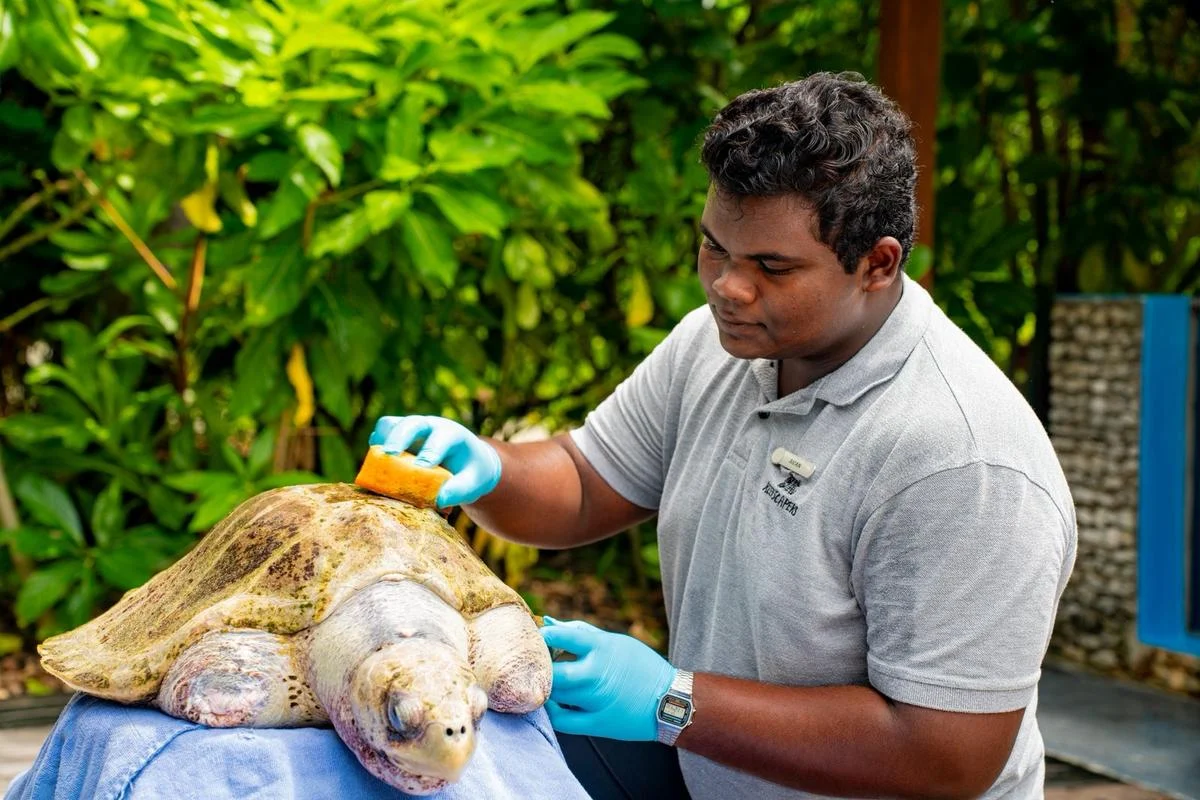
- 2011: The Sea Turtle Conservation Programme is officially established to rescue and rehabilitate injured Olive Ridley and Green turtles.
- 2018: Sister property Landaa Giraavaru launches "Ayur Ma," focusing on Ayurvedic principles, setting the stage for a group-wide wellness focus.
- December 2025: The official launch of Urja at Kuda Huraa, marking the resort’s transition into a premier naturopathy destination.
- Mid-2026: The resort celebrates the planting of its 9,000th coral frame and the 15th anniversary of its turtle conservation efforts.
- Late 2026 (Upcoming): Implementation of a resort-wide "Naturopathy Diet" menu across all dining outlets.
Supporting Data: The Logistics of Island Sustainability
Operating a high-end wellness retreat in the middle of the Indian Ocean requires a gargantuan logistical effort that often goes unseen by guests. This "heart of the house" is what sustains the illusion of effortless tranquility.
Resource Management and Sourcing
According to resort data, the island’s infrastructure is a marvel of self-sufficiency:
- Power Generation: The resort consumes approximately 5,000 liters of diesel daily to maintain 24/7 power for its 96 villas, desalination plants, and industrial kitchens.
- Water Production: On-site Reverse Osmosis (RO) plants convert seawater into high-quality drinking water, eliminating the need for plastic bottle imports.
- Food Sourcing: To maintain international culinary standards, the resort relies on a complex global supply chain. Exclusive produce is flown in from Germany, while high-grade meats are sourced from Australia.
- Regional Integration: Proximity to India is leveraged for specific high-volume items. For instance, the resort imports 220 kilograms of pineapples every week from Tamil Nadu, along with a vast array of authentic spices for its Indian restaurant, Baraabaru.
Marine Metrics
The Marine Discovery Centre (MDC) tracks the health of the surrounding ecosystem with scientific precision:

- Coral Frames: There are currently 3,291 active coral frames at Kuda Huraa. Across the four Maldivian resorts where Reefscapers operates, the number exceeds 10,000.
- Biodiversity: While coral reefs cover less than 1% of the ocean floor, the MDC notes they support 25% of all marine life, making their restoration critical for local food security and coastal protection.
Official Responses: Leadership Perspectives
The transition from a standard luxury hotel to a wellness and conservation hub has been spearheaded by experts who view hospitality through the lens of medicine and science.
Dr. Anand Prayaga, Director of Urja, emphasizes that the center is a "work in progress" that aims to bridge the gap between clinical wellness and hospitality. "I helmed a luxury naturopathy clinic in Idukki before moving here," Dr. Prayaga stated. "The transition from a hospital to hospitality meant bringing the same rigorous principles of naturopathy—using the five elements to treat the body—but delivering them in an environment of peace."
Addressing the upcoming culinary changes, Dr. Prayaga noted, "There is a misconception that naturopathy diets are strictly vegetarian. Our new menu, launching this December, will include several non-vegetarian options, ensuring that healthy eating is accessible and enjoyable for all guests."

Aditya Salvi and Kathryn Pogson, Marine Biologists at Reefscapers, highlight the urgency of their work. "We are moving beyond just planting frames," said Pogson. "We will soon have a spawning lab at the Centre where we will raise baby corals in a controlled environment. By releasing them only when they are resilient enough, we can significantly reduce their mortality rate."
Salvi added that the program’s success is bolstered by guest participation. "Each frame is dedicated to a sponsor and monitored. We observe growth rates and development, allowing guests to see the tangible impact of their stay on the ocean bed."
Implications: The Future of the Maldivian Model
The evolution of Four Seasons Kuda Huraa carries significant implications for the future of the Maldives and the broader luxury travel sector.

1. The Shift to "Blue Health"
The success of Urja suggests that the "spa" is being replaced by the "sanctuary." As travelers prioritize mental health and longevity, resorts that offer medical-grade wellness programs (naturopathy, Ayurveda, bio-hacking) will likely outperform those offering traditional pampering.
2. Conservation as a Core Amenity
Kuda Huraa has demonstrated that environmental conservation is no longer a "corporate social responsibility" (CSR) footnote—it is a primary draw for guests. By allowing visitors to participate in coral grafting and turtle rehabilitation, the resort creates an emotional "lock-in" that traditional luxury cannot match.
3. Sustainability vs. Luxury Demands
The data regarding diesel consumption and international food sourcing highlights the ongoing tension between high-end hospitality and environmental footprints. The resort’s move toward on-site RO plants and regional sourcing (like the Tamil Nadu pineapples) indicates a necessary shift toward reducing "food miles" and carbon intensity, even in the luxury segment.

4. Educational Tourism
The involvement of student volunteers, like Wiaam, and the educational briefings provided during dolphin cruises and snorkeling expeditions, point toward a more "cerebral" form of tourism. Guests are leaving the Maldives not just with a tan, but with a foundational understanding of marine biology and holistic health.
As the writer and traveler noted during their sojourn, the lesson learned while snorkeling—to "breathe and not flap your hands around too much"—serves as a metaphor for the Kuda Huraa experience. In an increasingly frantic world, the resort’s commitment to a "Calm, Unhurried, and Peaceful" philosophy provides a blueprint for how the travel industry can evolve to serve both the individual and the planet.
About the Resort:
The Four Seasons Resort Maldives at Kuda Huraa is located a 25-minute speedboat ride from Velana International Airport (Male). It remains a leading destination for those seeking a blend of traditional Maldivian charm and cutting-edge wellness innovation.
