The intersection of artificial intelligence (AI) and interior design is no longer a futuristic concept relegated to science fiction; it has become a cornerstone of the modern PropTech (Property Technology) ecosystem. As homeowners seek more personalized, efficient, and cost-effective ways to curate their living spaces, AI-powered tools are stepping in to bridge the gap between imagination and execution.
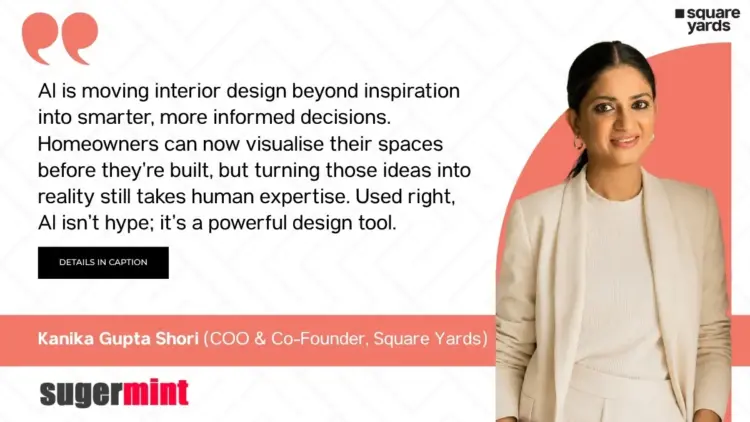
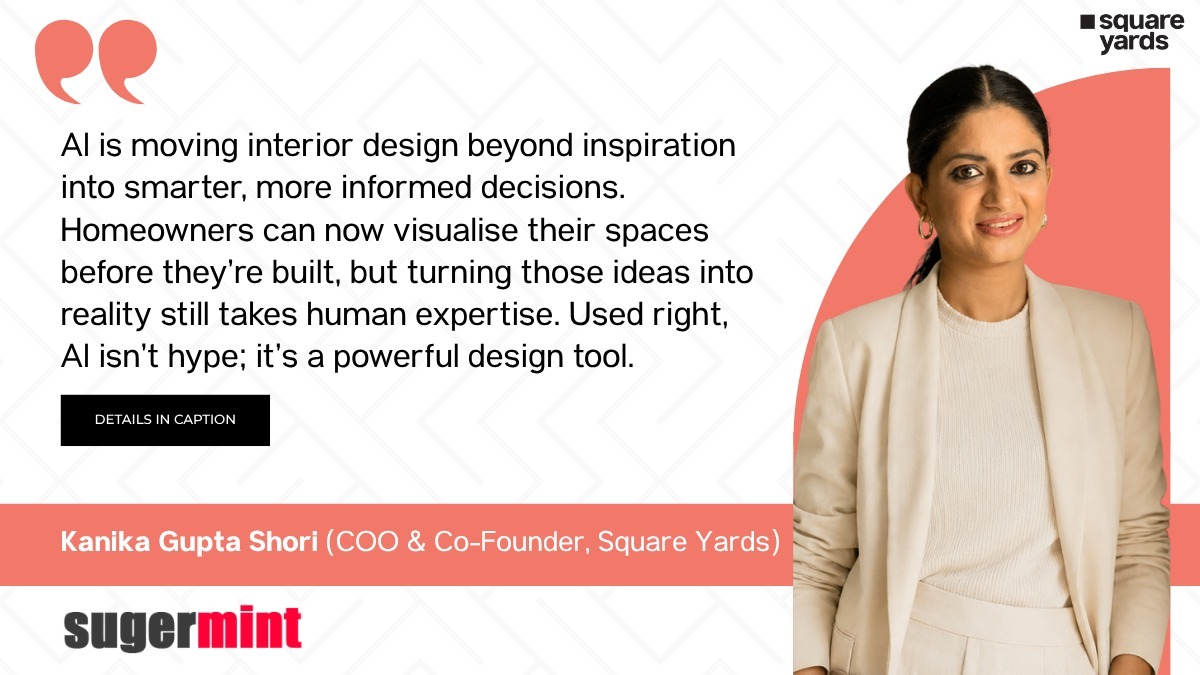
In a recent discourse featured by Sugermint, Kanika Gupta Shori, the COO and Co-Founder of Square Yards, shed light on this transformative shift. Her insights underscore a pivotal moment in the industry: AI is transitioning from a mere source of aesthetic inspiration to a robust engine for practical, data-driven decision-making. This evolution is reshaping how developers, designers, and homeowners collaborate, ensuring that the journey from a vacant shell to a finished home is more seamless than ever before.
Main Facts: The Digital Transformation of Personal Space
At its core, the integration of AI into interior design addresses the fundamental "visualization gap." Historically, the most significant hurdle for homeowners was the inability to accurately predict how a specific sofa, paint color, or floor plan would function within their unique physical constraints.
1. Visualization and Personalization
AI tools today utilize machine learning algorithms to analyze room dimensions, lighting conditions, and existing architectural features. By processing these variables, AI can generate hyper-realistic 3D renders that allow users to "walk through" their redesigned homes. This level of personalization ensures that the design is not just a generic template but a tailored reflection of the inhabitant’s lifestyle.
2. Efficiency in the Planning Phase
Traditional design cycles often involve weeks of back-and-forth communication. AI compresses this timeline significantly. By inputting preferences—such as "mid-century modern" or "minimalist Japanese"—users can generate dozens of iterations in seconds. This speed allows for rapid prototyping of ideas, saving both time and consultancy fees during the early stages of a project.
3. Data-Driven Material Selection
AI does more than just place virtual furniture. Modern platforms are increasingly linked to supply chain databases. This means that when a user selects a specific marble finish or a lighting fixture in a digital environment, the AI can provide real-time data on availability, pricing, and even the carbon footprint of the material.
Chronology: From Blueprints to Neural Networks
To understand the magnitude of the current AI revolution, one must look at the technological trajectory of the interior design industry over the last few decades.
The Era of Manual Draftsmanship (Pre-1990s)
For most of the 20th century, interior design was a labor-intensive process involving hand-drawn blueprints and physical mood boards. Designers relied on physical fabric swatches and catalogs. Revisions were costly and time-consuming, often requiring entire sets of drawings to be recreated.
The CAD and Digital Modeling Wave (1990s–2010s)
The introduction of Computer-Aided Design (CAD) and 3D modeling software like SketchUp and 3ds Max revolutionized the technical side of design. While these tools allowed for greater precision, they remained "dumb" tools—they did exactly what the human operator commanded but offered no proactive suggestions or automated optimizations.
The Rise of Generative AI (2020–Present)
The current era is defined by Generative AI. Unlike CAD, these systems are "intelligent." They can suggest layouts based on ergonomic standards, predict how natural light will move through a room at 4:00 PM in December, and automatically adjust furniture scales to fit specific room volumes. The entry of major PropTech players like Square Yards into this space has accelerated the democratization of these tools, making professional-grade design software accessible to the average consumer.
Supporting Data: The Economic and Functional Impact
The shift toward AI-driven design is backed by compelling market dynamics and consumer behavior shifts.
- Market Growth: The global AI in construction and design market is projected to reach several billion dollars by 2030, growing at a CAGR of over 25%. This growth is driven by the increasing demand for smart homes and the integration of IoT (Internet of Things) with interior aesthetics.
- Reduced Error Margins: Industry reports suggest that AI-assisted planning can reduce "rework" costs by up to 20%. Rework—the process of fixing mistakes made during construction due to poor planning—is one of the largest drains on home renovation budgets.
- Consumer Engagement: Platforms utilizing AI visualization see a 40% higher engagement rate from users compared to those offering static images. Homeowners are more likely to commit to a purchase or a renovation contract when they have interacted with a digital twin of their future home.
- Sustainability Metrics: AI algorithms can now calculate the energy efficiency of a room’s design. By optimizing the placement of windows and the thermal properties of materials, AI can help reduce long-term heating and cooling costs by an estimated 10-15%.
Official Responses: Insights from Industry Leadership
Kanika Gupta Shori’s perspective reflects a broader consensus among PropTech leaders. Her role at Square Yards, a company at the forefront of real estate technology, provides a unique vantage point on how technology influences the consumer journey.
Moving Beyond "Inspiration"
According to Shori, the early days of digital design were focused on "Pinterest-style" inspiration—users looking at beautiful images without a clear path to replicate them. Shori argues that AI’s true value lies in its transition to a decision-support tool. It isn’t just about showing a "pretty picture"; it’s about providing a roadmap that includes dimensions, costs, and structural feasibility.
The Hybrid Model of Expertise
While Shori is a proponent of technology, her stance is nuanced. She emphasizes that AI is an enhancer, not a replacement. The official stance from many design firms is that AI handles the "grunt work"—the initial layouts, the lighting simulations, and the basic color matching—allowing human designers to focus on the "soul" of the project. This includes the emotional resonance of a space, the tactile quality of materials, and the complex problem-solving required for historical renovations.
Democratization of Luxury
Shori’s insights also touch upon the democratization of design. Historically, hiring an interior designer was a luxury reserved for the affluent. By leveraging AI, companies like Square Yards can offer high-level design guidance to a broader demographic, making well-designed, functional living spaces a standard rather than a privilege.
Implications: The Future of the Living Space
The long-term implications of AI in interior design extend far beyond the aesthetics of a single living room.
1. The Changing Role of the Professional Designer
The interior designer of 2030 will likely function more as a "curator" and "technical auditor" than a traditional decorator. Their value will lie in their ability to interpret AI-generated data and ensure it aligns with the human experience. Designers will need to be as proficient in prompt engineering and data analysis as they are in color theory.
2. Real Estate Valuation and "Digital Twins"
In the future, every home may come with a "Digital Twin"—an AI-powered virtual model that lives in the cloud. When a homeowner wants to renovate, they simply update the digital twin to see the impact on the home’s resale value. This integration will make real estate a more liquid and transparent asset class.
3. Sustainability and Circular Economy
AI can track the lifecycle of furniture and materials. If a homeowner decides to redesign, the AI could suggest how to repurpose existing materials or list them on a secondary market, contributing to a more sustainable, circular economy in the construction sector.
4. Overcoming the "Technical Feasibility" Barrier
One of the greatest risks of AI is the generation of "impossible designs"—images that look stunning but violate the laws of physics or local building codes. The next generation of AI tools will be "code-aware," meaning they will automatically reject design ideas that interfere with load-bearing walls or plumbing stacks, further reducing the friction between the digital dream and the physical reality.
Conclusion: The Symbiosis of Mind and Machine
As Kanika Gupta Shori aptly suggests, the future of interior design lies in the harmonious blend of technological innovation and human creativity. AI provides the speed, the data, and the visualization capabilities that were once unimaginable. However, the human element—the understanding of comfort, the nuance of culture, and the practicalities of daily life—remains the "North Star" of the industry.
For the homeowner, this technological shift means more than just a faster way to pick a paint color. It represents a newfound agency over their environment. In the hands of a skilled professional, AI is the tool that finally makes the "dream home" a predictable, achievable, and sustainable reality. As we look toward 2027 and beyond, the message is clear: the most beautiful spaces of the future will be designed by humans, but they will be powered by intelligence.