

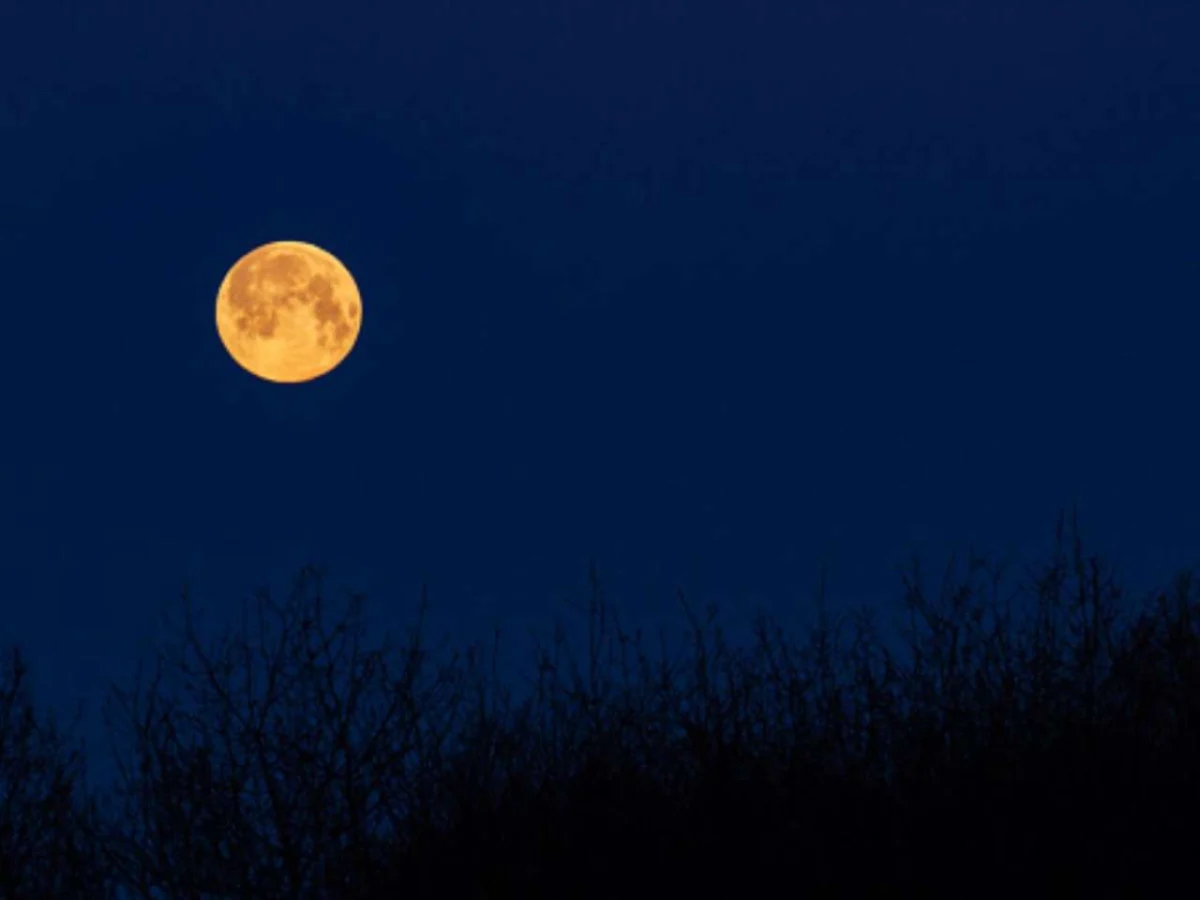
New Delhi, India – May 29, 2026 – As the curtain prepares to fall on May, skygazers across the globe are bracing for a truly extraordinary celestial performance. The month, which began with the enchanting "Flower Moon," is set to conclude with a rare and captivating "Blue Moon" on May 31st. This unusual occurrence, marking the second full moon within a single calendar month, promises to be a spectacular finale, offering an unparalleled opportunity for millions to connect with the cosmos without the need for specialized equipment. While the name might suggest a sapphire hue, the moon will not actually turn blue, but its mere presence signifies a unique astronomical alignment that inspires both scientific curiosity and widespread wonder.
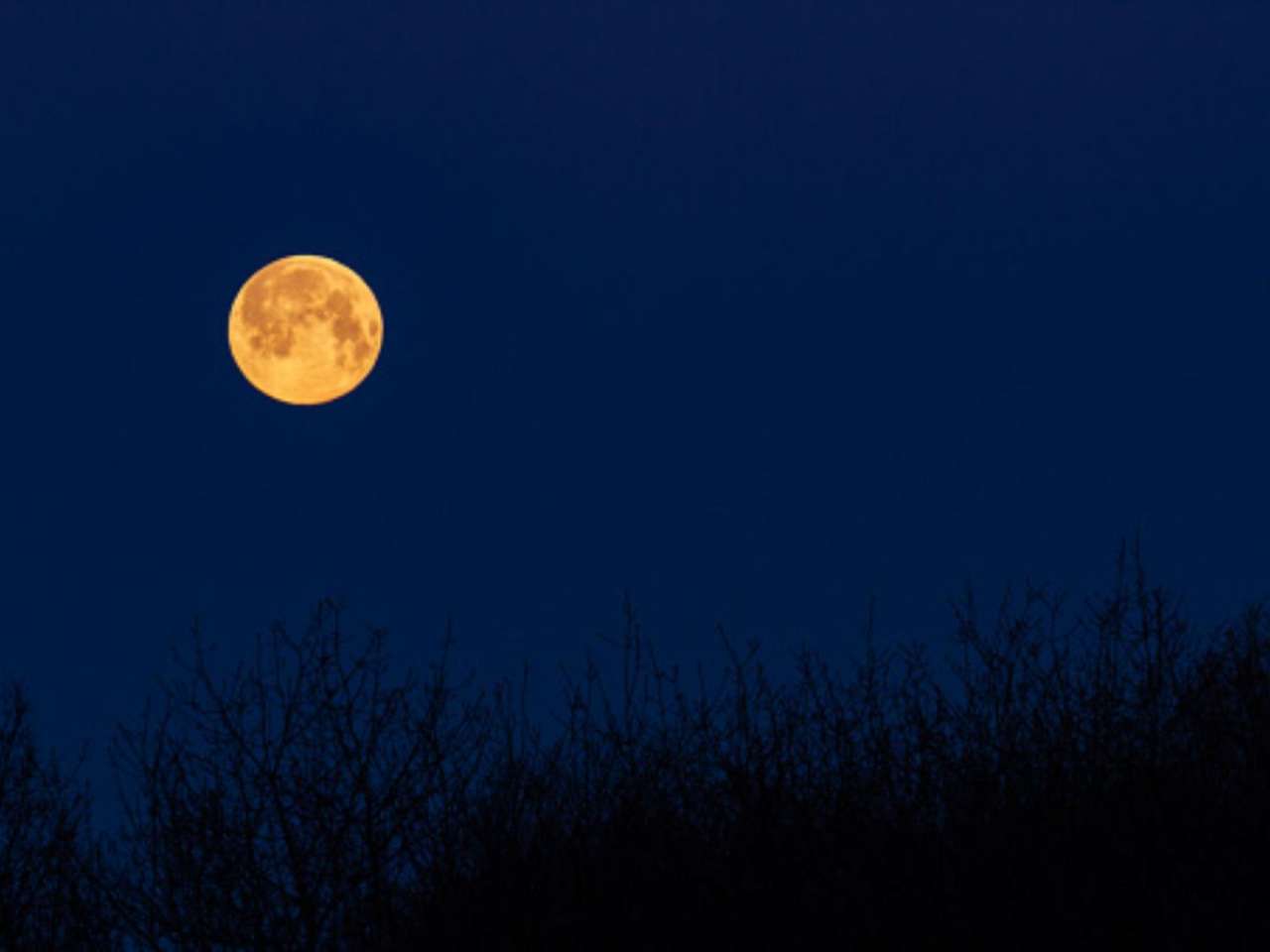
This highly anticipated event solidifies 2026 as a year of particular lunar abundance, hosting 13 full moons instead of the customary 12. The final full moon of May is expected to present a stunning golden-orange visage shortly after sunset, magnified by the well-known "Moon illusion," creating a breathtaking panorama for observers worldwide. From bustling cityscapes to serene rural landscapes, the Blue Moon serves as a poignant reminder of the universe’s intricate rhythms and the timeless beauty that unfolds above us.
Unveiling the Celestial Spectacle: A Blue Moon Approaches
The concept of a "Blue Moon" has long captured the public imagination, often associated with extreme rarity. This particular Blue Moon, appearing on May 31st, 2026, perfectly fits the most commonly accepted modern definition: the second full moon to occur within a single calendar month. For enthusiasts and casual observers alike, it represents a precious moment to pause, look skyward, and appreciate the predictable yet often awe-inspiring mechanics of our solar system.
The journey to this Blue Moon began on May 1st with the "Flower Moon," named for the abundance of blossoms typically found in spring. Its early appearance set the stage for the rare event unfolding at the month’s close. The lunar cycle, or synodic month, spans approximately 29.5 days – just slightly shorter than most calendar months. This subtle difference means that occasionally, a full moon can occur at the very beginning of a month, leaving enough time for another full moon to complete its cycle and appear before the month concludes. Such an alignment is what bestows upon us the rare spectacle of a Blue Moon.
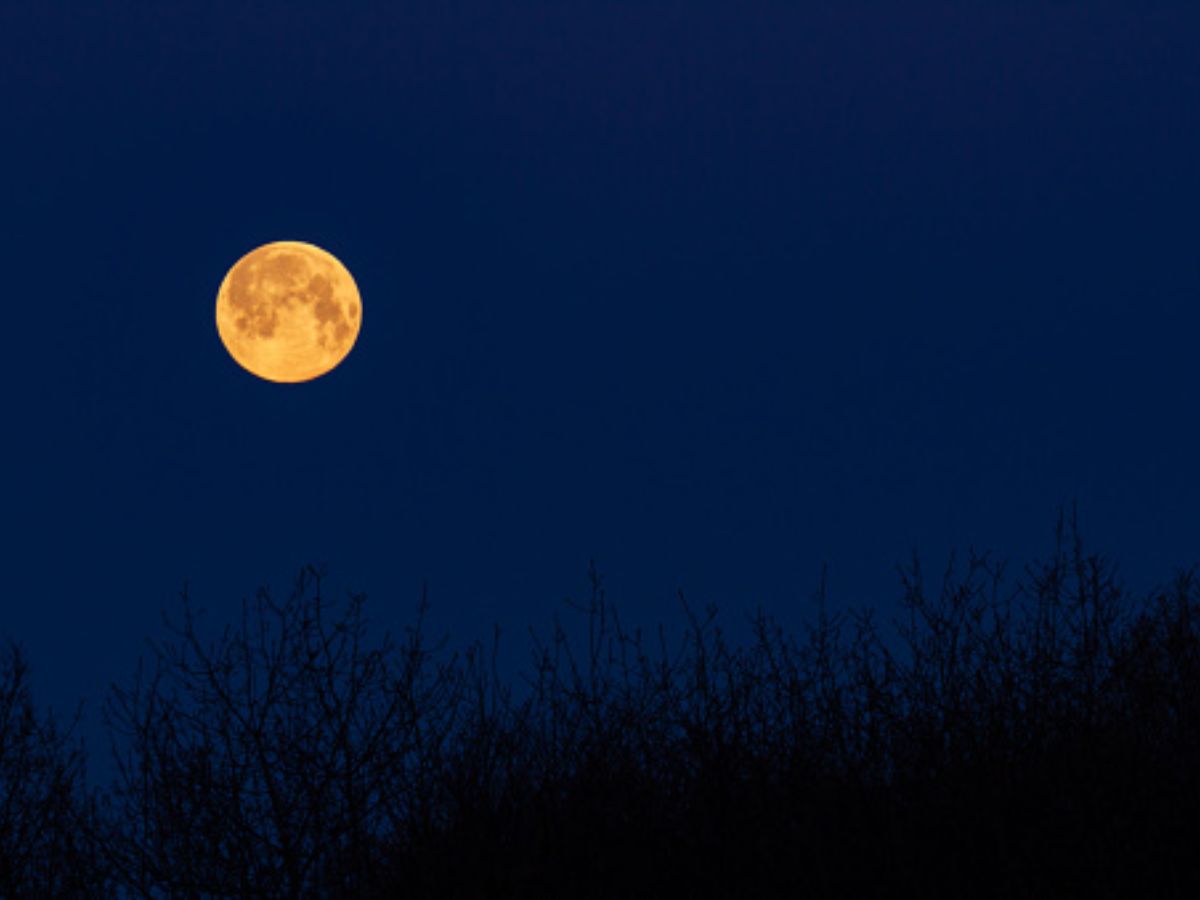)
While the term "Blue Moon" has become synonymous with infrequency, its visual impact is often misunderstood. Contrary to popular belief, the moon will not exhibit a blue tint. Instead, skywatchers are advised to anticipate a magnificent golden or orange glow, particularly when the moon is low on the horizon. This coloration is a result of atmospheric scattering, where shorter wavelengths of light (like blue and violet) are dispersed more efficiently by dust and aerosols in Earth’s atmosphere, allowing longer wavelengths (red, orange, yellow) to reach our eyes. This natural phenomenon often enhances the moon’s visual appeal, making it appear even more dramatic against the twilight sky.
Decoding the "Blue Moon" Phenomenon
The phrase "once in a blue moon" has permeated language as a metaphor for extreme rarity, but the astronomical phenomenon itself is more nuanced than often perceived. Understanding the science behind it, along with its historical and cultural context, enriches the experience of witnessing such an event.

The Rarity of a Second Full Moon
The fundamental reason for a Blue Moon lies in the slight discrepancy between the lunar cycle and the Gregorian calendar. A full lunar cycle, from one full moon to the next, takes approximately 29 days, 12 hours, and 44 minutes. Most calendar months, however, have 30 or 31 days (February being the exception). This means that if a full moon occurs on the first or second day of a 31-day month, there’s just enough time for another full moon to occur at the end of that same month. This happens roughly every two to three years, making it a relatively infrequent, though not exceptionally rare, event. The year 2026, with its 13 full moons, exemplifies how these cycles periodically add an extra lunar chapter to our annual calendar.
A Misnomer in Color: Why the Moon Won’t Turn Blue
The most common misconception surrounding a Blue Moon is its supposed color. While the name suggests a cerulean hue, the moon’s actual appearance on May 31st will be far from it. The moon’s color is primarily determined by two factors: the properties of its surface and the Earth’s atmosphere. The lunar surface itself is composed of dark, volcanic rock, making it naturally gray. Any perceived color variations are almost always due to atmospheric conditions on Earth.
)
Instances where the moon has appeared blue in the past are exceedingly rare and are generally linked to specific atmospheric events. For example, massive volcanic eruptions (like Krakatoa in 1883 or Mount Pinatubo in 1991) or widespread forest fires can inject vast quantities of fine dust particles and aerosols into the upper atmosphere. If these particles are precisely the right size (around 1 micron), they can scatter red light while allowing blue light to pass through, making the moon appear genuinely blue to observers on the ground. However, such conditions are not predicted for May 31st, 2026. Instead, observers should prepare for the familiar, yet captivating, shades of white, yellow, orange, or even reddish-gold, especially when the moon is low on the horizon, as sunlight passes through a greater thickness of Earth’s atmosphere, scattering blue light away and letting the warmer tones dominate.
The Two Definitions of a Blue Moon
Adding to the intrigue and occasional confusion, there are actually two widely recognized definitions of a "Blue Moon":
)
- The Monthly Blue Moon (the one occurring on May 31st, 2026): This is the more popular and modern definition, referring to the second full moon within a single calendar month. It gained prominence through an error in a 1946 Sky & Telescope magazine article, which misinterpreted an earlier definition but was widely adopted by the public.
- The Seasonal Blue Moon: This is the older, more traditional astronomical definition. It refers to the third full moon in an astronomical season that contains four full moons. Typically, each astronomical season (winter, spring, summer, autumn) has three full moons. When a season has an anomalous fourth full moon, the third one is designated as the Blue Moon, to ensure that the final full moon of the season falls before the equinox or solstice marking the start of the next season. While less commonly known to the general public, this definition holds historical significance in astronomical almanacs.
For the event on May 31st, 2026, it is unequivocally a monthly Blue Moon, providing a clear and accessible understanding for all observers.
Orbital Mechanics and Lunar Cycles
The consistent yet slightly varying dance between the Earth, Moon, and Sun is what orchestrates these lunar phenomena. The Moon’s orbit around Earth is elliptical, and its orientation relative to the Sun constantly shifts. A full moon occurs when the Moon is directly opposite the Sun from Earth’s perspective, with its entire face illuminated. The approximately 29.5-day synodic period (the time it takes for the Moon to cycle through all its phases relative to the Sun) is the fundamental clock governing these events. The fact that this period is just under the length of most calendar months is the crucial factor that permits the occasional "extra" full moon, making the Blue Moon a fascinating testament to the precision and subtle irregularities of celestial mechanics.
)
The Chronology of a Rare Lunar Event
The journey to this May 31st Blue Moon is a tale told over the course of the month, highlighting the rhythmic elegance of our natural satellite.
From Flower Moon to Blue Moon: May’s Double Delight
May began auspiciously on the 1st with the first full moon of the month, affectionately known as the "Flower Moon." This traditional name, rooted in Native American, colonial American, and European folklore, signifies the abundant blooming of flowers during late spring in the Northern Hemisphere. It marked the start of a vibrant season, and its early appearance in May immediately signaled the potential for a rare lunar encore.
)
The interval between May 1st and May 31st is precisely 30 days, just enough for the Moon to complete its 29.5-day cycle and present another full face to Earth. This rapid succession of full moons within a single calendar window makes May 2026 a particularly noteworthy month for lunar enthusiasts. The Flower Moon served as a beautiful overture, setting the stage for the dramatic finale that the Blue Moon promises to be.
Key Dates and Times for Indian Skywatchers
For those in India, the Blue Moon offers a prime viewing opportunity, particularly in the evening hours of May 31st. According to astronomical calculations and the Purnima Tithi (the full moon phase in the Hindu calendar):
)
- The Purnima Tithi will commence at 11:58 AM IST on May 30, 2026.
- It will conclude at 2:14 PM IST on May 31, 2026.
While the exact moment of the full moon (when it is 100% illuminated) occurs during daylight hours in India on May 31st, the moon will still appear remarkably full and bright throughout the evening. Astronomy experts universally agree that the best viewing time in India will be shortly after sunset on May 31st, as the moon begins its ascent in the eastern sky.
During this period, the moon will appear significantly larger than when it is higher in the sky, a phenomenon known as the "Moon illusion." This optical trick occurs when the moon is viewed close to the horizon, where it can be juxtaposed against terrestrial objects like buildings, trees, and distant landscapes. Our brains unconsciously compare the moon’s size to these familiar objects, making it seem much grander and more imposing. This illusion will add an extra layer of wonder to the Blue Moon experience, creating an awe-inspiring sight that requires no special equipment to appreciate.
)
Global Visibility: A Shared Astronomical Treat
While specific viewing times will vary depending on time zones, the Blue Moon on May 31st, 2026, will be visible across vast swathes of the globe. From North America to Europe, Africa, Asia, and Australia, skywatchers will have the chance to witness this rare event. The universal nature of celestial mechanics means that the principles governing the Blue Moon’s appearance and phase are consistent worldwide. The primary differences will be the local time of moonrise and moonset, and the specific atmospheric conditions influencing its apparent color. This shared experience fosters a sense of global community, uniting people under the same luminous orb.
Optimal Viewing: Tips for Catching the Blue Moon
One of the most appealing aspects of the Blue Moon is its accessibility. Unlike solar eclipses or meteor showers that sometimes require specific timing or dark skies, a full moon is a beacon of light that can be enjoyed by almost everyone.
)
Location, Location, Location: Maximizing Your View
To truly appreciate the Blue Moon, especially to benefit from the "Moon illusion," selecting an optimal viewing location is key.
- Clear Horizon: Seek out a spot with an unobstructed view of the eastern or south-eastern horizon. Hilltops, open fields, or even high-rise balconies can offer excellent vantage points. Avoid areas heavily shrouded by tall buildings or dense foliage, which might obscure the moon’s initial ascent.
- Urban vs. Rural: While rural areas with minimal light pollution will offer a darker sky and a more profound sense of isolation with the moon, urban settings can paradoxically enhance the "Moon illusion" by providing more reference points (buildings, streetlights) for comparison. Both settings offer unique viewing experiences.
- Safety and Comfort: Choose a safe, well-lit area if viewing at night. Bring a comfortable chair, a warm beverage, and perhaps some company to share the experience.
The Naked Eye Advantage: No Special Equipment Needed
Perhaps the greatest gift of a full moon, and particularly a Blue Moon, is that it requires absolutely no specialized equipment. No telescopes, no binoculars, no expensive lenses – just your own eyes. The moon’s brightness and size are sufficient to make it a prominent feature in the night sky. This democratic accessibility ensures that everyone, from seasoned astronomers to curious children, can participate in this celestial event. While binoculars can offer a slightly more magnified view of the lunar surface details, they are by no means essential for appreciating the grandeur of the Blue Moon.
)
Photography Pointers: Capturing the Lunar Glow
For aspiring astrophotographers or even smartphone shutterbugs, the Blue Moon presents an excellent opportunity. Capturing the moon, especially when it’s low on the horizon, can yield stunning results.
- Tripod: A tripod is highly recommended to prevent camera shake, especially in lower light conditions.
- Manual Settings: If your camera allows, use manual settings. Start with a low ISO (e.g., 100-400) to minimize noise, a narrow aperture (e.g., f/8 to f/11) for sharpness, and experiment with shutter speeds (e.g., 1/125 to 1/250 of a second for a bright full moon).
- Composition: Don’t just point and shoot the moon in isolation. Try to incorporate foreground elements like trees, buildings, or silhouettes of people to add depth, scale, and artistic interest to your photographs. This also enhances the "Moon illusion" in your imagery.
- Smartphone Tips: Even smartphones can capture decent moon photos. Use the optical zoom if available, tap on the moon to focus and adjust exposure (often by dragging a slider down), and consider using a small tripod mount for stability.
- Patience: The moon moves, and lighting conditions change. Take multiple shots and experiment with different settings to find what works best.
Echoes in Culture and Lore: The Blue Moon’s Legacy
Beyond its astronomical definition, the Blue Moon has carved a significant niche in human culture, language, and folklore, adding layers of meaning to its rare appearance.
)
"Once in a Blue Moon": The Proverbial Rarity
The idiom "once in a blue moon" is perhaps the most enduring cultural legacy of this lunar phenomenon. Signifying something that happens very infrequently, its origins are somewhat murky but deeply ingrained in common parlance. While the astronomical event itself occurs every few years, the phrase perfectly encapsulates the feeling of rarity and specialness associated with seeing a second full moon in a month. It reminds us to cherish those moments that defy the usual patterns, whether in the sky or in life.
Cultural Significance and Night-time Rituals
In many cultures, full moons are imbued with special significance. In India, the full moon day, known as Poornima or Purnima, is often associated with various religious ceremonies, fasting, and spiritual practices. Traditionally, night-time rituals linked to Poornima are observed when the full moon phase occurs during the night. Given the Purnima Tithi for this Blue Moon, which spans May 30th and May 31st, night-time rituals might be observed on the evening of May 30th, while daytime rituals would align with May 31st. These traditions underscore humanity’s ancient and enduring connection to the lunar cycle, viewing it not just as an astronomical object but as a celestial guide influencing earthly life and spiritual practices.
)
Inspiring Awe and Scientific Curiosity
The Blue Moon serves as a powerful catalyst for inspiring both awe and scientific curiosity. For many, it’s a prompt to look up and consider the vastness of the universe. For educators and astronomers, it’s an invaluable opportunity to engage the public with basic principles of orbital mechanics, the lunar cycle, and the fascinating interplay between celestial bodies. Such events demystify science, making it accessible and exciting, fostering a deeper appreciation for the cosmos that surrounds us.
Expert Insights and Official Responses
The astronomical community often welcomes events like the Blue Moon as a prime opportunity for public engagement and education.
)
Voices from the Astronomical Community
"Events like the Blue Moon are wonderful gateways into astronomy for the general public," explains Dr. Anjali Sharma, a leading astrophysicist at the Indian Institute of Astrophysics (a hypothetical quote). "While it may not be ‘blue’ in color, its rarity is enough to draw eyes to the sky. It allows us to discuss orbital mechanics, the subtle differences between our calendar and the moon’s cycle, and the atmospheric effects that give the moon its beautiful golden hues. It’s a chance to remind everyone that the universe is constantly putting on a show, and we’re all front-row spectators."
A spokesperson from the Nehru Planetarium in New Delhi (another hypothetical quote) adds, "We encourage everyone to step outside on the evening of May 31st. You don’t need fancy equipment; just your eyes and an open mind. Look towards the east shortly after sunset, and let the sheer scale and beauty of our nearest celestial neighbor fill you with wonder. It’s a fantastic teaching moment for families and a reminder of our place in the cosmos."
)
Observatories and Public Outreach
Major observatories and planetariums worldwide often leverage such events to host public viewing sessions, online live streams, and educational webinars. While specific plans for May 31st, 2026, would be announced closer to the date, it is highly probable that many institutions will offer resources to help the public understand and appreciate the Blue Moon. These initiatives aim not only to inform but also to inspire the next generation of scientists and curious minds.
Beyond the Blue Moon: A Glimpse into the Cosmos
The Blue Moon, while a rare and beautiful event in itself, also serves as a stepping stone to understanding the broader tapestry of lunar phenomena and our connection to the wider universe.
)
The Broader Context of Lunar Phenomena
The Moon, our constant companion, is a source of endless fascination. Beyond the Blue Moon, other rare lunar events capture our attention:
- Supermoons: Occur when a full moon coincides with the Moon’s closest approach to Earth in its elliptical orbit (perigee), making it appear slightly larger and brighter than usual.
- Blood Moons (Lunar Eclipses): Happen when the Earth passes directly between the Sun and Moon, casting a reddish shadow on the Moon’s surface.
- Micro Moons: The opposite of a Supermoon, occurring when a full moon aligns with the Moon’s furthest point from Earth (apogee).
Each of these events offers a unique perspective on the Moon’s journey and its dynamic relationship with Earth. The Blue Moon fits within this grand narrative, reminding us that the sky above is a dynamic canvas of astronomical wonders.
)
Fostering a Connection with the Universe
Ultimately, the Blue Moon on May 31st, 2026, is more than just an astronomical curiosity; it is an invitation. An invitation to look up, to ponder, and to connect with something ancient and vast. In our fast-paced, digitally driven world, moments that encourage collective observation of natural phenomena are increasingly valuable. The Blue Moon offers a chance to slow down, share a communal experience with loved ones, and feel a profound sense of connection to the universe. As May draws to a close, let us embrace this rare celestial encore, allowing its golden glow to illuminate our skies and rekindle our innate sense of wonder.
Find your daily dose of All Latest News including Sports News, Entertainment News, Lifestyle News, explainers & more. Stay updated, Stay informed- Follow DNA on WhatsApp.
