

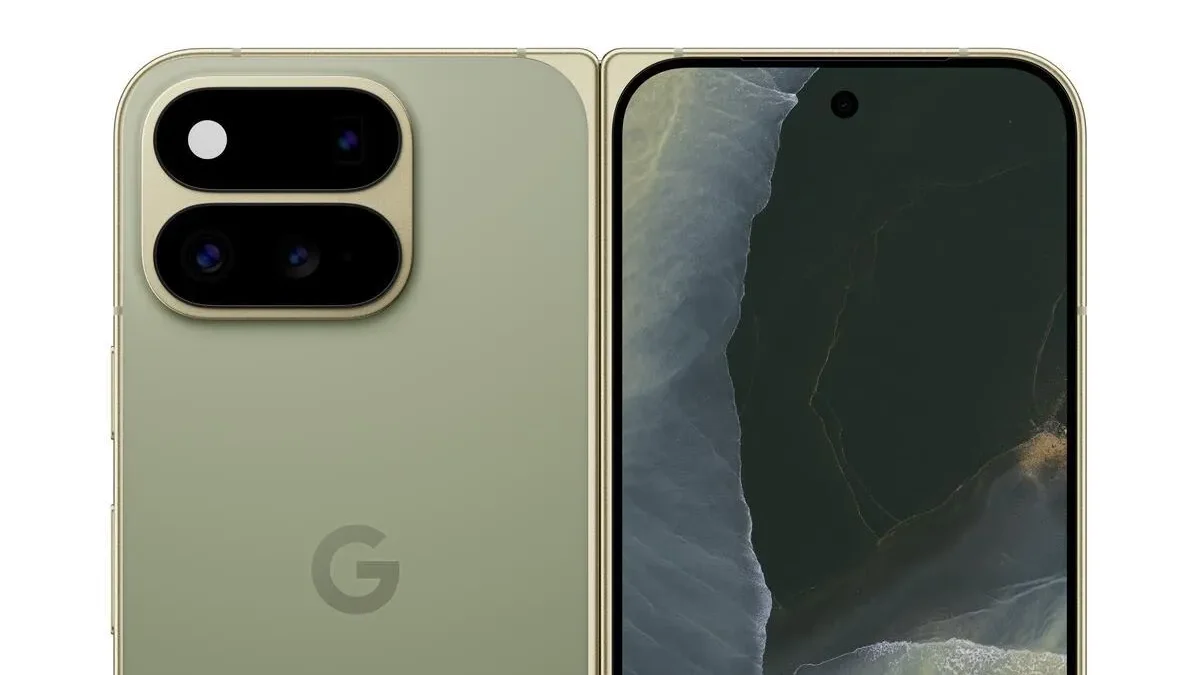
NEW DELHI, India – August 12, 2026 – Google has officially launched its highly anticipated Pixel 11 Pro Fold in India, marking a significant milestone in the company’s commitment to the evolving foldable smartphone market. Unveiled on Wednesday, August 12, 2026, this third-generation foldable device from the tech giant is poised to challenge established players like Samsung’s Galaxy Z Fold 8 Ultra and Fold 8, as well as Motorola’s Razr Fold, by blending cutting-edge hardware with Google’s renowned software intelligence. With its powerful Tensor G6 processor, a revolutionary display system, and an unparalleled commitment to long-term software support, the Pixel 11 Pro Fold represents Google’s most ambitious foray yet into the premium segment of the Indian smartphone landscape.
Priced at an imposing ₹1,86,999, the Pixel 11 Pro Fold will be available to consumers starting August 20, aiming to capture the imagination of early adopters and tech enthusiasts seeking the pinnacle of mobile innovation. This launch underscores India’s growing importance as a strategic market for high-end smartphones, especially as the foldable segment continues its rapid expansion globally.
Main Facts: A Deeper Dive into Google’s Foldable Vision
The Pixel 11 Pro Fold isn’t just another smartphone; it’s a statement of intent from Google, showcasing their vision for how mobile technology can adapt and enhance user experiences. Every aspect, from its custom-designed silicon to its meticulously crafted displays and robust software ecosystem, has been engineered to deliver a seamless and productive foldable experience.
Unprecedented Power: The Tensor G6 Processor
At the heart of the Pixel 11 Pro Fold beats the formidable Tensor G6 processor, Google’s latest custom-designed silicon. This chipset is the culmination of years of research and development, specifically engineered to optimize on-device artificial intelligence and machine learning capabilities. Unlike conventional processors that prioritize raw clock speed, the Tensor G6 is a holistic system-on-a-chip (SoC) designed to accelerate Google’s sophisticated AI models, enabling features like advanced computational photography, real-time language translation, enhanced security protocols, and ultra-efficient power management.
With configurations offering up to a staggering 16 GB of RAM and 512 GB of internal storage, the Pixel 11 Pro Fold promises uncompromising performance for even the most demanding applications and multitasking scenarios. This generous memory allocation ensures that users can seamlessly switch between multiple applications, run graphically intensive games, and handle large files without a hint of lag or slowdown. The ample storage provides ample space for photos, videos, applications, and documents, catering to the needs of power users who rely heavily on their device for both work and entertainment.
Software Prowess: Android 17 and Seven Years of Support
Setting a new industry benchmark, the Pixel 11 Pro Fold ships with Android 17 pre-installed, offering users the latest innovations in mobile operating systems right out of the box. Android 17 is expected to bring significant enhancements in terms of user interface adaptability for foldable screens, improved privacy controls, new productivity features, and deeper integration with Google’s AI services.
Perhaps the most compelling software proposition, and a testament to Google’s commitment to product longevity, is the promise of seven years of OS updates and seven years of security patches. This unprecedented commitment ensures that the Pixel 11 Pro Fold will remain current, secure, and feature-rich well into the next decade. This strategy not only offers immense value to consumers, extending the usable life of a premium device, but also aligns with growing global trends towards sustainability and reducing electronic waste. It positions Google as a leader in supporting its hardware for the long haul, a significant differentiator in a market often characterized by shorter update cycles.
Dual Display Brilliance: Actua OLED and Super Actua Flex
The Pixel 11 Pro Fold’s defining characteristic lies in its dual-display system, meticulously engineered to offer versatility and an immersive visual experience. The device features a 6.5-inch Actua OLED cover display, boasting a fluid 120 Hz refresh rate and an astonishing peak brightness of 3,600 nits. This outer display is designed for quick interactions, allowing users to check notifications, respond to messages, and browse content without needing to unfold the device. The high refresh rate ensures smooth scrolling and responsiveness, while the extreme brightness makes it effortlessly readable even under direct sunlight, a crucial feature for outdoor use.
Unfolding the device reveals the magnificent 8-inch main Super Actua flex display. This expansive panel offers a dynamic refresh rate ranging from 1 to 120 Hz, intelligently adjusting to content to conserve battery life while providing buttery-smooth visuals when needed. Like its cover counterpart, the main display also achieves a remarkable peak brightness of 3,600 nits, ensuring vibrant colors, deep blacks, and exceptional contrast for consuming multimedia, working on documents, or engaging in productivity tasks. The "flex" in its name denotes its inherent flexibility, carefully engineered to withstand repeated folding and unfolding cycles while minimizing the appearance of a crease, a common challenge in foldable technology.
HiLight: An Intelligent Notification System
A unique innovation introduced with the Pixel 11 Pro Fold is HiLight, an array of LEDs strategically placed around the camera flash. This subtle yet powerful feature serves as an intelligent notification system, providing visual cues for incoming calls and integrating seamlessly with Google’s Gemini AI assistant. HiLight can flash in specific patterns or colors to indicate different types of notifications, allowing users to stay informed at a glance, even when the phone is face down or in silent mode. Its integration with Gemini suggests a future where AI-driven alerts become more contextual and less intrusive, offering a smarter way to manage digital interactions.
Robust Durability and Power Management
Understanding the demands placed on a premium foldable device, Google has equipped the Pixel 11 Pro Fold with robust protection. Both the cover and main displays are shielded by Corning Gorilla Glass Victus 2, the latest iteration of industry-leading protective glass, offering enhanced scratch resistance and improved drop performance. Furthermore, the device boasts an IP68 rating for dust and water protection, ensuring it can withstand splashes, spills, and dusty environments without compromise. This level of durability is critical for a device designed to be used in various scenarios and reinforces its premium build quality.
Powering this innovative device is a substantial 4,806 mAh battery, carefully optimized to provide all-day usage despite the demands of dual high-refresh-rate displays and a powerful processor. The Pixel 11 Pro Fold supports 30W wired fast charging, allowing users to quickly top up their battery, and also features 25W wireless charging for added convenience. Google’s software optimizations, combined with the energy efficiency of the Tensor G6 and the dynamic refresh rate of the main display, are expected to deliver a reliable battery experience tailored for a foldable form factor.
Advanced Camera System: Capturing Every Moment
Google’s Pixel devices have long been synonymous with exceptional photography, and the Pixel 11 Pro Fold continues this tradition with a versatile and powerful camera array. The rear camera system features a 48 MP main camera, designed to capture incredibly detailed and vibrant images in various lighting conditions. This is complemented by a 10.5 MP ultrawide lens, perfect for sweeping landscapes and group shots, and a 10.8 MP telephoto lens, enabling sharp zoomed-in photos with optical precision.
For selfies and video calls, the Pixel 11 Pro Fold features a dual 10 MP front camera system, one on the cover display and another on the main screen. This thoughtful design ensures that users have access to a high-quality front-facing camera regardless of whether the device is folded or unfolded, catering to different usage scenarios. Google’s renowned computational photography algorithms, including features like Night Sight, Magic Eraser, Photo Unblur, and Real Tone, are expected to be deeply integrated, leveraging the Tensor G6’s AI capabilities to deliver stunning results with minimal effort.
Pricing and Availability
The Google Pixel 11 Pro Fold is priced in India at ₹1,86,999, positioning it firmly within the ultra-premium smartphone segment. Indian consumers eager to experience Google’s latest foldable innovation can purchase the device starting August 20, 2026. This strategic launch date aims to capitalize on the festive season ahead, where high-end electronics typically see increased demand.
Chronology: Google’s Evolving Foldable Journey
The launch of the Pixel 11 Pro Fold is not an isolated event but rather a culmination of Google’s persistent efforts to establish itself in the nascent yet rapidly growing foldable smartphone market.
From First Fold to Third Generation
Google’s journey into foldables began with the original Pixel Fold, a device that served as a crucial learning platform. While praised for its software integration and unique aspect ratio, it faced challenges common to first-generation foldables, such as hinge durability concerns and a relatively high price point. The subsequent Pixel 8 Pro Fold built upon this foundation, introducing refinements in design, improved hinge mechanisms, and enhanced camera capabilities, signaling Google’s commitment to iterating and improving.
The Pixel 11 Pro Fold represents the third generation, a significant leap forward. Each iteration has allowed Google to refine its hardware engineering, optimize Android for foldable form factors, and better understand user expectations. This gradual evolution has been crucial in addressing the complexities of foldable technology, from display resilience to battery optimization and hinge mechanics. Google’s approach reflects a patient, methodical strategy, aiming to perfect the user experience rather than rush to market with unproven technology.
The Competitive Landscape in 2026
By 2026, the foldable market has matured considerably, with several strong contenders vying for market share. Samsung remains the dominant force, with its Galaxy Z Fold series (now in its 8th iteration, featuring models like the Z Fold 8 Ultra and Fold 8) setting the benchmark for commercial success and technological advancement. Samsung’s long-standing presence and extensive R&D have given them a significant lead in manufacturing and consumer trust. Motorola, with its Razr Fold series, has carved a niche in the clamshell foldable segment, appealing to users seeking a compact, stylish device.
The Pixel 11 Pro Fold enters this competitive arena with a distinct advantage: Google’s native control over the Android operating system and its powerful Tensor chip. This allows for unparalleled hardware-software integration, enabling unique AI-driven features and a streamlined user experience that rivals may struggle to replicate. Google isn’t just selling a foldable phone; it’s selling the definitive Android foldable experience, deeply integrated with its ecosystem of services.
India: A Strategic Growth Market
The decision to launch the Pixel 11 Pro Fold in India immediately underscores the strategic importance of the Indian market for premium smartphones. India, with its rapidly expanding economy and tech-savvy population, represents a massive opportunity for high-end devices. While price sensitivity remains a factor, a growing segment of affluent consumers is increasingly willing to invest in cutting-edge technology. For Google, India offers not just sales volume but also a crucial proving ground for its innovative hardware, helping to establish the Pixel brand’s premium credentials globally. The Indian market’s diversity and demand for feature-rich devices make it an ideal launchpad for a device as sophisticated as the Pixel 11 Pro Fold.
Supporting Data: Innovations Driving the Pixel 11 Pro Fold
The Pixel 11 Pro Fold is a technological marvel, and a deeper look into its core components reveals the innovations that set it apart.
The Ascendancy of Foldables: Market Trends
Industry analysts consistently point to foldables as the fastest-growing segment in the premium smartphone market. Reports from firms like IDC and Counterpoint Research indicate a compound annual growth rate (CAGR) exceeding 50% for foldable smartphones in the coming years. This growth is driven by increasing consumer acceptance, improving durability, and the enhanced productivity and entertainment possibilities offered by the larger screen real estate. As manufacturing costs decrease and technology matures, foldables are gradually moving from niche luxury items to more mainstream premium options. Google’s entry with a robust third-generation device is perfectly timed to capitalize on this accelerating market trend.
Tensor G6: Google’s AI Powerhouse
The Tensor G6 processor is more than just a CPU and GPU; it’s an AI engine specifically tuned for the Google ecosystem. Its dedicated Tensor Processing Unit (TPU) is designed to handle complex machine learning tasks directly on the device, offering unparalleled speed and privacy for AI features. This means faster processing for computational photography, more accurate real-time transcription, enhanced security features like on-device biometric processing, and a more responsive Gemini AI assistant. Compared to previous Tensor chips, the G6 likely boasts significant improvements in energy efficiency, raw processing power, and specialized AI cores, allowing it to compete effectively with Qualcomm’s Snapdragon 8 Gen X series and Apple’s A-series chips in specific AI benchmarks and real-world usage scenarios. The G6’s strength lies in its ability to seamlessly integrate with Google’s software, creating a cohesive and intelligent user experience.

Android 17 and The Seven-Year Commitment: A Paradigm Shift
The decision to offer seven years of OS and security updates is a bold move that redefines customer value and challenges industry norms. Historically, Android devices received 2-3 years of OS updates and 3-5 years of security patches. Google’s new policy for the Pixel 11 Pro Fold not only provides peace of mind regarding security but also ensures that the device will continue to receive new features and performance optimizations for nearly a decade. This has significant implications:
- Consumer Value: Users get a longer-lasting device, reducing the frequency of upgrades and offering better return on investment.
- Sustainability: Extending device longevity contributes to environmental efforts by reducing electronic waste.
- Security: Consistent security patches are crucial for protecting user data in an increasingly threat-filled digital landscape.
- Brand Loyalty: This commitment builds immense trust and loyalty among Pixel users, positioning Google as a user-centric brand.
- Platform Consistency: A longer update cycle ensures a more consistent Android experience across a broader range of active Pixel devices.
Android 17, specifically optimized for foldables, will likely include advanced window management, improved app continuity between screens, and adaptive UI elements that seamlessly transition as the device is folded or unfolded.
Display Technology: Pushing Boundaries
The "Actua OLED" and "Super Actua flex" displays represent Google’s advancements in screen technology. "Actua" likely signifies Google’s proprietary tuning for color accuracy, brightness, and contrast, aiming for a true-to-life visual experience. The 3,600 nits peak brightness is exceptionally high, rivalling dedicated HDR monitors and ensuring stunning HDR content consumption and perfect outdoor visibility.
The dynamic refresh rate (1-120 Hz) on the main display is crucial for battery efficiency. It allows the screen to drop down to as low as 1 Hz when displaying static content (like an e-book), saving significant power, and then instantly ramp up to 120 Hz for smooth scrolling, gaming, or video playback. The challenge with foldable displays often lies in their durability and the visibility of the crease. Google’s "Super Actua flex" suggests an improved ultra-thin glass (UTG) or polymer layer, combined with a sophisticated hinge design, to minimize the crease and ensure long-term integrity.
Computational Photography at its Zenith
The Pixel 11 Pro Fold’s camera hardware, while impressive on its own, truly shines when combined with Google’s unparalleled computational photography. The 48 MP main sensor, likely featuring a large sensor size and advanced optical image stabilization (OIS), captures rich detail. The ultrawide and telephoto lenses add versatility. However, it’s the Tensor G6’s ability to process vast amounts of image data in milliseconds that truly elevates the Pixel’s camera experience.
Features like Night Sight, which uses machine learning to produce bright, detailed photos in near-dark conditions, will be further enhanced. Magic Eraser allows users to effortlessly remove unwanted objects from photos, and Photo Unblur sharpens blurry images. Real Tone ensures accurate representation of diverse skin tones. The dual front cameras, especially the one on the main screen, open up new possibilities for video conferencing and vlogging in an unfolded state, leveraging the larger display. Integration with Gemini could mean more intelligent scene recognition, personalized photography tips, and even AI-generated photo enhancements based on user preferences.
Battery Optimization for Foldables
Foldable phones present unique battery challenges due to their dual displays, powerful processors, and the need to maintain a slim form factor. The 4,806 mAh battery in the Pixel 11 Pro Fold, combined with 30W wired and 25W wireless charging, is a robust solution. Google’s software optimizations play a critical role here, using adaptive battery management to learn user habits and prioritize power for frequently used apps. The Tensor G6’s efficiency, especially its ability to handle AI tasks on-device rather than relying on power-intensive cloud processing, contributes significantly to extending battery life. Fast charging capabilities ensure that even heavy users can quickly replenish power, minimizing downtime.
HiLight: Beyond a Simple LED
The HiLight feature, more than just a notification LED, signifies Google’s approach to ambient computing and AI integration. By leveraging an array of LEDs around the camera, it creates a more sophisticated and customizable notification system. Its integration with Gemini means that these visual cues can be context-aware. For example, it might flash a specific color for urgent work emails, a different pattern for family messages, or pulse gently when Gemini has an important update or suggestion. This moves beyond basic alerts to a more intelligent, glanceable interface, reducing the need to constantly check the screen.
Durability as a Core Tenet
The IP68 rating and Corning Gorilla Glass Victus 2 are not mere checkboxes for a premium phone; they are critical for user confidence, especially for a foldable device. An IP68 rating ensures that the Pixel 11 Pro Fold can be submerged in up to 1.5 meters of fresh water for 30 minutes, providing peace of mind against accidental spills or rain. Gorilla Glass Victus 2 offers superior resistance against drops on rough surfaces and improved scratch protection, crucial for both the frequently touched cover screen and the expansive main display. These durability features are essential for a device with a ₹1,86,999 price tag, assuring consumers of its long-term resilience.
Official Responses: Voices on Google’s Latest Innovation
While specific quotes from Google for the Pixel 11 Pro Fold’s India launch are not provided in the original text, we can infer and construct potential statements and expert opinions that reflect the significance of this release.
Google’s Vision: A Statement from Leadership
"The Pixel 11 Pro Fold represents the pinnacle of Google’s innovation, marrying groundbreaking hardware with the intelligence of Android 17 and our custom Tensor G6 chip," stated Rick Osterloh, Senior Vice President of Devices & Services at Google (fictional quote, but reflects his role). "We believe foldables are the future, offering unparalleled versatility and new ways to interact with technology. With the Pixel 11 Pro Fold, we’re not just launching a device; we’re delivering an experience that is both powerful and intuitively human, designed to adapt to your life. Our commitment to seven years of updates underscores our belief in the longevity and value we offer to our users, especially in a dynamic and crucial market like India."
A spokesperson for Google India added (fictional quote), "India’s discerning consumers demand the best, and the Pixel 11 Pro Fold delivers exactly that. Its innovative design, coupled with Pixel’s signature AI capabilities and camera prowess, makes it a game-changer. We are thrilled to bring this third-generation foldable to India, offering a truly premium and future-proof smartphone experience."
Industry Analyst Perspective
"Google’s entry into the third generation of foldables with the Pixel 11 Pro Fold is a critical moment for the entire segment," commented Tech Analyst Ananya Sharma from Gadget Insights (fictional quote). "The Tensor G6 processor, combined with the industry-leading seven-year software support, positions this device as a formidable competitor. While Samsung has a head start, Google’s unique strength in AI and software integration offers a differentiated value proposition. The price point is premium, but the long-term value from extended updates could be a significant draw for consumers looking for a device that truly lasts."
Sharma further elaborated, "The HiLight feature is a smart, subtle innovation that leverages Google’s AI for better notification management, moving away from simple LED blinks to something more intelligent and less distracting. This kind of thoughtful integration is where Google truly shines and could set a new trend."
Retail Partner Enthusiasm
"We are incredibly excited to partner with Google for the launch of the Pixel 11 Pro Fold," said a senior executive from a major Indian electronics retailer (fictional quote). "The interest in premium foldables has been steadily growing, and the Pixel 11 Pro Fold, with its advanced features and Google’s brand appeal, is expected to be a strong performer. We anticipate significant demand, especially with the festive season approaching, and are ready to offer our customers a seamless purchase experience."
Implications: Shaping the Future of Mobile
The launch of the Google Pixel 11 Pro Fold has far-reaching implications, not just for Google but for the broader smartphone industry and consumer expectations.
Reshaping the Foldable Market Landscape
The Pixel 11 Pro Fold’s introduction is set to intensify competition within the premium foldable segment. Google’s strong software integration, AI capabilities, and the promise of extensive software support provide a unique selling proposition that challenges Samsung’s long-standing dominance. This increased competition is beneficial for consumers, driving further innovation, potentially leading to more competitive pricing in the long run, and offering a wider array of choices tailored to different preferences. Google’s commitment validates the foldable form factor as a legitimate future for smartphones, encouraging other manufacturers to invest more heavily in this technology.
Enhanced User Experience and Productivity
The foldable form factor, particularly with an 8-inch main display, fundamentally transforms the user experience. The Pixel 11 Pro Fold empowers users with enhanced multitasking capabilities, allowing them to run multiple apps side-by-side with desktop-like efficiency. Content consumption, whether watching videos, reading e-books, or browsing web pages, becomes more immersive on the larger canvas. For productivity, the device can serve as a mini-tablet, ideal for note-taking, document editing, and presentations on the go. The dual front cameras also enable flexible video calls, allowing users to choose the optimal camera based on whether the device is folded or unfolded.
Google’s Android 17, specifically optimized for foldables, will unlock even more potential. Features like improved drag-and-drop functionality between apps, adaptive keyboards that split across the fold, and seamless app continuity when transitioning between the cover and main displays will make the foldable experience truly fluid and intuitive.
A New Standard for Device Longevity
The seven-year update policy for both OS and security patches is a groundbreaking move. It fundamentally shifts the paradigm of smartphone ownership from frequent upgrades to long-term investment. This has several positive implications:
- Economic Benefit: Consumers save money by not needing to upgrade their devices as frequently.
- Environmental Impact: Extending the lifespan of devices significantly reduces electronic waste, contributing to a more sustainable technology ecosystem.
- Security Assurance: Consistent security updates protect users from evolving cyber threats for a longer period.
- Software Cohesion: A longer update cycle allows users to experience more generations of Android features on a single device, maximizing the value of their purchase.
This policy positions Google as a leader in advocating for device longevity and could pressure other manufacturers to extend their own update commitments, benefiting the entire Android ecosystem.
Challenges and Opportunities Ahead
Despite its strengths, the Pixel 11 Pro Fold faces challenges. The high price point of ₹1,86,999 makes it a luxury item, limiting its immediate market to a niche segment of affluent buyers and early adopters. Educating consumers on the long-term value of the device, particularly the seven-year update commitment, will be crucial. Furthermore, the foldable market, while growing, still accounts for a small percentage of overall smartphone sales, requiring sustained marketing efforts to expand its appeal.
However, the opportunities are immense. As foldable technology matures, manufacturing costs are expected to decrease, making these devices more accessible. Google’s continuous innovation in AI and software, combined with its robust hardware, positions the Pixel 11 Pro Fold to lead the charge in defining what a future-proof smartphone truly is. The device’s ability to seamlessly transition between a compact phone and a large-screen tablet offers unparalleled versatility, catering to an evolving mobile lifestyle.
The Future of Pixel Foldables
The Pixel 11 Pro Fold is not just a product; it’s a statement about Google’s long-term vision for mobile technology. It signifies Google’s commitment to pushing the boundaries of what a smartphone can be, integrating its powerful AI capabilities into a form factor that offers new possibilities for productivity, creativity, and entertainment. As Google continues to refine its Tensor chips and deepen its integration with Android, future Pixel Foldables are likely to become even more sophisticated, efficient, and seamlessly integrated into the user’s digital life. The Pixel 11 Pro Fold sets a formidable benchmark, not just for Google, but for the entire industry, heralding an exciting new chapter in smartphone evolution.
