

New Delhi, India – May 15, 2026, 18:00 IST – India, a land steeped in history, is adorned with a multitude of forts, each a silent sentinel of bygone eras. Among these architectural marvels, one stands as an undisputed titan: Chittorgarh Fort. More than just a collection of stone and mortar, it is a sprawling testament to Rajput valour, a living chronicle of epic battles, and a symbol of India’s enduring heritage. Its sheer scale, unparalleled grandeur, and profound historical significance set it apart, solidifying its position as the largest and arguably the most important fort in the country.
For centuries, forts across India have served as enduring symbols of power, protection, and royal governance. Built strategically across hills, plains, and vital trade routes, these colossal structures were not merely defensive outposts but the very hearts of kingdoms, safeguarding them from invasions while profoundly shaping the subcontinent’s political, cultural, and architectural landscape. Chittorgarh Fort, perched majestically in Rajasthan, embodies this historical role with an unmatched intensity.
A Titan Rises: Unveiling the Grandeur of Chittorgarh Fort
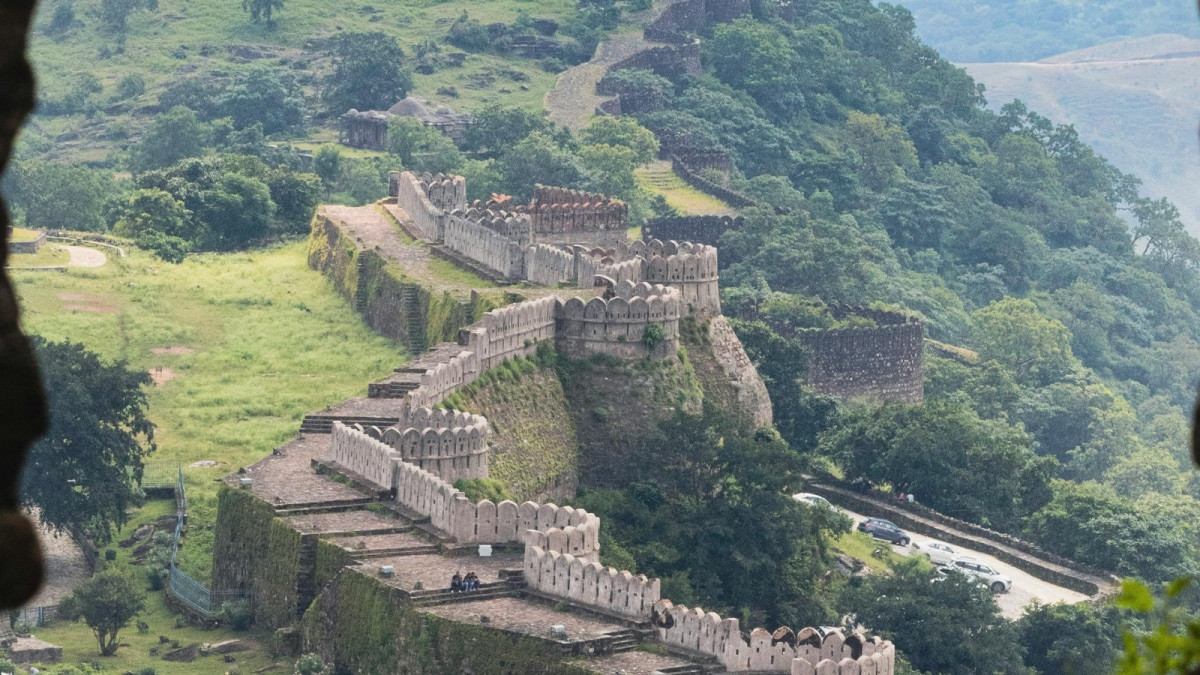
Chittorgarh Fort, situated in the southern region of Rajasthan, is not just a fort; it is an entire city within its formidable walls. Its immense size is staggering, covering an area that dwarfs many other historical sites. It is perched atop a rocky hill, offering a commanding view of the surrounding plains and the Berach River basin. This elevated position provided a formidable natural defence, an almost insurmountable barrier for any invading army, and a strategic advantage that defined its history.
The fort’s origins are traced back to the 7th century, a period when its foundations were first laid. However, its true architectural and strategic brilliance was cemented through centuries of expansion and refinement, most notably by the rulers of the Mewar dynasty. Figures like Rana Kumbha played a pivotal role in its development, adding layers of fortifications, palaces, and temples that transformed it into the magnificent citadel we recognize today. Over the ensuing centuries, successive rulers, each leaving their indelible mark, contributed to its evolving grandeur, making it a living museum of architectural evolution and royal patronage.
Echoes of Valour: A Chronicle of Historical Sieges and Legendary Figures
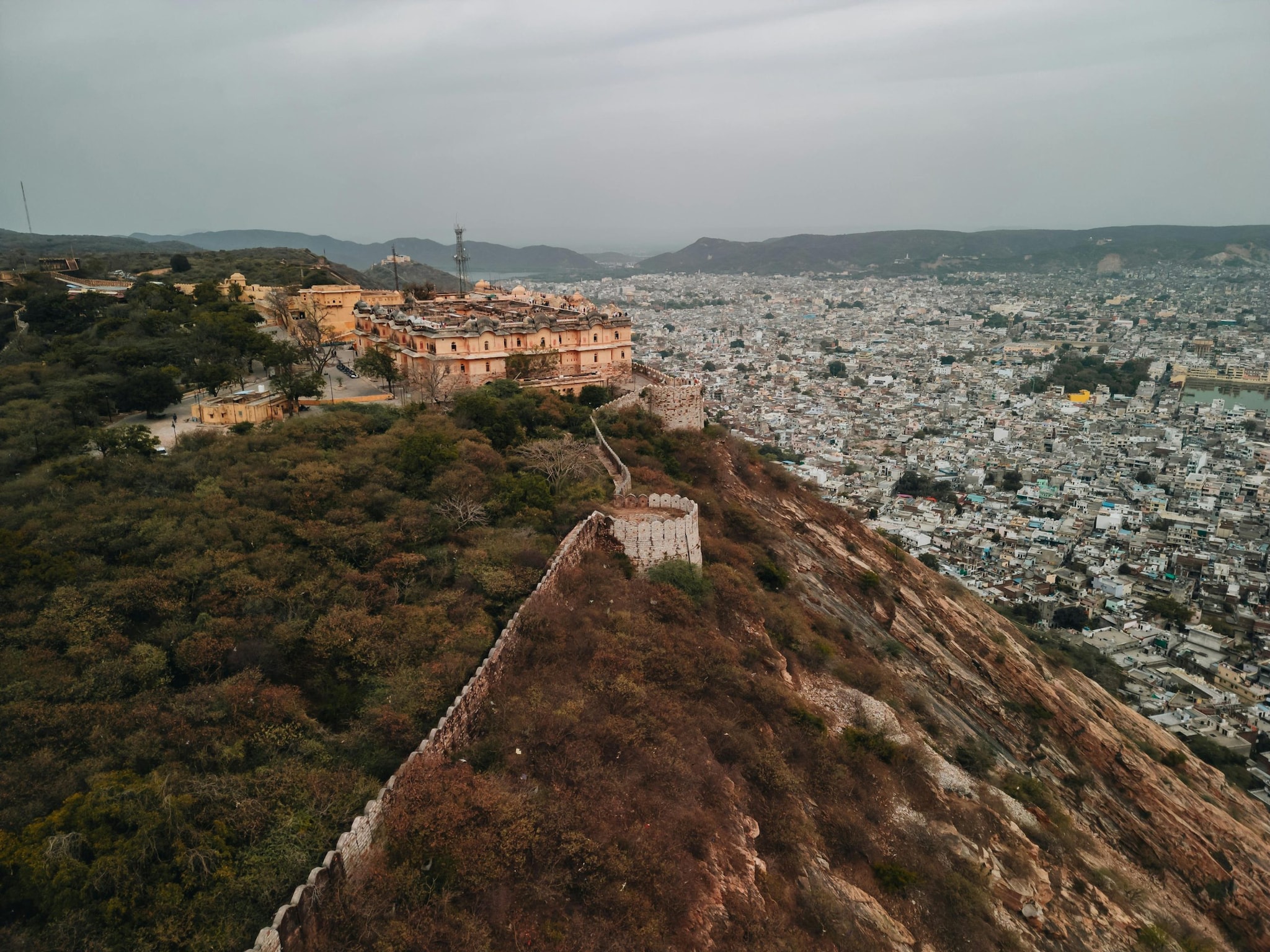
The historical tapestry of Chittorgarh Fort is woven with threads of unparalleled courage, profound sacrifice, and unwavering resistance. It is deeply intertwined with the legendary Rajput rulers and pivotal historical events that have shaped India’s narrative. The fort has witnessed three major sieges, each a chapter in its storied legacy, etched in the annals of Indian history.
These sieges are not just military encounters; they are epic tales of defiance against overwhelming odds. The stories of figures like Rani Padmini, whose alleged sacrifice to uphold honour remains a poignant legend, and Maharana Pratap, the indomitable warrior who fought relentlessly for his kingdom, are inextricably linked to Chittorgarh. Their acts of bravery, resilience, and ultimate sacrifice continue to resonate, forming an integral part of India’s rich historical and cultural narrative, inspiring generations with their indomitable spirit.
Architectural Marvels: A City Within Walls
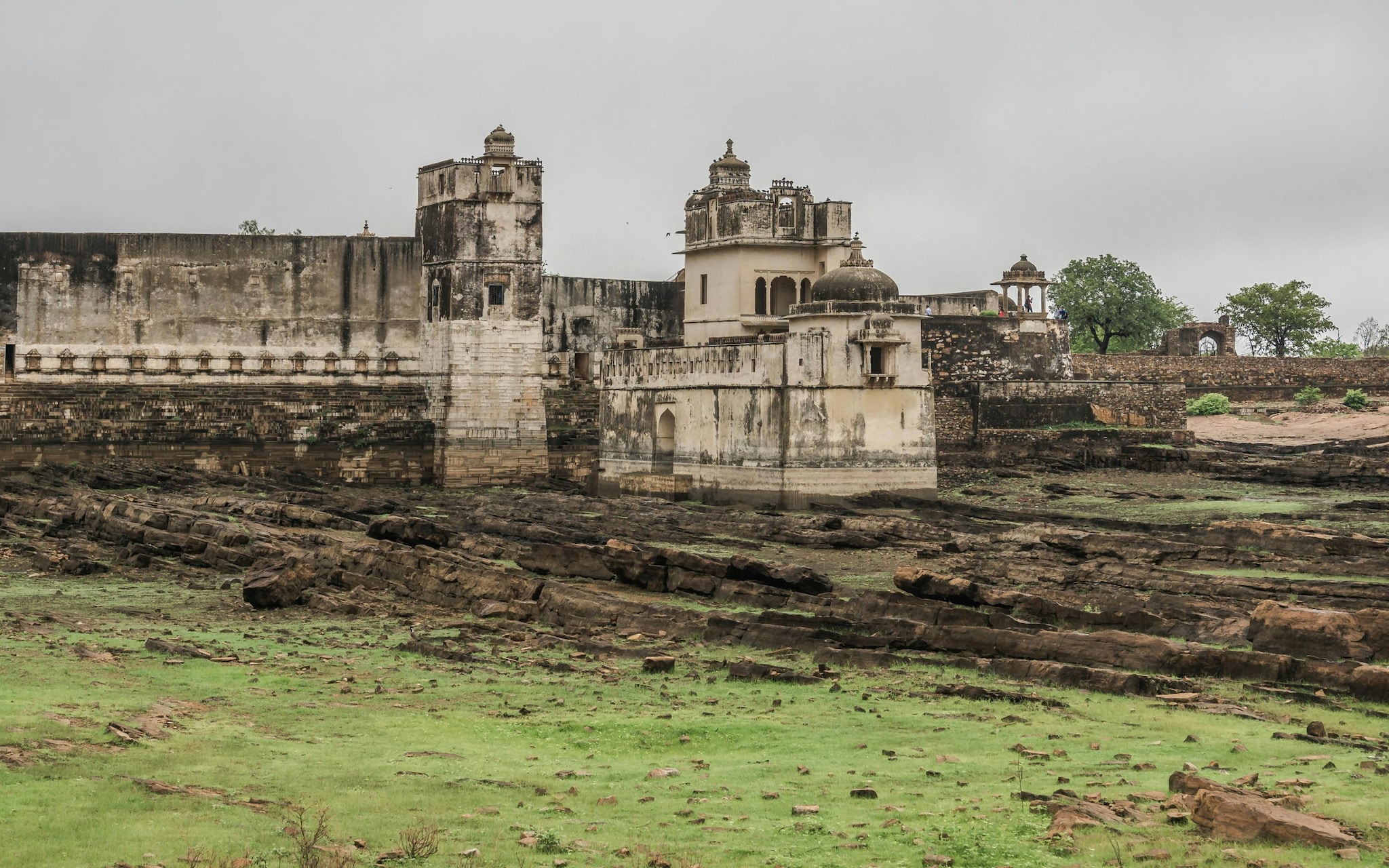
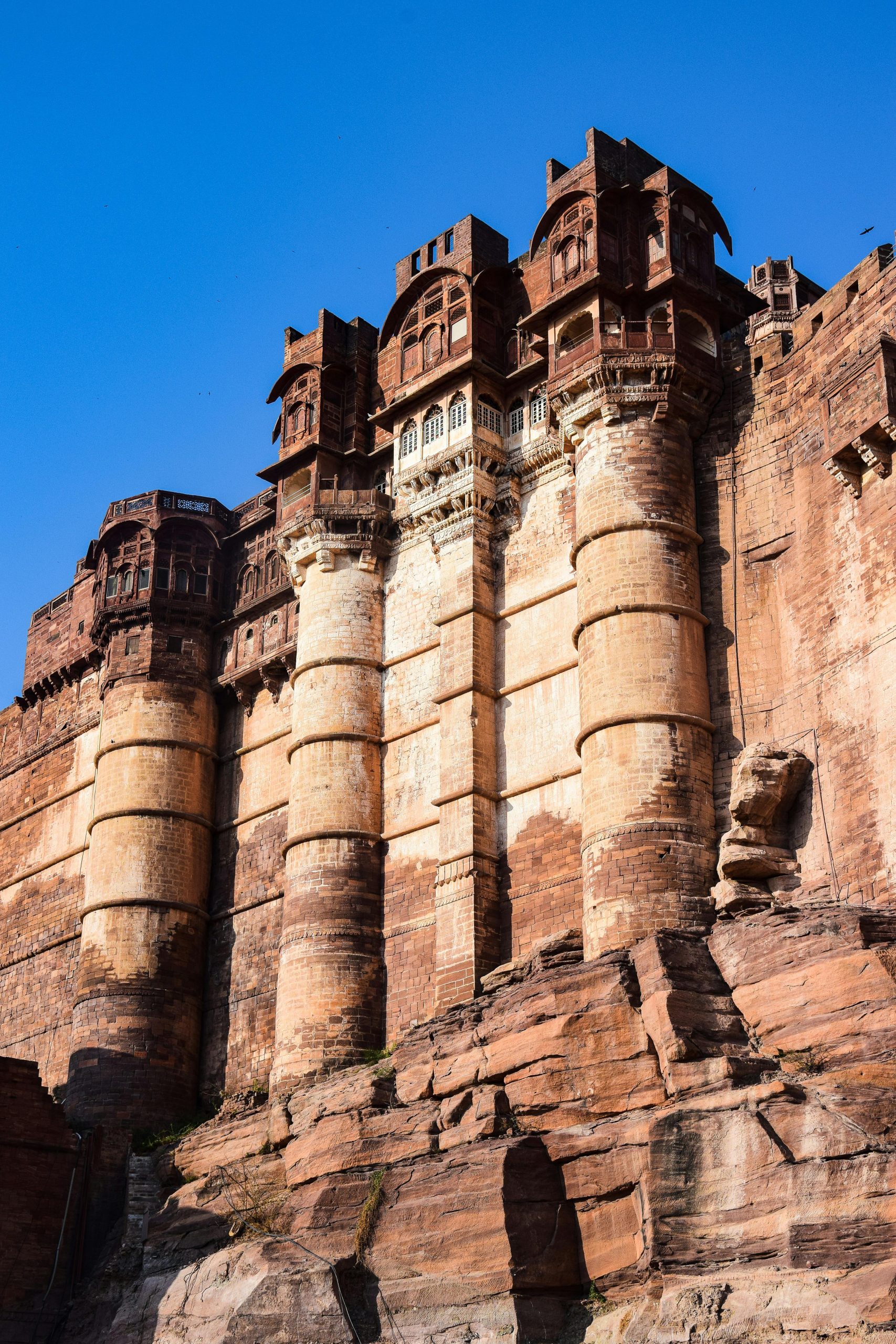
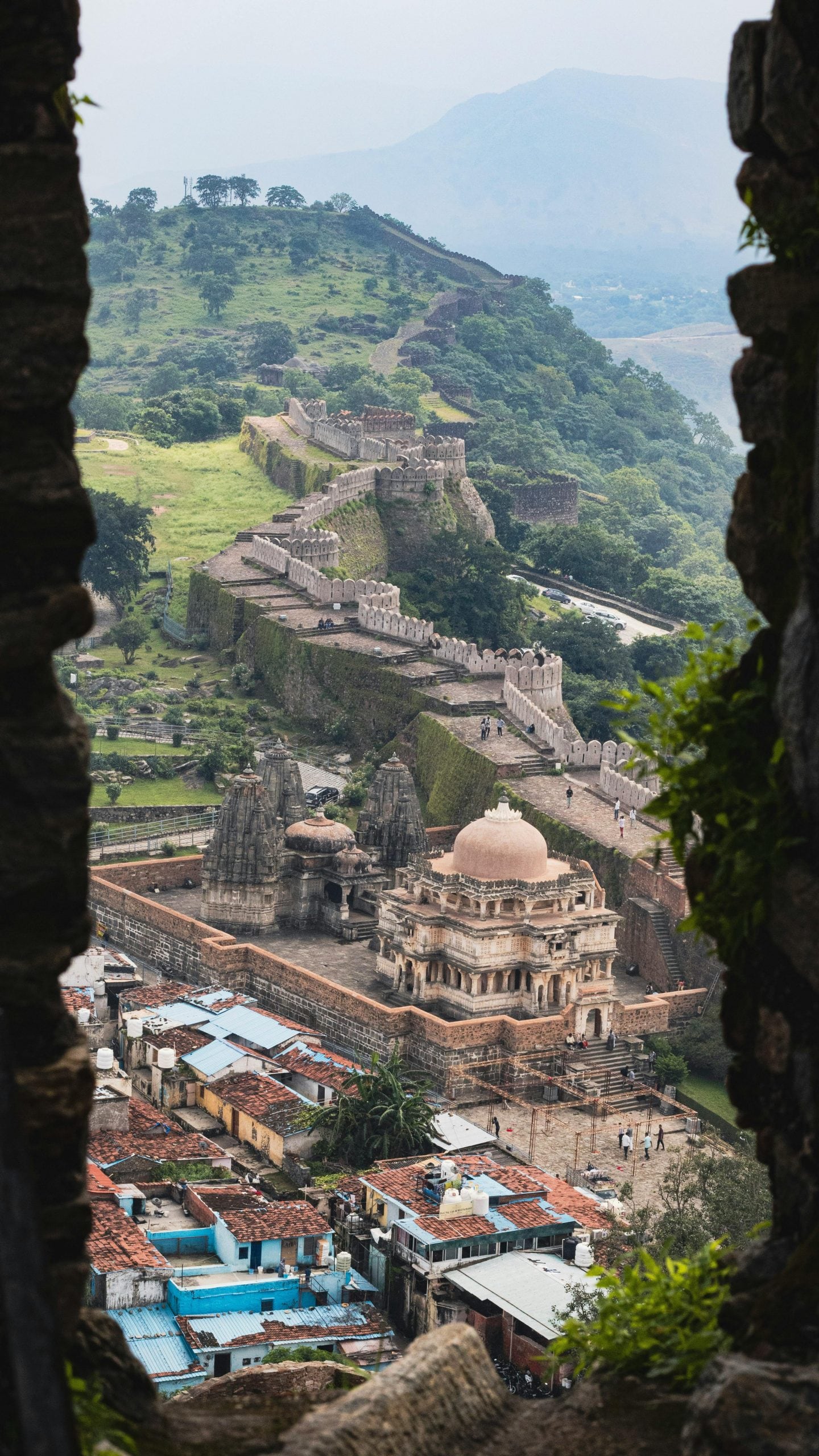
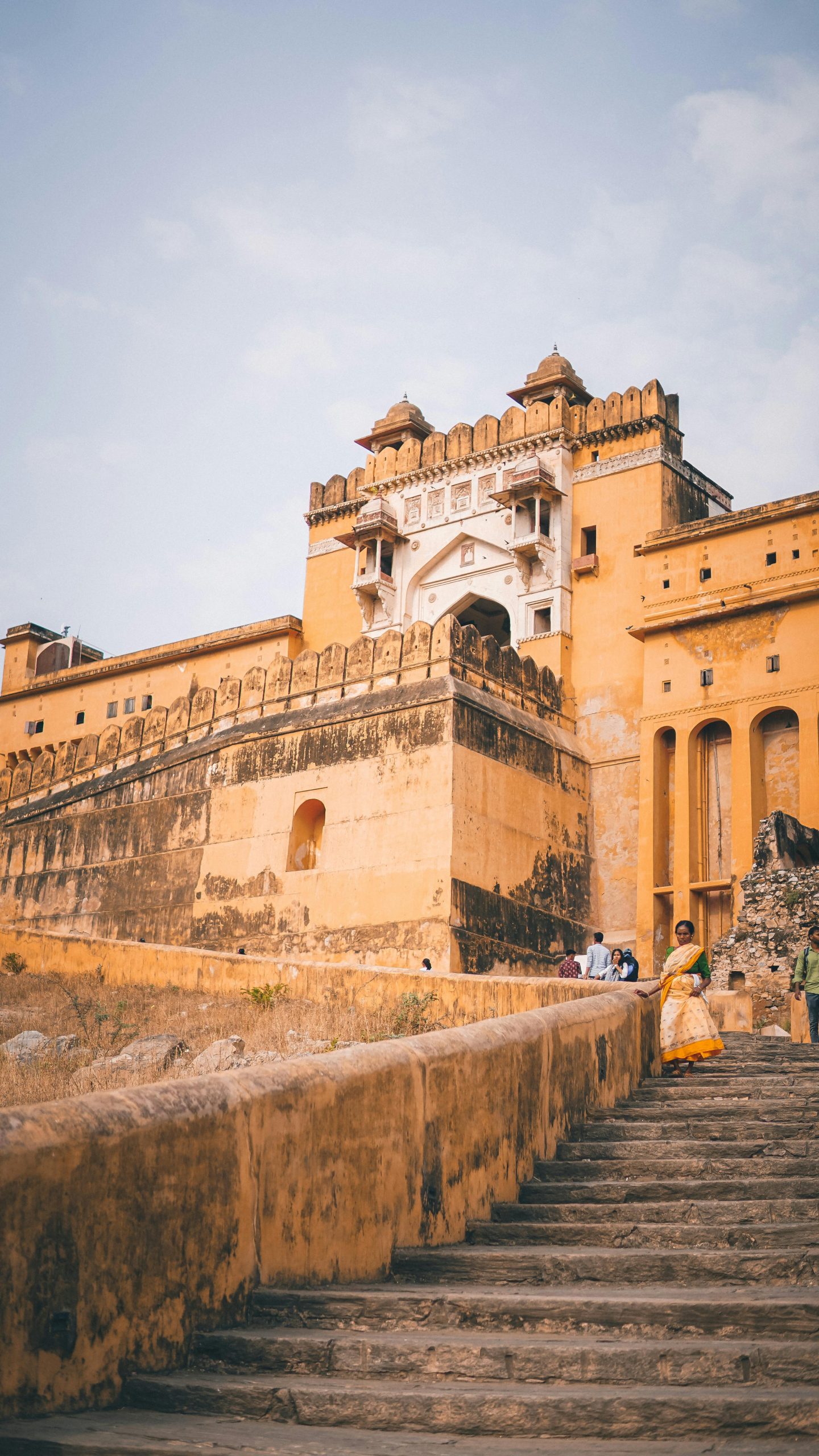
Chittorgarh Fort is a self-contained world, a testament to the ingenuity and artistic prowess of its builders. It features seven massive gateways, each a formidable entrance designed to deter invaders. Beyond these imposing entrances lies a sprawling complex that houses magnificent royal palaces, a significant number of Hindu and Jain temples, strategic watchtowers, and an intricate network of water reservoirs.
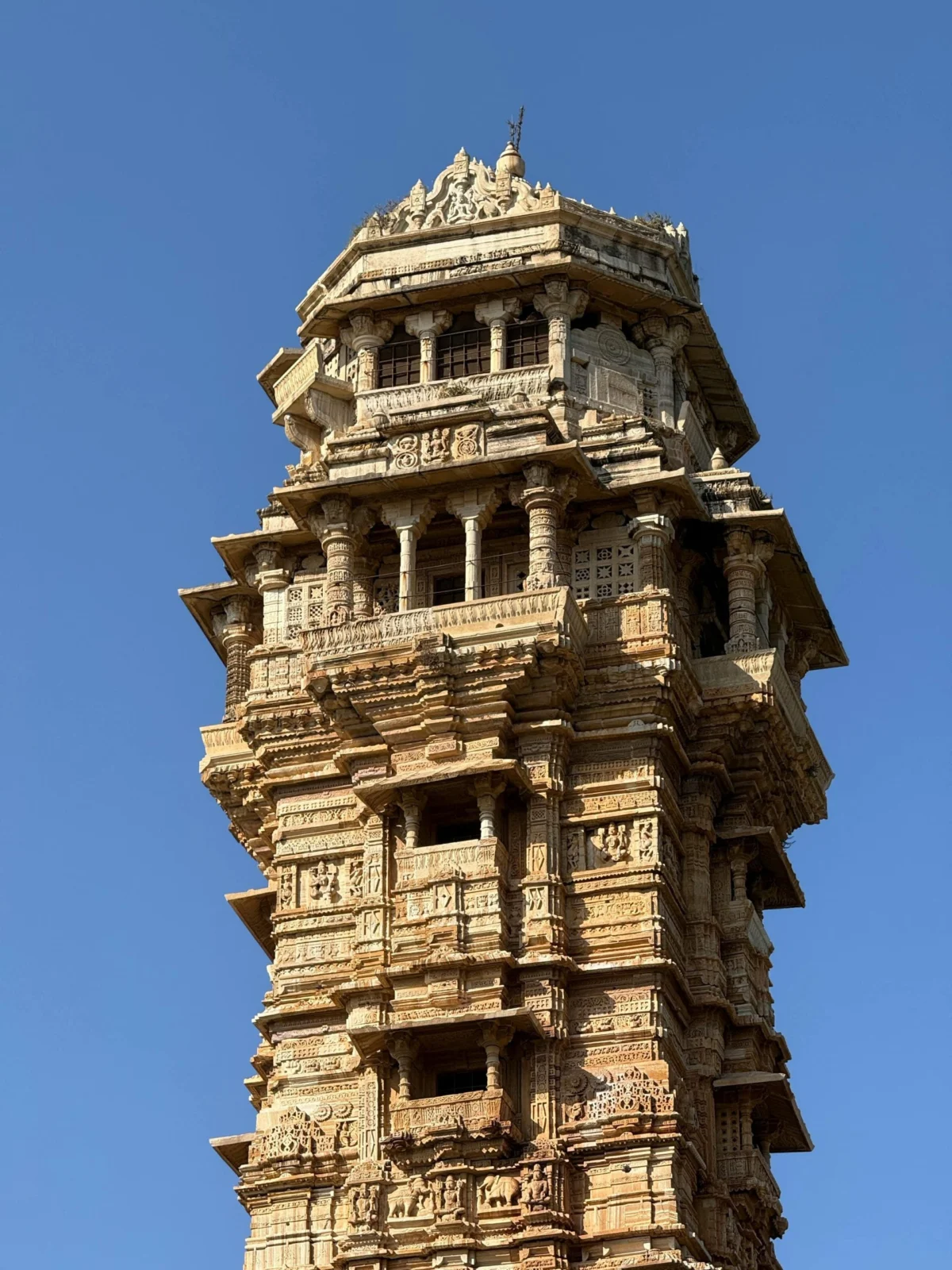
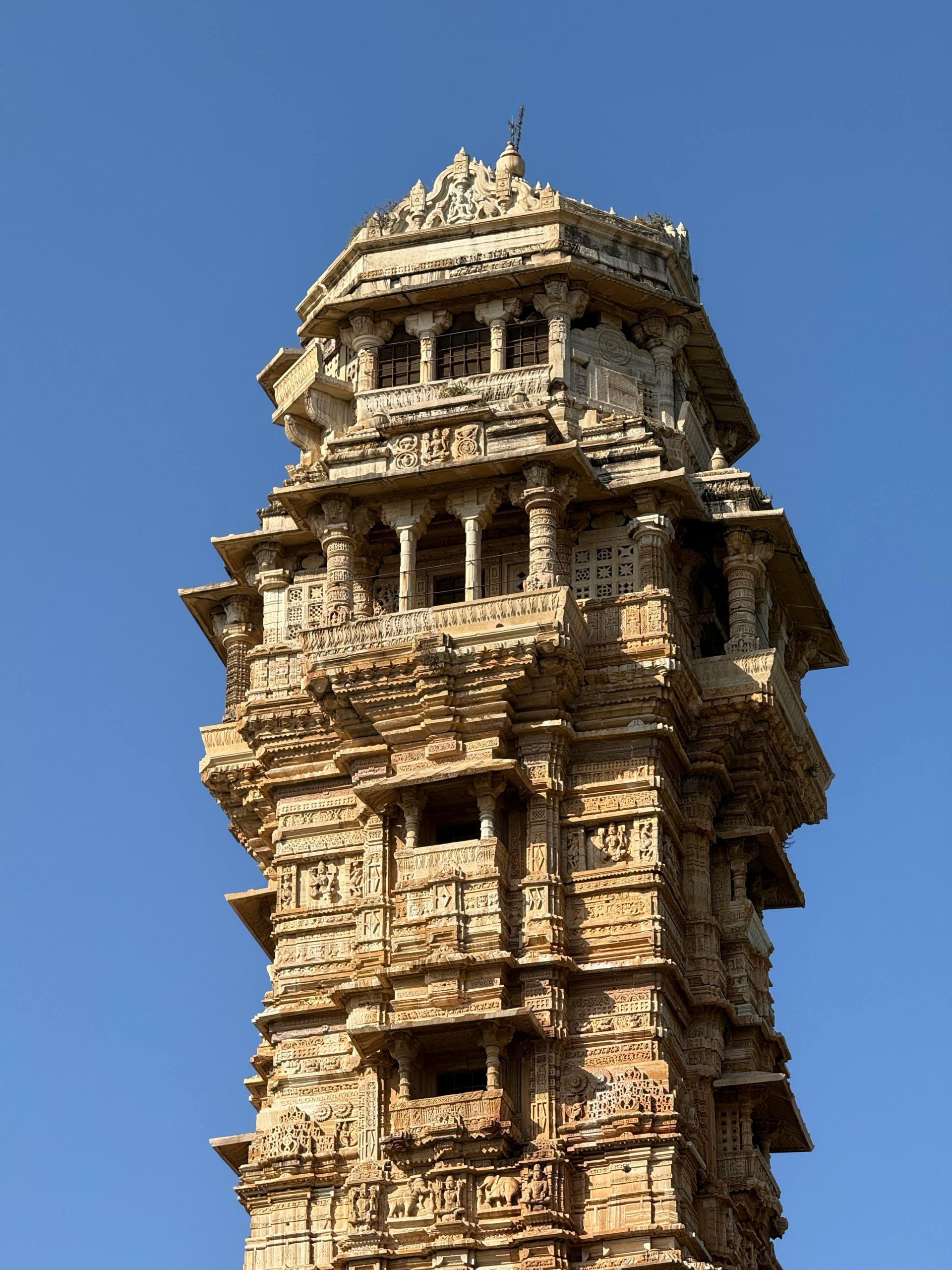
Among its many architectural splendours, the Vijay Stambh (Victory Tower) and the Kirti Stambh (Tower of Fame) stand out as iconic structures. The Vijay Stambh, a towering monument of nine stories, was erected by Rana Kumbha to commemorate his victory over Mahmud Khilji. Its intricate stone carvings depict various deities, scenes from Hindu mythology, and inscriptions that narrate its historical significance. The Kirti Stambh, a slightly smaller but equally impressive tower, is dedicated to Adinath, the first Jain Tirthankara, showcasing the fort’s religious inclusivity. These structures, along with countless others, highlight the fort’s remarkable architectural brilliance and its intricate stonework, a hallmark of Rajput craftsmanship.
Sustaining Life: The Ingenuity of Medieval Water Management
A crucial aspect of Chittorgarh Fort’s design, and a testament to the advanced engineering skills of the medieval period, is its elaborate water management system. The fort once housed an astonishing 84 water bodies, including numerous tanks and wells. These were not merely decorative features but vital life-support systems, meticulously designed to sustain its large population, including soldiers, royal families, and common citizens, during prolonged sieges, when external water sources would be cut off.
The foresight and planning involved in creating such a robust system are remarkable. Even today, many of these ancient water systems continue to function, a living testament to the engineering acumen of its creators. This sustainable approach to resource management was critical for the fort’s survival and its ability to withstand protracted military campaigns, a crucial factor in its historical importance.
A Symbol of Rajputana: Political Authority and Cultural Richness
For several centuries, Chittorgarh Fort served as the proud capital of the Kingdom of Mewar. Its imposing presence and strategic location made it the nerve centre of Rajputana’s political power. It stands as a potent symbol of the region’s political authority, its vibrant cultural richness, and its unwavering military resilience. Its historical significance in the context of medieval India is profound, representing not just a military stronghold but the very embodiment of Rajput identity and resistance.
A Crown Jewel of Rajasthan: UNESCO Recognition
The unparalleled historical significance, architectural grandeur, and outstanding universal value of Chittorgarh Fort have rightfully earned it a place among the UNESCO World Heritage Sites. It is an integral part of the "Hill Forts of Rajasthan," a collection of magnificent forts that collectively represent the zenith of Rajput architectural and defensive ingenuity. This UNESCO recognition underscores the fort’s global importance as a repository of human history and a treasure trove of cultural heritage, celebrating the grandeur and legacy of the Rajput era.
Chittorgarh Fort: The Unrivaled Giant of India’s Heritage
In conclusion, Chittorgarh Fort stands as the undisputed largest fort in India, not just in terms of its colossal area but also in its immeasurable historical importance. Its vast expanse, breathtaking architectural grandeur, and the enduring legacy of courage and sacrifice associated with its name make it one of the country’s most iconic and revered heritage landmarks. It is a place where history whispers from every stone, where tales of heroism echo through its ancient corridors, and where the spirit of Rajputana lives on, a powerful reminder of India’s glorious past.
As we continue to explore the rich tapestry of India’s heritage, Chittorgarh Fort remains a paramount destination, offering a profound connection to the nation’s historical roots and an inspiring testament to the indomitable human spirit.
Stay tuned for more insightful reads exploring India’s incredible historical landmarks and cultural treasures.
