

A recent incident involving a diabetic passenger allegedly denied washroom access on an IndiGo flight has ignited a critical debate within the aviation industry and among the public. The core of the issue lies in the complex interplay between stringent aviation safety protocols, particularly during critical flight phases, and the potential for genuine medical emergencies, such as those experienced by individuals with diabetes.
The social media post, shared by student activist and public policy researcher Shubham Kushwaha on X (formerly Twitter), details an alleged incident on IndiGo flight 6E6313 from Raipur to Delhi. According to Kushwaha’s post, a diabetic passenger was denied access to the aircraft’s lavatory at approximately 6:15 PM, a mere 20 minutes before the scheduled landing at 6:35 PM. The passenger reportedly cited a medical necessity due to their condition, yet access was reportedly refused. The allegations further state that the passenger was denied access even after the aircraft had landed and was taxiing to the gate, prior to deplaning.
This claim has understandably resonated with many, prompting discussions about the inflexibility of airline rules in the face of urgent medical needs. The incident highlights a recurring tension: how to uphold the paramount importance of safety for all passengers and crew without compromising the well-being of individuals facing unavoidable medical situations.
The Official Stance: Safety First
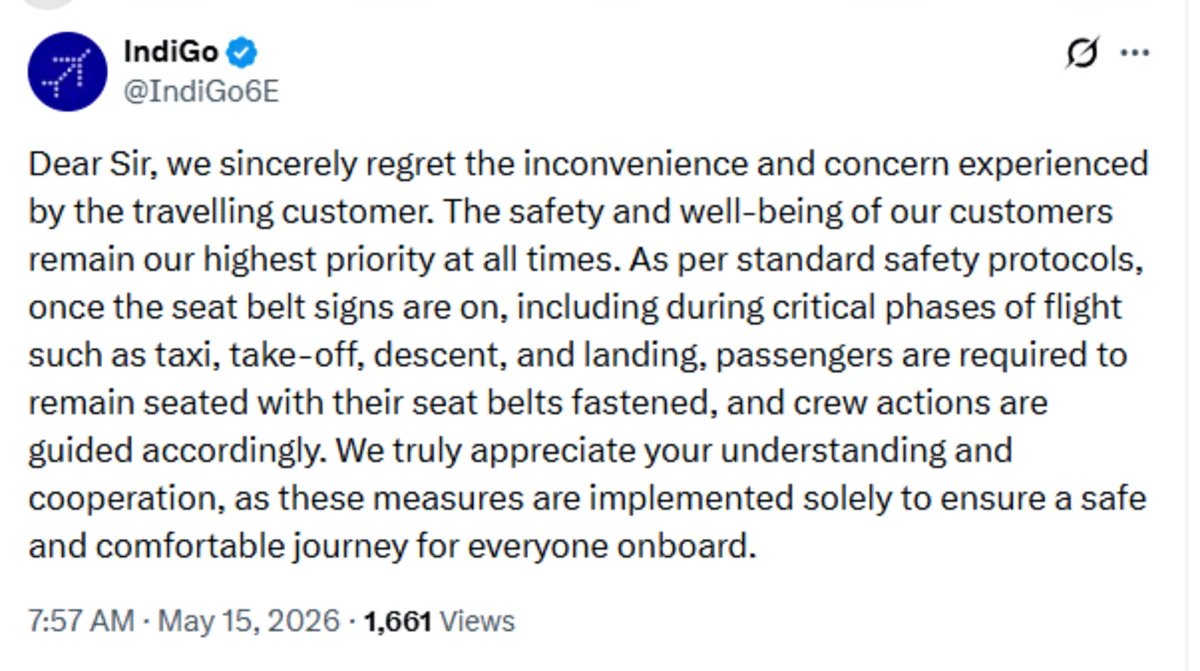
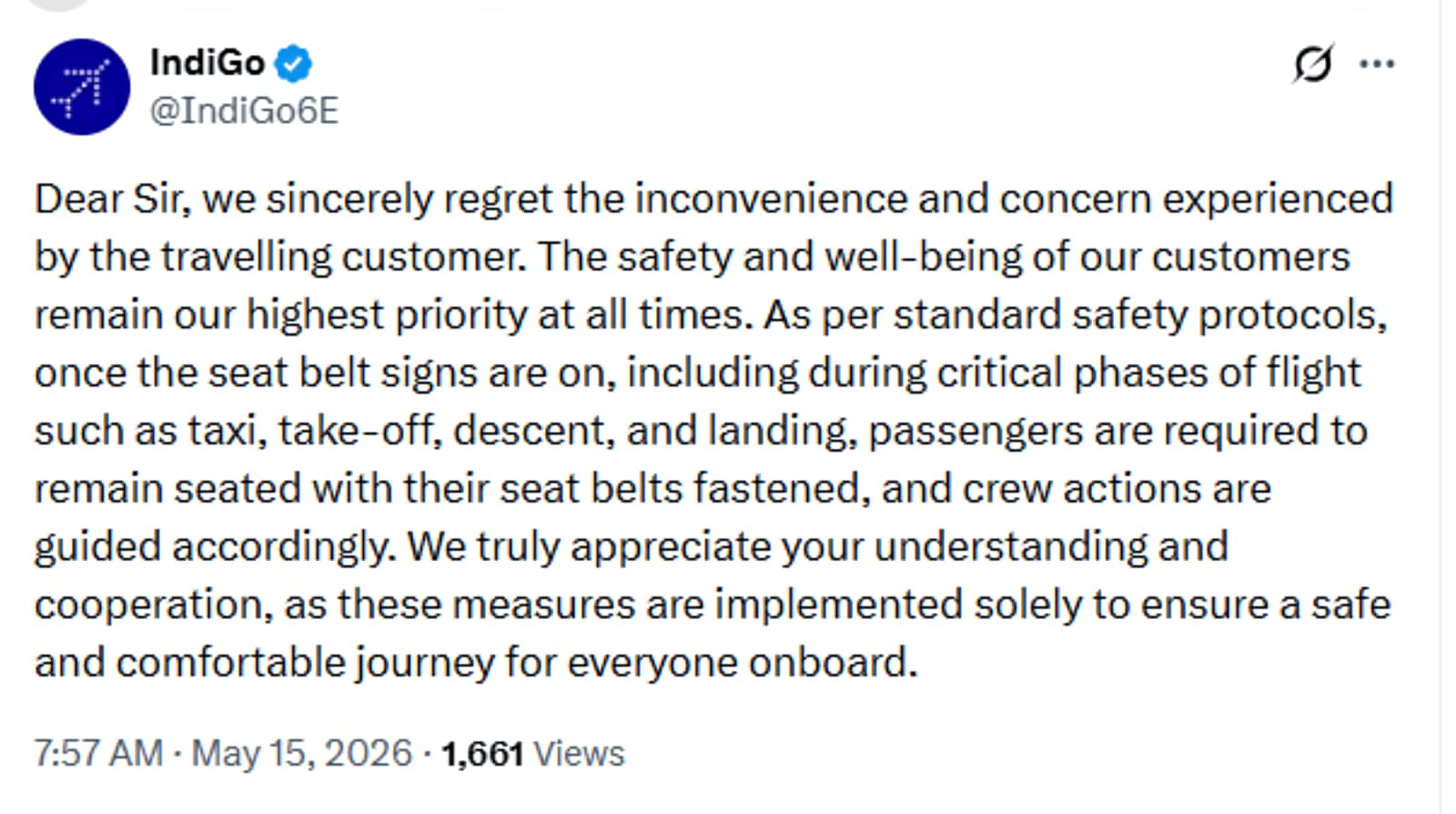
In response to the viral social media post, IndiGo issued a statement reiterating its commitment to safety. The airline stated, "As per standard safety protocols, once the seat belt signs are on, including during critical phases of flight such as taxi, take-off, descent, and landing, passengers are required to remain seated with their seat belts fastened."
This response aligns with established aviation regulations worldwide. The principle behind these rules is to mitigate risks associated with unexpected aircraft movements. As aircraft descend towards landing, they can encounter turbulence, require sudden braking, or undergo rapid changes in speed and direction. In such scenarios, a passenger moving through the cabin, especially to the lavatory, could be at a significant risk of serious injury.
Group Captain Anupam Banerjee (Retd.), a former Indian Air Force officer and civil aviator, elaborated on these protocols. He explained that the seatbelt sign is typically illuminated once an aircraft descends below 10,000 feet, a process that can commence well before the final approach to the runway, depending on air traffic control instructions and the descent profile. "Whenever an aircraft comes below 10,000 feet," Group Captain Banerjee stated, "I hope my memory serves me right – the seatbelt sign is put on. This can happen well before actual touchdown, depending on descent timing and air traffic instructions. He explains that once the sign is on, movement is generally restricted because sudden braking, turbulence, or unexpected aircraft movement can injure passengers."
The captain’s authority in ensuring safety is absolute once the aircraft’s doors are closed. "Once the door closes, till the time door opens, the discretion of the safety of the passengers and everything is the discretion of the captain," he emphasized.
Cabin crew, while responsible for passenger comfort and assistance, operate under these strict safety directives. They are trained to enforce these regulations, prioritizing the collective safety of everyone on board. Group Captain Banerjee further clarified why cabin crew might appear to have more latitude to move around: "they are the employees and also well-trained. Normal passengers might not know how to tackle a situation of turbulence or other emergency." Their training equips them to assess and react to rapidly evolving situations, but their movement is still dictated by the overall safety environment.
The allegation of denial of access even after landing also warrants examination. Group Captain Banerjee pointed out that even after the aircraft touches down, it is still in the process of taxiing to the gate. "The aircraft has not come to a stop… it is still moving," he explained. During this phase, there could still be potential hazards, such as obstructions on the runway or other aircraft movements, making it unsafe for passengers to roam freely. He also noted the tendency in India for passengers to rush towards the exit as soon as the seatbelt sign is switched off, increasing the risk of falls or collisions during taxiing.
The Medical Dimension: Diabetes and Bathroom Urgency
The crux of the debate lies in whether the situation described for the diabetic passenger constituted a genuine medical emergency that should have warranted an exception to the rules. Diabetes, a chronic condition affecting how the body regulates blood sugar, can indeed lead to situations requiring urgent bathroom access.
Dr. Rajiv Kovil, a Diabetes & Obesity Specialist at Zandra Healthcare, shed light on this aspect. He explained that for individuals with diabetes, the need to urinate can be significantly amplified under certain conditions. "Very high blood sugar," Dr. Kovil stated, "can force the kidneys to flush excess glucose through urine, causing frequent urination, dehydration, thirst, and sudden urgency." This phenomenon, known as osmotic diuresis, is a direct consequence of the body’s attempt to excrete the excess glucose that it cannot properly metabolize.
Furthermore, certain diabetes medications can exacerbate this issue. "Some diabetes medications, especially SGLT2 inhibitors," Dr. Kovil elaborated, "are specifically designed to pass sugar through urine and can significantly increase urinary frequency." These medications work by blocking the reabsorption of glucose in the kidneys, leading to more frequent urination.
Beyond blood sugar fluctuations and medication side effects, some diabetic patients may also experience bladder control issues due to nerve damage (diabetic neuropathy) or other related complications. This can manifest as an overactive bladder or stress urinary incontinence, where the urge to urinate is sudden and difficult to control.
However, Dr. Kovil stressed that this urgency is not always a "routine urgency." It can be a sudden and genuine medical need. He also offered practical advice for diabetic passengers traveling by air. "If the passenger is someone already known to have severe urinary urgency, overactive bladder, or stress urinary incontinence, then during flights, especially long flights – wearing protective undergarments or diapers may sometimes be a practical precaution to avoid distressing situations," he suggested. This proactive measure, while perhaps uncomfortable for some, can serve as a safeguard against potentially embarrassing or medically compromising situations.
Dr. Kovil also emphasized the importance of clear communication. He strongly advised diabetic passengers experiencing a medical need to communicate calmly and directly with cabin crew, using clear medical language to explain the urgency of their situation.
The Delicate Balance: Protocol Meets Humanity
The incident on IndiGo flight 6E6313 underscores the inherent challenge in balancing rigid safety protocols with compassionate medical considerations. While aviation safety is non-negotiable, the potential for medical emergencies cannot be entirely dismissed.
Experts suggest that the ideal scenario involves a nuanced approach, where cabin crew are empowered to exercise informed discretion in exceptional circumstances. "If it is a dire emergency, then of course, the crew will take action," Group Captain Banerjee clarified, adding that this judgment call is dependent on the crew’s assessment of the situation in real-time.
Dr. Kovil echoed this sentiment, stating that for some patients, the inability to access a washroom for an extended period can transcend mere discomfort, becoming a "medical and emotional issue." The psychological distress of being unable to attend to a sudden, urgent bodily need, especially when it’s medically driven, can be significant.
However, the limitations faced by cabin crew during critical flight phases are real. As Group Captain Banerjee pointed out, there are moments nearing landing where even communication with the cockpit might be restricted. In such scenarios, the crew’s primary responsibility remains the safety of all passengers.
Ultimately, without a full and transparent account of the events that transpired inside the aircraft, making a definitive judgment on either the airline’s crew or the passenger’s claims is challenging. Social media posts, while powerful in raising awareness, often provide a partial picture.
The IndiGo incident serves as a crucial reminder for airlines to review and potentially refine their protocols regarding medical emergencies during flight. This could involve enhanced training for cabin crew on recognizing and responding to specific medical conditions, clearer guidelines for handling such situations, and perhaps even exploring technological solutions that could facilitate safe access to lavatories in specific, controlled circumstances during critical phases.
For passengers, especially those with pre-existing medical conditions that might necessitate frequent or urgent bathroom access, proactive communication with the airline prior to the flight and carrying necessary medical documentation can be beneficial. Understanding the rules and being prepared with practical solutions, as suggested by Dr. Kovil, can also help navigate potential challenges.
The conversation sparked by this incident is vital. It pushes us to consider how the aviation industry can continue to prioritize safety while also embodying empathy and understanding for the diverse needs of its passengers. Finding this balance is not just about adhering to rules; it’s about ensuring that air travel remains accessible, safe, and humane for everyone.
