

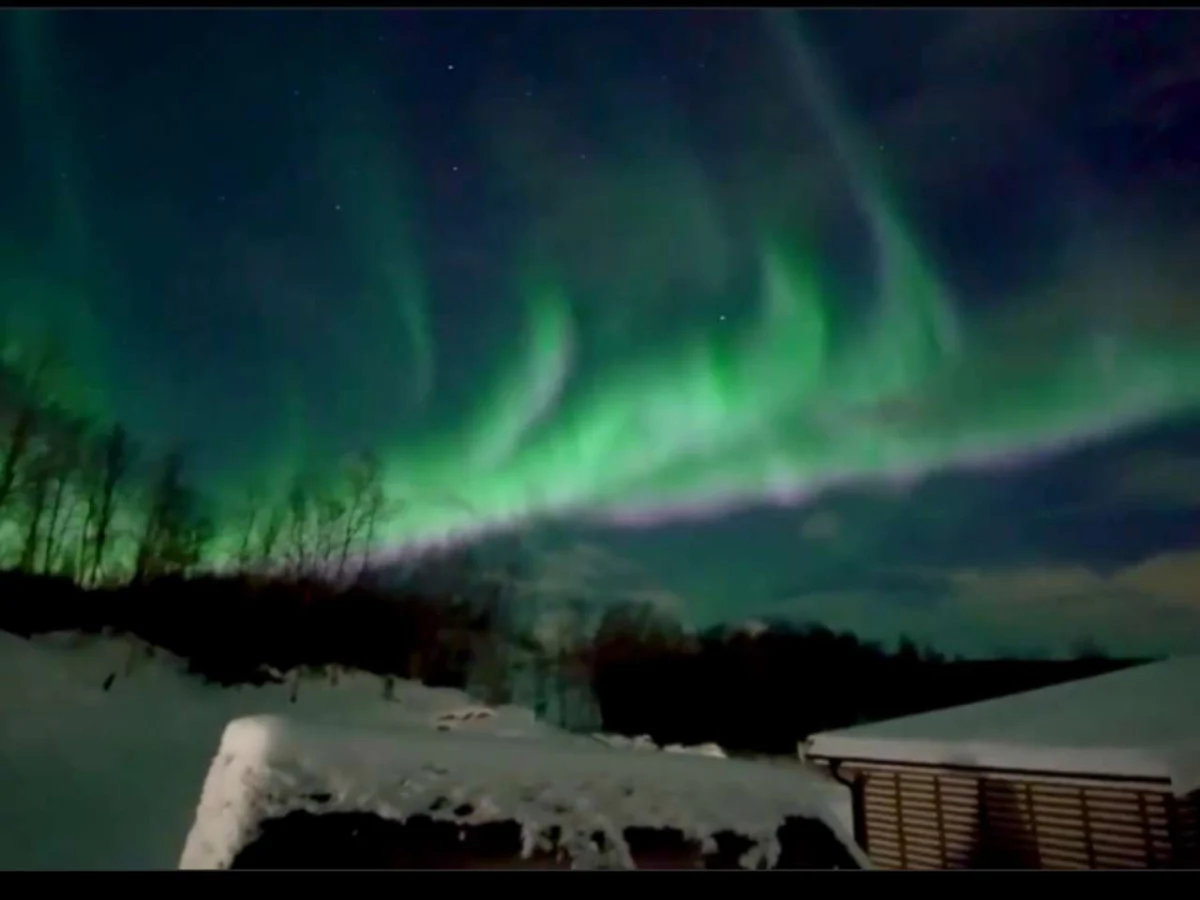
[CITY, COUNTRY] – June 8, 2026 – Earth is bracing for the imminent arrival of a powerful solar eruption, expected to collide with our planet’s magnetic field today. This celestial impact, originating from an active region on the Sun, has prompted space weather forecasters worldwide to issue a G3 (Strong) geomagnetic storm watch, significantly increasing the probability of spectacular aurora displays reaching latitudes far beyond their usual polar confines. Experts suggest that if conditions align, even regions like northern India could experience the rare spectacle of the Northern Lights.
The event marks a period of heightened solar activity, with the Sun unleashing a series of eruptions over recent days. However, one particular blast, originating from a region designated Active Region 4461, has captured the attention of scientists and observers alike, as its trajectory and intensity suggest a significant interaction with Earth’s protective magnetosphere.
The Sun’s Fury: A Chronology of the Event
The genesis of this impending geomagnetic storm can be traced back to June 6, 2026. On this day, Active Region 4461, a dynamic and magnetically complex area on the solar surface, experienced a significant event. It unleashed an M1.8-class solar flare – a mid-level eruption on the standard solar flare classification scale (ranging from A-class, the weakest, to X-class, the most powerful).
While solar flares are relatively common occurrences, what made this particular event noteworthy was its accompaniment: the eruption of a dense core filament. Solar filaments are immense structures of cool, dense plasma suspended above the Sun’s surface by powerful magnetic fields. When these magnetic fields become unstable, the filament can erupt, launching vast quantities of plasma and magnetic energy into space. This combined flare and filament eruption created a Coronal Mass Ejection (CME) – a massive cloud of magnetized plasma – that is now hurtling towards Earth.
Tracking the celestial projectile, scientists determined that this CME is travelling at an impressive speed of nearly 1,400 kilometres per second (approximately 3.1 million miles per hour). At such velocities, the ejected material is anticipated to make contact with Earth’s magnetic field sometime today, June 8, 2026, setting the stage for the anticipated geomagnetic storm.
Unpacking the Science: Solar Filaments and Coronal Mass Ejections
To fully appreciate the significance of this event, it’s crucial to understand the underlying solar phenomena.
)
The Enigma of Solar Filaments
A solar filament is essentially a gigantic, ribbon-like structure composed of plasma that is cooler and denser than the surrounding solar corona. Despite being "cool," temperatures within a filament can still range between 5,000 and 10,000 degrees Celsius – a stark contrast to the Sun’s outer atmosphere, which can soar to over a million degrees Celsius. These colossal structures are held aloft by intricate and powerful magnetic field lines, often appearing as dark, snake-like lines when viewed against the brighter solar disk.
When these delicate magnetic balances are disrupted, a filament can become unstable and erupt. Such eruptions are particularly potent because they eject a significant mass of dense plasma, carrying with it a substantial amount of magnetic energy. Unlike some solar flares that might release energy but not much material towards Earth, a filament eruption almost invariably results in a Coronal Mass Ejection (CME). Scientists often regard filament eruptions as precursors to stronger geomagnetic effects due to the sheer volume and magnetic complexity of the material they unleash.
Coronal Mass Ejections: The Sun’s Solar Wind on Steroids
A Coronal Mass Ejection (CME) is a monumental expulsion of plasma and magnetic field from the Sun’s corona – its outermost atmosphere. While often associated with solar flares, CMEs are distinct phenomena. A flare is an intense burst of radiation across the electromagnetic spectrum, travelling at the speed of light and reaching Earth in about eight minutes. A CME, on the other hand, is a physical cloud of charged particles, travelling much slower, typically taking one to five days to reach Earth.
)
When a CME is directed towards Earth, as is the case with the current event from Active Region 4461, it carries a substantial magnetic field. It is the interaction of this embedded magnetic field with Earth’s own magnetosphere that dictates the strength and impact of the resulting geomagnetic storm.
Geomagnetic Storms: Earth’s Magnetic Shield Under Siege
Our planet is constantly bombarded by the solar wind, a stream of charged particles emanating from the Sun. However, Earth is largely protected by its magnetosphere – an invisible magnetic bubble generated by the planet’s molten iron core. This magnetosphere deflects most of the solar wind, shielding life on Earth from harmful radiation.
However, a powerful CME can disrupt this protective shield. When a CME strikes Earth, the most critical factor determining the intensity of the geomagnetic storm is the orientation of the magnetic field within the incoming solar cloud. If this magnetic field points southward, it can align directly and connect with Earth’s northward-pointing magnetic field lines in a process known as magnetic reconnection.

This reconnection acts like a cosmic short circuit, allowing vast amounts of solar energy and charged particles to funnel directly into Earth’s magnetosphere and upper atmosphere. This influx of energy excites atoms and molecules in the atmosphere, leading to the spectacular auroral displays and potentially triggering a range of technological disruptions.
The G-Scale: Measuring Geomagnetic Storms
Geomagnetic storms are classified by the National Oceanic and Atmospheric Administration (NOAA) on a five-point G-scale, ranging from G1 (Minor) to G5 (Extreme), based on their potential impact on Earth’s technology and the visibility of auroras.
- G1 (Minor): Can cause weak power grid fluctuations and minor impact on satellite operations. Auroras are typically visible at high latitudes.
- G2 (Moderate): May cause voltage alarms in power systems, minor satellite orientation issues, and increased drag on low-Earth orbit satellites. Auroras can be seen further from the poles (e.g., northern US, southern Canada).
- G3 (Strong): This is the current forecast. Can require corrective actions for power systems, potentially causing false alarms in protective devices. Intermittent satellite navigation (GPS) problems and low-frequency radio navigation issues are possible. Auroras can be seen much farther from the poles, potentially reaching mid-latitudes.
- G4 (Severe): The possibility for brief G4 conditions exists with the current storm. Can lead to widespread voltage control problems and even power grid blackouts. Extensive satellite surface charging and drag, leading to orbit decay. Severe radio signal degradation and navigation problems. Auroras can be seen at very low latitudes.
- G5 (Extreme): The most intense category. Can cause widespread power system collapse and blackouts. Extensive satellite damage, complete radio blackouts, and widespread navigation system failures. Auroras are seen globally, potentially reaching the equator.
The current forecast calls for a G3 storm, a significant event that necessitates vigilance. While G3 is manageable for modern infrastructure, space weather experts caution that brief periods of G4-level conditions remain possible if the incoming magnetic field’s orientation proves particularly favourable for storm development.
)
The Allure of the Auroras: A Dazzling Display
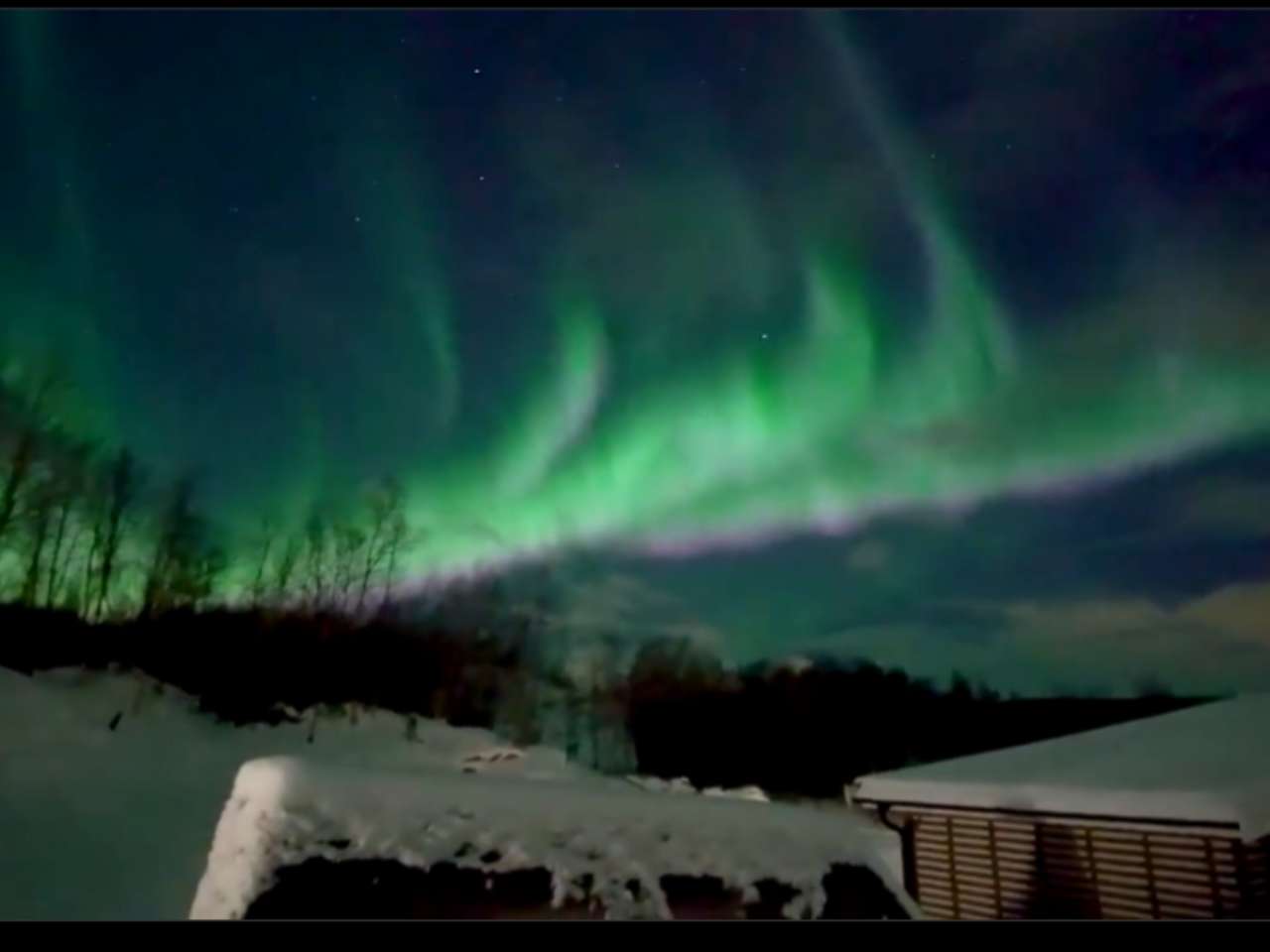
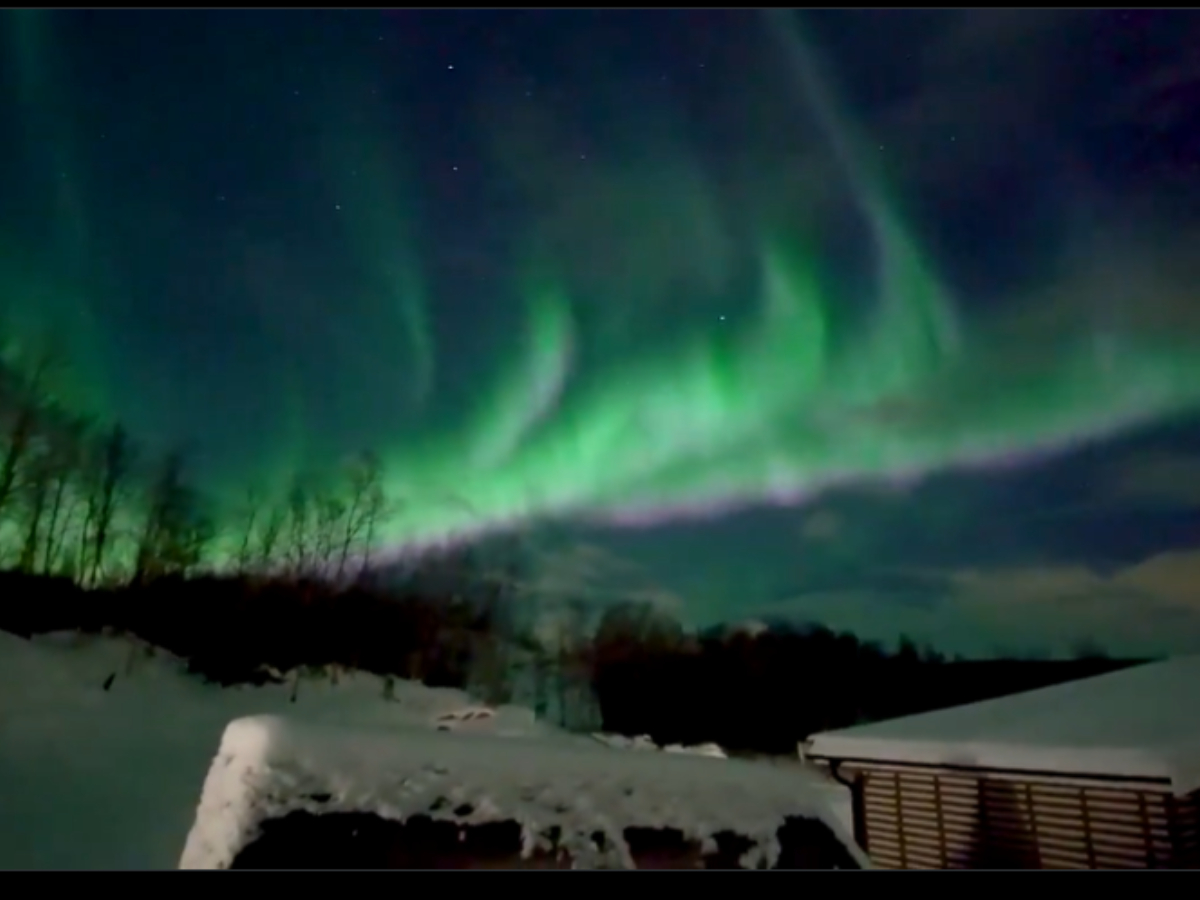
For many, the most captivating aspect of a powerful geomagnetic storm is the prospect of witnessing the aurora borealis (Northern Lights) or aurora australis (Southern Lights). These ethereal ribbons of light, dancing across the night sky, are a direct result of the interaction between solar particles and Earth’s atmosphere.
When charged particles from the Sun are funnelled down Earth’s magnetic field lines towards the poles, they collide with atoms and molecules of gases in the upper atmosphere – primarily oxygen and nitrogen. These collisions excite the atmospheric particles, causing them to emit light. The colour of the aurora depends on the type of gas involved and the altitude at which the collision occurs:
- Green: Most common, produced by oxygen atoms at lower altitudes (around 100-300 km).
- Red: Produced by oxygen atoms at higher altitudes (above 300 km).
- Blue/Violet: Produced by nitrogen molecules.
Typically, auroras are confined to the polar regions, forming oval-shaped rings around the magnetic poles. However, during strong geomagnetic storms (G3 and above), the intensified energy injection into the magnetosphere causes the auroral oval to expand significantly, pushing the dazzling displays to much lower latitudes than usual.
)
Could the Northern Lights Be Seen From India?
The question of whether the Northern Lights could be visible from India during this event is one of particular interest and excitement. While such sightings are exceedingly rare, they are not entirely impossible during exceptionally powerful geomagnetic storms.
For auroras to be visible from a country like India, two primary conditions must be met:
- Extreme Storm Strength: The geomagnetic storm would need to briefly reach at least G4 (Severe) levels, or even higher, to significantly expand the auroral oval to such low latitudes.
- Favourable Viewing Conditions: A clear, dark night sky, free from light pollution, is essential. The aurora would likely appear as a faint glow near the northern horizon.
While the current forecast is for a G3 storm, the possibility of brief G4 conditions keeps the hope alive for mid-latitude observers. Historically, during the super solar storm of 1859 (the Carrington Event), auroras were reportedly seen as far south as the Caribbean. More recently, during a G5 storm in 2003, auroras were observed from parts of the southern United States. Therefore, while a direct sighting in India remains a long shot, it is within the realm of scientific possibility if the storm’s intensity surpasses current predictions.
)
Countries with a much higher likelihood of witnessing spectacular displays include Canada, the northern United States, parts of Europe (especially Scandinavia and Scotland), New Zealand, and southern Australia, which are all positioned closer to the expanded auroral oval during a G3/G4 storm.
Potential Impacts: Beyond the Northern Lights
While the auroras capture public imagination, space weather experts are more concerned with the potential impacts of a strong geomagnetic storm on critical infrastructure. Modern society is heavily reliant on technologies that can be vulnerable to solar activity.
1. Power Grids: The Risk of Geomagnetically Induced Currents (GICs)
The primary concern for a G3/G4 storm is the potential for Geomagnetically Induced Currents (GICs) in long conductors like power transmission lines. When Earth’s magnetic field fluctuates rapidly due to a geomagnetic storm, it induces electric currents in the ground and in conductive infrastructure. These GICs can flow into transformers, causing them to overheat, trip circuit breakers, or even be permanently damaged, potentially leading to localised or widespread power outages. While a G3 storm is generally manageable, operators need to take corrective actions, and a G4 could lead to significant disruptions.
)
2. Satellites and Spacecraft: Radiation and Drag
Satellites in Earth orbit are exposed to increased radiation during geomagnetic storms, which can damage sensitive electronics. The influx of energy also heats and expands Earth’s upper atmosphere, increasing atmospheric drag on low-Earth orbit satellites, potentially altering their orbits and requiring corrective manoeuvres. Communication satellites, particularly those in geosynchronous orbit, can experience signal interference.
3. GPS and Navigation Systems: Accuracy and Reliability
Global Positioning System (GPS) signals can be degraded or become inaccurate during strong geomagnetic storms. The increased ionisation in Earth’s ionosphere, caused by solar particles, distorts radio signals, affecting the precision of GPS receivers used in aviation, maritime navigation, agriculture, and various other critical applications.
4. Radio Communications: HF Blackouts
High-frequency (HF) radio communications, essential for aviation, emergency services, and military operations, can be severely disrupted or blacked out entirely during geomagnetic storms. The ionosphere, which is used to reflect HF radio waves, becomes highly disturbed, absorbing the signals instead.
)
5. Aviation: Rerouting and Radiation Exposure
Airlines operating polar routes are particularly vulnerable. During strong storms, pilots may need to reroute flights to lower latitudes to avoid communication blackouts and minimise passenger and crew exposure to increased radiation levels, which can be significantly elevated at high altitudes during solar events.
It is important to note that while these are potential impacts, modern infrastructure has built-in redundancies and protective measures, and space weather agencies work closely with operators to mitigate risks. A G3 storm is generally well within the resilience capabilities, but vigilance is key.
The Forecasters’ Dilemma: The Crucial Unknown
Despite sophisticated forecasting models and an array of monitoring satellites, space weather forecasters face a significant challenge: the precise orientation of the magnetic field embedded within the incoming solar cloud remains unknown until the last possible moment.
)
Earth maintains a constellation of satellites at the L1 Lagrangian point, located approximately 1.5 million kilometres (about 930,000 miles) between the Sun and Earth. These sentinel satellites, such as NOAA’s DSCOVR (Deep Space Climate Observatory) and NASA’s ACE (Advanced Composition Explorer), are equipped with instruments to measure the solar wind plasma and magnetic field. They act as an early warning system.
Once the CME passes these L1 satellites, forecasters gain crucial information about its magnetic field orientation, density, and speed. This provides a vital but narrow window of warning – typically 15 to 60 minutes – before the CME physically impacts Earth’s magnetosphere. It is during this short timeframe that the final, critical details about the storm’s potential severity become clear, determining whether the event will produce a modest aurora or a truly spectacular sky show.
For now, space weather agencies around the world, including NOAA’s Space Weather Prediction Center (SWPC), the European Space Agency (ESA), and national space agencies, remain on high alert. Their scientists are meticulously analysing the incoming data, waiting for that final piece of information that will determine just how dramatic tonight’s space weather event becomes.
)
The Sun’s Restless Cycle: A Period of Heightened Activity
This powerful solar eruption is not an isolated incident but rather a manifestation of the Sun’s natural rhythm. Our star undergoes an approximately 11-year cycle of activity, characterized by waxing and waning numbers of sunspots, solar flares, and CMEs. We are currently well into Solar Cycle 25, which began in December 2019.
Scientists predict that Solar Cycle 25 is progressing more rapidly and intensely than initially forecast, with activity expected to peak around late 2024 or early 2025 – a period known as solar maximum. During solar maximum, the Sun’s magnetic field is at its most tangled and dynamic, leading to a significant increase in the frequency and intensity of solar flares, filament eruptions, and Coronal Mass Ejections. The current event from Active Region 4461 is a testament to this heightened activity, reminding us of the powerful forces at play in our solar system as we approach the peak of the solar cycle.
Historical Echoes: Remembering Past Solar Events
While the current G3 storm watch is significant, it also serves as a potent reminder of even more powerful solar events that have impacted Earth throughout history, shaping our understanding of space weather risks.
)
The most famous example is the Carrington Event of 1859. This colossal geomagnetic storm, triggered by an exceptionally powerful solar flare and CME, caused telegraph systems worldwide to fail, shocking operators and even setting some telegraph papers ablaze. Auroras were so bright and widespread that they were visible near the equator, in places like Hawaii and the Caribbean, and people reported being able to read newspapers by their light. Had such an event occurred today, it would have catastrophic implications for our technologically dependent society.
More recently, the March 1989 geomagnetic storm caused a nine-hour blackout across Quebec, Canada, affecting six million people, as GICs overwhelmed the province’s power grid. The "Halloween Storms" of October-November 2003 produced a G5 (Extreme) geomagnetic storm, causing power outages in Sweden, significant satellite anomalies, and widespread aurora displays, including sightings from the southern United States.
These historical events underscore the importance of continuous monitoring and preparedness. While the current storm is not anticipated to reach Carrington Event levels, it provides valuable data and experience for managing space weather impacts in an increasingly interconnected world.
)
Global Vigilance and Preparedness
The approach of this powerful solar storm highlights the critical role of international cooperation in space weather monitoring and forecasting. Agencies worldwide share data, collaborate on models, and issue alerts to a diverse range of stakeholders, from power grid operators and airline companies to satellite providers and emergency services.
Governments and industries are increasingly investing in resilient infrastructure and developing robust contingency plans to mitigate the potential effects of severe space weather. This includes hardening power grid components against GICs, implementing backup communication systems, and refining protocols for satellite operations and air traffic control during periods of heightened solar activity. Public awareness campaigns also play a crucial role, informing citizens about the phenomenon and its implications.
As the dense cloud of plasma and magnetic energy from Active Region 4461 races towards Earth, the balance of scientific excitement and cautious preparedness hangs in the air. For scientists, it’s an opportunity to study our dynamic star and its influence on our planet. For the public, it’s a rare chance to witness one of nature’s most spectacular light shows, a vivid reminder of the powerful forces that govern our solar system. The next few hours will reveal the full drama of this celestial encounter.
)
Find your daily dose of All Latest News including Sports News, Entertainment News, Lifestyle News, explainers & more. Stay updated, Stay informed- Follow DNA on WhatsApp.
