

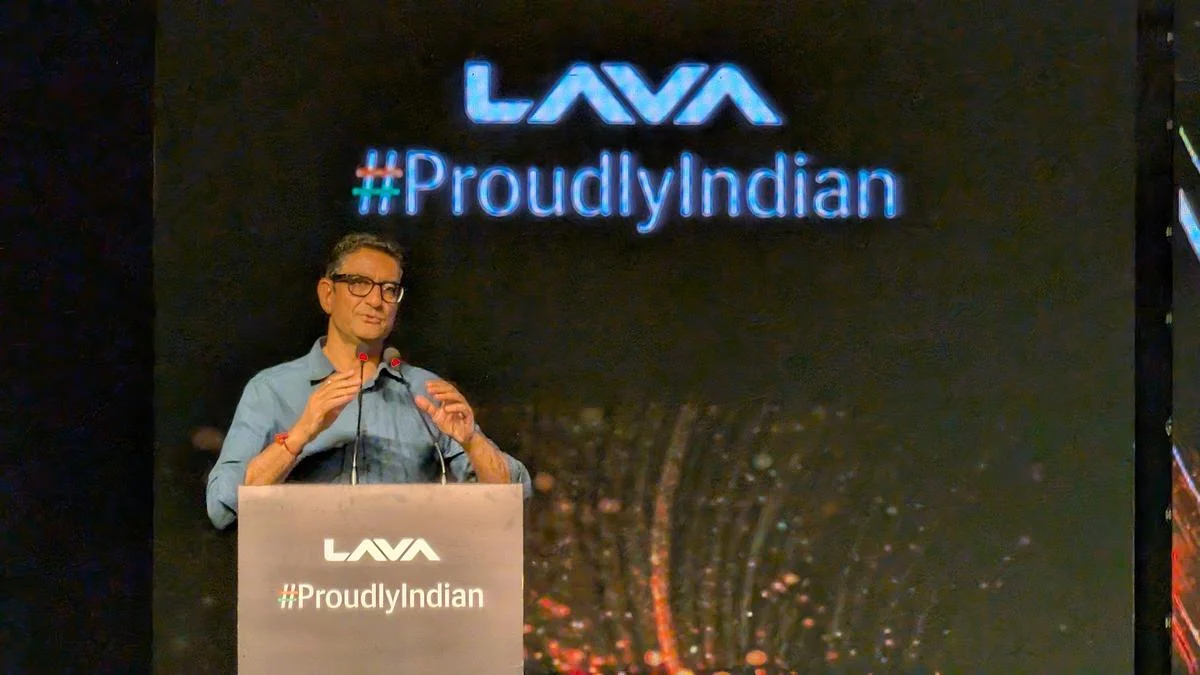
NEW DELHI, INDIA – June 27, 2026 – In a significant strategic move signaling its burgeoning global ambitions, Lava International, India’s pioneering homegrown smartphone brand, is set to launch its Agni 4 smartphone in the United Kingdom market this July. Leveraging the e-commerce giant Amazon for its entry, Lava aims to capitalize on a distinct market opportunity characterized by a preference for non-Chinese brands and a strong demand for high-quality, affordably priced devices. This international foray, coupled with a sharpened focus on the sub-INR 30,000 segment in its home market, underscores a period of robust growth and strategic clarity for the Indian manufacturer.
Sunil Raina, Managing Director of Lava, articulated the brand’s strategic rationale in an exclusive interview with The Hindu, stating, "Being a Chinese-averse market worked as an opportunity for Lava. People in the UK are seeking a higher quality product at a lesser price." This insight highlights Lava’s calculated approach to identifying and penetrating markets where its value proposition—combining Indian engineering with competitive pricing—can resonate most effectively.
Domestically, Lava is content to dominate the budget and mid-segment, specifically the sub-INR 30,000 price category, which Mr. Raina refers to as the "volume game," viewing anything beyond as "vanity." This disciplined focus on its core strength in smartphones, eschewing diversions into other product verticals, is a testament to the company’s commitment to mastering its chosen domain. "We are good at smartphones and have been doing this for quite some time," Mr. Raina affirmed, signaling a clear strategic direction for the brand’s product roadmap.
The expansion comes amidst a challenging global macroeconomic climate, marked by persistent supply-side bottlenecks and inflationary pressures that have driven up smartphone prices across the industry. While Mr. Raina anticipates a 10-15% hit to the overall smartphone industry due to this crisis, he noted that Lava, as a "smaller player," is comparatively less affected. Intriguingly, these market dynamics have also spurred a rare growth in the feature phone segment, where Lava has ascended to the third position, further diversifying its market presence.
Crucially, Lava has successfully shed earlier perceptions, with Mr. Raina observing, "Buyers are less skeptical about Lava phones today as they were earlier." This shift in consumer confidence is attributed to sustained efforts in enhancing design, bolstering after-sales service, and maintaining affordability. The results are evident in the company’s smartphone division, which is reportedly growing at an impressive Compound Annual Growth Rate (CAGR) of 50% year-on-year. With a robust network of over 750 service centers across India, complemented by a pioneering home servicing option, Lava is demonstrating a profound commitment to customer satisfaction.
The company proudly positions itself as the only Indian brand effectively challenging Chinese behemoths in the domestic market, a feat it believes can be replicated globally. "If we can compete with them in India, we can do it anywhere in the world," Mr. Raina declared, projecting an assertive stance on international competitiveness. Looking ahead, Lava is also integrating advanced technologies, having introduced its AI agent, Vayu AI, last year, with plans to incorporate it into future smartphone models, signaling a forward-thinking approach to innovation.
Chronology: Lava’s Journey and Strategic Shifts
Lava International’s trajectory is a microcosm of the Indian mobile industry’s evolution, marked by periods of explosive growth, intense competition, and strategic reinvention. From its inception, Lava has navigated the shifting sands of consumer preferences and technological advancements, emerging as a resilient player.
Early Days and the Rise of Indian Brands
The early 2010s witnessed a vibrant landscape for Indian mobile brands. Companies like Micromax, Karbonn, Intex, and Lava capitalized on the burgeoning demand for affordable mobile phones, particularly feature phones, in a market hungry for connectivity. These brands understood the nuances of the Indian consumer, offering localized content, dual-SIM capabilities, and aggressive pricing strategies that resonated deeply with the masses. Lava, with its focus on robust build quality and a growing distribution network, quickly carved out a significant niche, building trust in a nascent market. This period was characterized by rapid expansion and a sense of national pride in homegrown technology.
The Smartphone Shift and Chinese Influx
The mid-2010s brought about a seismic shift with the advent of affordable smartphones and the aggressive entry of Chinese manufacturers. Brands like Xiaomi, Vivo, Oppo, and Realme disrupted the Indian market with their potent combination of cutting-edge features, sleek designs, and highly competitive pricing, often backed by substantial marketing budgets. This onslaught caught many Indian brands off guard, leading to a significant loss of market share and, for some, eventual decline. The sheer scale and speed of innovation from Chinese players, coupled with their vertically integrated supply chains, proved a formidable challenge for domestic companies. Many Indian brands struggled to adapt to the rapid product cycles and fierce pricing wars of the smartphone era.
Lava’s Resilience and Reinvention
Amidst this challenging environment, Lava chose a path of resilience and strategic reinvention. Rather than attempting to out-compete Chinese brands on every front, it doubled down on its strengths and identified new opportunities. A key pillar of its revival was a renewed emphasis on the "Designed in India" and "Made in India" ethos. This involved investing heavily in local R&D, design, and manufacturing capabilities, allowing Lava greater control over quality and cost. The company consciously pivoted towards improving the core user experience, focusing on stable software, reliable hardware, and, critically, robust after-sales support.
Mr. Raina’s comments about reducing buyer skepticism are a direct reflection of these efforts. Lava understood that trust, once eroded, is hard to regain. By prioritizing product quality, enhancing design aesthetics, and making its devices more accessible through affordability, Lava began to rebuild its brand image. The extensive network of over 750 service centers and the introduction of home servicing options were not merely operational improvements but strategic investments in consumer confidence, differentiating Lava from competitors who often struggled with post-purchase support. This commitment to the customer experience became a cornerstone of its renewed strategy, slowly but surely winning back a discerning Indian consumer base.
The Agni Series and Premium Push
The launch of the Agni series marked a pivotal moment in Lava’s journey, signaling its intent to offer more premium experiences within its chosen segments. While still firmly rooted in the budget and mid-range categories, the Agni smartphones represented Lava’s technological prowess and design ambition. The Agni 4, specifically, is positioned as a flagship offering for this segment, embodying Lava’s commitment to delivering a compelling blend of features and value. Its selection as the spearhead for the UK market entry is highly strategic, showcasing a product that Lava believes can stand shoulder-to-shoulder with international competitors in terms of quality and performance, all while adhering to its philosophy of affordability. This series is crucial for Lava’s image transformation from a budget-only brand to a purveyor of well-engineered, value-driven smartphones.
Supporting Data and Market Dynamics
Understanding Lava’s current strategic moves requires an appreciation of the complex and dynamic markets it operates within, both domestically and internationally.
Indian Smartphone Market Landscape
The Indian smartphone market remains one of the most competitive globally, characterized by its sheer volume and price sensitivity. As of 2026, it continues to be largely dominated by Chinese players, who command a significant majority of market share across various price points. Brands like Xiaomi, Samsung (a non-Chinese multinational), Vivo, Oppo, and Realme have established deep roots, leveraging extensive distribution networks, aggressive marketing, and a constant stream of new models. For Indian brands like Lava, competing means finding distinct niches and offering compelling alternatives. Lava’s success in carving out a share, particularly in the sub-INR 30,000 category, is a testament to its understanding of the value-conscious Indian consumer and its ability to deliver reliable products with strong local support. The "volume game" Mr. Raina refers to is critical in India, where even small market share gains translate into millions of units sold, providing the necessary scale for sustainable operations.
Feature Phone Resurgence
A fascinating counter-trend in the smartphone-dominated era is the unexpected resurgence of feature phones. This phenomenon, which Mr. Raina highlights, is largely a consequence of the rising prices of smartphones, driven by global supply chain disruptions, increased component costs, and macroeconomic inflationary pressures. For a significant segment of the Indian population, particularly in rural and semi-urban areas, feature phones offer an indispensable, affordable, and durable communication tool. Their long battery life, robust build, and simplicity appeal to users who prioritize basic connectivity over advanced smart features. Lava’s ascent to the number three position in this segment demonstrates its continued relevance across the mobile spectrum and its ability to cater to diverse consumer needs, effectively cushioning the impact of smartphone price hikes on its overall business. This segment also serves as a crucial entry point for new mobile users, many of whom may eventually upgrade to Lava smartphones.
Global Market Opportunities
Lava’s expansion into the UK is predicated on a keen understanding of global market sentiment, particularly the growing "Chinese-averse" trend in certain Western economies. This sentiment, often driven by geopolitical considerations, data privacy concerns, and a desire for supply chain diversification, presents a unique window of opportunity for brands from other geographies. The UK market, in particular, exhibits a demand for "higher quality product at a lesser price" – a sweet spot that Lava believes it can fill. Unlike the saturated high-end premium segment dominated by Apple and Samsung, there’s a significant segment of consumers seeking reliable, well-built smartphones that don’t command flagship prices, especially if they come from a trusted, non-Chinese origin. Lava aims to position Agni 4 as a compelling alternative for these discerning, value-oriented buyers, leveraging Amazon’s expansive e-commerce reach to minimize initial physical infrastructure costs.

Growth Metrics and After-Sales
The reported 50% CAGR in Lava’s smartphone segment is a powerful indicator of its successful turnaround and growing market acceptance. Such robust growth rates are difficult to achieve in a mature and competitive industry, underscoring the effectiveness of Lava’s strategic adjustments. This growth is inextricably linked to its revamped approach to customer satisfaction. The company’s vast network of over 750 service centers across India, coupled with the innovative home servicing option, is a critical differentiator. In a market where after-sales service is often a pain point, Lava’s commitment to prompt and accessible support directly translates into enhanced brand loyalty and positive word-of-mouth, which are invaluable assets in driving sustained growth and reducing buyer skepticism. This extensive service infrastructure not only supports sales but also builds long-term customer relationships, fostering repeat purchases and brand advocacy.
Official Responses and Leadership Insights
Sunil Raina’s insights provide a crucial lens through which to understand Lava’s current strategy and future trajectory. His candid assessment of market conditions and Lava’s positioning offers valuable perspectives on the brand’s resilience and ambition.
Sunil Raina’s Vision
Mr. Raina’s vision for Lava is one of focused growth and strategic differentiation. His comments on the UK market opportunity underscore a proactive approach to leveraging global geopolitical shifts. He views the "Chinese-averse" sentiment not as a temporary fad but as a sustainable trend that creates an opening for brands offering reliable alternatives. The demand for "higher quality product at a lesser price" aligns perfectly with Lava’s core competency of delivering value.
Domestically, Mr. Raina’s philosophy regarding the sub-INR 30,000 segment is deeply pragmatic. He understands that while aspirational high-end devices garner headlines, the real "volume game" and profitability for a brand like Lava lie in catering to the vast middle and budget segments of the Indian market. His dismissal of anything beyond this as "vanity" reflects a disciplined approach to resource allocation, ensuring that Lava’s efforts are concentrated where they can yield the most significant returns. This avoids the trap of chasing prestige segments where competition is fiercest and margins often tighter for challenger brands.
His unwavering commitment to the smartphone business ("We are good at smartphone and have been doing this for quite some time") indicates a strong belief in Lava’s core expertise. This focused strategy prevents dilution of brand efforts and resources across unrelated product verticals, allowing the company to continually refine its smartphone offerings and enhance its competitive edge.
Regarding the industry-wide price hike challenges, Mr. Raina acknowledges the severe impact of supply chain bottlenecks and macroeconomic factors. His estimate of a 10-15% industry hit highlights the pervasive nature of these issues. However, his assertion that Lava, as a "smaller player," is less affected, suggests a leaner operational model, perhaps with more agile supply chain management or a less complex product portfolio, enabling it to navigate these headwinds with greater resilience than larger, more diversified competitors.
The MD’s observations on reduced buyer skepticism are particularly encouraging. This isn’t accidental; it’s the direct result of deliberate strategies focused on product improvement and customer care. By "working on design, after-sales and affordability," Lava has methodically addressed previous weaknesses, transforming its brand perception from a budget option to a reliable and trustworthy choice. This shift in consumer confidence is foundational to its sustained growth.
Finally, Mr. Raina’s bold declaration that "If we can compete with them in India, we can do it anywhere in the world" is a powerful statement of intent. It positions Lava as a flagbearer for Indian innovation, capable of standing against global giants. This belief system is likely a key driver behind the UK expansion and future international endeavors.
AI Integration and Future Tech
Lava’s roadmap for AI, highlighted by the introduction of its Vayu AI agent last year, signifies a commitment to staying at the forefront of technological innovation. The plan to integrate Vayu AI into future smartphones suggests a strategic vision for enhancing user experience through intelligent features. AI in smartphones can manifest in various ways: from optimizing battery life and camera performance to personalizing user interfaces, improving voice assistants, and bolstering security. For Lava, Vayu AI could serve as a unique selling proposition, offering localized and intuitive AI capabilities that cater specifically to the needs and preferences of its target demographics, further differentiating its products in a crowded market. This forward-looking approach ensures that Lava remains relevant and competitive as AI increasingly becomes a standard feature in mobile technology.
Implications and Future Outlook
Lava’s strategic moves carry significant implications, not just for the company itself but for the broader Indian manufacturing ecosystem and the global mobile industry.
Impact on Indian Manufacturing and ‘Make in India’
Lava’s successful expansion into international markets, particularly in a discerning market like the UK, serves as a powerful validation of India’s manufacturing capabilities and the ‘Make in India’ initiative. It demonstrates that Indian companies can produce world-class products that are competitive on a global stage. This success story can inspire other domestic brands to invest in R&D, enhance manufacturing quality, and explore international opportunities, thereby boosting local employment, fostering technological self-reliance, and strengthening India’s position as a global manufacturing hub. Lava’s journey underscores that ‘Make in India’ is not merely about assembling products but about designing, innovating, and producing competitive goods entirely within the country.
Competitive Landscape
Lava’s foray into the UK will inevitably impact the competitive landscape. In the UK, it will directly challenge established brands, including Chinese manufacturers who may face increased scrutiny, and other budget-to-mid-range players. Its success could encourage other Indian brands to follow suit, leading to a more diversified and competitive global market. Domestically, Lava’s continued growth and improved brand perception put pressure on its Chinese rivals to innovate further and potentially adjust their pricing strategies. By taking a share out of these dominant players, Lava not only secures its own position but also validates the potential for local champions to thrive in hyper-competitive environments.
Challenges and Opportunities Ahead
The road ahead for Lava is fraught with both significant challenges and immense opportunities.
Challenges:
- Sustaining Growth in International Markets: Establishing brand recognition and distribution channels in new territories is capital-intensive and requires sustained marketing efforts. Maintaining the delicate balance between quality and affordability while scaling operations globally will be crucial.
- Intense Competition: Even in "Chinese-averse" markets, Lava will face competition from other global players and local brands. Differentiating itself beyond price will be key.
- Supply Chain Resilience: While Lava has navigated recent price hikes, global supply chain disruptions remain a persistent threat. Ensuring a stable and cost-effective supply of components will be vital for sustained production and competitive pricing.
- Navigating Geopolitical Shifts: The "Chinese-averse" sentiment can be fluid. Lava must be agile in adapting to evolving geopolitical landscapes and consumer preferences in different markets.
- Brand Perception: While skepticism has reduced in India, Lava will need to build trust and establish a strong brand identity from scratch in new international markets.
Opportunities:
- Leveraging Anti-China Sentiment: This remains a significant opportunity in markets where consumers are actively seeking alternatives, allowing Lava to position itself as a trusted, non-Chinese option.
- Tapping Underserved Segments: There are still large segments of consumers globally who seek reliable, feature-rich smartphones at accessible price points, a segment where Lava excels.
- Expanding Product Portfolio (within smartphone focus): While sticking to smartphones, Lava can explore new sub-segments, such as rugged phones, specific enterprise solutions, or devices tailored for specific regional needs.
- Exploring Other Emerging Markets: Success in the UK could be a blueprint for expansion into other European, African, or Latin American markets that share similar consumer demands and geopolitical considerations.
- AI Integration: Further development and deployment of Vayu AI can create unique selling propositions, enhancing user experience and fostering loyalty through intelligent features.
The Road Ahead for Lava
Lava International stands at a critical juncture, poised for potentially transformative growth. Its strategic expansion into the UK, coupled with its robust performance and clear focus in India, positions it as a significant player to watch. By prioritizing design, after-sales service, affordability, and leveraging a strong ‘Make in India’ narrative, Lava is demonstrating that homegrown brands can not only survive but thrive amidst global competition. If it can successfully replicate its domestic success in international territories, Lava has the potential to establish itself as a formidable global contender in the value-for-money smartphone segment, further solidifying its role as a proud flagbearer for Indian innovation on the world stage. The coming years will reveal whether this ambitious trajectory can culminate in Lava becoming a truly global force in mobile technology.
