

India’s automotive landscape is currently caught in the crosswinds of a monumental transformation. For decades, the internal combustion engine (ICE) fueled by imported crude oil has been the undisputed king of the road. However, as the twin pressures of environmental degradation and a staggering oil import bill mount, the nation is pivoting toward a multi-pronged energy strategy. While electric vehicles (EVs) often dominate the headlines, a quieter but equally significant revolution is brewing in the form of biofuels.
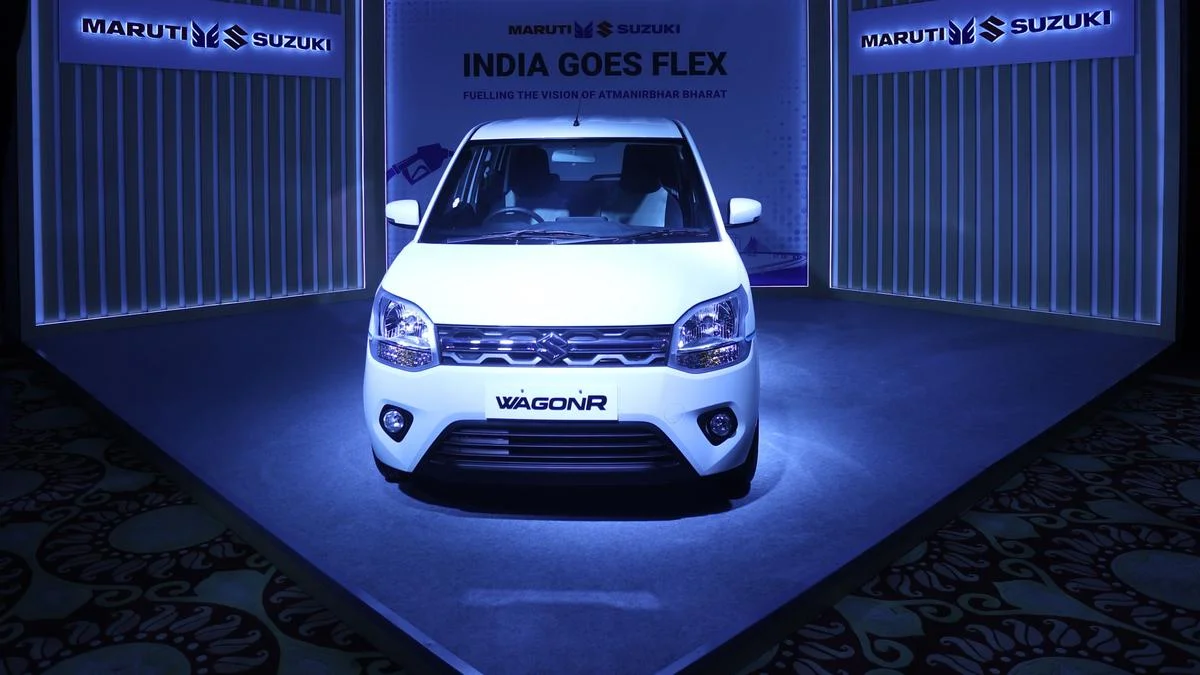
The recent unveiling of the Maruti Suzuki Wagon R Flex Fuel prototype marks a watershed moment in this journey. By integrating flexible-fuel technology into one of India’s most iconic and high-volume hatchbacks, Maruti Suzuki is signaling that the path to decarbonization will not be paved by batteries alone. Instead, it will be a mosaic of technologies, with ethanol playing a starring role.
Main Facts: Engineering a Mass-Market Alternative
At its core, the Maruti Suzuki Wagon R Flex Fuel is a technological bridge between the familiar past and a sustainable future. Unlike standard vehicles that are tuned for a specific fuel type, a flex-fuel vehicle (FFV) is designed to run on a variety of ethanol-petrol blends.
Technical Sophistication Under the Hood
The Wagon R Flex Fuel is engineered to operate on any blend ranging from E20 (20% ethanol, 80% petrol) to E100 (100% pure ethanol). This is not a simple "plug-and-play" modification. To handle the corrosive nature of ethanol and its different combustion characteristics, Maruti Suzuki’s engineers had to redesign several critical components:
- The Engine Control Unit (ECU): The "brain" of the car has been upgraded with advanced sensors that detect the ethanol concentration in the fuel line in real-time. It then automatically adjusts ignition timing and fuel injection to optimize performance and efficiency.
- Fuel System Durability: Ethanol is hygroscopic (it absorbs water) and can be corrosive to standard rubber and certain metals. The Wagon R Flex Fuel features reinforced fuel pumps, specialized fuel injectors, and upgraded fuel lines to ensure long-term reliability.
- Engine Internals: Modifications to the valves and valve seats were necessary to withstand the different heat profiles generated by ethanol combustion.
Strategic Selection of the Wagon R
Maruti Suzuki’s choice of the Wagon R as the platform for this technology is a calculated move. In the automotive world, manufacturers often debut expensive new technologies in luxury segments to recoup R&D costs. By choosing a "Tall Boy" hatchback that has consistently topped sales charts for over two decades, Maruti is sending a clear message: Flex-fuel technology is intended for the masses, not just the elite. With an expected price range of INR 7.50 to 8.00 lakh, it remains within the reach of the Indian middle class.
Chronology: The Road to Ethanol Adoption
The journey toward a flex-fuel future in India has been a decade-long endeavor, accelerated significantly over the last five years.

- 2003-2013: The Early Experiments: India began its Ethanol Blended Petrol (EBP) program with a modest target of 5% blending. However, inconsistent supply from sugar mills and a lack of infrastructure meant the targets were rarely met.
- 2018: The National Policy on Biofuels: The government introduced a comprehensive policy to promote the production of ethanol from various feedstocks, including sugarcane juice, molasses, and damaged food grains like broken rice and maize.
- 2021: The Accelerated Timeline: Prime Minister Narendra Modi announced that the target for 20% ethanol blending (E20), originally set for 2030, would be moved forward to 2025. This sent a shockwave through the automotive industry, forcing manufacturers to expedite their flex-fuel roadmaps.
- 2022-2023: The Prototype Era: At various automotive expos, manufacturers began showcasing flex-fuel prototypes. Toyota unveiled a flex-fuel hybrid, while Maruti Suzuki showcased the Wagon R Flex Fuel, developed locally with support from Suzuki Motor Corporation, Japan.
- 2024 and Beyond: The focus has shifted from "can we build it?" to "how do we scale it?" The government is now working with oil marketing companies (OMCs) to set up E100 dispensing stations across major urban centers.
Supporting Data: The Economic and Environmental Imperative
The push for flex-fuel is driven by cold, hard data. India is the world’s third-largest consumer of crude oil, importing nearly 85% of its requirements. This creates a massive drain on foreign exchange reserves and leaves the economy vulnerable to geopolitical volatility.
Energy Security and the Import Bill
According to data from the Ministry of Petroleum and Natural Gas, achieving a 20% ethanol blend across the country could save India approximately $4 billion (INR 30,000 crore) in annual oil import costs. Moving toward E85 or E100 would exponentially increase these savings, providing a buffer for the national economy.
The Agricultural Synergy
India is one of the world’s largest producers of sugarcane and grain. A robust flex-fuel ecosystem creates a "circular economy" where the money spent at the fuel pump goes back into the pockets of Indian farmers rather than foreign oil cartels.
- Surplus Management: Ethanol production provides a lucrative outlet for surplus food grains and sugarcane, preventing price crashes that often devastate rural incomes.
- Job Creation: The expansion of biorefineries is estimated to create thousands of jobs in rural and semi-urban areas, supporting the "Atmanirbhar Bharat" (Self-Reliant India) vision.
Emissions and Climate Goals
While ethanol is not "zero-emission" like pure electric power, it offers a significant reduction in the carbon footprint compared to traditional fossil fuels.
- Tailpipe Emissions: Vehicles running on high ethanol blends show a reduction of up to 20% in Carbon Monoxide (CO) emissions and significantly lower particulate matter.
- Life Cycle Analysis: Because the plants used to make ethanol absorb CO2 as they grow, the "well-to-wheel" carbon footprint of ethanol is much lower than that of gasoline.
Official Responses: Government and Industry Alignment
The success of flex-fuel technology depends on a "Triple-Helix" collaboration between the government, the automotive industry, and the energy sector.
The Government’s Vision
Union Minister for Road Transport and Highways, Nitin Gadkari, has been the most vocal proponent of flex-fuel vehicles. In multiple addresses, Gadkari has urged the industry to move away from "petrol and diesel dominance," framing biofuels as a matter of national pride and economic survival. The government has also provided incentives, such as lower GST rates on ethanol (reduced from 18% to 5%) to make the fuel more competitive.

Maruti Suzuki’s Commitment
Hisashi Takeuchi, Managing Director and CEO of Maruti Suzuki India, has emphasized that the company’s "Carbon Neutral" strategy involves multiple paths. While Maruti is preparing to launch its first high-profile EV in 2025, Takeuchi maintains that CNG, hybrids, and flex-fuel are essential to cover the vast and diverse Indian geography where EV charging infrastructure may take decades to mature.
The Industry Consensus
Other major players, including Toyota, Tata Motors, and two-wheeler giants like TVS and Bajaj, have echoed this sentiment. The Society of Indian Automobile Manufacturers (SIAM) has been working closely with the government to standardize testing protocols for E20 and E100 engines, ensuring that Indian-made flex-fuel cars meet global safety and performance standards.
Implications: Challenges on the Horizon
Despite the optimism, the transition to a flex-fuel economy is fraught with challenges that must be addressed to gain consumer trust.
1. The Infrastructure Gap
The most immediate hurdle is the availability of fuel. Currently, E20 is becoming increasingly available at petrol pumps, but E100 is virtually non-existent for the general public. For a consumer to invest in a flex-fuel Wagon R, they need the assurance that they can find the appropriate fuel blend during a cross-country trip.
2. The "Mileage" Concern
Ethanol has a lower energy density than petrol. This means that, theoretically, a car running on E100 will deliver lower fuel efficiency (km/l) than one running on pure petrol. If the price of ethanol at the pump is not significantly lower than petrol, the consumer’s "running cost" will actually increase. The government and OMCs must work on a pricing strategy that makes ethanol economically attractive to the end user.
3. Consumer Awareness and Education
There is a lingering fear among car owners regarding the impact of ethanol on engine life. Many remember the issues with older vehicles where ethanol caused gaskets to leak and engines to stall. Maruti Suzuki and the government face a massive task in educating the public that modern "Flex-Fuel" engines are specifically engineered to avoid these pitfalls.

4. Food vs. Fuel Debate
Globally, critics of ethanol argue that using land to grow "fuel" instead of "food" could lead to higher food prices. In India, the government has countered this by focusing on "2G Ethanol" (Second Generation), which uses agricultural waste like paddy straw and corn cobs rather than the edible part of the crop. However, scaling 2G technology remains a capital-intensive challenge.
Conclusion: A Multi-Modal Future
The Maruti Suzuki Wagon R Flex Fuel is more than just a car; it is a laboratory on wheels. It represents a pragmatic realization that India’s path to a greener future cannot be a "one size fits all" approach.
For the urban commuter with a home charger, an EV might be the answer. For the long-distance traveler, a hybrid or a clean diesel might remain the choice. But for the millions of Indians who rely on the country’s vast existing network of fuel stations and the familiarity of the internal combustion engine, flex-fuel offers a way to go green without changing their lifestyle.
As Maruti Suzuki prepares to move from prototype to production, the focus must shift to the ecosystem. The car is ready, and the engineering is sound. Now, the success of India’s ethanol dream rests on the pumps, the prices, and the confidence of the Indian driver. If these factors align, the humble Wagon R may well be remembered as the vehicle that broke India’s addiction to foreign oil.
Maruti Suzuki Wagon R Flex Fuel expected price: INR 7.50 – 8.00 lakh
Motorscribes, in association with The Hindu, brings you the latest in cars and bikes. Follow them on Instagram @motorscribes
