

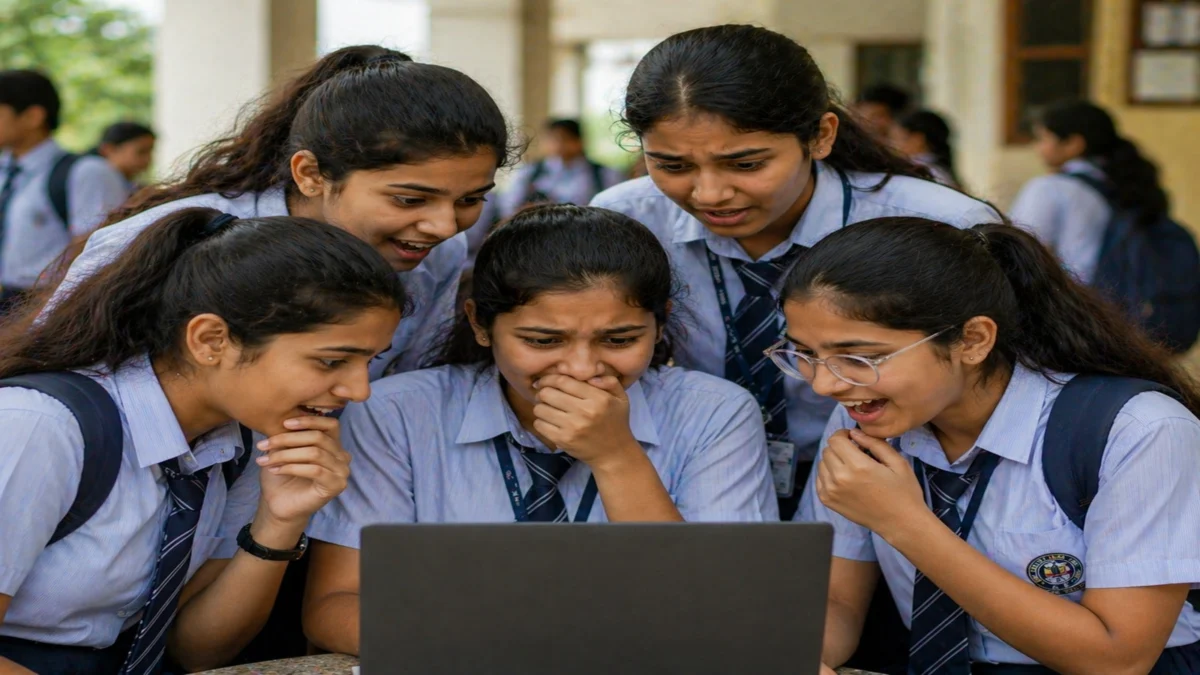
New Delhi – May 17, 2026, 05:48 PM IST – The Ministry of Education has strongly defended the newly implemented On-Screen Marking (OSM) system for CBSE Class 12 examinations, terming it a "foolproof" and globally recognized methodology. This assertion comes in the wake of growing apprehension among students and parents who have speculated that the introduction of OSM may have contributed to a recent dip in the overall pass percentage and the number of students achieving high scores. To address these concerns and foster greater transparency and accessibility in the post-result process, the Ministry, through the Central Board of Secondary Education (CBSE), has also announced a significant reduction in the fees for revaluation and answer sheet verification services, bringing them down to a nominal Rs 100 per service.
The move to embrace On-Screen Marking represents a significant technological leap for the CBSE, aligning its evaluation practices with international standards. While acknowledging the initial rollout presented certain challenges, officials emphasized that robust safeguards were in place and that the system is designed to enhance the integrity and efficiency of the examination process. The Ministry’s proactive stance aims to quell anxieties and reassure stakeholders about the fairness and reliability of the grading system, while simultaneously making post-result scrutiny more affordable for students.
The Genesis and Scale of On-Screen Marking
The introduction of On-Screen Marking by the CBSE for its Class 12 examinations marks a pivotal moment in the board’s long-standing tradition of paper-based evaluations. This modern approach involves the digital scanning of answer scripts, which are then evaluated by examiners on computer screens. The primary objectives behind this transition are multifaceted: to improve the speed and accuracy of the evaluation process, to enhance transparency, and to ensure a more standardized and secure marking system.
According to data released by the Ministry, the scale of the operation was substantial. A staggering 98.6 lakh answer books from the Class 12 examinations underwent the scanning process for On-Screen Marking. This massive undertaking required significant logistical and technological infrastructure to ensure that each answer script was digitized accurately and efficiently.
However, the transition was not without its technical hurdles. The Ministry acknowledged that a portion of these scanned scripts presented legibility issues. These challenges were primarily attributed to the quality of ink used in some handwritten answer sheets, which, despite repeated scanning, did not always render the text clearly on screen.
Addressing Technical Glitches: A Multi-Tiered Approach
To mitigate the impact of these legibility issues, the CBSE implemented a multi-pronged corrective strategy. This approach was designed to ensure that no student’s performance was adversely affected due to technical deficiencies in the digitization or evaluation process.
The board reported that 68,018 answer books necessitated a rescan due to poor initial scan quality. This indicates that the initial digitization process was not always optimal, requiring a second attempt to capture a clearer image of the answer script.
Furthermore, for cases where persistent quality issues remained even after rescanning, a more intensive intervention was employed. A total of 13,583 answer books were subjected to manual evaluation. In these instances, examiners were tasked with physically reviewing the original answer sheets or highly detailed digital copies. The deficiencies noted by these manual evaluators were meticulously annotated, and the marks awarded were then uploaded separately. This ensured that the integrity of the marking process was maintained, even when the digital evaluation pathway was compromised.
Sanjay Kumar, School Education Secretary, elaborated on the robustness of the system during a press conference. He highlighted that "three levels of security were followed during the process." This suggests a layered approach to data handling and access, aimed at preventing any unauthorized alterations or breaches. He further explained the rationale behind the manual evaluations, stating, "It was found that despite repeated scanning, there were still some legibility issues because the ink used in some answer sheets was of a very light colour. Even after scanning, those scripts could not be made fully legible." This candid admission underscores the Ministry’s commitment to transparency in addressing the challenges encountered.
Student Apprehensions and the Impact on Results
The introduction of On-Screen Marking coincided with a noticeable trend in the CBSE Class 12 results for 2026. Reports indicated a 16% fall in the number of students scoring 90% or above compared to previous years. This statistical shift, coupled with the implementation of a new evaluation methodology, inevitably led to speculation and concern among students and their parents.
Many students who felt their performance did not accurately reflect their preparation voiced their anxieties. The perceived dip in high achievers fueled the narrative that the OSM system might be a contributing factor. Some students, even those who had performed exceptionally well in competitive entrance examinations like JEE Main, found themselves scoring below the 75% threshold often required for further academic pursuits, leading them to question the fairness and accuracy of the on-screen marking process. This sentiment was captured in reports where students expressed, "I scored over 99 percentile in JEE Main but got below 75% in Class 12th: Students question CBSE’s first year of On-Screen Marking."
The Ministry, while acknowledging the dip in high scorers, has largely attributed it to a combination of factors, including a general recalibration of grading standards and the natural ebb and flow of academic performance across a large student cohort. However, the consistent linkage made by the public between the OSM system and the results has prompted a strong defense from the Ministry.
Revaluation Relief: Making Post-Result Services Accessible
In an effort to assuage student anxieties and promote a more accessible post-result scrutiny process, the CBSE has announced a substantial reduction in the fees for various services. This decision is aimed at empowering students to seek clarifications and re-evaluations without facing prohibitive costs.
The revised fee structure for post-result services is as follows:
- Viewing of Answer Sheets: The fee has been drastically reduced from Rs 700 to Rs 100. This allows students to personally review their evaluated answer scripts, understand where marks might have been deducted, and gain insights into their performance.
- Verification/Validation of Answer Sheets: Similarly, the charge for verification or validation of answer sheets has been slashed from Rs 500 to Rs 100. This service confirms that all answers have been evaluated and that no totaling errors have occurred.
- Rechecking of Individual Answers: For students who have specific concerns about the evaluation of particular questions, the fee for rechecking per question has been set at a modest Rs 25. This provides a granular level of scrutiny for targeted concerns.
Furthermore, the CBSE has introduced a crucial refund policy. Secretary Sanjay Kumar assured stakeholders that, "if, during re-evaluation, a student’s marks increase, then the amount paid for re-evaluation will be refunded to the student." This policy acts as a significant incentive for students to utilize the re-evaluation process, knowing that their financial investment is protected if a genuine error is identified.
The Ministry has reiterated its stance that the On-Screen Marking system is not only secure but also "aligned with global standards of examination evaluation." This emphasis on international best practices aims to instill confidence in the system’s integrity and fairness. The significant fee reductions are seen as a proactive measure to demonstrate the CBSE’s commitment to student welfare and its willingness to address any perceived shortcomings transparently.
Implications and the Future of Examination Evaluation
The implementation and subsequent defense of the On-Screen Marking system by the Ministry of Education carry significant implications for the future of examinations in India.
Enhanced Transparency and Accountability: By embracing digital evaluation, the CBSE is moving towards a more transparent system. The digital trail of scanned scripts and marked answers can, in theory, offer greater accountability. The reduced fees for revaluation further enhance this transparency, allowing students to engage more directly with their assessment.
Technological Advancement in Education: The OSM system represents a broader trend of technological integration within the Indian education sector. As more boards and examination bodies adopt similar technologies, it signifies a commitment to modernizing educational infrastructure and processes.
Addressing Student Concerns Proactively: The Ministry’s swift response to student anxieties, coupled with the fee reductions, sets a precedent for how educational authorities can proactively engage with and address concerns raised by stakeholders. This approach can foster greater trust and collaboration between examination bodies and students.
Potential for Wider Adoption: If the On-Screen Marking system proves successful and robust in its implementation, it could pave the way for its wider adoption across other examinations conducted by the CBSE and potentially other educational boards in the country. This could lead to a more standardized and efficient evaluation landscape nationwide.
Focus on Continuous Improvement: The challenges encountered during the initial rollout of OSM, particularly regarding the legibility of scanned scripts, highlight the importance of continuous improvement and refinement of technological systems. The CBSE’s commitment to addressing these issues, including implementing rescans and manual evaluations, demonstrates a pragmatic approach to ensuring the system’s efficacy.
In conclusion, the Ministry of Education’s firm stance on the "foolproof" nature of the On-Screen Marking system, backed by concrete data on corrective measures and significantly reduced revaluation fees, aims to solidify confidence in the CBSE Class 12 examination process. While challenges were acknowledged, the proactive steps taken by the Ministry underscore a commitment to transparency, fairness, and the modernization of educational assessment practices in India. The future will undoubtedly see further refinement of such digital evaluation methodologies, driven by the pursuit of accuracy, efficiency, and student-centricity.
