

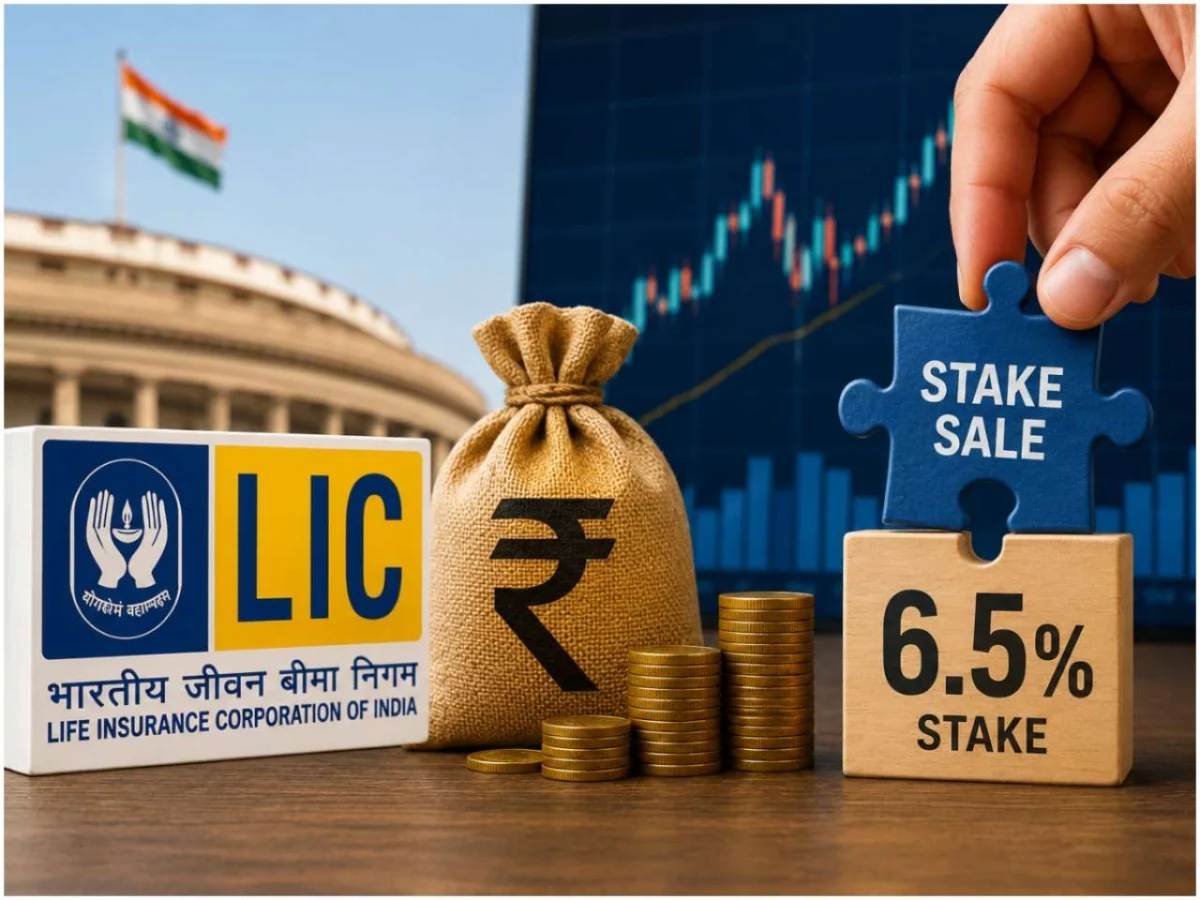
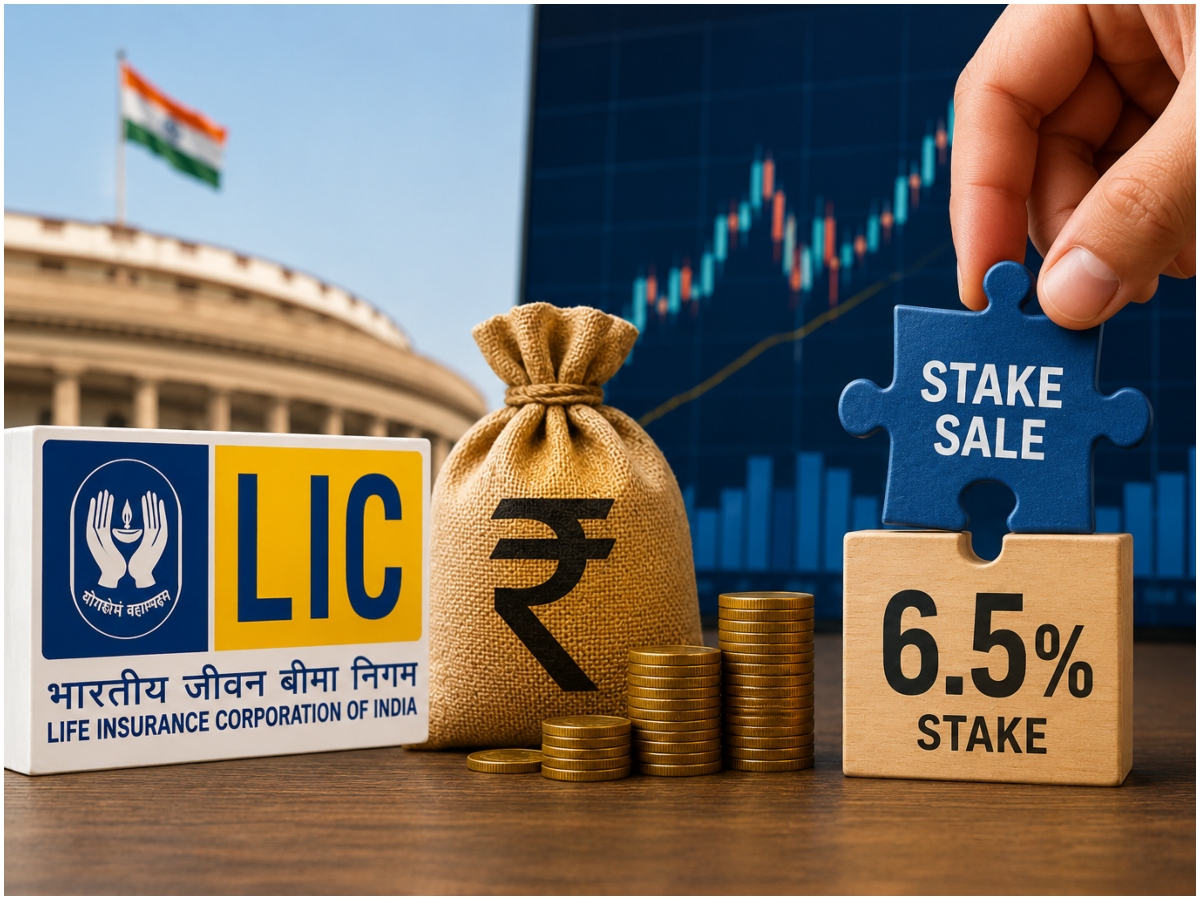
New Delhi, India – The Indian government has once again turned its attention to Life Insurance Corporation of India (LIC), announcing plans to divest a 6.5 percent stake through an Offer for Sale (OFS). This move, anticipated to garner approximately Rs 30,000 crore, represents a critical facet of the Centre’s ongoing disinvestment agenda. While the government will unequivocally retain its position as the largest shareholder, the decision has ignited discussions across financial circles, prompting investors, existing shareholders, and market analysts to dissect its multifaceted implications for the behemoth insurer and the broader Indian economy.
This latest divestment is not merely a revenue-generating exercise but is deeply rooted in regulatory compliance, fiscal prudence, and a strategic vision to enhance the public float of one of India’s most iconic financial institutions. As the nation’s largest insurer navigates the complexities of a dynamic market, the government’s calibrated approach aims to strike a balance between maintaining strategic control and fostering greater market participation.
Unpacking the Offer for Sale (OFS): The Details
The announced Offer for Sale (OFS) is a standard mechanism employed by promoters to dilute their stake in listed companies, primarily to meet regulatory requirements or raise capital. For LIC, this 6.5 percent stake dilution is a significant event, given the company’s sheer size and its crucial role in India’s financial landscape.
The Quantum and Estimated Value
The proposed sale of a 6.5 percent stake translates to a substantial number of shares, which, based on current market valuations and the expected proceeds of Rs 30,000 crore, indicates a specific pricing strategy the government might adopt. While the exact floor price for the OFS will be announced closer to the date of the sale, the estimated collection underscores the government’s confidence in LIC’s underlying value and investor appetite for its shares. This figure represents a considerable contribution to the government’s annual disinvestment target, a crucial component of its non-tax revenue strategy. The transaction will likely involve institutional investors, potentially offering a window for retail participation as well, often with a slight discount to encourage broader uptake.
Mechanism of the Sale
Typically, an OFS is executed over one or two trading days. Institutional investors usually place their bids on the first day, followed by retail investors on the subsequent day. The government, through the Department of Investment and Public Asset Management (DIPAM), will manage the process, ensuring transparency and adherence to market regulations. This mechanism allows for efficient price discovery and widespread participation, crucial for a stake sale of this magnitude involving a public sector undertaking (PSU) like LIC. The success of the OFS will hinge on market sentiment, LIC’s recent financial performance, and the overall macroeconomic environment.
A Historical Perspective: LIC’s Journey to Public Listing
To fully grasp the significance of the current stake sale, it is imperative to revisit LIC’s storied history and its relatively recent transition to a publicly listed entity.
)
From Nationalization to IPO: A Timeline
Life Insurance Corporation of India was established in 1956 through the nationalization of 245 Indian and foreign private insurance companies. It was conceived as a cornerstone of India’s socialist economic model, playing a pivotal role in mobilizing savings and channeling them into national development. For decades, LIC operated as a wholly state-owned entity, becoming synonymous with life insurance in India, enjoying a near-monopoly status until the opening up of the insurance sector to private players in the early 2000s.
The idea of listing LIC had been deliberated for years, driven by the government’s broader disinvestment policy and the desire to unlock value and improve corporate governance within PSUs. The actual journey to an Initial Public Offering (IPO) began in earnest with policy reforms and preparatory work in the late 2010s. The process was complex, involving actuarial valuations, restructuring of policyholder and shareholder funds, and navigating intricate regulatory frameworks.
The Initial Public Offering: Promises and Performance
LIC finally made its highly anticipated debut on the stock exchanges in May 2022. Heralded as India’s largest-ever IPO, it aimed to raise approximately Rs 21,000 crore by selling a 3.5 percent stake. The IPO was met with considerable investor interest, particularly from retail and policyholder categories, who were offered shares at a discount. The listing, however, proved to be challenging, with the stock opening at a discount to its issue price.

Since its listing, LIC’s share price performance has been a subject of intense scrutiny. While it remains a fundamentally strong company with a vast network and substantial assets under management, the stock has traded below its IPO price for extended periods. This performance has been influenced by various factors, including global market volatility, evolving investor perceptions of PSU valuations, and the unique nature of its business model, which balances policyholder interests with shareholder returns. Despite these market dynamics, the IPO successfully established LIC as a publicly traded company, marking a new chapter in its long history and setting the stage for subsequent stake dilutions to meet regulatory mandates.
The Mandate of Minimum Public Shareholding (MPS): A Regulatory Imperative
At the heart of the government’s decision to further dilute its stake in LIC lies a crucial regulatory requirement: the Minimum Public Shareholding (MPS) norms stipulated by the Securities and Exchange Board of India (SEBI).
Understanding SEBI’s MPS Norms
SEBI, as India’s capital market regulator, mandates that all listed public companies must maintain a certain minimum level of public shareholding. The standard norm requires a minimum public float of 25 percent for companies listed on Indian stock exchanges. This regulation is enshrined in Clause 19(a) of the Securities Contracts (Regulation) Rules, 1957, and further elaborated in SEBI (Listing Obligations and Disclosure Requirements) Regulations, 2015. The primary objective of MPS is to ensure adequate liquidity in the market, facilitate price discovery, prevent promoter dominance, and promote good corporate governance by encouraging broader public participation.
)
Companies that list with a lower public shareholding (e.g., through an IPO where promoters retain a significant majority) are typically given a specific timeframe to comply with the 25 percent MPS rule. For instance, a company listing with public shareholding between 10-25% is given three years to achieve the 25% threshold.
LIC’s Special Exemption and Compliance Deadline
When LIC was initially listed, the government held a staggering 96.5 percent stake. Recognizing the monumental size and strategic importance of LIC, SEBI granted a special exemption, allowing the government a longer window to meet the MPS norms. Under this special dispensation, the government is required to reduce its stake to 75 percent or below within five years from the date of listing. This means LIC has until May 2027 to achieve this target. The current 6.5 percent stake sale is a direct step towards fulfilling this regulatory obligation. With this sale, the government’s holding will decrease from the current 96.5% (after the IPO) to approximately 90%, still significantly above the 75% target. This indicates that further stake sales will be necessary in the coming years to meet the full compliance requirement.
Why 25% Public Float Matters
A higher public float is considered beneficial for several reasons:
)
- Enhanced Liquidity: More shares in public hands mean higher trading volumes, making it easier for investors to buy and sell without significantly impacting the price.
- Better Price Discovery: Increased liquidity and participation lead to more efficient price discovery, reflecting the true market value of the company.
- Reduced Manipulation: A broader shareholder base makes it harder for a few large players to manipulate stock prices.
- Improved Corporate Governance: A significant public float often translates to greater accountability of management to a diverse group of shareholders, promoting better corporate governance practices.
- Attracting Institutional Investors: Many institutional investors, including foreign funds, prefer companies with higher public float and robust liquidity, as it allows them to enter and exit positions more easily. Index providers also often factor in public float for inclusion criteria.
The Government’s Rationale: Beyond Regulatory Compliance
While meeting SEBI’s MPS norms is a primary driver, the government’s decision to further dilute its stake in LIC is also intertwined with broader economic and strategic objectives.
Boosting Fiscal Health and Funding Development
The estimated Rs 30,000 crore from the LIC OFS will be a substantial boost to the government’s non-tax revenue. Disinvestment proceeds are a crucial component of the annual budget, helping the government manage its finances. These funds are typically channeled into the Consolidated Fund of India and then allocated for various purposes, including infrastructure development, social welfare schemes, and public expenditure. In an economy aiming for sustained growth, such capital injections are vital for funding critical projects that might otherwise face resource constraints.
Signalling Market Reforms and Investor Confidence
The continuous efforts to disinvest in public sector enterprises, including LIC, send a strong signal to domestic and international investors about the government’s commitment to market-oriented reforms. It reflects a policy stance that encourages private sector participation, enhances transparency, and reduces the government’s direct involvement in day-to-day business operations. Such signals can bolster investor confidence, attracting more foreign direct investment (FDI) and portfolio investment into the Indian economy. It also showcases a pragmatic approach to managing public assets, recognizing that market forces can play a vital role in unlocking their true potential.
)
Enhancing Public Float and Price Discovery
Even beyond regulatory compliance, increasing the public float of a major entity like LIC is a strategic move to improve its market dynamics. A higher public float means more shares are available for trading, which naturally leads to better liquidity. This improved liquidity, in turn, contributes to more efficient price discovery, where the market price more accurately reflects the company’s intrinsic value and future prospects. For a company of LIC’s stature, robust price discovery can attract a wider array of sophisticated investors, including large institutional funds that require significant liquidity for their investment strategies.
Financial Implications: Where Will the Funds Go?
The substantial proceeds from the LIC stake sale are earmarked for specific purposes, consistent with the government’s fiscal management strategy.
Bolstering the Consolidated Fund of India
All revenues received by the Government of India, including disinvestment proceeds, are credited to the Consolidated Fund of India. This is the primary government account from which all expenditures are met. By depositing the Rs 30,000 crore into this fund, the government gains flexibility in allocating resources according to its budgetary priorities. It acts as a central reservoir of funds, allowing for strategic deployment across various sectors.
)
Fueling Infrastructure and Social Welfare
A significant portion of disinvestment receipts is often directed towards capital expenditure, particularly in infrastructure projects. India has an ambitious agenda to upgrade its infrastructure, including roads, railways, ports, airports, and digital networks. These projects are crucial for long-term economic growth, job creation, and improving the ease of doing business. Additionally, funds can be utilized for social welfare programs, such as healthcare, education, and poverty alleviation initiatives, contributing to inclusive growth and human development. This strategic allocation underscores the government’s commitment to leveraging public assets for broader societal benefit.
Addressing the Fiscal Deficit Challenge
Disinvestment proceeds also play a vital role in managing the government’s fiscal deficit. The fiscal deficit represents the difference between the government’s total expenditure and its total revenue (excluding borrowings). A lower fiscal deficit is generally seen as a sign of sound financial management, attracting investor confidence and potentially leading to lower borrowing costs for the government. By supplementing its revenue through stake sales, the government can reduce its reliance on market borrowings, thereby easing pressure on interest rates and contributing to macroeconomic stability. The Rs 30,000 crore from the LIC OFS will be a welcome contribution towards achieving the government’s fiscal consolidation targets for the current financial year.
Impact on LIC: Operational Stability and Market Perception
The government’s stake dilution, while significant in terms of value, is carefully calibrated to ensure minimal disruption to LIC’s core operations and its strategic direction.
)
Upholding Operational Integrity
Crucially, the proposed stake sale will not affect LIC’s day-to-day operations or its fundamental ownership structure. The government will continue to remain the majority stakeholder, ensuring continuity in leadership, policy, and strategic decision-making. LIC’s status as a state-owned insurance group and investment company will remain intact, guaranteeing policyholder security and the continued fulfillment of its social mandate. The company’s vast agency network, product portfolio, and investment strategy are unlikely to undergo any immediate radical shifts due to this divestment. This assurance is vital for maintaining the trust of its millions of policyholders and employees.
Enhanced Liquidity and Investor Appeal
One of the most significant positive implications for LIC is the expected improvement in the liquidity of its shares. With more shares available in the public domain, trading volumes are likely to increase, making the stock more attractive to a wider range of investors. This enhanced liquidity can attract greater participation from both domestic and foreign institutional investors, who often prioritize highly liquid stocks for their portfolios. Increased institutional interest can lead to a more stable and robust valuation for LIC shares over time, as these investors conduct thorough research and contribute to efficient price discovery.
Corporate Governance and Valuation Prospects
While the government remains the majority owner, increased public shareholding can subtly influence corporate governance practices. A more diverse shareholder base often brings greater scrutiny and demand for transparency, potentially leading to enhanced reporting standards and decision-making processes within LIC. Over the long term, this could contribute to a re-rating of LIC’s valuation multiples, bringing them closer to those of its private sector peers. As the public float increases, LIC might also become eligible for inclusion in various market indices, which would further boost its visibility and attract passive fund flows.
)
What This Means for Key Stakeholders
The government’s decision to dilute its stake in LIC carries distinct implications for various groups associated with the insurer and the broader market.
For Existing Shareholders: Long-Term Value and Liquidity
Existing shareholders of LIC, particularly those who invested during the IPO, have experienced a volatile journey. The current OFS, by increasing the public float, could lead to improved liquidity for their holdings. While a large supply of shares might exert short-term pressure on the stock price, the long-term benefits of enhanced institutional interest and better price discovery could lead to a more stable and potentially upward trajectory for the stock. Shareholders will closely monitor the pricing of the OFS and the market’s reception to gauge the immediate impact on their investments. For those holding for the long term, the move signals the government’s commitment to unlocking value and strengthening LIC’s market position.
For Potential Investors: An Opportunity for Entry
The OFS presents a fresh opportunity for new investors, particularly institutional players, to acquire a stake in India’s largest insurer. For funds that prioritize liquidity and market depth, the increased public float makes LIC a more viable investment option. The potential for a retail discount in the OFS could also entice individual investors looking to enter at a potentially attractive price point. This influx of new capital and diverse investor profiles can contribute to a more dynamic and efficient market for LIC shares.
)
For the Insurance Sector: A Bellwether’s Evolution
LIC is a bellwether for the Indian insurance sector. Its market performance, strategic decisions, and corporate governance standards often set precedents for other players. The government’s efforts to enhance LIC’s public float and market-driven valuation could encourage other public sector insurers, or even future listings, to adopt similar transparency and governance standards. It also signals the ongoing evolution of India’s financial markets, where even historically state-dominated entities are increasingly subjected to market discipline and investor expectations.
Expert Voices and Market Reactions
The announcement of another LIC stake sale has naturally drawn commentary from financial experts and analysts, alongside initial market reactions.
Analysts Weigh In
Market analysts generally view such stake sales as a positive step towards fulfilling regulatory norms and improving market dynamics. "This move is largely expected and aligns with the government’s long-term strategy for LIC," comments a leading financial analyst. "Meeting the MPS requirement is crucial for the company’s market standing. Increased public float will undoubtedly enhance liquidity, which is a key factor for attracting larger institutional investors and could lead to better valuation multiples over time."
)
Another expert highlights the fiscal aspect: "The proceeds will provide valuable resources for the government, especially given its ambitious infrastructure agenda. It’s a pragmatic approach to manage public assets while adhering to market best practices." Concerns, if any, often revolve around the timing and pricing of the OFS in relation to prevailing market conditions and LIC’s recent stock performance, ensuring that the sale maximizes value for the exchequer.
Investor Sentiment
Initial investor sentiment is likely to be mixed. While long-term investors might appreciate the regulatory compliance and potential for improved liquidity, short-term traders might react to the increased supply of shares in the market. The success of the OFS will largely depend on the pricing offered, the prevailing market conditions during the bidding period, and the broader economic outlook. However, the government’s continued majority ownership provides a strong sense of stability and reassurance for many investors who value the implicit sovereign guarantee associated with LIC.
The Road Ahead: Future of LIC and Disinvestment Strategy
The latest stake sale is a pivotal moment, but it is part of a larger, ongoing narrative for LIC and the government’s broader disinvestment policy.
)
Government’s Continued Role
Even after this divestment, the Indian government will remain the dominant shareholder in LIC, retaining significant control over its strategic direction and ensuring its role as a key pillar of India’s financial stability and social security net. This dual role—as a strategic owner and a facilitator of market participation—underscores the unique position of LIC within India’s economic framework. Future stake sales will undoubtedly occur as the 2027 deadline for 75 percent public shareholding approaches, each carefully planned to minimize market disruption and maximize value.
Broader Disinvestment Landscape
The LIC stake sale is indicative of the government’s consistent approach to disinvestment. Over the years, India has seen a concerted effort to unlock value from public sector enterprises, driven by the dual objectives of fiscal resource mobilization and promoting economic efficiency. While some disinvestments have been more challenging than others, the long-term vision remains to create a more vibrant, market-driven economy where capital is efficiently allocated. The success of the LIC OFS will not only benefit the insurer and the government but also contribute to the overall sentiment towards India’s ongoing economic reforms and the deepening of its capital markets. As India continues its growth trajectory, such strategic financial maneuvers will remain central to its economic policy toolkit.
