

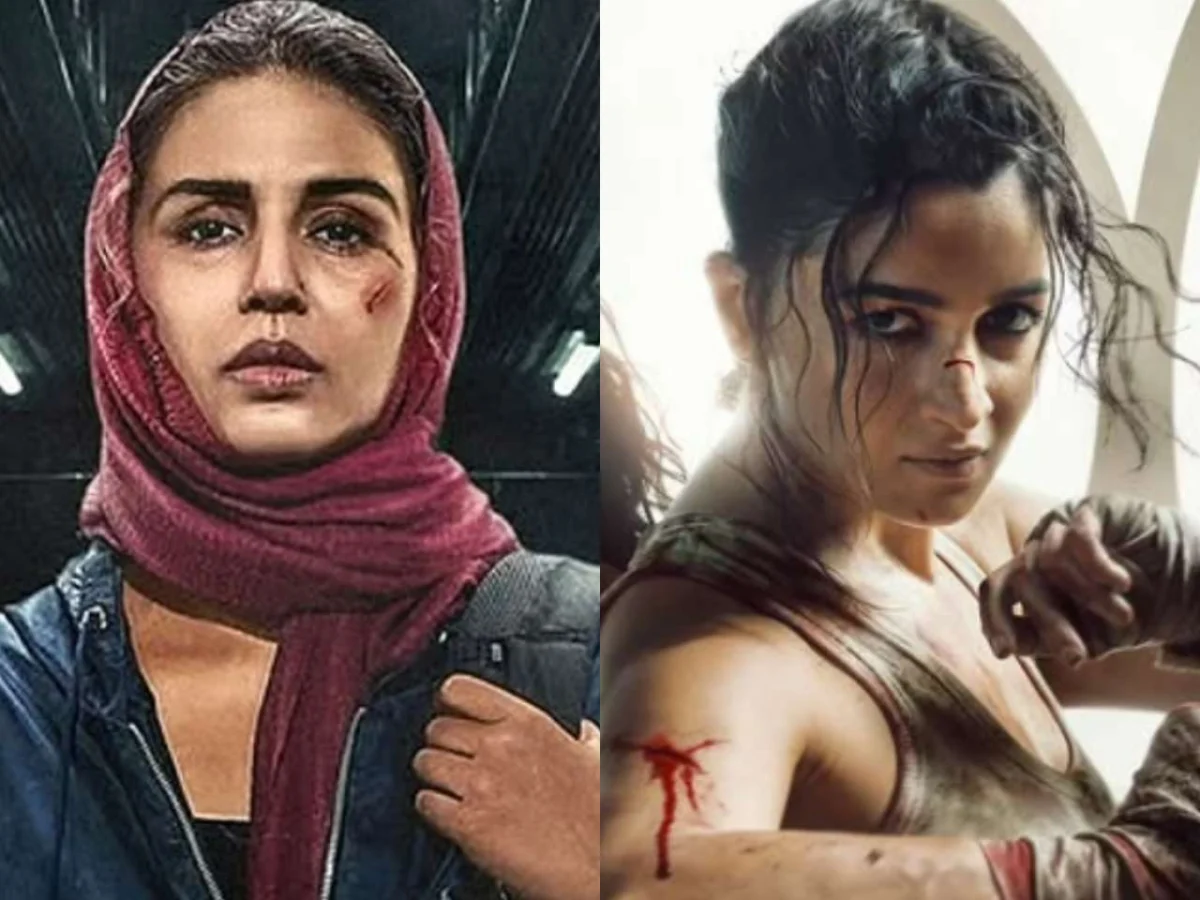
Mumbai, India – In a significant moment for Hindi cinema, two female-led action films, Huma Qureshi’s "Baby Do Die Do" and Alia Bhatt’s "Alpha," have arrived simultaneously in theaters, signaling a burgeoning trend and a testament to the evolving landscape of women in lead roles within the action genre. While the industry often buzzes with box office competition, Huma Qureshi, the protagonist of "Baby Do Die Do," has voiced a perspective that prioritizes collective growth and audience appreciation over direct rivalry.
Qureshi, who portrays a formidable deaf-mute assassin in "Baby Do Die Do," articulated her stance on the cinematic collision with "Alpha." "I don’t look at ‘Alpha’ from a sense of being a competition," she stated in a recent interview. "I think there is space for all kinds of films to be made and to be viewed. We’re an independently-made film. I’m not even looking at what else is releasing on that weekend." Her sentiment underscores a broader industry sentiment: a desire for a diverse cinematic ecosystem where different narratives and performers can thrive. The simultaneous release on Friday, July 3rd, has been hailed by many as a positive development, demonstrating the increasing confidence of filmmakers and audiences in stories fronted by women.
)
The Rising Tide of Women in Action: A Paradigm Shift
Huma Qureshi’s assertion about the growing space for women-led action films is not merely a hopeful wish but a reflection of observable trends in Hindi cinema. Historically dominated by male protagonists, the action genre is witnessing a gradual but steady influx of female characters who are not relegated to supporting roles or damsels in distress, but are instead the driving force of the narrative. Qureshi’s portrayal in "Baby Do Die Do" exemplifies this evolution. She embodies a character who leverages her perceived limitations – her inability to hear or speak – as strategic advantages in her profession.

"I’m playing a female hitwoman who can’t hear or speak," Qureshi explained. "That is not a disability or a weakness but actually her strength. There is a stereotype of a hitman always being a male. But why can’t it be a woman?" This question resonates deeply in a society where women are increasingly breaking barriers across all professions. The actress, known for her powerful performances in films like "Gangs of Wasseypur," emphasized that the current era is particularly opportune for such narratives. "I don’t think we’re going anywhere," she asserted, highlighting the growing presence of women in every sphere of life, from journalism and acting to law enforcement and the armed forces.
)
The appeal of the action genre for Qureshi is palpable. "I love doing action, I love watching action movies, I love doing action in movies as well and I think that the time is here where I think audiences will appreciate it for sure." This personal enthusiasm, coupled with the societal shifts she observes, fuels her belief in the viability and success of women-driven action cinema. The audience, she suggests, is not only ready but actively seeking out these narratives, eager to see female characters exhibit strength, agency, and the capability to lead high-octane sequences.
)
A Collaborative Spirit: Two Female-Led Films, One Box Office Weekend
The release of "Baby Do Die Do" and "Alpha" on the same weekend marks a significant milestone. Instead of viewing this as a zero-sum game, Huma Qureshi advocates for a spirit of camaraderie and mutual support within the industry. "I think it’s amazing that here we are, where two female-led films are clashing at the box office," she remarked. "We’ve already reached there, where that’s actually a reality, and more power to all of us, and more power to all female-led content. I will always be cheering, not just for my own film, but also for my girlfriends."
)
This sentiment of solidarity is crucial for fostering a more inclusive and diverse film industry. It moves away from a narrative of scarcity, where the success of one film is perceived as the detriment of another, towards one of abundance, where the collective success of women-led projects can pave the way for more such ventures. Qureshi’s focus on finding her "own audience" for "Baby Do Die Do," an independently produced film, further emphasizes the importance of targeted marketing and audience engagement, regardless of concurrent releases.
)
A Glimpse into the Films: "Baby Do Die Do" vs. "Alpha"
"Baby Do Die Do": Directed by Nachiket Samant and produced by Huma and Saqib Saleem’s production house, Saleem Siblings, "Baby Do Die Do" presents Huma Qureshi in a unique role as a stealthy assassin who utilizes an umbrella as her weapon. The film also features a supporting cast including Seema Pahwa, Sikander Kher, Chunky Pandey, and Rachit Singh. The independent nature of its production underscores Qureshi’s earlier statement about carving out its niche in the market. The premise itself is intriguing, offering a fresh take on the assassin trope by incorporating a protagonist with a distinctive disability that becomes her superpower.
)
"Alpha": On the other hand, "Alpha" is a high-profile production from Yash Raj Films (YRF), directed by Shiv Rawail and starring a star-studded cast including Alia Bhatt, Sharvari, Bobby Deol, and Anil Kapoor. This film is a significant addition to the YRF Spy Universe, a franchise that has already seen immense success with titles like "Ek Tha Tiger," "Tiger Zinda Hai," "War," "Pathaan," "Tiger 3," and the upcoming "War 2." The inclusion of "Alpha" in this established universe suggests a large built-in audience and significant marketing muscle, positioning it as a major contender at the box office.
)
The contrast in the production scale and background of the two films – one independent and the other a major studio production – further highlights the diverse pathways that female-led narratives are taking in the industry. Both are venturing into the action space, but with different levels of established franchise backing.
)
Supporting Data and Industry Trends
The success of recent female-led films across various genres, not just action, provides a strong foundation for Qureshi’s optimism. Films like "Gangubai Kathiawadi," "Darlings," "Thappad," and "Raazi" have not only performed well commercially but have also garnered critical acclaim, demonstrating the audience’s appetite for strong female characters and compelling storytelling. The box office performance of these films, alongside the growing number of women in directorial, writing, and technical roles, indicates a positive trajectory.
)
Furthermore, the rise of streaming platforms has also played a crucial role in diversifying content and providing a platform for women-centric narratives that might have struggled for theatrical release in the past. This has, in turn, broadened the audience’s exposure to and acceptance of female protagonists in various roles. The conversation around representation in cinema has gained significant momentum, with audiences and industry stakeholders alike increasingly demanding more authentic and varied portrayals of women on screen.
)
Implications for the Future of Bollywood
The simultaneous release of "Baby Do Die Do" and "Alpha" is more than just a box office event; it is a potential harbinger of future trends. If both films manage to attract significant viewership, it will send a powerful message to producers and studios that investing in female-led action films is a commercially viable and artistically rewarding endeavor. This could lead to:
)
- Increased Greenlighting of Female-Led Action Projects: More scripts featuring women in dynamic, action-oriented roles are likely to be greenlit.
- Greater Diversity in Storytelling: The success of "Baby Do Die Do" could encourage the development of more niche and independent films that challenge conventions, while the success of "Alpha" could solidify the place of established franchises in embracing female leads.
- Empowerment of Female Talent: More opportunities for actresses to showcase their versatility and physicality in the action genre, potentially leading to the emergence of new action stars.
- A More Balanced Industry: A continued shift towards a more equitable representation of genders in lead roles across all genres, fostering a healthier and more dynamic film industry.
Huma Qureshi’s forward-thinking perspective, coupled with the ambition of films like "Baby Do Die Do" and "Alpha," points towards an exciting new chapter for Bollywood. The industry appears to be embracing a future where women are not just participants but powerful protagonists, driving narratives and captivating audiences with their strength, talent, and unique storytelling. The success of these films will undoubtedly be watched with keen interest, not just for their box office numbers, but for the broader implications they hold for the future of Hindi cinema.
