

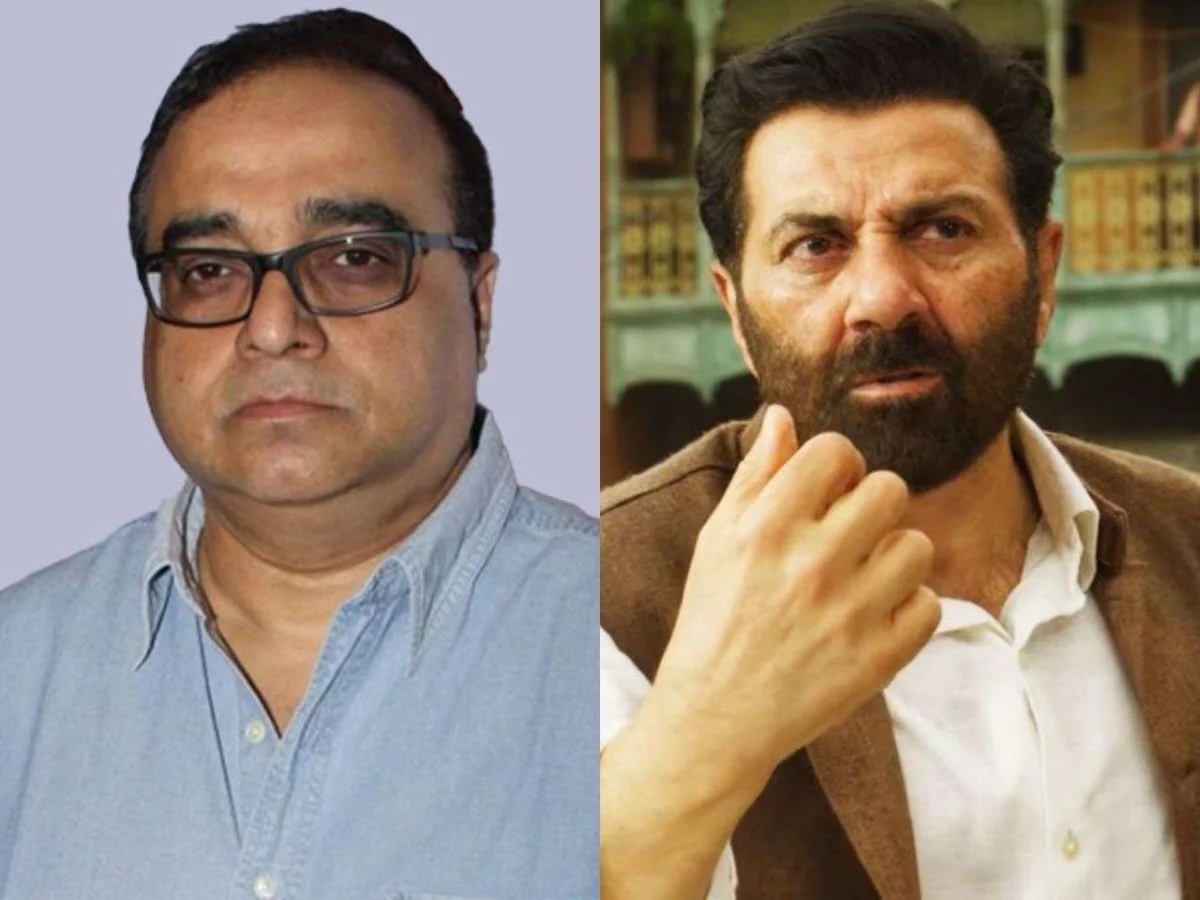
Mumbai, India – August 21, 2026 – Renowned filmmaker Rajkumar Santoshi, known for his impactful cinematic contributions to Bollywood, has expressed profound disappointment and a sense of bewilderment over the underperformance of his latest directorial venture, "Batwara 1947." The film, a reunion with the stalwart Sunny Deol, was met with anticipation but has struggled to gain traction at the box office, a reality that has deeply shaken the veteran director. In an exclusive interaction, Santoshi candidly shared his thoughts on the film’s commercial trajectory, venturing into a somber reflection on the current societal appetite for narratives centered on peace and humanity, and the perceived resistance to portraying positive Muslim characters in mainstream cinema.
The Disappointing Debut of a Passion Project
"Batwara 1947," a film that marked Santoshi’s return to direction after a hiatus, was expected to be a significant cinematic event. While critical reviews acknowledged its emotional depth and a sensitive portrayal of the India-Pakistan conflict, the box office numbers have painted a starkly different picture. The film experienced a lukewarm opening, saw a promising surge on Saturday, but then dramatically faltered on Sunday, leaving industry analysts and the filmmakers themselves in a state of shock.
)
Speaking to DNA, Santoshi admitted, "Jis tarike ka box office raha, main hil gaya. Main yehi socha ki kaha galat ho gaya." (The way the box office has been, I am shaken. I kept thinking, where did it go wrong.) This sentiment underscores the personal investment and hope attached to "Batwara 1947," a film that apparently aimed to resonate with audiences on a deeper, more humanitarian level.
)
A Plea for Peace in a World Driven by Division
Adding a unique dimension to the post-release discussion, Santoshi recently convened a press conference that brought together spiritual leaders from various faiths, including Maharishi Bhrigu Pithadhishwar Vivek Muni Maharaj, Father Norbert, Paramjeet Singh Chandhok, Allama Bunai Hasani, and Maulana Naushad Ahmad Siddiqui. The gathering was a testament to Santoshi’s intent to promote a message of peace, brotherhood, and humanity, themes he believed were central to his film. The spiritual luminaries, in turn, lauded Santoshi for his endeavor to propagate these values in an era often characterized by negativity and division.

However, when questioned about whether his deliberate attempt to champion peace in a market seemingly saturated with discord had backfired, Santoshi offered a poignant and perhaps disheartening observation: "I dared; this is a compliment. I tried to speak about truth, love, and peace. Ho sakta hai jo aapne kaha, yehi uske against gaya ho. Nobody wants to hear about peace and humanity anymore." This statement suggests a perceived societal fatigue or even aversion to messages of harmony, a sentiment that directly contrasts with the film’s underlying ethos.
)
The "Good Muslim Hero" Conundrum: A Societal Blind Spot?
Perhaps the most striking and controversial aspect of Santoshi’s reflections pertains to the portrayal of his characters. When directly asked if he felt audiences were not receptive to seeing a Muslim protagonist in a positive light, his response was unequivocal and deeply troubling: "Ache musalmaan dekhna hi nahi chahte. They don’t want to believe that there can be nice Muslims. This is wrong. I will fight for it till the end."
)
Santoshi emphasized that "Batwara 1947" did not engage in any form of propaganda but rather presented a nuanced narrative. He highlighted a specific scene where a Muslim character lights a lamp before an idol of Krishna, a symbolic gesture intended to underscore religious harmony. "Film mein koi propaganda nahi kiya hai. Ek muslim Krishna ki murti ke aage diya jalata hai. Sab kuch saamne rakha hai. Mujhe nahi lagta ki isse phele ya iske baad bhi aisi film banegi," he stated, expressing his belief that such a depiction of interfaith respect is rare and perhaps even unprecedented in Indian cinema. His conviction that audiences might be unwilling to accept or even acknowledge the existence of "nice Muslims" points to a deeper societal malaise and a potentially biased reception of cinematic narratives.
)
The Box Office Conundrum: A Call for Open-Mindedness
The director acknowledged the significant impact of the film’s box office performance on him, stating, "Aaj sabhi dharamguruon ne dekhi, aur woh sabko rasta batate hain. Ek saath ek manch pe aaye hain. Kaio ne film first time dekhi hai. But because they heard about the film, they saw it, and the way all of them complimented the film, saying that they preach peace, brotherhood, and oneness, but he narrated it beautifully through the film." The appreciation from spiritual leaders, who themselves advocate for peace and unity, provided him with solace and renewed strength. He considered their validation as the "biggest reward."
)
Addressing the potential influence of the actors’ established personas on the film’s reception, Santoshi made a direct appeal to the audience. He questioned whether Sunny Deol’s action-hero image or producer Aamir Khan’s public persona could have overshadowed the film’s core message. His plea was for viewers to come to the theaters and experience the film before forming judgments. "Uske liye theate aayiye toh sahi. Aamir ke fans ho ya Sunny ke. Paisa laga hai, mehnat lagi hai, sabne itna acha perform kiya hai. My only appeal is to come forward and watch it before forming an opinion," he urged. He further implored the audience to watch the film with an "open mind" and to offer criticism if they felt the film was misguided, a stance that highlights his willingness to engage in constructive dialogue.
)
Implications and Future Outlook
Rajkumar Santoshi’s candid remarks about "Batwara 1947" raise critical questions about the current landscape of cinematic consumption in India. The film’s struggle at the box office, coupled with the director’s assertion that messages of peace and positive portrayals of minority communities are met with apathy or resistance, suggests a potential disconnect between artistic intent and audience reception.
)
The statement, "’Hatred sells,’ people don’t want to see ‘good Muslim hero’," if accurately reflecting the current market dynamics, is a cause for concern. It implies a societal preference for divisive narratives or a reluctance to engage with stories that challenge preconceived notions and promote inclusivity. This could have significant implications for filmmakers aiming to create socially conscious and humanist cinema.
)
The success of "Batwara 1947" was intrinsically linked to its message of reconciliation and the nuanced characterizations. The film’s underperformance, as interpreted by its director, might indicate that such narratives are finding it increasingly difficult to compete in a market that may be more receptive to sensationalism or pre-existing biases.
)
Santoshi’s commitment to fighting for the portrayal of positive Muslim characters, despite the commercial setbacks, is commendable. It underscores the responsibility of filmmakers to continue creating diverse and inclusive stories, even in the face of adversity. His appeal for an open-minded audience is a clarion call for a more discerning and empathetic approach to cinematic engagement.
)
The future of films that champion peace and inclusivity in Bollywood may depend on whether the audience is willing to shift its focus from divisive narratives to stories that foster understanding and unity. Rajkumar Santoshi’s experience with "Batwara 1947" serves as a poignant case study, prompting a vital conversation about the stories we choose to tell and the stories we choose to watch, and the profound impact this has on our collective societal consciousness.
