The rejection of the formal item—championed by a coalition of mountain nations led by Nepal, Bhutan, and Kyrgyzstan—highlights the friction between immediate regional catastrophes and the broader, often bureaucratic, priorities of the United Nations Framework Convention on Climate Change (UNFCCC). However, the gravity of the situation, underscored by a World Meteorological Organization (WMO) report estimating a loss of 400 gigatonnes of glacier ice in 2025 alone, has forced these concerns into the summit’s draft cover text.
Main Facts: A Diplomatic Pivot Amidst Cryospheric Collapse
The core of the dispute at COP31 centers on the "cryosphere"—the Earth’s frozen water systems. For countries like Nepal and Bhutan, the cryosphere is not a distant scientific concept but a volatile neighbor. The push for a dedicated mountain agenda was intended to create a permanent, decision-making track within the UNFCCC to address mountain-specific priorities in climate finance, adaptation strategies, and the burgeoning framework for "Loss and Damage."
Despite the formal rejection of the item—sidelined in favor of other flagship proposals such as global electrification and waste reduction—the mountain nations achieved a significant "diplomatic pivot." By successfully embedding language into the COP31 draft cover text released on November 16, these nations have ensured that the "particular vulnerability of mountain regions and glacier-dependent communities" is recognized as a priority area for the international community.

The urgency is driven by harrowing statistics. The WMO’s special update for 2026 paints a grim picture: the Earth is losing ice at a rate that threatens the water security of billions. In the Hindu Kush Himalayan (HKH) region, often referred to as the "Third Pole," the rate of warming is nearly double the global average. Scientists warn that even if global warming is limited to 1.5°C, the HKH range will experience a temperature rise of 1.8°C to 2.2°C, a threshold that spells disaster for glacial stability.
Chronology: From Himalayan Floods to the Antalya Floor
The road to the mountain agenda at COP31 was paved by a series of climate disasters in 2025 and 2026 that served as a grim prelude to the negotiations.
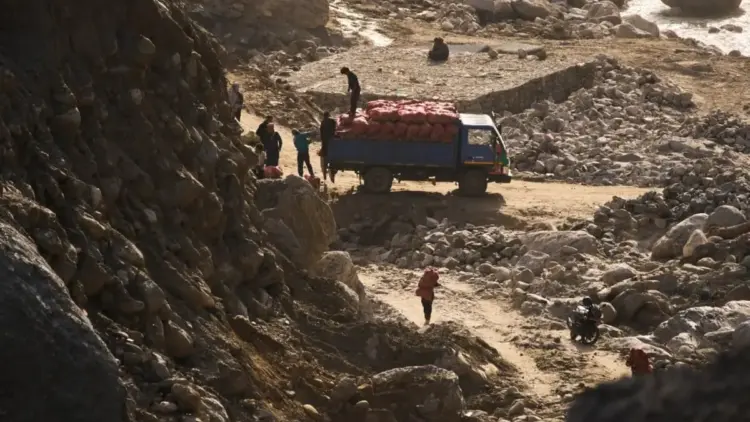
- August 2026: Nepal suffered one of its deadliest summers in recent memory. A massive rock-ice avalanche triggered devastating flash floods that swept through mountain settlements, claiming 1,400 lives and causing billions in infrastructure damage. This event served as the primary catalyst for Nepal’s submission to the UNFCCC.
- October 2026: Just weeks before the summit, Bhutan reported the collapse of a glacial lake, sending a torrent of water downstream. This followed a similar disaster in Sikkim, India, in late 2023, highlighting a pattern of increasing frequency and intensity in Glacial Lake Outburst Floods (GLOFs).
- November 12, 2026: At the start of COP31, Nepal, Bhutan, and Kyrgyzstan formally proposed the inclusion of a supplementary agenda item on mountain impacts. The proposal argued that mountain vulnerabilities have been historically "underrepresented within the core decision-making tracks."
- November 14, 2026: The proposal faced stiff resistance during technical sessions. Some parties expressed concern that a mountain-specific agenda would "diffuse" the focus on mitigation and the fulfillment of the Paris Agreement, while others balked at the potential for new financial obligations.
- November 16, 2026: Following the rejection of the formal item, the COP31 Presidency released the draft cover text. In a win for the mountain coalition, the text included specific mentions of glacier-dependent communities and proposed work programmes for resilience building.
Supporting Data: The Science of Overshoot and Irreversibility
The scientific backdrop to these negotiations is provided by two seminal reports released during the summit: the WMO’s "State of the Climate 2026 Update" and the International Cryosphere Climate Initiative’s (ICCI) report, "Overshoot and the Cryosphere."
According to the ICCI, the world is currently on a trajectory for 2.6°C of warming by the end of the century. For the cryosphere, this "overshoot" beyond the 1.5°C target is catastrophic. The report asserts that any warming beyond current levels will lead to losses that are "irreversible on human timescales."

Key data points include:
- Glacial Loss: If current emission levels persist, only 16% of the Himalayan glaciers are expected to remain by 2100.
- Water Insecurity: The HKH range provides freshwater to ten of Asia’s largest river systems. The loss of glaciers threatens the agricultural and energy security of nearly 2 billion people downstream.
- The 1.5°C Reality: Global sea surface temperatures have already risen by more than 1°C since the pre-industrial era. The IPCC has repeatedly stated that every fraction of a degree increases the likelihood of climatic extremes, such as the avalanches seen in Nepal.
- Financial Disparity: Nepal’s recovery from the August floods is estimated to cost $4.71 billion. To date, the UN’s Loss and Damage Fund has provisionally approved only $21.6 million—less than 0.5% of the required capital.
Official Responses: Leadership vs. Absence
The diplomatic atmosphere in Antalya has been one of "frustrated leadership." While small mountain nations have taken the lead, a noticeable vacuum exists among the world’s major emitters and regional powers.
Lila Pieters Yahia, Nepal’s UN Resident Coordinator, emphasized the strategic shift her country had to make. "When the standalone agenda item was not adopted, Nepal pivoted swiftly to mainstream cryosphere and mountain priorities across existing negotiating tracks," she stated. She called for "international solidarity" to match Nepal’s leadership with "commensurate action, investment, and cooperation."
The sentiment was echoed by Sonam Tashi, Bhutan’s Director of the Department of Environment and Climate Change. "Every glacier we lose threatens us twice: first as a flood, and later as a running river," Tashi told the assembly. He noted that Bhutan has gained 50 new glacial lakes in just five years due to meltwater, a ticking time bomb for the nation’s safety.

However, the "High Level Segment" co-hosted by Nepal and Bhutan saw a conspicuous absence of representatives from India, China, the United States, and Canada. Olivier Poivre d’Arvor, France’s Ambassador for the Poles and Maritime Affairs, pointed out the irony of the situation. "All countries, from the beginning to the end of the chain, are concerned," he said, noting that France and the UK were among the few Western powers present at the mountain-specific sessions.
The technical discussions of the COP’s Subsidiary Body revealed the underlying reasons for the agenda’s rejection. Some parties feared "additional financial, institutional, and human resource demands," while others insisted that any mountain engagement must be "non-prescriptive" and avoid creating "new obligations or reporting requirements."
Implications: A Future of Transboundary Risk
The failure to establish a formal mountain agenda, despite the inclusion of mountain priorities in the cover text, has profound implications for regional stability and global climate policy.
1. The Transboundary Crisis:
Cryosphere-related disasters do not respect national borders. A glacier collapse in Tibet can trigger a flood in India or Bangladesh. Experts argue that without a formal UNFCCC track, regional cooperation on "interoperable early warning systems" and "cooperative river-basin governance" will remain fragmented. The lack of a formal framework makes it harder to mandate the sharing of satellite and ground-based monitoring data between neighboring states.

2. The Finance Gap:
The "underfunded and under-resourced" status of mountain nations remains the greatest hurdle. By failing to secure a dedicated agenda item, mountain nations may find it harder to access "grant-based and concessional adaptation funding." The current reliance on the Loss and Damage Fund—which is already stretched thin—is insufficient for the multi-billion-dollar reconstruction efforts required after mountain disasters.
3. The Policy Failure of "Overshoot":
Pam Pearson, director of the ICCI, describes the current path as a "policy failure." The acceptance of a temperature "overshoot" assumes that the planet can "cool down" later. However, for glaciers and permafrost, there is no cooling down once the tipping point is reached. "The cryosphere is different," Pearson warns. "That should make overshoot in essence unacceptable."
4. Domestic Pressures in the Himalayas:
For India, which holds 17% of its landmass in the Himalayas, the implications are domestic and dire. States like Uttarakhand, Himachal Pradesh, and Arunachal Pradesh are already facing an uptick in avalanches and extreme weather. The absence of India from the high-level mountain talks at COP31 suggests a complex geopolitical calculation, but the physical reality of the mountains may soon force a change in diplomatic strategy.
As COP31 draws to a close on November 20, the final version of the cover text will determine whether the "mountain agenda" is a mere rhetorical inclusion or a genuine commitment to action. For the communities living in the shadow of the world’s highest peaks, the difference is a matter of survival. The melting ice of 2025 has provided the warning; Antalya will provide the verdict on whether the world is listening.