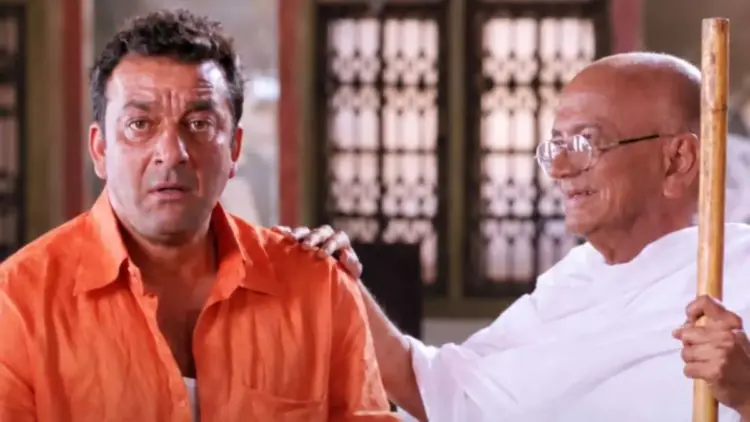
Mumbai, India – In a rare and profound revelation, acclaimed filmmaker Rajkumar Hirani has pulled back the curtain on a deeply impactful, yet ultimately excised, funeral scene from his 2006 cinematic landmark, Lage Raho Munna Bhai. The sequence, described in vivid detail by Hirani himself, offers a stark and poignant visual of Mahatma Gandhi’s martyrdom, complete with the unmistakable imprints of three bullets on his chest. This powerful imagery, Hirani explains, was a crucial element in shaping the film’s enduring message, even though the scene itself did not make it to the final cut.
The disclosure came during a candid conversation with long-time collaborator Abhijat Joshi on Komal Nahta’s podcast, "Game Changers: The Writer Series." The episode, which delved into the creative process behind some of Bollywood’s most beloved films, saw Hirani and Joshi reminisce about their collaborative journey, which has spanned over two decades and includes monumental successes like 3 Idiots, PK, Sanju, and Dunki. It was during their discussion of Lage Raho Munna Bhai, the film that first cemented their creative partnership, that Hirani unveiled the deleted scene.
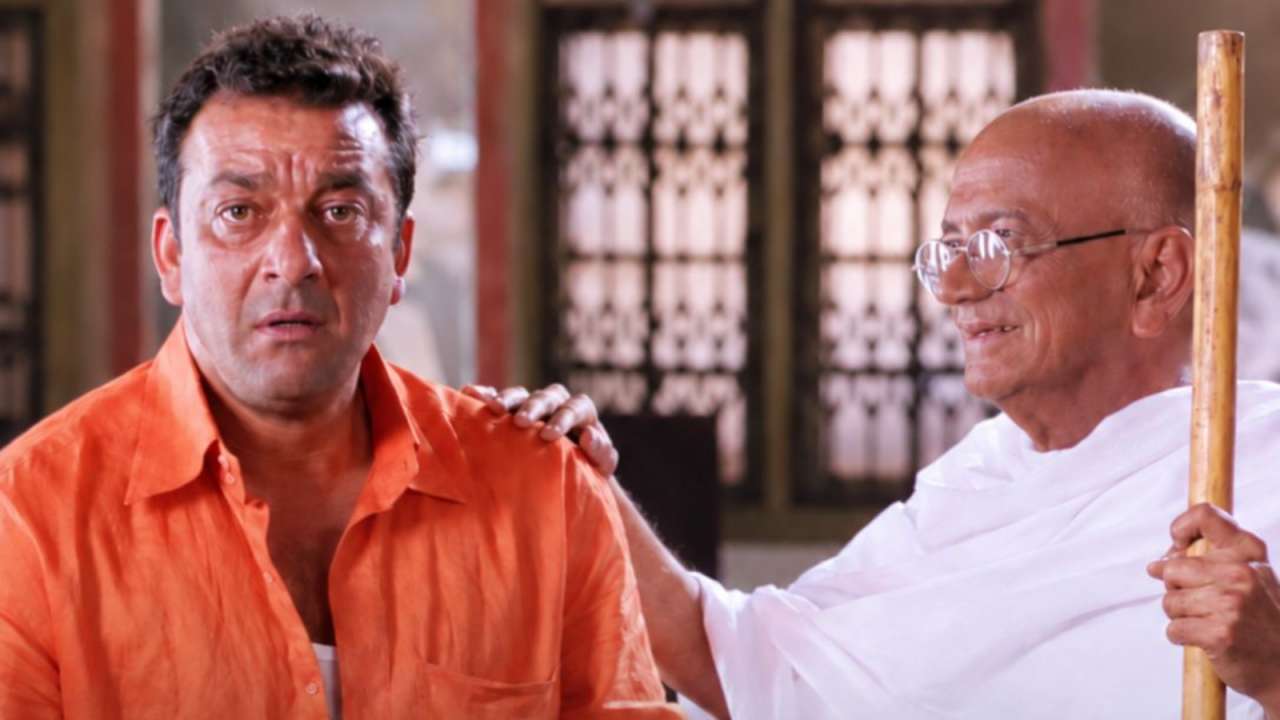
"That scene didn’t make it to the final cut but the thought behind the scene remained," Hirani stated, his voice resonating with the weight of memory. "In Lage Raho Munna Bhai, the residents of the old age home are protesting against Lucky Singh (Boman Irani). Abhijat wrote a scene that the security guards attack the old men and one of them gets so badly hit that he dies."
This harrowing incident served as the catalyst for the deeply emotional funeral sequence that followed. Hirani elaborated on the scene, painting a vivid picture of Munna Bhai (Sanjay Dutt) and Circuit (Arshad Warsi) grappling with the tragic loss. "At the funeral, Munna and Circuit are sad that one man has died," Hirani recounted. "Munna is angry and wants to kill Lucky. We then see Munna hallucinate that Bapu (Dilip Prabhavalkar) is standing at a distance. He tells Bapu that he would kill Lucky. Bapu replies, ‘You don’t kill him. Violence is not the solution.’"
The emotional crescendo of the scene arrived with a sudden gust of wind, a visual metaphor that dramatically shifted the focus. "Suddenly, there’s a strong gust of wind, due to which Bapu’s shawl flies in the air," Hirani described. "This is when viewers see three bullet marks on Bapu’s chest." This powerful visual starkly contrasted the peaceful visage of Gandhi, emphasizing the brutal reality of his assassination.
The dialogue that followed this revelation became the philosophical bedrock of the film. "At this, Munna says, ‘You were also killed.’ Bapu said, ‘Three bullets killed me, but they could not kill my thoughts’," Hirani shared, highlighting the line that would ultimately resonate with audiences worldwide. "The scene was there for the longest time in the script. But I didn’t want to walk that path and show that one old age home resident dies. Hence, we sacrificed the scene but the thought remained in the film."

The Genesis of a Collaborative Spark: A Scene That Defined a Partnership
The revelation of this deleted scene also sheds light on the very inception of the celebrated writing partnership between Rajkumar Hirani and Abhijat Joshi. Hirani disclosed that it was precisely this particular scene, penned by Joshi, that convinced him to bring the writer on board for Lage Raho Munna Bhai.
"When Abhijat first narrated this scene to me, I was so impressed by the depth and emotional resonance of his writing that I knew I had to work with him," Hirani admitted. "The way he envisioned Gandhi’s presence and the powerful message embedded within that scene was truly extraordinary. Even though it didn’t make it into the final film, its core idea was so potent that we knew we had to find a way to incorporate it."

This initial creative spark, born from a scene that explored the enduring power of non-violence in the face of brutality, laid the foundation for a collaboration that has consistently delivered films that are both commercially successful and socially relevant. The shared vision and mutual respect between Hirani and Joshi have been instrumental in crafting narratives that challenge audiences, provoke thought, and often, leave an indelible mark on the cultural landscape.
Chronology of a Creative Decision: From Script to Screen and Beyond
The journey of the deleted funeral scene from Lage Raho Munna Bhai offers a fascinating glimpse into the iterative process of filmmaking, where creative choices are constantly weighed and refined.

- Initial Conception and Writing: Abhijat Joshi, as part of the script development for Lage Raho Munna Bhai, conceived a powerful scene depicting the death of an elderly protestor due to violence instigated by Lucky Singh. This incident was intended to heighten the stakes and fuel Munna Bhai’s anger.
- The Funeral Scene: Following the death of the protestor, Joshi crafted an emotionally charged funeral sequence. In this scene, Munna Bhai hallucinates a presence of Mahatma Gandhi (Bapu). The core of this sequence was Gandhi’s dialogue, emphasizing that while his physical body was destroyed by three bullets, his ideology and thoughts remained invincible.
- Visualizing the Martyrdom: A key visual element within this scene was the depiction of three bullet marks on Gandhi’s chest, a stark reminder of his assassination. This imagery was intended to create a profound visual impact, driving home the message of non-violence triumphing over brute force.
- Screenplay Inclusion: The funeral scene, along with its poignant dialogue, remained a significant part of the script for a considerable duration during the pre-production phase. It was considered a pivotal moment in Munna Bhai’s emotional arc and his understanding of Gandhi’s philosophy.
- Filmmaking Dilemma: During the filmmaking process, Rajkumar Hirani, while appreciating the scene’s thematic strength, faced a directorial dilemma. He felt that explicitly showing the death of an elderly character in the film, even within the context of a protest, might steer the narrative in a direction he did not intend and potentially overshadow the film’s broader message. The visual of the bullet marks, while powerful, also presented a sensitive aspect of Gandhi’s assassination that Hirani wanted to handle with extreme care.
- The Decision to Sacrifice: After careful consideration, Hirani made the difficult decision to omit the entire funeral sequence. The rationale was to avoid a specific instance of death and its direct aftermath, focusing instead on the overarching principle of non-violence as a guiding force.
- Preserving the Core Message: Crucially, the thematic essence and the powerful dialogue of the deleted scene were not lost. Hirani and Joshi meticulously ensured that the central idea – that Gandhi’s ideology transcended the violence inflicted upon him – was retained and integrated into the film’s climax.
- Climactic Integration: The memorable line, "Three bullets killed me, but they could not kill my thoughts," was ultimately delivered by Bapu himself in the film’s climax, addressing the audience directly. This allowed the powerful message to reach viewers without the need for the explicit visual of the funeral and the bullet-ridden chest, thus maintaining the film’s overall tone and intent.
- Film’s Release and Legacy: Lage Raho Munna Bhai was released in 2006 and achieved immense critical and commercial success, garnering four National Film Awards. The film’s unique blend of comedy, social commentary, and its profound exploration of Gandhian principles through a modern lens cemented its status as a cult classic. The decision to retain the core message of the deleted scene, albeit in a different context, is a testament to the filmmakers’ commitment to impactful storytelling.
Supporting Data: The Enduring Impact of ‘Lage Raho Munna Bhai’
The decision to omit the funeral scene, while sacrificing a potent visual, ultimately amplified the film’s core message of non-violence and the enduring power of Mahatma Gandhi’s ideals. The enduring success and critical acclaim of Lage Raho Munna Bhai serve as testament to the efficacy of this creative choice.
- Critical Acclaim: Upon its release, Lage Raho Munna Bhai was lauded by critics for its innovative narrative, strong performances, and its ability to seamlessly blend humor with profound social commentary. Reviewers frequently highlighted the film’s ability to make Gandhian principles relatable to a contemporary audience.
- Commercial Success: The film was a significant box office success, performing exceptionally well both domestically and internationally. Its broad appeal transcended demographic boundaries, resonating with audiences of all ages.
- National Film Awards: Lage Raho Munna Bhai garnered significant accolades, including four prestigious National Film Awards. These included Best Popular Film Providing Wholesome Entertainment, Best Screenplay (Adapted) for Hirani and Joshi, Best Dialogue for Joshi, and Best Actor for Sanjay Dutt. This recognition underscored the film’s impact and artistic merit.
- Cultural Resonance: The film’s central premise, where Munna Bhai interacts with the spirit of Mahatma Gandhi, sparked widespread discussions about non-violence, honesty, and ethical conduct in everyday life. The film’s dialogues, particularly those delivered by Gandhi, became widely quoted and continue to hold relevance.
- The "Gandhigiri" Phenomenon: The film popularized the term "Gandhigiri," a neologism that encapsulated the film’s unique approach to problem-solving through non-violent means and principles inspired by Gandhi. This term entered the popular lexicon, reflecting the film’s deep cultural impact.
- Influence on Social Discourse: Lage Raho Munna Bhai is often cited as a film that successfully reignited interest in Gandhian philosophy among younger generations. It demonstrated that the principles of truth and non-violence could be presented in an engaging and accessible manner, prompting introspection and dialogue on social issues.
- Box Office Figures (Approximate): While precise figures can vary, Lage Raho Munna Bhai is estimated to have grossed over ₹120 crore worldwide, making it one of the highest-grossing Indian films of 2006. This commercial success further validated the film’s broad appeal and the resonance of its message.
The fact that a deleted scene, even one as powerful as the one described by Hirani, did not diminish the film’s impact, and in fact, its core message was successfully integrated into the climax, speaks volumes about the strength of the script and Hirani’s directorial vision. The decision to prioritize the overarching theme of non-violence over a specific, potentially jarring, visual representation of martyrdom underscores a sophisticated understanding of cinematic storytelling and audience engagement.

Official Responses and Interpretations
While there have been no "official" statements from the filmmakers regarding the specific deleted scene since its revelation, the subsequent discussion on the podcast and the existing critical discourse around Lage Raho Munna Bhai provide substantial insight into their intentions and interpretations.
Rajkumar Hirani’s Rationale:
Hirani’s explanation on the podcast is the primary source of information regarding the deleted scene. His stated reason for its omission – "I didn’t want to walk that path and show that one old age home resident dies. Hence, we sacrificed the scene but the thought remained in the film" – highlights a deliberate directorial choice. He aimed to keep the narrative focused on the positive and constructive application of Gandhian principles, rather than dwelling on the graphic consequences of violence within a specific subplot. The visual of the bullet marks, while historically accurate and thematically potent, was deemed too direct and potentially disturbing for the film’s overall tone, which sought to inspire rather than shock.

Abhijat Joshi’s Contribution:
As the writer of the scene, Joshi’s role in conceiving the powerful dialogue and the underlying message is crucial. His contribution was recognized with a National Award for Best Dialogue. The fact that the most impactful lines from this deleted scene were retained and delivered by Gandhi himself in the climax underscores the shared vision between Hirani and Joshi. They recognized the inherent power of the message and worked collaboratively to ensure its survival within the film’s narrative architecture.
Critical and Audience Reception:
The film’s overwhelmingly positive reception suggests that the filmmakers made the right call in preserving the spirit of the scene while omitting the visual. Critics and audiences alike embraced the film’s optimistic and inspiring portrayal of Gandhian ideals. The success of "Gandhigiri" as a concept further indicates that the film’s messaging resonated deeply without needing the explicit depiction of Gandhi’s violent end within the film’s narrative progression. The audiences connected with the idea of Gandhi and his teachings, rather than a literal representation of his assassination.

Thematic Resonance:
The deleted scene, with its visual of the bullet marks, would have undoubtedly added a layer of stark realism to the film’s exploration of violence and non-violence. However, by choosing to integrate the dialogue into the climax, Hirani and Joshi managed to convey the same message in a way that felt more universal and less tied to a specific, albeit tragic, event. The focus shifted from the act of assassination to the endurance of Gandhi’s philosophy, which is arguably a more potent and empowering message for a film that aims to inspire positive change.
Implications and Enduring Relevance
The revelation of this deleted scene from Lage Raho Munna Bhai carries significant implications, both for the understanding of the film’s creative process and for the enduring relevance of its core themes. It underscores the meticulous nature of filmmaking, where even the most powerful moments can be sacrificed for the greater good of the narrative’s overall impact.

A Deeper Appreciation of Filmmaking:
The disclosure provides audiences with a behind-the-scenes glimpse into the complex decision-making that shapes a film. It highlights that creative choices are not always about what is "good" but about what is "best" for the story and its intended message. The fact that Hirani and Joshi were willing to part with such a potent scene, while meticulously preserving its essence, speaks volumes about their commitment to thematic coherence and narrative integrity. This insight can foster a deeper appreciation for the art of filmmaking and the collaborative efforts involved.
The Enduring Power of Ideals Over Violence:
The core message of the deleted scene – that Mahatma Gandhi’s thoughts and ideals outlived the bullets that killed him – remains profoundly relevant. In a world still grappling with conflict and violence, this message serves as a powerful reminder of the resilience of humanistic principles. The film, by extension, continues to advocate for the supremacy of non-violence, ethical conduct, and the pursuit of truth as potent tools for societal transformation.

The ‘Gandhigiri’ Legacy:
The film’s popularization of "Gandhigiri" as a method of non-violent protest and problem-solving continues to inspire. The deleted scene, by illustrating the ultimate consequence of violence against Gandhi, further reinforces the necessity of his methods. It serves as a stark counterpoint, emphasizing why his philosophy is not just a historical ideal but a practical approach to navigating complex human interactions and societal challenges.
The Nuance of Visual Storytelling:
Hirani’s decision to remove the visual of the bullet marks suggests a nuanced understanding of how to convey powerful messages. While the visual would have been undeniably impactful, its directness might have overshadowed the film’s more hopeful and inspirational tone. By opting for a more symbolic integration of the message, the filmmakers ensured that the audience was left with a feeling of empowerment and a commitment to Gandhi’s ideals, rather than dwelling solely on the tragedy of his death.

A Testament to Collaborative Genius:
The revelation also solidifies the reputation of Rajkumar Hirani and Abhijat Joshi as master storytellers. Their ability to craft narratives that are both commercially successful and thematically rich, and their willingness to refine and perfect their work, is evident in the enduring legacy of Lage Raho Munna Bhai. The deleted scene, though unseen by most, played a crucial role in shaping the film’s ultimate success, showcasing the strength of their collaborative genius.
In conclusion, the unearthed funeral scene from Lage Raho Munna Bhai is more than just a discarded piece of cinematic history; it is a powerful testament to the enduring strength of ideas over violence and a profound illustration of the creative rigor that defines Rajkumar Hirani’s filmmaking. It reminds us that even in the shadows of deleted scenes, the core of a powerful message can find its way into the light, continuing to inspire and resonate with audiences across generations.