Introduction: A Fragile Frontier
In the northern reaches of West Bengal, where the Teesta River unfurls its braided channels across the plains, a precarious drama of survival unfolds every season. On the "chars"—temporary sandbars formed by the river’s silt—a community of migrant farmers engages in a high-stakes gamble with nature. These farmers, often displaced by erosion elsewhere, cultivate fertile but ephemeral lands that sit directly in the ancient migratory paths of the Asian elephant (Elephas maximus).
What was once a landscape defined by the rhythmic ebb and flow of water has become a frontline for one of India’s most complex human-wildlife conflicts. As the Teesta shifts its course, reshaping the geography of the region, it brings two desperate groups into forced proximity: landless farmers seeking a livelihood and elephants searching for dwindling fodder. This report explores the nuances of this encounter, the systemic failures in compensation, and the ecological pressures driving both species toward a breaking point.
1. Main Facts: The Dynamics of the Teesta Chars
The conflict on the Teesta sandbars is not a static one; it is as fluid as the river itself. Understanding the situation requires an analysis of the geographical and socio-economic factors at play.
The Geography of Marginalization
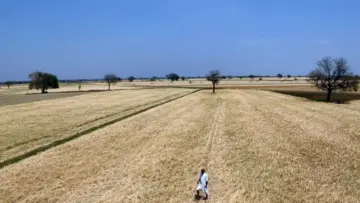
The Teesta River, originating in the Himalayas, carries immense sediment loads. As it enters the plains of Jalpaiguri and Cooch Behar, it creates "chars"—islands of silt and sand. These landmasses are highly fertile due to the mineral-rich deposits but are geographically unstable. They can vanish in a single monsoon season, only to reappear miles downstream a year later.
The Human Element
The farmers inhabiting these chars are predominantly linguistic and religious minorities or those displaced by "river erosion" (known locally as nadi bhangan). With no permanent titles to land (pattas), they are forced into a nomadic lifestyle, following the receding waters to plant seasonal crops such as maize, paddy, mustard, and various vegetables.
The Megaherbivore Presence
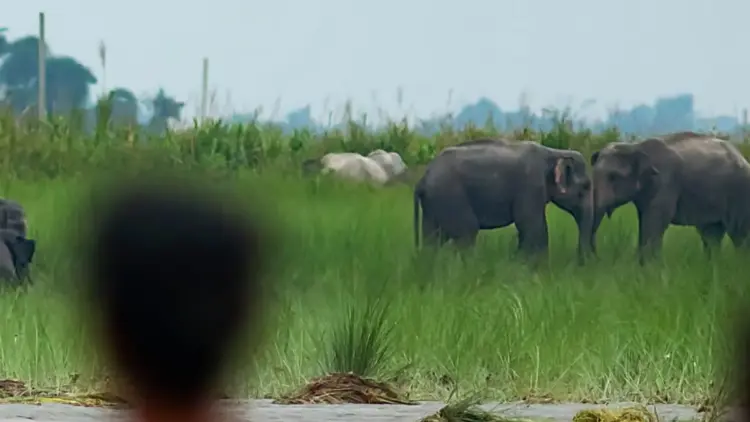
The forests of North Bengal—including Gorumara National Park, Chapramari Wildlife Sanctuary, and the Baikunthapur Division—are home to a significant population of Asian elephants. These forests are fragmented by tea gardens, highways, and railway lines. The Teesta riverbed serves as a natural corridor for these herds as they move between forest patches. The introduction of high-calorie crops like maize on the sandbars has turned these transit routes into permanent feeding grounds.
2. Chronology: A Seasonal Cycle of Encounter
The conflict follows a predictable yet devastating seasonal rhythm, dictated by the hydrological cycle of the Teesta.
Phase I: The Monsoon Retreat (June – September)
During the monsoon, the Teesta is a raging torrent. The chars are mostly submerged, and farmers retreat to higher ground or embankments. Elephants remain within the denser forest cover of the foothills. At this stage, the conflict is minimal as the physical landscape separates the two groups.
Phase II: The Emergence of the Chars (October – November)
As the rains cease and the water level drops, new sandbars emerge. Farmers quickly move in to claim patches of land, clearing the tall elephant grass (Saccharum ravennae) to plant winter crops. Simultaneously, elephants begin to venture out of the forests, following the smell of fresh vegetation and the traditional migratory routes that the riverbed provides.
Phase III: The Peak Conflict (December – March)
This is the harvest season for maize and winter vegetables. Maize, in particular, is an "attractant crop." It provides more calories in a single night of raiding than an elephant could forage in a week in the wild. During these months, elephant incursions become nightly occurrences. Farmers build makeshift bamboo watchtowers (manchas) and stay awake through the freezing nights, using torches and firecrackers to ward off herds.
Phase IV: The Pre-Monsoon Scarcity (April – May)
As the heat rises and water sources inside the forests dry up, elephants return to the Teesta not just for food, but for water. This period sees heightened aggression as both humans and elephants compete for access to the river’s dwindling channels before the monsoon once again resets the cycle.
3. Supporting Data: The Cost of Coexistence
The impact of human-elephant conflict (HEC) in North Bengal is among the highest in India, and the Teesta chars represent a significant portion of this data.

Economic Devastation
- Crop Loss: A single elephant can consume up to 150kg of wet food a day. A herd of 20 elephants can decimate a five-acre maize field in less than three hours. For a migrant farmer, this represents a loss of their entire annual investment, often funded by high-interest informal loans.
- Infrastructure Damage: While houses on the chars are often temporary huts made of jute sticks and thatch, their destruction leaves families homeless and exposed to the elements.
Mortality and Morbidity
- Human Toll: In the wider North Bengal region, human fatalities due to elephant encounters average between 40 to 60 per year. On the chars, the lack of medical facilities and the difficulty of navigating the river at night mean that even non-fatal injuries often lead to permanent disability or death due to delayed treatment.
- Elephant Toll: The conflict is equally lethal for the pachyderms. Retaliatory killings, though rare on the chars compared to tea gardens, do occur. More common are accidental deaths caused by illegal electric fencing—farmers sometimes hook wires to overhead lines to protect their crops, creating lethal traps for elephants.
The Compensation Gap
A critical data point is the "Zero-Compensation" reality for char farmers. Because these sandbars are often classified as "un-surveyed" or "forest land," the residents lack legal land deeds. Current West Bengal Forest Department policies require land ownership documents to process crop compensation claims. Consequently, nearly 90% of losses on the Teesta chars go unrecorded and uncompensated.
4. Official Responses: Policy Gaps and Field Challenges
The response from state authorities has been characterized by a mix of logistical difficulty and bureaucratic hurdles.
The Forest Department’s Dilemma
Forest officials in the Jalpaiguri and Terai divisions acknowledge the severity of the issue but cite limited resources. They deploy "Hulla Parties"—specialized teams of local youth trained to drive elephants back into the forest using drums and torches. However, the terrain of the Teesta, with its soft sand and multiple water channels, makes it nearly impossible for forest vehicles to reach the conflict zones in time.
The Land Rights Impasse
The District Administration maintains that many of the settlements on the chars are "encroachments." From an official standpoint, providing compensation for crops grown on "illegal" land would set a legal precedent that the state is unwilling to establish. This leaves the farmers in a legal limbo: they are recognized as citizens during elections but treated as ghosts when it comes to disaster relief or wildlife damage.
Technological Interventions
There have been sporadic attempts to install solar-powered fences along the forest fringes bordering the Teesta. However, these are often bypassed by elephants, who have learned to knock down the non-electrified posts using trees or their tusks. Furthermore, the shifting nature of the river means that any permanent fencing is likely to be washed away during the next monsoon.
5. Implications: A Future on the Edge
The situation on the Teesta chars is a microcosm of a larger ecological crisis. The implications of this ongoing conflict extend far beyond the immediate loss of crops.
Ecological Fragmentation
The conversion of the Teesta riverbed into a patchwork of farms is closing one of the last remaining corridors for elephant movement. When elephants cannot move freely between forest patches to maintain genetic diversity, the long-term health of the species is at risk. The "squeezing" of elephants into smaller and smaller pockets of forest increases the frequency of "crop-raiding" behavior, as natural forage becomes insufficient.
Social Instability and Migration
The constant threat of elephant attacks, combined with the lack of state support, is creating a class of "doubly displaced" people. These farmers were first displaced by the river and are now being displaced by wildlife. This leads to increased migration to urban centers like Siliguri or Kolkata, where they often end up in slums, adding to the urban poverty crisis.
The Climate Change Multiplier
Climate change is making the Teesta’s flow more erratic. Intense rainfall events lead to more frequent and unpredictable flooding, which in turn creates more shifting chars. As traditional agriculture becomes more precarious, the desperation of the farmers increases, leading them to take greater risks by encroaching further into known elephant habitats.
The Need for a Humanitarian Approach
The current "fortress conservation" model—which prioritizes forest boundaries and legal land titles—is failing on the Teesta. Experts argue for a "Landscape Approach" that recognizes the riverbed as a shared space. Potential solutions include:
- Community-Based Insurance: Moving away from state-run compensation to community-managed insurance pools that do not require land titles.
- Alternative Cropping: Encouraging farmers to grow crops that elephants find unpalatable, such as chili, lemon, or ginger, which can provide income without attracting herds.
- Early Warning Systems: Utilizing SMS-based alerts and drone monitoring to give farmers enough time to protect their fields without resorting to dangerous face-to-face confrontations.
Conclusion
The shifting sandbars of the Teesta are more than just a geographic phenomenon; they are a site of profound human and animal suffering. As long as the policy framework remains rigid and the land remains contested, the nightly battles between the farmers and the elephants will continue. Resolving the conflict requires a shift in perspective—from seeing the char dwellers as encroachers to seeing them as essential stakeholders in a shared, albeit fragile, ecosystem. Without such a shift, the "Grey Giants" and the migrant farmers are both destined to lose their place in the sun.