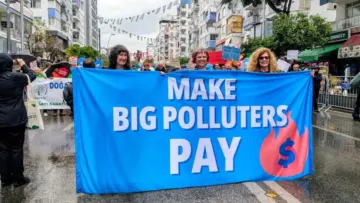
The summit, co-hosted by Türkiye and Australia, has seen a flurry of new bureaucratic frameworks and technical initiatives. However, as ministers arrive for the high-level segment of the second week, they find a massive "finance gap" that threatens to derail the proceedings. Developing nations, led by voices from the Global South, argue that without a massive infusion of public capital from wealthy, industrialized states, the goals of the Paris Agreement will remain a mathematical impossibility.
Main Facts: A Crisis of Capital and Commitment
The central objective of the Antalya summit was to finalize the "New Collective Quantified Goal" (NCQG) on climate finance. This goal is intended to replace the previous $100 billion annual target, which was met late and was widely criticized as insufficient. The stakes were set early by UN Secretary-General António Guterres, who delivered a blistering assessment during the leaders’ summit on November 11.

"The brutal truth is that the climate crisis is outrunning us," Guterres told the assembled heads of state. He noted that global emissions hit record highs in 2025, and the world is now almost certain to breach the 1.5°C warming limit established in 2015. While the Secretary-General insisted that the "overshoot" could be minimized, he made it clear that speed requires liquidity.
The current negotiations are stalled on three fronts: the total amount of money, the form that money takes (grants vs. loans), and the timeline for delivery. Developing nations are pushing for a commitment of at least $1.3 trillion annually by 2035. In contrast, developed nations—wrestling with domestic inflation and geopolitical instability—have tentatively agreed to a core goal of $300 billion, with the remainder expected to come from private investment and "mobilized" sources.
Chronology: The First Week in Antalya
The summit opened with a sense of urgency, but the momentum has shifted toward technical maneuvering rather than political breakthroughs.

- November 10-11: The Leaders’ Summit. The conference began with high-level rhetoric. Leaders from Türkiye and Australia emphasized a pragmatic approach, focusing on "practical action." However, the absence of several key G7 leaders cast a shadow over the proceedings, signaling a potential lack of political will at the highest levels of the world’s largest economies.
- November 12: Launch of the "Climate Implementation Bridge." Host nation Türkiye unveiled its flagship initiative, naming five pilot countries: Ethiopia, Fiji, Indonesia, Pakistan, and Uzbekistan. The "Bridge" is designed to provide technical expertise to help these nations turn their national climate plans into "bankable" projects that can attract international investment.
- November 13: The Global Implementation Accelerator. Brazil, Türkiye, and Australia formally established the Global Implementation Accelerator. This mechanism aims to bring together governments and financial institutions to scale up specific climate solutions. While welcomed, critics quickly pointed out that the Accelerator is a "matchmaking" service rather than a new source of funding.
- November 14-15: Technical Deadlock. Negotiators moved into closed-door sessions to debate the text of the finance agreement. Friction emerged over the "35-by-35" electrification pledge—a Turkish-led effort to ensure 35% of global energy use comes from electricity by 2035. While popular, fossil-fuel-dependent nations raised concerns about the lack of a clear mandate for renewable sources within that electricity mix.
Supporting Data: The Widening Adaptation Gap
The urgency of the negotiations is underscored by the 2026 Adaptation Gap Report released by the UN Environment Programme (UNEP) during the summit. The data presents a grim reality for developing nations:
- Funding Shortfall: Developing countries will require approximately $305 billion annually by 2035 just for adaptation—infrastructure like sea walls, drought-resistant crops, and early warning systems.
- Current Flow: International public finance for adaptation reached only $31.7 billion in 2024. This represents a meager $1 billion increase from the previous year, a growth rate that UNEP describes as "woefully inadequate."
- The Debt Trap: According to UN climate chief Simon Stiell, many vulnerable nations are spending more on debt servicing than on climate resilience. He noted that the cost of borrowing for climate projects is often three to four times higher for developing nations than for wealthy ones, creating a "cycle of disaster and debt."
- Emission Realities: Despite the 2023 Dubai agreement to "transition away from fossil fuels," global coal and gas consumption remained resilient through 2025, complicating the 1.5°C pathway.
Official Responses: Voices from the Global South and North
The rhetoric in Antalya has highlighted a deep ideological divide between the world’s major emitters and those suffering the most from their emissions.
India’s Stance:
India has emerged as a primary advocate for the Global South. Environment Ministry Secretary Narendra Bhooshan delivered a firm statement on November 10, asserting that "public finance from developed countries remains central to catalysing climate action." India’s position is rooted in the principle of "Common But Differentiated Responsibilities" (CBDR). New Delhi argues that since developed nations are historically responsible for the majority of atmospheric CO2, they must bear the financial burden of the transition. India also emphasized that national circumstances must dictate the speed of the fossil fuel phase-out, rejecting "one-size-fits-all" sectoral targets.

The UN Perspective:
UN Climate Chief Simon Stiell has used the summit to call for a "fundamental transformation" of the global financial architecture. On November 13, he warned that climate finance should not be viewed as "charity" but as an essential investment in global stability. "Climate finance must help countries break free," Stiell said, referring to the "debt-disaster cycle" where a single hurricane or flood can wipe out years of economic growth and force a country to take on high-interest loans to rebuild.
The Brazilian Push:
President Luiz Inácio Lula da Silva has focused heavily on the Tropical Forest Forever Facility (TFFF). Brazil’s strategy is to create a massive endowment that pays countries to keep their forests standing. While the TFFF received further political support in Antalya, the actual capital commitments to the fund remain well below the levels needed to stop deforestation in the Amazon and Congo basins.
Implications: What Failure in Antalya Would Mean
As the summit enters its final days, the implications of a weak outcome are profound. If governments fail to agree on a robust finance package, the credibility of the UN climate process itself may be at risk.

1. The Erosion of Trust:
The "Belém Mission to 1.5," launched at COP30, relies on countries submitting more ambitious National Climate Plans (NDCs). However, developing nations have made it clear: they will not submit more ambitious plans if there is no guarantee of the finance required to implement them. A failure in Antalya could lead to a "stagnation of ambition" exactly when the world needs an acceleration.
2. Economic Instability:
Without adequate funding for adaptation, climate-related disasters will continue to disrupt global supply chains. The "35-by-35" electrification pledge, while a step forward, risks becoming a hollow victory if the transition is powered by coal, leading to "carbon lock-in" for emerging economies.
3. The Fossil Fuel Stalemate:
The divide over the transition away from fossil fuels remains the summit’s "elephant in the room." Some nations are pushing for a clear timeline to end coal and gas subsidies, while others, particularly those with significant hydrocarbon reserves, argue that energy security and economic development must come first. If Antalya cannot provide a clear political signal on the end of the fossil fuel era, the 1.5°C goal may be officially declared dead by the time the next summit begins.

Conclusion: The Test of the Second Week
The first week in Antalya has been a masterclass in "building the machinery"—creating accelerators, bridges, and missions. But as the UN Secretary-General noted, machinery is useless without the fuel of finance. The "Antalya Test" will not be measured by the number of initiatives launched, but by the hard numbers in the final agreement.
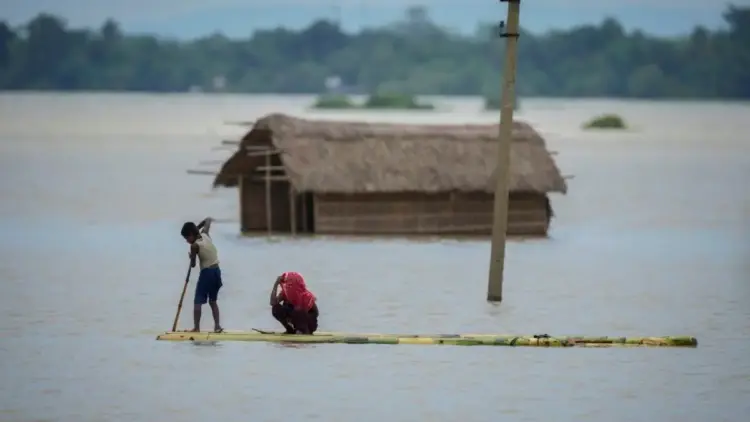
Ministers now face a choice: they can continue the cycle of incremental increases and vague promises, or they can deliver the "turning point" the summit was billed to be. For the boy on the banana raft in flood-stricken Assam, or the farmers in the drought-parched fields of Ethiopia, the technicalities of the "Global Implementation Accelerator" matter far less than whether the world’s wealthiest nations finally decide that the cost of inaction is higher than the cost of the cure.