

Introduction: A Strong Start to the Second Quarter
Hyundai Motor India Limited (HMIL), the nation’s second-largest car manufacturer, has reported a robust performance for April 2026, underscored by a significant year-on-year (YoY) growth of 17%. As the Indian automotive landscape continues its decisive shift toward Sports Utility Vehicles (SUVs), Hyundai has leveraged its extensive portfolio to capture a substantial share of the domestic market. With a total of 51,902 units dispatched to dealers across the country, the company has demonstrated resilience in a highly competitive environment, even as it navigates the complexities of a fluctuating month-on-month (MoM) demand cycle.
The April 2026 figures highlight a clear narrative: while traditional segments like sedans and entry-level hatchbacks face stagnation, the SUV "trinity"—comprising the Creta, Venue, and Exter—remains the bedrock of Hyundai’s commercial success. However, the data also reveals emerging challenges, particularly in the midsize SUV segment, where increased competition is beginning to test the long-standing dominance of the Hyundai Creta.
Main Facts: Domestic Performance and Segment Trends
The headline figure for April 2026 is the 51,902 units sold in the domestic market. Comparing this to the 44,374 units sold in April 2025, Hyundai has achieved a healthy 17% YoY increase. This growth is particularly impressive given the maturing nature of the Indian passenger vehicle market and the high base set in previous years.
However, the month-on-month trajectory tells a different story. In March 2026, Hyundai recorded sales of 55,064 units. The subsequent decline to 51,902 units in April represents a 6% MoM dip. Industry analysts suggest this contraction is largely seasonal, often attributed to the "year-end rush" in March where buyers take advantage of fiscal year-end incentives, followed by a cooling-off period in April.
The SUV Powerhouse
The SUV segment accounted for over 60% of Hyundai’s total domestic volume. The Hyundai Creta, despite a slight dip in its individual numbers, remains the flagship volume generator. The Venue and Exter followed closely, showcasing the brand’s ability to cater to diverse price points within the SUV category—from micro-SUVs to premium midsize offerings.
Chronology: The Evolution of Sales (April 2025 – April 2026)
To understand Hyundai’s current position, one must look at the developments over the past twelve months. In April 2025, Hyundai was still solidifying its "SUV-first" strategy. At that time, the Exter was a relatively new entrant, and the Venue was maintaining steady but modest growth.
By late 2025, the market saw a surge in competition. Brands like Tata Motors, Mahindra & Mahindra, and Maruti Suzuki launched refreshed versions of their competing models (Nexon, XUV300/XUV 3XO, and Brezza). In response, Hyundai focused on feature-rich updates and aggressive marketing for the Venue and Exter.

As we entered early 2026, the Creta underwent a strategic realignment in its variant distribution to counter new rivals like the Honda Elevate and the updated Kia Seltos. By March 2026, Hyundai hit a peak of 55,064 units, driven by festive demand and the closing of the financial year. The April 2026 results represent the first "normal" month of the new fiscal year, providing a realistic baseline for the company’s performance in the 2026-27 cycle.
Supporting Data: A Detailed Model-wise Breakdown
The performance of individual models provides a granular view of consumer preferences and market shifts.
1. The Midsize Leader: Hyundai Creta
The Creta continues to be the "crown jewel" of the Hyundai lineup. In April 2026, it clocked 15,291 units. While it remains the segment leader, it recorded a 10% YoY decline (from April 2025) and a 14% MoM decline. This suggests that while the Creta brand is exceptionally strong, the midsize SUV segment is becoming saturated with high-quality alternatives, forcing Hyundai to innovate further to maintain its market share.
2. The Compact Specialist: Hyundai Venue
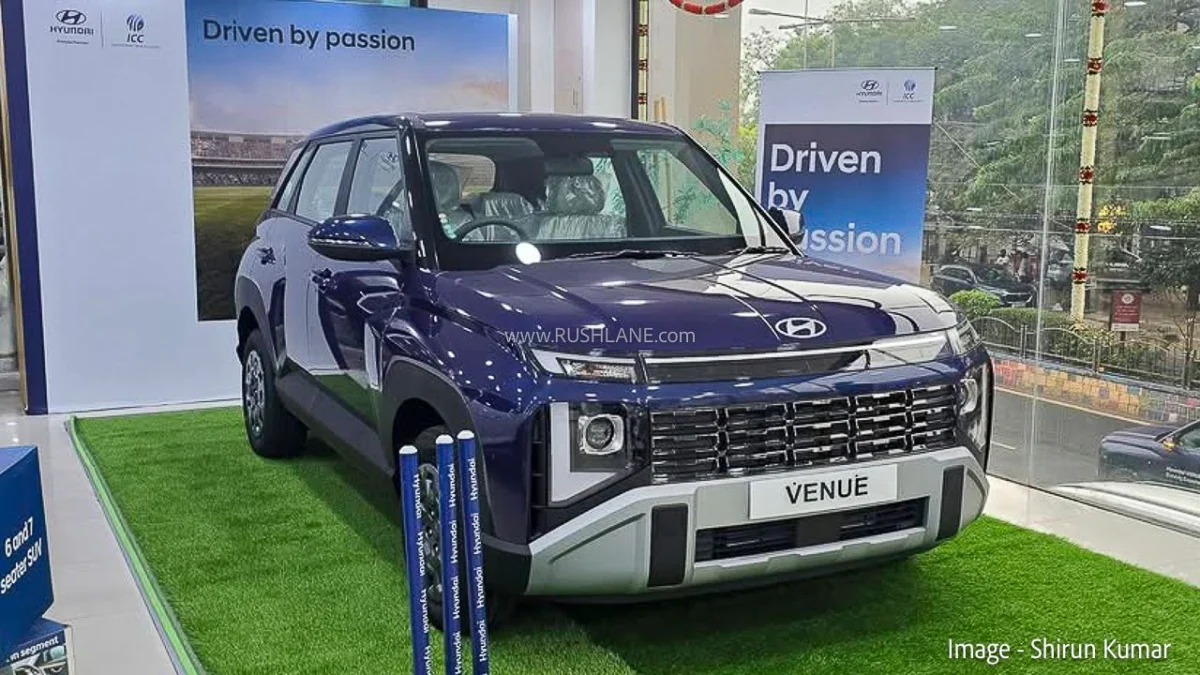
The Venue emerged as the standout performer of the month. Selling 12,420 units, it posted a staggering 56% YoY growth compared to the 7,953 units sold in April 2025. Furthermore, it was one of the few models to show MoM growth, increasing by 11% over March 2026. This indicates a renewed consumer interest in the compact SUV segment, likely driven by the Venue’s balance of technology, size, and pricing.
3. The Entry-Level Disruptor: Hyundai Exter
The Exter has rapidly become a volume pillar for Hyundai. With 8,096 units sold in April 2026, it registered a 49% YoY growth and a 25% MoM increase. Its success highlights the Indian consumer’s preference for SUV styling even at entry-level price points, effectively cannibalizing sales from traditional hatchbacks.
4. Hatchbacks and Sedans: A Mixed Bag
- Hyundai i20: The premium hatchback remains a steady contributor with 5,624 units (60% YoY growth).
- Hyundai Aura: The compact sedan saw 4,587 units sold (9% YoY growth), but suffered a sharp 31% MoM decline, reflecting the volatility of the fleet and entry-level sedan market.
- Grand i10 NIOS: With 4,149 units, sales were nearly flat YoY, but down 18% MoM.
- Hyundai Verna: The premium sedan segment continues to shrink. The Verna sold 865 units, down 14% YoY and 38% MoM.
5. Premium and EV Segments
- Hyundai Alcazar: The three-row SUV sold 850 units, a 16% YoY decline.
- Hyundai IONIQ 5: The flagship electric vehicle saw 20 units sold, a slight improvement over the 16 units sold in the previous year, maintaining its niche as a premium EV offering.
- Hyundai Tucson: Interestingly, the Tucson recorded zero sales in April 2026, suggesting either a temporary stock-out, a transition to a new model year, or a strategic pause in dispatches.
Official Responses and Strategic Intent
While official statements from Hyundai executives typically highlight the "customer-centric" approach, internal strategies suggest a pivot toward premiumization and electrification. Sources close to the company indicate that Hyundai is not overly concerned by the MoM dip, viewing it as a stabilization period.
"Our focus remains on the ‘SUV Life’ campaign," an industry insider noted. "The growth in Venue and Exter sales validates our decision to double down on the sub-midsize SUV categories. While the Creta faces more competition than ever, it remains the benchmark for the industry."
Hyundai has also hinted at optimizing its production lines at its Chennai and newly acquired Talegaon plants to ensure that high-demand models like the Venue and Exter have shorter waiting periods, which has been a pain point for customers in the past.
Implications: What Lies Ahead for Hyundai?
The April 2026 sales data carries several long-term implications for Hyundai Motor India and the broader automotive industry.

1. The "SUV-ification" of the Portfolio
The decline in Verna and Grand i10 NIOS numbers, contrasted with the surge in Exter and Venue sales, suggests that Hyundai may eventually move toward an almost exclusively SUV-and-Crossover-led lineup. The hatchback, once the mainstay of the Indian middle class, is being relegated to a secondary role.
2. Filling the "White Spaces"
Hyundai has confirmed the arrival of two new SUVs by March 2027. One is a midsize crossover, reportedly based on the European Bayon. This model is strategically vital; it is intended to sit between the Venue and the Creta. By filling this gap, Hyundai aims to capture buyers who find the Venue too small but the Creta too expensive.
3. The Electric Offensive
The second planned model is a mass-market compact electric SUV. As Tata Motors continues to dominate the EV space with the Nexon EV and Punch EV, Hyundai’s upcoming electric crossover will be its most significant move toward volume-based electrification. This model will likely leverage the localization of battery components to achieve a competitive price point.
4. Competitive Pressures
The 10% YoY dip in Creta sales is a warning sign. With rivals like the Maruti Suzuki Grand Vitara and the Toyota Hyryder offering strong hybrid options—a technology Hyundai currently lacks in India—the company may need to reconsider its powertrain strategy. Whether Hyundai introduces its own hybrids or skips straight to a more aggressive EV lineup remains a critical question for the next 24 months.
5. Market Consolidation
Hyundai’s 17% YoY growth demonstrates that the market is consolidating around top-tier players who can offer a diverse range of SUVs. As smaller players struggle to keep up with the rapid pace of feature updates and safety requirements, Hyundai’s ability to refresh its portfolio frequently gives it a distinct advantage.
Conclusion
Hyundai Motor India’s performance in April 2026 is a testament to the brand’s adaptability. By successfully transitioning its focus from hatchbacks to a multi-tiered SUV strategy, the company has managed to outpace the general market growth. While the decline in Creta sales and the MoM dip across several models provide areas for concern, the massive gains in the Venue and Exter segments provide a solid cushion.
As the company prepares for the launch of the Bayon-based crossover and its first mass-market EV, the next year will be defined by how well Hyundai can defend its midsize territory while aggressively expanding into the "white spaces" of the Indian automotive market. For now, the "H" badge remains a formidable force, driven by an Indian consumer base that shows no signs of slowing its love affair with the SUV.
