


TECHNOLOGY | EDUCATION | GOVERNANCE
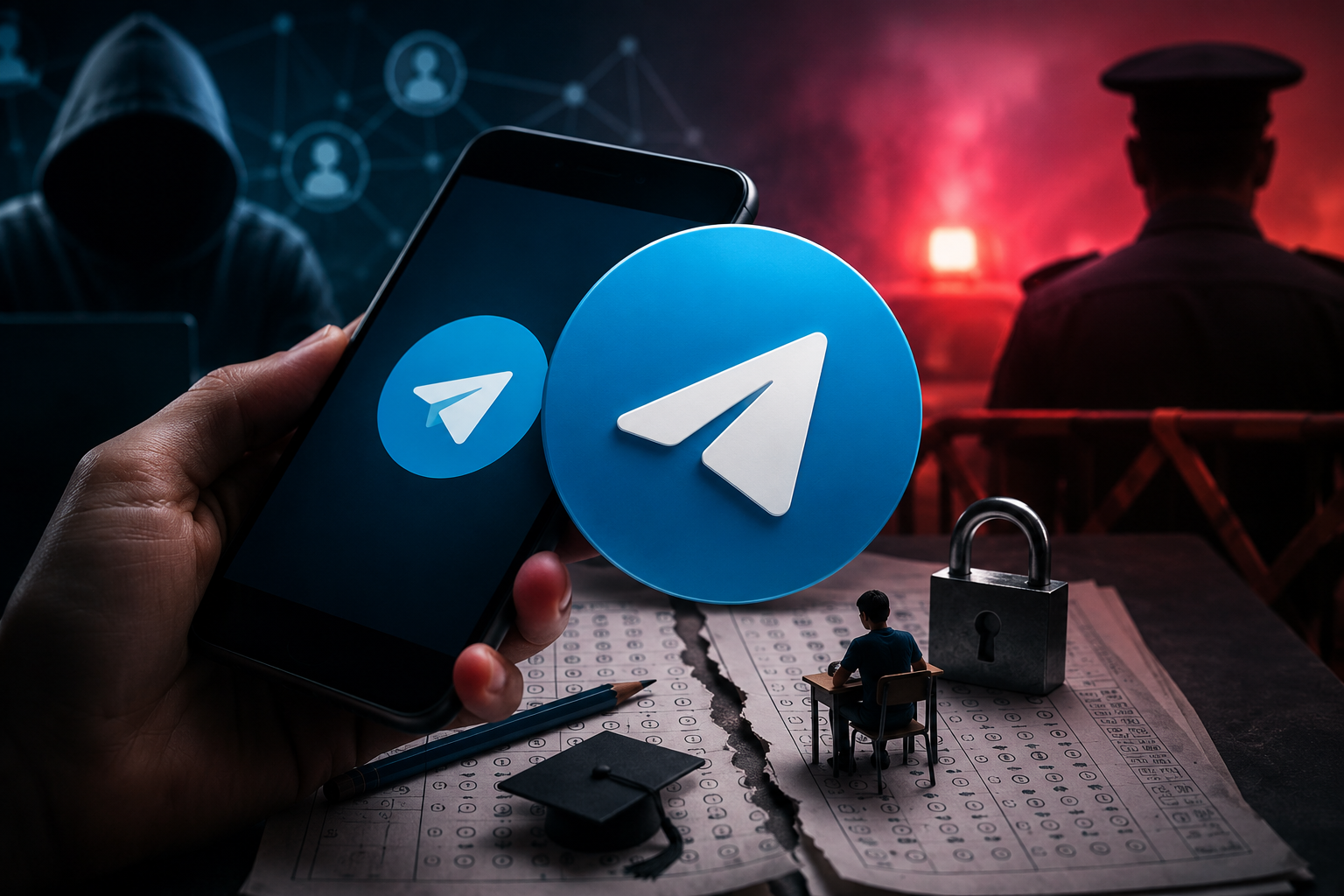
The integrity of India’s fiercely competitive examination system has once again been cast into doubt, igniting a fervent national debate that pits the government’s quest for security against concerns over digital freedoms and student welfare. At the heart of this storm lies the popular messaging application, Telegram, which found itself the target of an unprecedented temporary ban ahead of the crucial NEET (National Eligibility cum Entrance Test) re-examination. While government officials staunchly defend the move as a necessary, targeted, and time-bound intervention to curb rampant paper leaks, critics—ranging from student bodies to opposition leaders and digital rights activists—have questioned its efficacy, legality, and disproportionate impact on millions of legitimate users.
The controversy underscores a complex interplay between rapidly evolving digital communication platforms and the persistent challenges faced by examination authorities in maintaining fairness and preventing fraud in a digitally interconnected age. The ban on Telegram, slated until June 21, the day the NEET re-exam is scheduled, has particularly drawn scrutiny given that similar paper leak allegations have surfaced concerning other platforms like WhatsApp, yet these have not faced similar punitive action. This selective approach has prompted deeper questions about the technical vulnerabilities of different applications, the government’s enforcement strategies, and the broader implications for digital governance in India.

Main Facts: A Digital Clampdown on Exam Fraud
The core issue revolves around the widespread leakage of question papers for the National Eligibility cum Entrance Test (NEET), a pivotal examination for aspiring medical students in India. Following irrefutable evidence of a leak during the initial examination, the National Testing Agency (NTA), responsible for conducting the exam, was compelled to cancel it and announce a re-examination. The subsequent investigation by the NTA and law enforcement agencies identified Telegram as a primary conduit for the illicit distribution of these leaked papers and for orchestrating related scams, including the sale of purported "access" to examination materials for exorbitant sums.
In response, the Government of India, through the Ministry of Electronics and Information Technology, ordered a temporary ban on the Telegram messaging application across the country. This ban, effective until June 21, 2026, aims to disrupt the networks facilitating these leaks and ensure a secure environment for the re-examination. Simultaneously, a specific feature within Telegram—the ability to edit older messages—has also been disabled in India until June 30, 2026, a direct response to how scammers allegedly manipulated timestamps and content to create fake proofs of leaks.
However, this governmental action has not been met with universal approval. Critics argue that a blanket ban on a widely used communication platform, even if temporary, represents an overreach that punishes millions of innocent users and students who rely on it for legitimate purposes, including academic groups, study materials, and personal communication. They contend that such measures are akin to "burning down the house to catch a mouse" and distract from the fundamental systemic failures in exam security. The disparity in treatment between Telegram and other platforms, notably WhatsApp, which also faces occasional leak allegations but remains unbanned, further fuels this contention. The government’s defense rests on the assertion that Telegram’s unique architectural and privacy features make it particularly susceptible to facilitating anonymous, large-scale, and untraceable illicit activities, thus necessitating a more drastic intervention.
)
Chronology of a Crisis: From Leak to Ban
The saga of the NEET paper leak and the subsequent Telegram ban unfolds as a rapid sequence of events, highlighting the escalating challenges in safeguarding high-stakes examinations in the digital age.
Early 2026: Pre-Exam Tensions and Rumors
Even before the scheduled date of the NEET UG 2026 examination, whispers and rumors of potential malpractices and question paper availability began circulating on various social media platforms and encrypted messaging apps. While often dismissed as speculative, these early warnings hinted at an underlying vulnerability in the system.
[Date of Original NEET Exam, e.g., May 5, 2026]: The Leak Unfurls
On the day of the initial NEET examination, widespread reports emerged from multiple cities alleging that the question paper had been leaked and was circulating on various online platforms hours before the exam commenced. Screenshots and PDF files purporting to be the original question paper went viral, causing immense distress and confusion among candidates.

Immediate Aftermath: Calls for Cancellation and Investigation
Student organizations, opposition parties, and concerned parents immediately called for the cancellation of the examination and a thorough investigation. The National Testing Agency (NTA) initially downplayed the extent of the leak but soon faced mounting pressure and undeniable evidence.
[Date of NTA’s Announcement, e.g., May 15, 2026]: Exam Cancellation and Re-examination
Succumbing to public outcry and acknowledging the integrity of the examination had been compromised, the NTA announced the cancellation of the NEET UG 2026 examination. A new date for the re-examination, June 21, 2026, was subsequently declared, along with a promise of stricter security measures.
NTA’s Investigation: Telegram Identified as a Hub
In the weeks following the cancellation, NTA, in collaboration with law enforcement agencies like the CBI and state police, launched a comprehensive investigation. Their findings consistently pointed to Telegram as a primary platform used by perpetrators. Specific channels with names like "ReNEET 2026," "Paper Leaked Need," and similar variations were identified. These channels actively promoted access to the leaked papers, often demanding large sums, reportedly "lakhs of rupees," from desperate candidates. The authorities noted the difficulty in tracing the administrators of these channels due to Telegram’s anonymity features.
)
[Date of Government Decision, e.g., June 10, 2026]: The Telegram Ban Order
After extensive deliberations and considering the persistent nature of the issue despite crackdowns on individual channels, the Government of India, through its relevant ministries, issued an order for a temporary, nationwide ban on the Telegram application. The ban was specified to remain in effect until June 21, 2026, coinciding with the NEET re-examination date. This was framed as a "last resort" measure to ensure a fair and secure re-test environment.
[Date of Edit Feature Disablement, e.g., June 12, 2026]: Technical Intervention
In a further targeted measure, the government also mandated the disabling of Telegram’s "edit message" feature specifically for users in India. This move, effective until June 30, 2026, aimed to counter a specific modus operandi identified by the NTA: scammers using the edit feature to alter older messages, sometimes replacing them with PDF files of leaked papers after the fact, to create misleading "proof" of prior access and extort money.
Ongoing Reactions: Backlash and Legal Scrutiny
The ban immediately triggered a wave of criticism from various quarters. Opposition political parties accused the government of digital authoritarianism and punishing innocent students. Student bodies voiced concerns about disruption to their study routines and legitimate communication. Digital rights advocates questioned the legality and proportionality of a blanket ban. Legal experts began to debate whether the action constituted a legally valid intervention under existing IT laws or if it was an instance of governmental overreach.
)
Supporting Data: Why Telegram Became the Center of Controversy
The government’s decision to single out Telegram stems from several inherent design features of the platform that, while offering privacy and flexibility to legitimate users, simultaneously make it a potent tool for illicit activities, particularly large-scale content distribution and anonymous communication, when compared to rivals like WhatsApp.
1. Lack of Default End-to-End Encryption for Channels and Group Chats:
Unlike WhatsApp, which applies end-to-end encryption (E2EE) to all personal and group chats by default, Telegram’s E2EE is only available for "Secret Chats." Regular cloud chats, group chats, and public channels are not end-to-end encrypted. While Telegram does use client-server encryption, this means that Telegram itself can theoretically access the content of these non-E2EE communications. This fundamental difference makes it easier for authorities (or even Telegram, if compelled) to potentially monitor or access content in large public channels, though the anonymity of the administrators remains a significant challenge. For scammers, the lack of E2EE in channels means they can broadcast content widely without the technical overhead of managing E2EE keys for thousands of recipients, making large-scale distribution simpler.
2. Robust Anonymity Features:
Telegram is designed to prioritize user privacy and anonymity.
)
- Username-based Identity: Users can create unique usernames and interact without revealing their phone numbers. This allows perpetrators to establish channels and communicate without easily traceable real-world identifiers.
- Hidden Phone Numbers: When creating a profile, users can choose to hide their phone number from others, further obscuring their identity. This contrasts sharply with WhatsApp, where a user’s identity is inextricably linked to their registered phone number.
- Proxy Support and VPN Integration: Telegram has historically supported proxy servers and VPNs, making it easier for users to circumvent geographical restrictions or government blocks, and further obfuscating their IP addresses and locations.
3. Powerful Channel Functionality for Mass Distribution:
Telegram’s "channels" feature is a broadcasting tool that allows a single administrator to disseminate messages to an unlimited number of subscribers.
- Unlimited Subscribers: This is a critical distinction from WhatsApp groups, which typically have a limit of 1024 participants. The ability to reach millions simultaneously makes Telegram channels ideal for spreading information rapidly, whether legitimate news or leaked exam papers.
- Broadcast Nature: Channels are one-way communication tools, perfect for delivering content to a passive audience, which fits the model of selling leaked papers.
- Anonymity of Administrators: As mentioned, channel administrators can remain highly anonymous, making it exceedingly difficult for law enforcement to identify and apprehend the individuals behind the leak operations.
4. The "Edit Message" Feature: A Tool for Deception:
One of Telegram’s convenient features, allowing users to edit messages after sending them, was identified by the NTA as a crucial tool in the paper leak scam.
- Post-Facto Falsification: Scammers would initially post generic messages or even blank files on their channels. Once the actual exam paper was leaked (often through other means), they would edit these older messages, replacing the content with the leaked PDF or images, without altering the original timestamp. This created a deceptive impression that they had access to the paper before the exam, lending credibility to their fraudulent claims and enabling them to extort money from unsuspecting students.
- NTA’s Countermeasure: This specific vulnerability led to the unprecedented step of disabling the edit feature for all Indian users until June 30, 2026, highlighting the severity of its misuse.
5. Evidence from Research and Past Incidents:
The problem is not isolated to India or NEET. A research study at the USENIX Security Symposium in 2025 (as cited in the original article, reflecting a future context) revealed that a staggering 23.8 million users followed approximately 339 cybercriminal activity channels on Telegram globally. These channels engaged in various illicit activities, from selling drugs and stolen data to facilitating financial fraud and, crucially, exam leaks. This global trend corroborates the NTA’s findings that Telegram has become a preferred platform for organized digital crime due to its features. Past instances of exam leaks in other countries, and even other competitive exams within India, have also frequently cited Telegram as a primary vector for information dissemination.
)
In stark contrast, WhatsApp, with its default end-to-end encryption, phone number-based identity, and smaller group limits, offers a less conducive environment for large-scale, anonymous, and untraceable distribution of illicit content. While leaks can occur on WhatsApp, the traceability via phone numbers and the technical difficulty of broadcasting to an unlimited, anonymous audience make it a less attractive option for organized, large-scale fraud operations like those seen with the NEET paper leak.
Official Responses: Justifications and Defenses
The government and the National Testing Agency have offered robust defenses for their actions, particularly the temporary Telegram ban, framing it as a necessary evil to protect the sanctity of the examination system and the future of millions of students.
Government of India’s Stance:
A spokesperson for the Ministry of Electronics and Information Technology articulated the government’s position, stating that the ban was a "targeted and time-bound action" aimed squarely at disrupting the infrastructure of exam fraud. "This is not a general censorship measure," the spokesperson clarified, "but a specific, temporary intervention designed to safeguard the integrity of a national examination that determines the careers of countless young Indians. When faced with a threat of this magnitude, where traditional law enforcement measures are hampered by the platform’s design, a decisive step becomes imperative."
)
The government emphasized that the decision was taken as a "last resort" after extensive monitoring and unsuccessful attempts to curb the fraudulent activities through other means, such as reporting channels and requesting data from Telegram. They argue that Telegram’s features, particularly its anonymity and the ease of creating large, untraceable broadcast channels, rendered it uniquely problematic for the scale of the NEET leak operation.
Regarding the criticism of not banning WhatsApp, officials reiterated that WhatsApp’s architecture, with default end-to-end encryption for all chats and phone number-based user identification, offers a degree of traceability and accountability not present in Telegram’s public channels. "While no platform is entirely immune to misuse," a senior official explained, "the systemic vulnerabilities that enable large-scale, anonymous, and untraceable criminal enterprises are significantly higher on Telegram for this specific type of mass distribution."
National Testing Agency (NTA) Perspective:
The NTA has been vocal about the challenges it faced. A senior NTA official detailed the agency’s efforts: "We tracked hundreds of channels, issued numerous takedown requests, and collaborated with cybercrime units. However, as soon as one channel was shut down, several others would spring up with identical content, often administered by the same anonymous entities. The ‘edit message’ feature, in particular, was a significant hurdle, allowing fraudsters to retroactively create fake proof of leaks and continue their extortion rackets."
)
The NTA asserted that the temporary ban was a crucial measure to "break the chain" of communication for the remaining period leading up to the re-examination. They contended that while inconvenient, the measure prioritizes the collective good of millions of honest students over the temporary inconvenience of a specific application. "Our primary mandate is to ensure a fair playing field," the official stated, "and if that requires temporarily restricting a platform that has become a hotbed for cheating, then it is a step we must take."
Legal Arguments and Counterarguments:
The legal validity of such a sweeping ban is a complex issue. Government lawyers likely invoked sections of the Information Technology Act, 2000 (and its subsequent amendments), particularly those related to public order, national security, or preventing incitement to commit cognizable offenses. They would argue that widespread exam fraud, impacting millions and undermining public trust, constitutes a threat to public order and requires immediate preventative action. The "time-bound" and "targeted" nature of the ban would be presented as a measure to demonstrate proportionality.
However, legal experts and digital rights advocates have raised concerns about potential overreach. They argue that a blanket ban impacts fundamental rights to freedom of speech and expression (which includes the right to access information and communicate) and the right to privacy. They contend that less restrictive measures, such as enhanced cyber surveillance, targeted arrests, or greater cooperation with Telegram (if feasible), should be exhausted before resorting to a complete ban. The Delhi High Court, if approached, would likely have to weigh the state’s interest in maintaining exam integrity against the fundamental rights of citizens, assessing whether the ban is indeed necessary, proportionate, and has a legitimate aim. The question of whether the government issued a proper "blocking order" under Section 69A of the IT Act, following due process, would also be critical.
)
Implications: A Precedent, a Warning, and a Call for Reform
The temporary ban on Telegram in India carries significant implications, reverberating across the spheres of education, technology, governance, and digital rights. It sets a precedent, serves as a stark warning, and underscores the urgent need for systemic reforms.
1. Impact on Students and Educational Access:
While intended to protect students, the ban inevitably causes disruption. Millions of students use Telegram for legitimate purposes, including joining study groups, accessing educational content, and communicating with peers and mentors. A sudden ban forces them to migrate to other platforms, potentially losing access to crucial resources at a critical time. Moreover, it adds to the immense stress and anxiety already faced by students preparing for a re-examination, raising questions about the mental health toll of such government interventions. For students in remote areas with limited internet access or technical literacy, switching platforms might be particularly challenging.
2. Digital Rights and Freedom of Expression:
The ban sparks a critical debate on digital rights, freedom of speech, and governmental overreach. Digital rights advocates argue that even a temporary ban on a popular communication platform, based on the actions of a few bad actors, is a disproportionate measure that sets a dangerous precedent. It raises concerns about the state’s power to control access to information and communication tools, potentially leading to similar bans in response to other forms of online dissent or illicit activity. The ability of citizens to access and share information freely, without undue restriction, is a cornerstone of democratic societies, and such bans chip away at this principle.
)
3. Effectiveness and the "Whack-a-Mole" Problem:
A fundamental question is whether the ban will truly solve the problem of paper leaks or merely push perpetrators to other, potentially harder-to-monitor platforms. Scammers are adaptable; they could migrate to other encrypted messaging apps (Signal, Session), the dark web, or even less mainstream social media platforms. This creates a "whack-a-mole" scenario, where banning one platform only shifts the problem elsewhere, requiring continuous, escalating interventions. Critics argue that focusing solely on platform bans distracts from the root causes of leaks—lax security at printing presses, distribution centers, and examination halls—and the systemic corruption that enables them.
4. Future of Exam Security and Technology’s Dual Role:
The incident highlights the urgent need for a comprehensive overhaul of exam security protocols. This includes leveraging technology for prevention rather than just reaction. Measures like robust biometric verification for candidates, secure digital delivery of question papers, advanced AI-driven proctoring, and end-to-end encrypted distribution channels could be explored. The episode underscores technology’s dual role: while it facilitates leaks, it also offers powerful tools to combat them. The focus must shift from merely banning platforms to building resilient and foolproof examination systems.
5. Platform Accountability and Global Precedent:
This incident also contributes to the global discourse on platform accountability. Should messaging apps be held responsible for the illicit content shared on their services? While Telegram prides itself on privacy and resistance to government demands, such incidents put pressure on platforms to cooperate more actively with law enforcement, or face punitive actions like bans. The Indian government’s move, though domestically focused, could inspire similar actions in other nations grappling with online fraud and misinformation.
)
In conclusion, the temporary Telegram ban is more than just an administrative directive; it is a critical moment in India’s digital journey. While born out of a legitimate concern for exam integrity, its execution has opened a Pandora’s Box of questions regarding balancing security with freedom, the efficacy of digital crackdowns, and the long-term vision for a secure yet open digital India. The NEET re-exam will be a test not only for the students but also for the government’s strategy and the resilience of India’s digital ecosystem. The true measure of success will not be the temporary cessation of activity on one platform, but the establishment of a robust, trustworthy, and equitable system that safeguards the dreams of millions of aspirants.
