

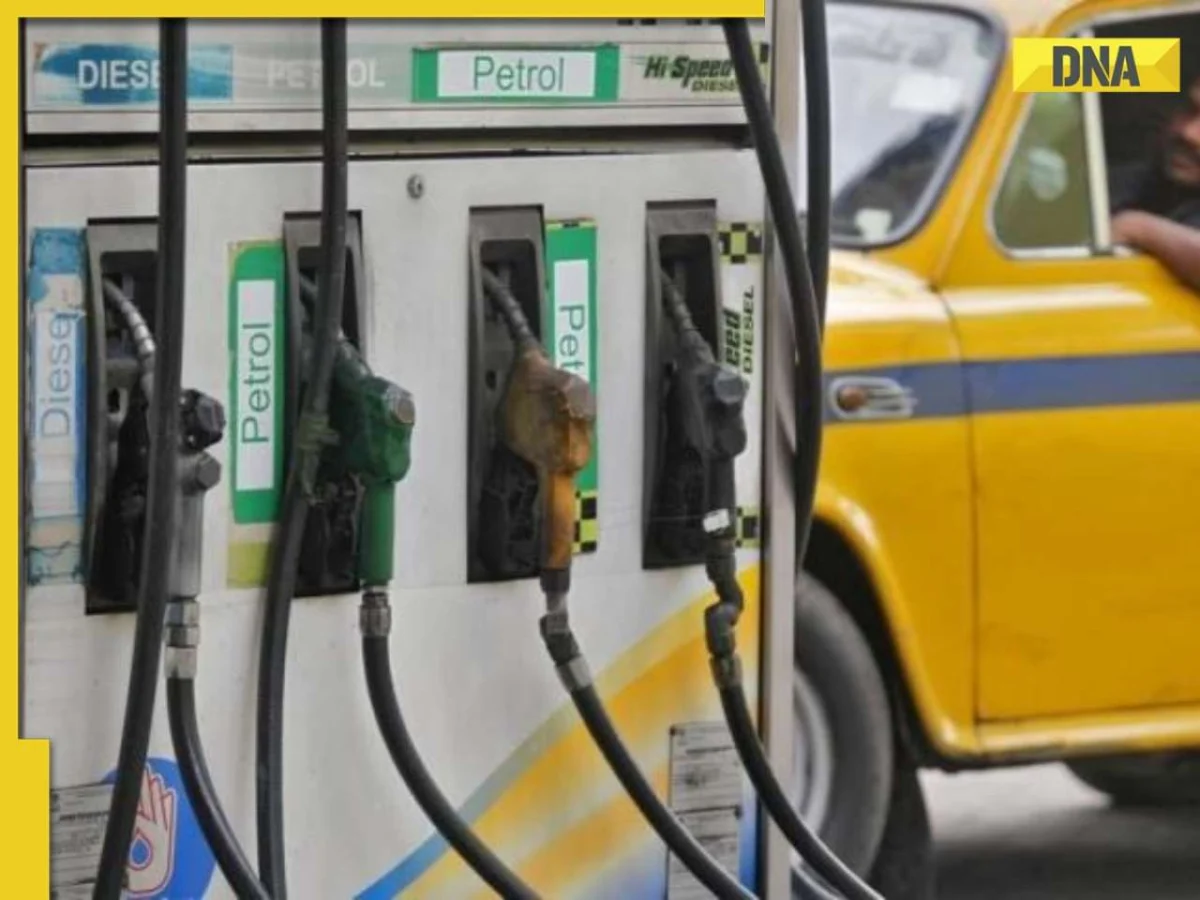
Mumbai, India – May 18, 2026 – In a significant relief for consumers and businesses alike, petrol and diesel prices across India remained largely stable on May 18, 2026. This period of constancy, particularly evident in major economic hubs like Mumbai, underscores a calibrated approach by oil marketing companies amidst ongoing global energy market fluctuations. Despite a robust domestic demand curve, the retail fuel rates have held steady, providing a much-needed anchor for the nation’s burgeoning economy.
Main Facts: A Snapshot of Fuel Prices
As the second Sunday of May 2026 dawned, the stability in fuel prices offered a moment of respite for millions of commuters and the logistics sector. In the financial capital, Mumbai, petrol was retailed at ₹106.68 per litre, a figure that has shown remarkable consistency over recent days. Similarly, diesel prices in Mumbai mirrored this trend, holding firm at ₹93.14 per litre. This equilibrium is a direct reflection of a complex interplay of international crude oil benchmarks, the prevailing rupee-US dollar exchange rate, and the intricate domestic taxation framework.
Across the vast geographical expanse of India, fuel prices exhibit a natural variance. While Mumbai’s rates serve as a key indicator, other metropolitan cities and regions presented their own specific price points. In the capital, New Delhi, petrol was observed at approximately ₹94.72 per litre and diesel at ₹87.62 per litre, reflecting the distinct state taxation policies. Kolkata saw petrol at around ₹106.03 per litre and diesel at ₹92.76 per litre, while Chennai recorded petrol at ₹100.75 per litre and diesel at ₹92.34 per litre. These figures, though differing, largely maintained the nationwide pattern of stability. The sustained high demand for both petrol and diesel across urban and rural areas further highlights the economic vitality, yet has not, in this instance, translated into an immediate upward price revision.
Chronology: Understanding the Recent Trajectory
The current state of stability in India’s fuel prices is not an isolated event but rather the culmination of a nuanced pricing strategy influenced by both global forces and domestic policy decisions. To fully appreciate the present scenario, it’s essential to trace the recent trajectory of these critical commodities.
)
Mumbai’s Recent Price Movements: A Microcosm of National Trends
Focusing on Mumbai, the past ten days leading up to May 18, 2026, have been characterized by minor fluctuations within a relatively narrow band. Petrol prices in the city have oscillated between a low of ₹103.54 and the current ₹106.68 per litre. This range, while showing some movement, is indicative of the oil marketing companies’ (OMCs) efforts to absorb minor international shocks and maintain a predictable pricing environment for consumers. Diesel prices in Mumbai followed a similar pattern, fluctuating between ₹90.03 and ₹93.14 per litre during the same period. These controlled movements suggest a deliberate strategy to prevent sharp, volatile price swings that could disrupt economic stability and consumer confidence.
A Broader Perspective: Fuel Price Trends in 2025-2026
Looking back at the preceding year and the early months of 2026, India’s fuel market has navigated a landscape marked by global economic uncertainties and geopolitical shifts. The period witnessed intermittent phases of slight price increases, primarily driven by surges in international crude oil benchmarks, often linked to supply concerns or heightened global demand. Conversely, periods of moderation in global oil prices or strategic currency management by the Reserve Bank of India (RBI) occasionally led to minor price reductions or prolonged stability.

The OMCs, primarily Indian Oil Corporation (IOC), Bharat Petroleum Corporation Limited (BPCL), and Hindustan Petroleum Corporation Limited (HPCL), have consistently employed a "calibrated pricing" approach. This strategy involves not immediately passing on the full extent of international crude price volatility to consumers. Instead, they often absorb a portion of the increases or pass on reductions gradually, aiming to smooth out the impact on retail prices. This approach has been a defining feature of the Indian fuel market, especially since the full deregulation of petrol and diesel prices, which shifted the daily price revision mechanism.
Historical Context of Indian Fuel Pricing: From Administered to Dynamic
The journey of fuel pricing in India has undergone a profound transformation. Historically, fuel prices were largely determined through an Administered Price Mechanism (APM), where the government set prices, often leading to under-recoveries for OMCs and a substantial subsidy burden on the exchequer. The gradual deregulation, starting with petrol in 2010 and diesel in 2014, marked a pivotal shift towards market-linked pricing.
)
The introduction of the daily dynamic pricing mechanism in June 2017 further cemented this transition, aligning Indian retail prices more closely with international benchmarks and the rupee-dollar exchange rate on a real-time basis. While this mechanism aimed for greater transparency and responsiveness, the government and OMCs have often intervened or employed strategic pricing to mitigate extreme volatility, especially during periods of high inflation or significant global crude price spikes. This historical evolution underscores the delicate balance India strives to maintain between market efficiency, fiscal prudence, and consumer welfare. The current stability, therefore, is a testament to the ongoing refinement of this dynamic pricing system, coupled with strategic market management.
Supporting Data: The Pillars of Price Determination
The seemingly simple act of filling up a vehicle’s tank is, in reality, the endpoint of a complex economic chain, where numerous factors converge to determine the final retail price. India, being a major net importer of crude oil, is particularly susceptible to these global and domestic forces.
)
Global Crude Oil Dynamics: The Primary Driver
At the forefront of fuel price determination are international crude oil prices. India imports over 85% of its crude oil requirements, making global benchmarks like Brent Crude and West Texas Intermediate (WTI) critical indicators. The price of crude oil is influenced by a multitude of factors:
- Supply and Demand: Decisions by OPEC+ (Organization of the Petroleum Exporting Countries and its allies) regarding production quotas significantly impact global supply. Economic growth projections in major consuming nations like China, the US, and India drive demand forecasts.
- Geopolitical Events: Conflicts or instability in major oil-producing regions (e.g., the Middle East, Eastern Europe) can disrupt supply chains, leading to immediate price spikes due due to perceived scarcity or actual production cuts.
- Inventory Levels: Stockpiles of crude oil in key consuming nations, particularly the US, also play a role. High inventories can depress prices, while low inventories can push them up.
- Speculative Trading: Futures markets for crude oil are heavily influenced by speculative trading, which can amplify price movements based on market sentiment and anticipated future events.
When global crude oil prices rise, the cost of importing crude for Indian refineries increases, directly impacting the ex-refinery price of petrol and diesel. Conversely, a fall in crude prices provides headroom for OMCs.
)
The Rupee-Dollar Exchange Rate: A Crucial Converter
Since crude oil transactions on the international market are predominantly denominated in US dollars, the exchange rate between the Indian Rupee and the US Dollar becomes a pivotal factor. A weaker rupee against the dollar means that Indian OMCs have to pay more rupees for the same quantity of imported crude oil.
For example, if a barrel of crude costs $80, and the exchange rate is ₹80 to $1, the cost in rupees is ₹6,400. If the rupee depreciates to ₹83 to $1, the same barrel now costs ₹6,640, an increase of ₹240, even if the dollar price of crude remains unchanged. This depreciation directly translates into higher import costs, which eventually feed into higher retail fuel prices. The Reserve Bank of India’s monetary policies and global economic factors influence the rupee’s strength, adding another layer of complexity to fuel price calculations.
)
Taxation: The Lion’s Share of the Retail Price
Perhaps the most significant differentiator for retail fuel prices in India, compared to many other nations, is the substantial tax component levied by both the central and state governments. These taxes constitute a major portion of the final price consumers pay.
- Central Excise Duty: The central government imposes an excise duty on both petrol and diesel. This can be a fixed amount per litre or an ad valorem tax (a percentage of the price). Changes in central excise duty directly impact the base price before state taxes.
- State Value Added Tax (VAT): Each state government levies its own VAT on fuel. This is typically an ad valorem tax, meaning it is calculated as a percentage of the price (including central excise duty and dealer commission). The wide disparity in VAT rates across states is the primary reason why fuel prices differ significantly from one state to another. For instance, states with higher VAT rates like Maharashtra, Rajasthan, and Telangana tend to have higher retail prices, while regions like the Andaman and Nicobar Islands, with lower or no state taxes, offer comparatively cheaper fuel.
- Dealer Commissions and Freight Charges: A small but significant part of the retail price includes commissions paid to petrol pump dealers for their services and freight charges for transporting fuel from refineries to distribution points and then to retail outlets. These vary based on the distance and operational costs.
The cumulative effect of these taxes often means that over 40-50% of the retail price of petrol and diesel can be attributed to government levies. This high tax component is a critical revenue source for both the central and state governments, funding various developmental projects and welfare schemes.
)
Domestic Demand Landscape: A Relentless Upward Trajectory
Despite the high prices, India’s domestic fuel demand remains robust and continues its upward trajectory, reflecting the nation’s economic growth and increasing mobility.
- Overall Consumption: India consumed approximately 220 million metric tonnes (MMT) of crude oil and petroleum products in 2023. Projections for 2026 indicate a continued rise, driven by an expanding economy, burgeoning middle class, and rapid urbanization.
- Sectoral Demand:
- Diesel: This fuel remains the lifeblood of India’s logistics, transportation, agriculture, and industrial sectors. Commercial vehicles, freight transport, farm machinery, and power generators heavily rely on diesel. Its sustained demand is a direct indicator of economic activity and industrial output.
- Petrol: Primarily used for personal mobility, petrol consumption is fuelled by the increasing number of private vehicles (two-wheelers and cars) on Indian roads, a testament to rising disposable incomes and aspirations.
- Economic Indicators: Strong fuel demand is often seen as a positive economic indicator, signalling healthy industrial activity, robust trade, and consumer confidence. The current stability in prices, combined with strong demand, suggests a resilient economic environment that can absorb existing price levels without significant disruption.
These interconnected factors — global crude prices, the rupee’s value, the tax structure, and domestic demand — collectively paint a comprehensive picture of how fuel prices are determined and why their stability on May 18, 2026, holds significant economic implications.
)
Official Responses and Industry Insights
The sustained stability in India’s fuel prices on May 18, 2026, is not merely a fortuitous alignment of market forces but a deliberate outcome shaped by the strategic decisions of key stakeholders. Both the public sector oil marketing companies and the government play pivotal roles in navigating the complex dynamics of the energy market.
Role of Oil Marketing Companies (OMCs): The Balancing Act
India’s major public sector OMCs – Indian Oil Corporation (IOCL), Bharat Petroleum Corporation Limited (BPCL), and Hindustan Petroleum Corporation Limited (HPCL) – are at the forefront of implementing the country’s fuel pricing strategy. Their "calibrated pricing" approach has been instrumental in maintaining stability.
)
Industry insiders indicate that OMCs often absorb a portion of the volatility in international crude prices, especially during periods of moderate increases. This absorption capacity is influenced by their refining margins and the overall profitability of their operations. By not immediately passing on the full extent of global price hikes, they act as a buffer for consumers, mitigating the immediate shock of external market fluctuations. This strategy, while beneficial for consumers, can sometimes impact the OMCs’ quarterly earnings, as they balance national interest with commercial viability. Their role extends beyond mere distribution; they are key strategic players in ensuring energy security and price stability.
Government Stance and Policy: Revenue vs. Relief
The central and state governments walk a tightrope between maximizing revenue from fuel taxes and providing relief to consumers. Fuel taxes are a crucial source of income, funding infrastructure projects, social welfare schemes, and administrative expenses. However, excessively high fuel prices can fuel inflation, increase transportation costs for essential goods, and dampen consumer sentiment.
)
While there were no explicit official statements on May 18, 2026, regarding the specific pricing decisions, the government’s overarching policy has been to monitor global crude prices closely and to intervene through tax adjustments when necessary. In the past, both central and state governments have occasionally reduced excise duties or VAT to alleviate consumer burden during periods of extreme price hikes. Conversely, taxes have been increased when crude prices were low to shore up government revenues. The current stability suggests that the government is content with the prevailing tax structure, recognizing the balance it strikes between fiscal needs and market stability. Future interventions would likely be triggered by significant shifts in global crude prices or sustained inflationary pressures.
Expert Economists and Analysts’ Views: A Look Beneath the Surface
Economists and energy market analysts generally view the current stability with cautious optimism. Dr. Ananya Sharma, a leading energy economist, commented, "The sustained stability in fuel prices reflects a maturity in India’s dynamic pricing mechanism, where OMCs are proactively managing volatility. It’s a testament to their improved inventory management and risk assessment strategies. However, the underlying factors — global crude and the rupee’s health — remain critical."
)
Analysts from major financial institutions often highlight that while stability is welcome, India remains vulnerable to external shocks. Mr. Rajeev Mehta, a senior analyst at a Mumbai-based brokerage, noted, "The current equilibrium is a delicate one. Strong domestic demand provides some cushioning, but any sharp escalation in geopolitical tensions or a significant weakening of the rupee could quickly unravel this stability. The government’s fiscal space for tax cuts might also be limited, depending on broader economic conditions."
These expert insights underscore that while the current stability is beneficial, it is built upon a foundation that is highly susceptible to global macroeconomic and geopolitical shifts. The calibrated approach by OMCs, backed by government oversight, is key to navigating these complex waters, ensuring that the impact on India’s economy and its citizens remains manageable.
)
Implications: What Stable Prices Mean for India
The consistency in petrol and diesel prices on May 18, 2026, carries far-reaching implications for India’s economy, its various sectors, and the daily lives of its citizens. This stability, though potentially fragile, offers immediate benefits and shapes future policy considerations.
Economic Impact: A Stabilizing Force
- Inflation Control: Fuel prices are a significant component of the Wholesale Price Index (WPI) and the Consumer Price Index (CPI). Stable fuel costs directly contribute to reining in inflation, as transportation expenses for goods and services remain predictable. This helps the Reserve Bank of India in its monetary policy decisions and provides a more stable economic environment for businesses and consumers.
- Logistics and Supply Chains: For India’s vast logistics and transportation sector, which heavily relies on diesel, stable prices are a boon. Trucking companies, freight forwarders, and public transport operators can better plan their operational costs, leading to more predictable freight rates. This, in turn, helps keep the prices of essential commodities, from agricultural produce to manufactured goods, in check, benefiting the end consumer.
- Consumer Spending: Predictable fuel expenses allow households to better manage their budgets. This stability can indirectly support consumer confidence and discretionary spending, as less income is diverted towards fluctuating fuel costs. For individual vehicle owners, the absence of daily price shocks contributes to a sense of financial security.
- Impact on Specific Sectors:
- Agriculture: Diesel is vital for irrigation pumps, tractors, and transporting produce. Stable prices reduce input costs for farmers, potentially leading to better profitability and more stable food prices.
- Manufacturing: Industries reliant on transportation of raw materials and finished goods benefit from reduced and predictable logistics costs, enhancing their competitiveness.
- Tourism and Hospitality: These sectors, heavily dependent on travel and transportation, also gain from stable fuel prices, which can encourage domestic tourism and make travel more affordable.
Energy Security and Policy: A Long-Term Vision
India’s high dependence on crude oil imports, currently over 85%, underscores its energy security vulnerabilities. While stable retail prices provide immediate relief, the underlying reliance on global markets remains a strategic challenge. The current stability allows policymakers some breathing room to focus on long-term energy strategies, including:
)
- Diversification of Energy Sources: Accelerating the transition to renewable energy (solar, wind, hydro) to reduce reliance on fossil fuels.
- Strategic Petroleum Reserves (SPR): Building and maintaining adequate SPRs to cushion against global supply disruptions.
- Ethanol Blending Program: Expanding the ethanol blending program for petrol, which not only reduces import dependency but also supports the agricultural sector.
- Electric Vehicle (EV) Adoption: Promoting the adoption of electric vehicles through subsidies, charging infrastructure development, and policy incentives to reduce future demand for petrol and diesel.
Regional Disparities and Consumer Equity: The Ongoing Debate
The continued variation in fuel prices across different states, largely due to differing VAT rates, remains a point of contention. While Hyderabad and Thiruvananthapuram recorded among the highest petrol prices, regions like the Andaman and Nicobar Islands maintained comparatively lower rates. This disparity often sparks debates about consumer equity and the need for greater uniformity in fuel pricing.
The discussion frequently revolves around bringing petrol and diesel under the ambit of the Goods and Services Tax (GST). Such a move could potentially lead to a more uniform pricing structure nationwide, reducing regional disparities and simplifying the tax regime. However, this would require significant consensus between the central and state governments, as it involves a substantial shift in revenue collection mechanisms for both. The current stability, while welcome, does not resolve this fundamental structural issue.
)
The Road Ahead: Will Fuel Prices Rise?
While the current stability offers a welcome respite, the question of future price movements remains pertinent. India’s fuel market is intrinsically linked to dynamic global and domestic factors, making it susceptible to rapid shifts.
Several critical factors could trigger an upward revision in petrol and diesel prices in the coming months:
)
- Sharp Increase in Global Crude Oil Prices: Any significant escalation in international crude oil benchmarks, driven by increased global demand, deeper production cuts by OPEC+, or a sustained recovery in the world economy, would inevitably push up import costs for India.
- Geopolitical Tensions: A flare-up of conflicts or political instability in major oil-producing or transit regions could disrupt supply chains, leading to panic buying and speculative price surges in the global market.
- Supply Disruptions: Natural disasters impacting oil infrastructure, or unforeseen operational issues at major refineries globally, could temporarily reduce supply and drive up prices.
- Weakening of the Rupee Against the US Dollar: A substantial depreciation of the Indian Rupee, perhaps due to global economic slowdowns, capital outflows, or domestic economic pressures, would make crude oil imports more expensive in rupee terms, irrespective of the dollar price of crude.
- Revision of Domestic Taxes: While less likely during periods of stability, both central and state governments retain the option to revise excise duties or VAT. An upward revision, particularly if coupled with rising crude prices, would directly translate to higher retail prices.
Public sector oil marketing companies, currently maintaining price stability through their calibrated strategies, would find it challenging to absorb prolonged or significant increases in input costs without eventually passing them on to consumers. The delicate balance between market forces, consumer welfare, and government revenue will continue to dictate the trajectory of India’s fuel prices. As India continues its growth story, the prudent management of its energy sector remains paramount for sustainable economic development.
Find your daily dose of All Latest News including Sports News, Entertainment News, Lifestyle News, explainers & more. Stay updated, Stay informed- Follow DNA on WhatsApp.
