

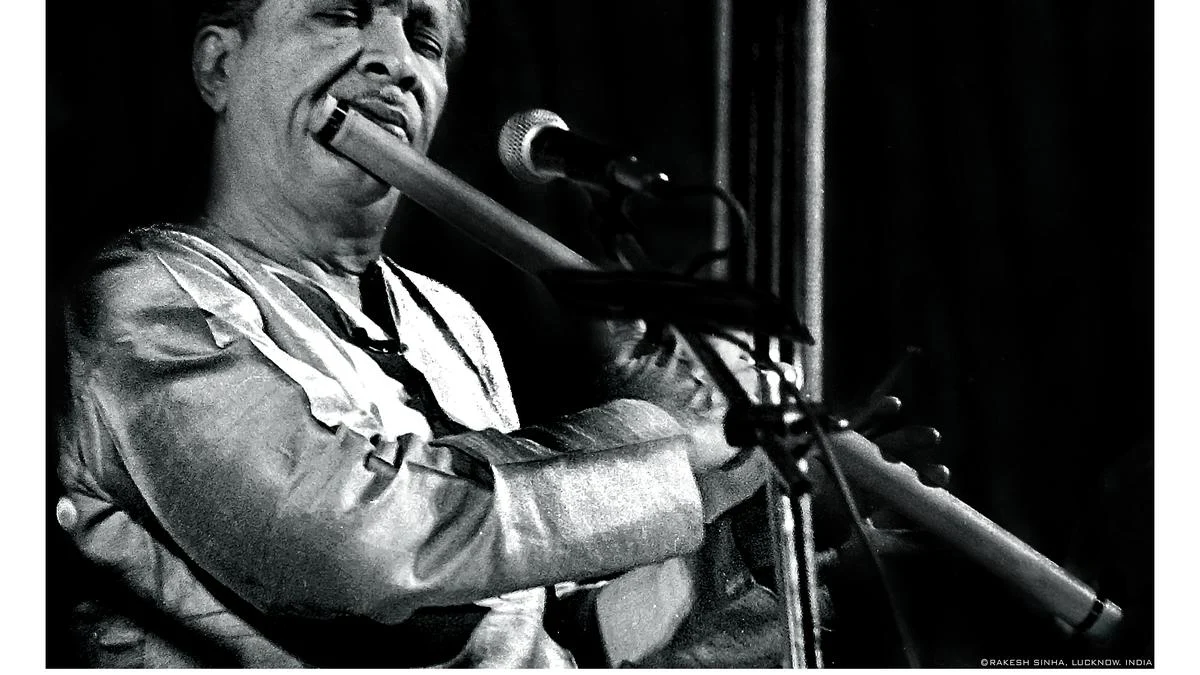
New Delhi – In a poignant recognition of a lifetime dedicated to capturing the soul of Indian classical arts, renowned photographer Rakesh Sinha has been bestowed with the prestigious Sangeet Natak Akademi Award. For over five decades, Sinha’s discerning eye and artistic sensibility have immortalized the ephemeral beauty of India’s performing traditions, transforming fleeting moments into enduring visual narratives. His extensive body of work, a testament to his unwavering passion, now forms an invaluable archive, a visual chronicle of the nation’s rich cultural tapestry.
Sinha’s journey into the world of photography began not on a stage, but in the quiet pursuit of his elder brother, a photographer with the Uttar Pradesh Information Department. As a young boy accompanying his brother to cover cultural events in Lucknow, Rakesh found himself captivated by the vibrant energy of the performing arts. The stages, the dedicated artistes, and the click of the camera soon became intrinsically linked in his young mind, igniting a lifelong passion for documenting this dynamic world. This early immersion provided him with a profound connection to India’s artistic and cultural heritage, a connection that would shape his future endeavors.
A Photographic Odyssey: From Analogue Beginnings to Digital Archives
Rakesh Sinha’s photographic career officially commenced at the tender age of 15. In an era dominated by analogue cameras and the meticulous process of black-and-white film rolls, his early assignments were fraught with technical challenges and significant financial investment. The cost of film, the limited number of exposures per roll, and the ever-present risk of a misstep or a processing error leading to the loss of precious frames demanded immense patience and dedication. Sinha recalls the heartbreak of seeing an entire roll of film, painstakingly captured, ruined just before development, a setback he endured on multiple occasions. Yet, these very challenges honed his skills, fostering a deep understanding of composition, timing, and the art of anticipating the decisive moment.

"Those days a camera could accommodate only a limited number of film rolls," Sinha reminisces, his voice tinged with nostalgia. "One was fortunate if an entire roll could be utilized successfully; otherwise, some frames would invariably get spoilt. What was most disheartening was that an entire roll could be ruined just before the photographs were to be developed and that would break my heart. Unfortunately, I experienced such setbacks on several occasions."
Despite pursuing a career in the Manufacturing Division of Hindustan Aeronautics Limited (HAL) in Lucknow, a field seemingly unrelated to his artistic pursuits, Sinha’s evenings and weekends were dedicated to his photographic passion. He meticulously documented the cultural milieu of the city, attending performances, capturing the essence of musical recitals, dance ballets, and theatrical productions. This dual commitment underscores his profound dedication to preserving the visual legacy of Indian arts.
The Art of Capturing the Unseen: Light, Shadow, and the Soul of Performance
What distinguishes Rakesh Sinha’s work is not merely the technical proficiency but his profound ability to transcend the literal representation of a performance. His photographs are not just images; they are portals into the emotional and spiritual depths of the artistes. He possesses a rare gift for capturing the subtle nuances of expression, the graceful flow of movement, and the palpable energy that emanates from the stage.

A hallmark of his photographic style, particularly in the realm of classical music and dance, is his masterful command of light and shadow. Sinha views stage lighting not as a mere functional necessity but as a potent tool for emotional expression. He understands how to harness its interplay to sculpt forms, evoke mood, and accentuate the drama inherent in a performance. His images often possess a chiaroscuro quality, where shadows add depth and mystery, while light illuminates the very essence of the artist’s dedication and artistry.
The pursuit of that perfect moment is a testament to his patience and foresight. Sinha often describes waiting for hours, observing, and anticipating the precise instant when the artiste and their art coalesce into a singular, breathtaking entity. He elaborates on this with an example: "I often wait for hours for that decisive moment when the artiste and the art become one. I cite the example of one particular image – where the posture of a tabla player’s hands at the sam of a tihai; with the vocalist’s expression while reaching the taar saptak (upper octave), becomes a silent dialogue exchanged through the eyes of musicians during a jugalbandi." This anecdote beautifully illustrates his ability to perceive and capture the unspoken connections and profound communication that transpires between artists during a performance.
A Visual Tapestry of India’s Cultural Luminaries
Sinha’s extensive archives are a treasure trove of visual history, featuring an impressive roster of India’s most celebrated musicians, dancers, and theatre personalities. His lens has captured the iconic figures who have shaped and defined Indian classical arts for generations. From the evocative grace of Kathak maestro Sitara Devi to the soulful renditions of vocalist Pt. Jasraj, the intricate veena artistry of Chitti Babu, and the vibrant folk melodies of Malini Awasthi, Sinha’s portfolio offers a comprehensive panorama of India’s performing arts landscape.

His black-and-white photography, in particular, has garnered significant acclaim within Lucknow’s cultural circles. The timeless elegance and stark impact of monochrome lend a unique gravitas to his portraits, allowing the viewer to focus on the raw emotion and inherent dignity of the subjects. These images are more than mere portraits; they are profound reflections of the discipline, humility, and spiritual depth that underpin years of rigorous practice and artistic dedication.
The Legacy of "Swar Virasat": An Exhibition of Reverence
In 2023, Rakesh Sinha’s deeply revered exhibition, "Swar Virasat" (The Legacy of Melody), captivated audiences in Lucknow, drawing widespread attention from art connoisseurs and critics alike. The exhibition served as a powerful testament to his lifelong commitment, showcasing a curated selection of his most impactful works that celebrated the enduring power of Indian music and dance. The overwhelming response to "Swar Virasat" underscored the profound impact of Sinha’s contribution and the public’s appreciation for his unique ability to preserve and present India’s cultural heritage.
Recognition and Future Endeavors: A Continuing Mission
The Sangeet Natak Akademi Award is a fitting tribute to Rakesh Sinha’s invaluable contributions. It acknowledges not just his technical skill but his deep understanding and reverence for the arts he documents. This prestigious recognition serves as a powerful impetus for him to continue his mission.

"The Sangeet Natak Akademi award, he says, further motivates him to devote the rest of his life to the preservation and documentation of India’s cultural heritage." This statement encapsulates his enduring passion and commitment. Sinha’s work extends beyond mere photography; it is an act of cultural stewardship, ensuring that the legacy of India’s performing arts continues to inspire and resonate with future generations. His photographs are not just beautiful images; they are historical documents, artistic interpretations, and profound tributes to the enduring spirit of Indian culture. As he continues his journey, Rakesh Sinha remains an indispensable chronicler, his lens a vital conduit through which the soul of India’s performing arts is preserved for posterity.
