

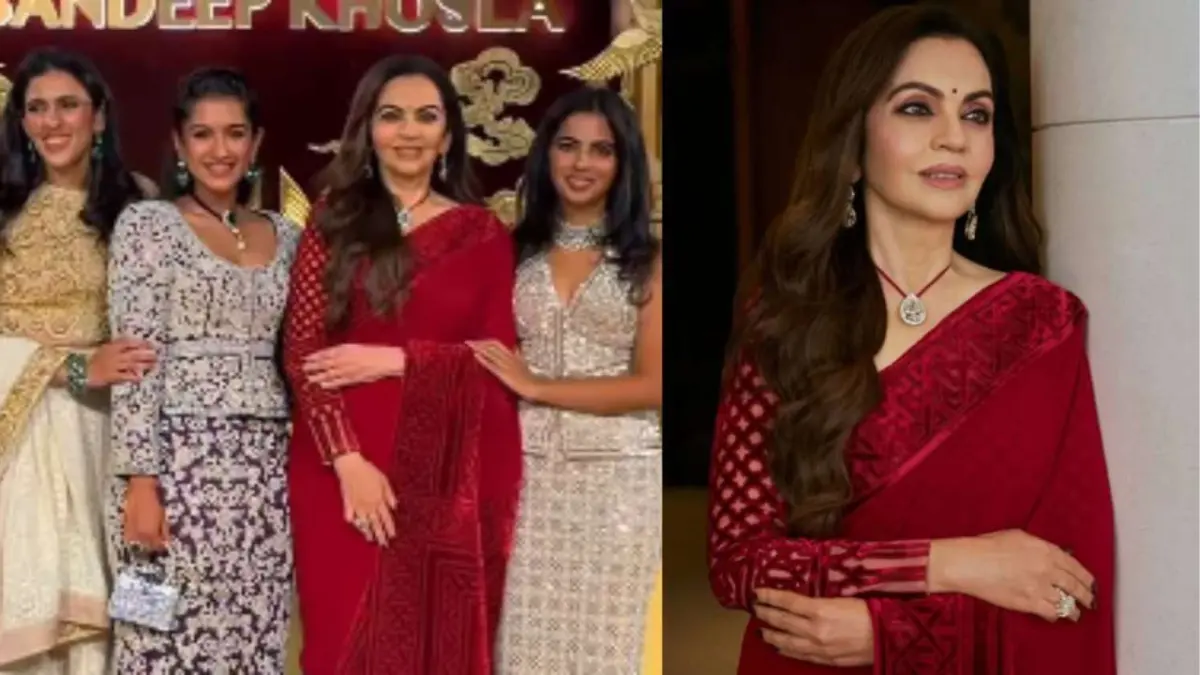
Mumbai, India – September 7, 2026 – The opulent Mubarak Baug in Mumbai shimmered with an ethereal glow last night as the iconic design duo Abu Jani Sandeep Khosla celebrated their illustrious 40-year journey in Indian fashion. Amidst a constellation of stars and esteemed guests, Nita Ambani, the influential Chairperson of Reliance Foundation, unequivocally captured the evening’s sartorial spotlight. Her choice of a resplendent crimson saree, a masterpiece of intricate craftsmanship, not only paid homage to the designers’ legacy but also set a new benchmark for timeless elegance.
The event, held on September 6th, marked a dual celebration: the culmination of four decades of groundbreaking design and the grand unveiling of the duo’s expansive new flagship store, Mubarak Baug. This colossal 20,000-square-foot space, envisioned as a sanctuary for haute couture, exquisite jewellery, and a curated collection of archival pieces, stands as a testament to their enduring influence on the Indian fashion landscape.
Nita Ambani: A Vision in Crimson
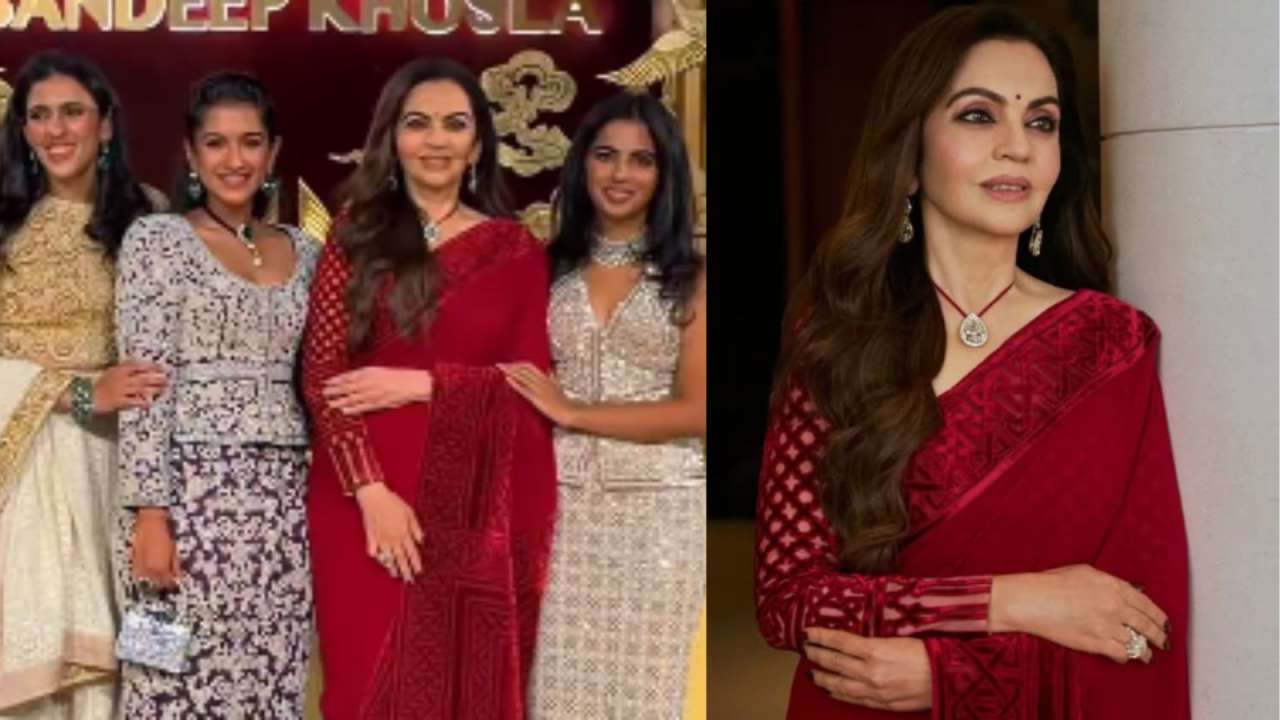
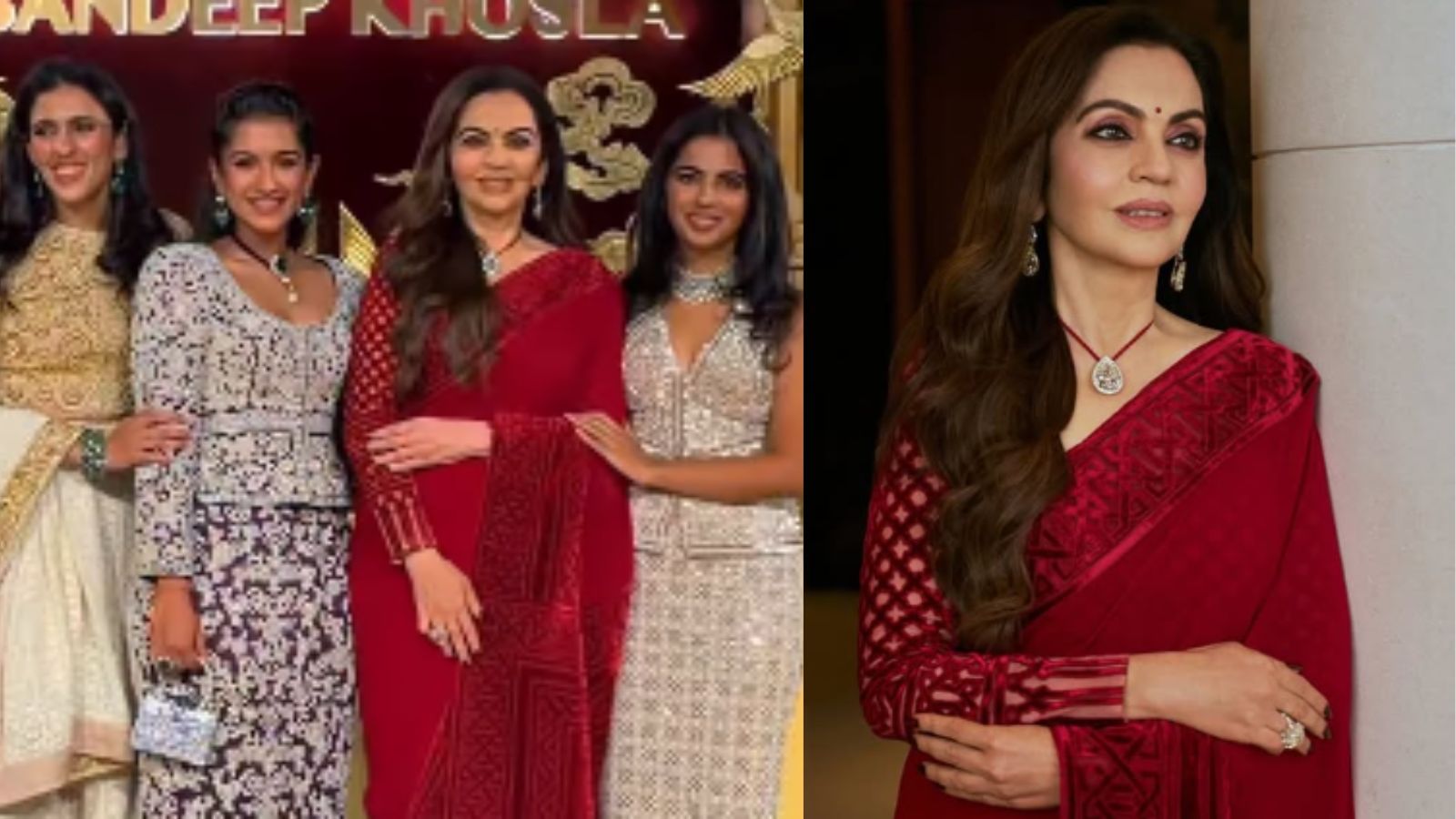
Nita Ambani’s presence at the gala was nothing short of spectacular. She adorned a deeply saturated crimson-red saree, a hue synonymous with auspiciousness and regal bearing in Indian culture. The fabric itself was a canvas of meticulous artistry, boasting intricate geometric detailing that artfully framed the borders and the pallu. This detailed embellishment provided a captivating contrast to the solid, vibrant expanse of the saree, exuding an aura of sophisticated grandeur.
Complementing the resplendent saree was a meticulously crafted, full-sleeved blouse in a matching shade of crimson. The blouse was adorned with equally intricate embroidery, creating a harmonious and festive ensemble that flowed seamlessly. The choice of a solid, rich colour, elevated by such detailed craftsmanship, showcased a profound understanding of traditional aesthetics reinterpreted for a contemporary audience. This deliberate sartorial choice underscored the celebratory spirit of the evening while highlighting the enduring appeal of classic Indian textiles and craftsmanship.
The strategic choice of accessories further amplified Ambani’s elegant presentation. Opting for a minimalist approach, she allowed the magnificence of the saree to take centre stage. Her adornments included a delicate necklace, intricately woven with red threads and punctuated by a single, sparkling diamond pendant. Complementing the necklace were matching drop earrings, adding a subtle touch of glamour without overwhelming the ensemble. A statement ring, chosen with precision, offered a final flourish of understated sparkle.
Ambani’s beauty was further accentuated by her refined styling. Her hair was styled in soft, cascading waves, framing her face and adding a touch of effortless grace. Her makeup was a symphony of subtle sophistication: defined eyes that hinted at a playful allure, a warm-toned blush that imparted a healthy glow, and a glossy nude-pink lipstick that added a touch of modern allure. A classic red bindi, a quintessential element of traditional Indian attire, served as the perfect finishing touch, completing her poised and culturally resonant look. This meticulous attention to detail, from the fabric of her saree to the placement of her bindi, cemented her status as a style icon and a graceful ambassador of Indian fashion.
The Legacy of Abu Jani Sandeep Khosla: Four Decades of Design Excellence
The celebration at Mubarak Baug was more than just a party; it was a retrospective and a bold statement of intent from Abu Jani and Sandeep Khosla, designers who have redefined Indian couture since their inception in 1986. Their journey, spanning four decades, is a narrative of innovation, artistic integrity, and an unwavering commitment to elevating Indian craftsmanship to global prominence.
From their early days, the duo was characterized by a fearless approach to design, blending traditional Indian aesthetics with contemporary sensibilities. They championed intricate embroidery, rich fabrics, and bold silhouettes, creating pieces that were both timeless and trendsetting. Their work has graced the wardrobes of royalty, Bollywood’s biggest stars, and discerning clientele across the globe, solidifying their reputation as architects of opulence and elegance.
The opening of Mubarak Baug, their new flagship store, represents a significant milestone in their career. This expansive space is not merely a retail outlet but a curated experience. It houses their latest couture collections, a breathtaking display of bespoke jewellery that complements their sartorial creations, and a carefully preserved archive of their most iconic designs. The store also serves as a platform to celebrate and reimagine traditional Indian crafts, integrating them into modern fashion narratives. This ambitious venture signifies their dedication to preserving heritage while simultaneously pushing the boundaries of contemporary design.
A Star-Studded Gala: The Fabric of the Celebration
The anniversary celebration at Mubarak Baug was a dazzling affair, drawing a constellation of India’s most prominent personalities from the realms of business, fashion, and entertainment. The event served as a vibrant tapestry, weaving together the threads of glamour, achievement, and sartorial excellence.
Among the distinguished guests who graced the occasion were members of the Ambani family, who have long been patrons and admirers of Abu Jani Sandeep Khosla’s creations. Isha Ambani, the radiant daughter of Nita and Mukesh Ambani, was a vision in a meticulously designed ensemble, showcasing the designers’ signature flair for intricate detailing and luxurious fabrics. Radhika Merchant, another prominent figure, also exuded elegance, her presence adding to the evening’s star power. The presence of these influential women underscored the deep-rooted connection between the Ambani family and the design duo.
The guest list also featured a host of other celebrated individuals who have been instrumental in shaping India’s cultural landscape. Navya Nanda, a rising star and entrepreneur, and Sonam Kapoor, a celebrated fashion icon and actress known for her bold sartorial choices, were among the notable attendees. Their presence further amplified the event’s prestige, highlighting the widespread admiration and respect for Abu Jani and Sandeep Khosla’s contributions to Indian fashion.
The atmosphere was alive with a palpable sense of camaraderie and celebration. Laughter, conversation, and the clinking of champagne glasses filled the air as guests mingled, reminisced about the designers’ iconic creations, and marveled at the grandeur of Mubarak Baug. The event was a fitting tribute to the enduring legacy of Abu Jani Sandeep Khosla, a testament to their unparalleled ability to weave dreams into reality through the art of fashion.
The Impact of a Milestone: Redefining Luxury and Heritage
The 40th-anniversary celebration of Abu Jani Sandeep Khosla, coupled with the inauguration of Mubarak Baug, carries significant implications for the Indian luxury and fashion industry. It signifies a renewed emphasis on heritage craftsmanship, a growing appreciation for bespoke artistry, and the increasing global recognition of Indian design talent.
)
Redefining Luxury: The scale and ambition of Mubarak Baug signal a shift in how luxury is perceived and experienced in India. It moves beyond mere retail to offer an immersive journey into the world of haute couture, art, and heritage. This approach caters to a discerning clientele seeking not just garments but experiences that are steeped in culture and exclusivity. The store’s emphasis on couture, jewellery, and archival pieces suggests a curated approach to luxury, where each element is thoughtfully selected and presented to tell a story.
Championing Heritage Craftsmanship: In an era dominated by fast fashion and mass production, Abu Jani Sandeep Khosla’s unwavering dedication to intricate hand embroidery, traditional weaving techniques, and artisanal craftsmanship stands out. Their continued success and the grand scale of their new venture underscore the enduring value and appeal of these traditional arts. By integrating them into contemporary designs, they are not only preserving these skills but also making them relevant and desirable for a new generation of consumers. This commitment serves as an inspiration for other designers and artisans to uphold and innovate upon India’s rich textile heritage.
Global Reach and Recognition: The international acclaim that Abu Jani Sandeep Khosla have garnered over the past four decades has paved the way for other Indian designers to gain global recognition. Their ability to blend Indian aesthetics with universal design principles has resonated with audiences worldwide. The success of Mubarak Baug further solidifies India’s position as a significant player in the global luxury market, showcasing the country’s capacity for producing world-class design and craftsmanship.
Intergenerational Influence: The presence of younger generation figures like Isha Ambani and Radhika Merchant, alongside established icons, highlights the intergenerational appeal of Abu Jani Sandeep Khosla’s designs. This continuity ensures that their legacy will continue to inspire and influence future generations of fashion enthusiasts and designers. Their ability to cater to diverse tastes and preferences across age groups is a testament to their adaptability and timeless design philosophy.
The celebration at Mubarak Baug is more than just a personal triumph for Abu Jani and Sandeep Khosla; it is a landmark event that reverberates through the Indian fashion ecosystem. It is a powerful reminder of the enduring allure of Indian artistry, the evolving landscape of luxury, and the boundless potential of creative vision. As Nita Ambani’s crimson saree continues to be a talking point, it symbolizes the enduring grace and sophistication that define both the wearer and the designers whose milestone was so spectacularly celebrated. The event at Mubarak Baug is not just a look back at 40 years of brilliance but a bold step forward, setting a new standard for Indian luxury and design on the global stage.
