

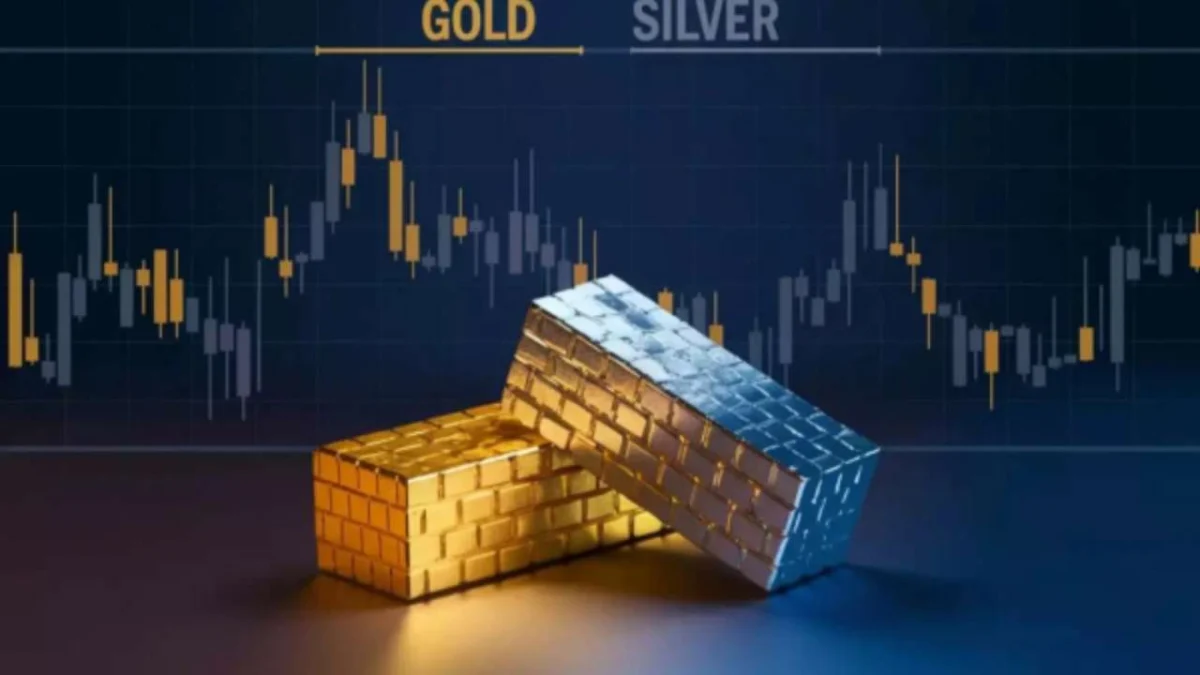
New Delhi, India – September 12, 2026 – India’s vibrant precious metals market continues its intricate dance with global economic forces, local consumer sentiment, and shifting currency valuations. As of Saturday, September 12, 2026, both gold and silver prices have registered movements influenced by a complex interplay of international trends, domestic demand, and the prevailing US Dollar exchange rate. Investors and consumers alike are closely monitoring these fluctuations, particularly as the nation anticipates the onset of its crucial festive season.
Today’s market snapshot reveals a slight uptick in gold prices, largely attributed to persistent global inflationary pressures and a renewed appetite for safe-haven assets. Silver, while generally experiencing less dramatic swings than gold, also saw its valuations influenced by global industrial demand and broader market sentiment.
Current Market Snapshot: Gold and Silver Prices on September 12, 2026
The Indian precious metals market, a significant global player, woke up to varied rates across major cities today. The benchmark price for 24-karat gold (999 pure) is currently pegged at Rs 15,667 per gram in major metros like Mumbai, Kolkata, and Chennai, with Delhi experiencing a slightly higher rate of Rs 15,682 per gram. For 22-karat gold, commonly used in jewellery and representing 91.67% purity, prices hover around Rs 14,361 per gram in Mumbai, Kolkata, and Chennai, rising to Rs 14,376 per gram in the capital.
Silver, often considered the ‘poor man’s gold’ but a crucial industrial metal, is trading at approximately Rs 2,49,900 per kilogram for 999 pure silver. For those dealing in smaller denominations, this translates to Rs 2,499 per 10 grams across Delhi, Mumbai, Kolkata, and Chennai. Sterling silver (925 purity) is priced at around Rs 2,49,000 per kilogram.
)
These figures, sourced from market aggregators like Good Returns, underscore the dynamic nature of India’s bullion market, which remains highly susceptible to both international and domestic catalysts.
Unpacking the Influencing Factors: A Deeper Dive
The price of precious metals in India is not a monolithic entity but rather a reflection of several interconnected global and local phenomena. Understanding these factors is crucial for anyone looking to invest or purchase.

Global Market Trends: The Macroeconomic Bedrock
The most significant driver for gold and silver prices in India originates from international markets. Global economic stability, geopolitical tensions, and the monetary policies of major central banks profoundly impact bullion.
- Inflationary Pressures: The slight increase in gold prices today is partly attributed to persistent global inflationary pressures. In a climate where the purchasing power of fiat currencies is eroding, investors often turn to gold as a traditional hedge against inflation. Throughout 2026, several major economies have grappled with elevated inflation rates, prompting central banks to consider hawkish stances, yet paradoxically bolstering gold’s appeal.
- Geopolitical Stability: Gold’s perennial role as a safe-haven asset means that any global political instability, regional conflicts, or heightened economic uncertainty can trigger a rush towards the metal. While September 12, 2026, might not mark a major geopolitical flashpoint, underlying tensions in various parts of the world, which have intermittently flared throughout the year, continue to provide a floor for gold prices.
- Central Bank Policies: Decisions by central banks, particularly the U.S. Federal Reserve, regarding interest rates and quantitative easing/tightening, are paramount. Higher interest rates typically make non-yielding assets like gold less attractive compared to interest-bearing bonds. However, if interest rate hikes are perceived as insufficient to curb inflation, or if the global economic outlook darkens, gold can still find support. The market is currently weighing expectations of future rate movements against ongoing economic data.
- Strength of the U.S. Dollar: As gold is primarily denominated in U.S. dollars in international markets, a stronger dollar generally makes gold more expensive for buyers using other currencies, potentially dampening demand. Conversely, a weaker dollar can make gold more affordable and thus more attractive. The USD-INR exchange rate, therefore, plays a direct role in determining the landed cost of gold in India.
Local Demand Dynamics: The Indian Heartbeat
India’s cultural affinity for gold and silver ensures robust domestic demand, particularly during specific periods.
)
- Festive and Wedding Seasons: India is gearing up for its extensive festive season, which traditionally kicks off in the autumn months and culminates with Diwali. This period, alongside the auspicious wedding season, witnesses a massive surge in demand for gold and silver jewellery, coins, and bars. This inherent cultural demand often acts as a significant upward pressure on local prices, sometimes even overriding global trends. As of September 2026, jewellers are already reporting increased inquiries, anticipating a strong festive demand.
- Cultural Significance: Gold and silver are not merely commodities in India; they are integral to religious ceremonies, social customs, and serve as symbols of wealth, security, and auspiciousness. This deeply ingrained cultural value ensures a continuous baseline demand irrespective of minor price fluctuations.
- Rural vs. Urban Demand: Demand patterns can vary between rural and urban areas. Rural demand for gold is often linked to agricultural prosperity and serves as a traditional store of wealth, especially in regions with limited access to formal banking. Urban demand, while also cultural, is more sensitive to investment opportunities and market trends.
Currency Exchange Rates: The Rupee’s Role
The exchange rate between the Indian Rupee (INR) and the U.S. Dollar (USD) is a critical determinant of local precious metal prices. Since international gold prices are quoted in USD, a depreciation of the Rupee against the Dollar makes imported gold more expensive in INR terms, even if the international dollar price remains constant. Conversely, a stronger Rupee can lower the cost. India imports a significant portion of its gold, making the USD-INR rate a direct and immediate influencer of domestic prices. Market analysts suggest that the Rupee has seen moderate volatility against the dollar in recent months, contributing to the observed price movements.
Industrial Demand for Silver: A Unique Driver
While gold’s demand is predominantly investment and jewellery-driven, silver benefits significantly from industrial applications. Its excellent electrical and thermal conductivity makes it indispensable in various high-tech sectors.
)
- Solar Energy: The burgeoning global solar energy industry is a massive consumer of silver, used in photovoltaic cells. As nations worldwide push for renewable energy targets, the demand from this sector continues to grow.
- Electronics and Automotive: Silver is also critical in electronics (e.g., switches, circuit boards) and in the automotive industry (e.g., electrical contacts). The increasing electrification of vehicles further boosts silver’s industrial utility.
- Medical Applications: Its antibacterial properties make silver valuable in medical devices and wound care.
Any significant shifts in these industrial sectors, or advancements in alternative materials, can have a noticeable impact on silver prices. Throughout 2026, robust global manufacturing activity has provided a consistent demand floor for silver, despite occasional market corrections.
Chronology of 2026: A Year of Volatility and Resilience
The year 2026 has been marked by a series of events that have collectively shaped the trajectory of precious metal prices. Following a relatively stable start to the year, Q2 saw heightened concerns over global economic growth deceleration, which initially boosted gold’s safe-haven appeal. However, subsequent hawkish signals from major central banks tempered these gains.
Mid-year, persistent inflation figures, particularly from developed economies, reignited interest in gold as an inflation hedge. Silver, meanwhile, experienced a dual pull: strong industrial demand driven by green energy initiatives provided support, while its correlation with broader commodity markets introduced volatility. The USD-INR pair has also seen its share of fluctuations, reacting to domestic economic data, foreign institutional investment flows, and global risk appetite. The current September 12th prices reflect a market that is balancing ongoing inflation fears with expectations of future monetary policy adjustments and the imminent surge in festive demand.
)
City-Wise Rates: A Detailed Breakdown (September 12, 2026)
Understanding the micro-level variations is essential for consumers and businesses operating in different regions. The slight differences in city-wise prices can be attributed to local taxes, transportation costs, and specific market dynamics.
Gold Prices in India Today:
- Delhi:
- 24K Gold (999 Pure): Rs 15,682 per gram
- 22K Gold (91.67% Pure): Rs 14,376 per gram
- Mumbai:
- 24K Gold (999 Pure): Rs 15,667 per gram
- 22K Gold (91.67% Pure): Rs 14,361 per gram
- Kolkata:
- 24K Gold (999 Pure): Rs 15,667 per gram
- 22K Gold (91.67% Pure): Rs 14,361 per gram
- Chennai:
- 24K Gold (999 Pure): Rs 15,667 per gram
- 22K Gold (91.67% Pure): Rs 14,361 per gram
Silver Prices in India Today:
- Delhi:
- Silver 999 Pure: Rs 2499 per 10 grams (equivalent to Rs 2,49,900 per kilogram)
- Mumbai:
- Silver 999 Pure: Rs 2499 per 10 grams (equivalent to Rs 2,49,900 per kilogram)
- Kolkata:
- Silver 999 Pure: Rs 2499 per 10 grams (equivalent to Rs 2,49,900 per kilogram)
- Chennai:
- Silver 999 Pure: Rs 2499 per 10 grams (equivalent to Rs 2,49,900 per kilogram)
Expert Analysis and Market Sentiment: Official Responses and Outlook
While governments and central banks typically do not comment on daily price movements of commodities, their policy decisions and economic outlooks heavily influence market sentiment. Analysts from leading financial institutions provide crucial interpretations of these broader signals.
)
"The current stability in gold prices, despite some hawkish rhetoric from global central banks, indicates that underlying inflation concerns and geopolitical uncertainties are providing strong support," commented Ms. Anjali Sharma, Head of Commodity Research at Zenith Financials. "Investors are increasingly looking at gold not just as a hedge, but as a strategic asset for portfolio diversification in an increasingly unpredictable economic landscape. For India, the upcoming festive season is a non-negotiable demand driver that will likely keep local prices robust, even if global markets see minor corrections."
Mr. Rajeev Kapoor, a Senior Economist at the Indian Council for Economic Research (ICER), weighed in on the Rupee’s impact. "The Rupee’s performance against the Dollar is a critical variable. While the Reserve Bank of India (RBI) continues to manage currency volatility, any significant depreciation would immediately translate to higher landed costs for gold. Conversely, a stronger Rupee could offer some relief to domestic buyers, but the overall trend of inflation and global demand seems to be the dominant factor for now."
)
Regarding silver, Mr. Siddharth Mehta, a Precious Metals Strategist at Global Bullion Group, highlighted its dual nature. "Silver’s performance on September 12, 2026, reflects its unique position. While it benefits from the same safe-haven appeal as gold during economic uncertainty, its strong industrial ties to green technology and electronics mean its trajectory is also tied to global manufacturing health. We expect industrial demand, particularly from the solar sector, to be a consistent driver for silver prices through the remainder of 2026."
Implications for Investors and Consumers
The current price trends carry significant implications for various stakeholders in the Indian market.
)
For Investors: Strategic Allocation
For investors, the present environment suggests a continued role for precious metals in a diversified portfolio. Gold’s recent resilience against inflation and its safe-haven characteristics make it an attractive asset during periods of economic uncertainty. Silver, with its lower entry point and industrial demand, offers a different risk-reward profile, potentially providing higher beta exposure to economic growth cycles.
- Long-Term Holdings: Many financial advisors recommend holding a portion of one’s portfolio in gold as a long-term hedge against inflation and currency devaluation. Physical gold (bullion, coins) or Gold ETFs are popular avenues.
- Tactical Plays: Short-term investors might look for opportunities arising from global news events or significant shifts in currency markets. However, this carries higher risk.
- Digital Gold/Silver: The increasing popularity of digital gold and silver platforms offers convenient and secure ways to invest in smaller denominations, reducing storage and purity concerns.
For Consumers: Navigating Purchases
For the average Indian consumer, especially with the festive season approaching, understanding these price dynamics is crucial for making informed purchasing decisions.
)
- Timing Purchases: While it’s difficult to perfectly time the market, monitoring trends and making purchases during periods of relative stability or minor dips can be beneficial.
- Purity and Hallmarking: Consumers are advised to always check for BIS (Bureau of Indian Standards) hallmarking for gold jewellery and coins to ensure purity.
- Making Charges: Beyond the metal price, making charges on jewellery constitute a significant portion of the final cost. These charges can vary widely, so comparing across jewellers is advisable.
- Silver as an Alternative: With gold prices remaining elevated, silver offers a more affordable alternative for cultural purchases and gifts, especially given its traditional significance in many Indian households.
Market Dynamics and Future Outlook
Looking ahead, the precious metals market in India is expected to remain highly sensitive to a confluence of factors. On the global front, the path of inflation, the pace of interest rate adjustments by major central banks, and the evolving geopolitical landscape will be critical. Any escalation of global tensions or a significant downturn in economic growth could push gold prices higher as investors seek safety.
Domestically, the strength of the Rupee and the vigor of the upcoming festive and wedding seasons will dictate local demand. A robust agricultural output, leading to increased rural incomes, could further boost gold and silver purchases. Supply-side dynamics, including global mining output and recycling rates, also play a role, though typically with a longer-term impact.
)
Analysts generally anticipate gold to maintain its strong footing, potentially seeing further upside if inflation persists or global economic anxieties deepen. Silver’s outlook remains tied to both its monetary and industrial characteristics, with strong industrial demand providing a stable base. However, investors are cautioned that any sudden shifts in monetary policy or a significant global economic contraction could introduce volatility.
Conclusion
As of September 12, 2026, the Indian gold and silver markets reflect a delicate balance between global economic crosscurrents and robust domestic demand. While global inflationary pressures and safe-haven buying are providing a tailwind for gold, and industrial applications support silver, the specific rates in Indian cities are also shaped by the USD-INR exchange rate and the anticipation of the nation’s culturally significant festive season. For both investors and consumers, a vigilant eye on these multifaceted influences will be key to navigating the dynamic world of precious metals in the months to come. The enduring appeal of gold and silver in India ensures that these metals will remain at the forefront of financial and cultural discourse, continuously adapting to the ebb and flow of national and international economies.
