

NEW DELHI, [Date] – In a dramatic escalation of concerns over electoral integrity, the Cockroach Janta Party (CJP) on Thursday issued a stringent ultimatum to Chief Election Commissioner (CEC) Gyanesh Kumar, demanding his resignation within 48 hours. Accusing the CEC of "undermining voter rights," the burgeoning pressure group warned of a nationwide agitation, including a potent "Jantar Mantar 2.0" protest in the capital, should its demands not be met. The CJP’s confrontational stance follows recent revelations of significant internal dissent within the Election Commission of India (ECI) and widespread alleged exclusions from electoral rolls.
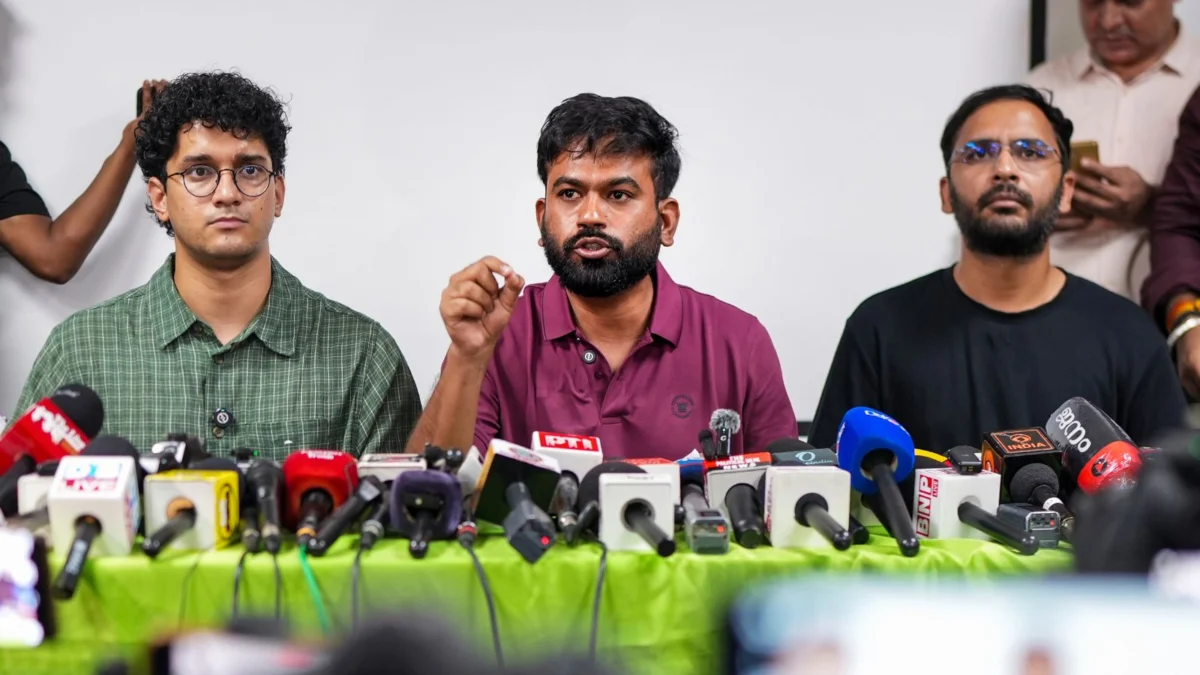
At a high-stakes press conference in New Delhi, flanked by co-conveners Saurav Das and Ashutosh Ranka, CJP national convener Abhijeet Dipke declared, "If Gyanesh Kumar does not resign within 48 hours, we will start a nationwide protest before coming for a protest in Delhi. If the CEC doesn’t resign, Jantar Mantar 2.0 will definitely happen." The party also outlined three pivotal demands, aiming to restore transparency and accountability to India’s electoral processes. This bold challenge positions the CJP at the forefront of a burgeoning national debate on the independence and operational integrity of one of India’s most critical democratic institutions.
Unpacking the CJP’s Ultimatum: A Crisis of Confidence
The CJP’s demand for CEC Gyanesh Kumar’s resignation is rooted in a profound loss of confidence in the Election Commission’s ability to safeguard voter rights and ensure transparent electoral processes. The group contends that under Kumar’s leadership, the ECI has exhibited a pattern of decisions and operational opacities that fundamentally compromise the democratic principle of free and fair elections. The threat of a "Jantar Mantar 2.0" is a direct reference to the CJP’s past success in mobilising public opinion, which notably led to the resignation of Union Education Minister Dharmendra Pradhan following protests against the NEET exam paper leak in July. This history underscores the CJP’s capacity to translate grassroots discontent into impactful political action, signaling that their current demands are not to be taken lightly.
The core of the CJP’s grievance revolves around allegations of systemic disenfranchisement, particularly through the Special Intensive Revision (SIR) exercise, and a perceived erosion of the ECI’s collegial decision-making process. The party’s leadership, having successfully leveraged public outrage on previous occasions, is now attempting to galvanize support around the fundamental right to vote, arguing that any questions over the electoral system itself undermine the very fabric of Indian democracy.
A Chronology of Growing Concerns
The CJP’s recent activism is not an isolated event but rather the latest chapter in its evolution from an online collective into a potent pressure group. Initially gaining prominence through digital advocacy, the CJP has demonstrated an increasing capability to translate virtual momentum into tangible on-ground protests. Their success in orchestrating the Jantar Mantar protests against the NEET paper leak, which directly contributed to a Union Minister’s resignation, cemented their reputation as a force capable of holding administrative powers to account.
Following this high-profile victory, the CJP embarked on a campaign focused on broader administrative accountability, shedding light on the state of primary schools and healthcare facilities in villages and towns nationwide. This grassroots engagement, however, reportedly met with "pushback on the ground," indicating the challenges of sustaining public momentum on diverse, often localized, issues. The current controversy surrounding the Election Commission, therefore, provides the CJP with a high-profile, national issue that directly impacts every citizen’s democratic rights, offering a strategic platform to remain a central part of the national conversation and build on its previous successes.
The immediate catalyst for the CJP’s current offensive is a damning investigative report published by The Indian Express. The report, which sent ripples through political and administrative circles, revealed that Election Commissioners Sukhbir Singh Sandhu and Vivek Joshi had formally objected on record at least 14 times over a period of 10 months. These objections pertained to decisions related to the Special Intensive Revision (SIR) of electoral rolls, which were allegedly taken without their knowledge or approval, highlighting "glaring gaps in processes." This unprecedented public exposure of internal dissent within the ECI suggested a fundamental breakdown in its collegial functioning, raising serious questions about the transparency and legality of critical electoral decisions.
In the wake of The Indian Express expose, the ECI issued a response on Wednesday, acknowledging the existence of these "notes." However, its explanation proved to be largely dismissive and vague. The Commission described these internal objections merely as a "part of the decision-making process" and "standard, ongoing practices," asserting that "differing views and observations are a normal part of deliberation in any institution." Signed by Deputy Director P Pawan, the press note added that "the suggestions given by the Commissioners were for further improving the electoral processes." Crucially, the ECI’s statement conspicuously failed to respond to any of the specific concerns raised by Commissioners Sandhu and Joshi, nor did it clarify whether or how these objections were actually addressed or if the disputed decisions were subsequently altered or reviewed. This non-committal response from the ECI only served to fuel the CJP’s narrative of opacity and unaccountability, setting the stage for their aggressive demands for the CEC’s resignation and broader electoral reforms.
Supporting Data: The Allegations of Undermining Voter Rights
The CJP’s "Election Commission Thik Karo" (Fix the Election Commission) campaign pivots around several critical allegations that, if true, represent a severe undermining of voter rights and electoral integrity. The primary focus of this campaign is the alleged exclusion of more than 13 crore names from draft electoral rolls across 30 states and Union Territories during the Special Intensive Revision (SIR) exercise. This staggering number, according to the CJP, points to a systemic flaw and potential deliberate disenfranchisement.
CJP national convener Abhijeet Dipke passionately articulated the group’s rationale: "Democracy means that people choose their government. This is not democracy, this is autocracy. Under Gyanesh Kumar, we are seeing an electoral system in which the Election Commission is deciding who remains on the voter rolls and who does not." He emphasized that when millions of names can seemingly vanish from draft rolls, "the burden is on the Commission to establish that every exclusion is lawful, transparent, and subject to meaningful review." Dipke further highlighted the unprecedented nature of the internal dissent, stating, "Two of the three Election Commissioners formally objected to decisions being taken without their knowledge or approval. The Election Commission must publicly explain how these objections were dealt with and who authorised the decisions in question." These statements underscore the CJP’s belief that the ECI’s current functioning falls short of democratic ideals and constitutional mandates.
Saurav Das, a co-convener of the CJP, further detailed three specific areas requiring immediate and rigorous scrutiny, providing granular evidence for the party’s broader allegations:
Alleged Blocking of First-Time Voters
Das pointed to a new directive introduced by the ECI, which mandates an additional declaration in the online Form 6 process for new applicants. This declaration requires first-time voters to provide information about their own or their parents’ presence in previous SIR rolls. The CJP alleges that this new requirement acts as an unnecessary bureaucratic hurdle, effectively "blocking" a significant number of first-time voters from registering. This mechanism, they argue, disproportionately affects young, mobile populations and those from marginalized communities who may not have ready access to such historical data, thereby disenfranchising a demographic critical to the vibrancy of any democracy. The CJP views this as a deliberate attempt to complicate the voter registration process, particularly for those who might be less familiar with electoral procedures.
Opaque Handling of Appeals in West Bengal
Another critical concern raised by Das pertains to the ECI’s handling of appeals from excluded voters, specifically citing issues in West Bengal. The CJP leader demanded absolute transparency in how the Commission processes SIR-related cases, including appeals of excluded voters and the legal steps taken in these matters. The lack of clarity around the appeals process, the criteria for re-inclusion, and the overall legal framework, according to the CJP, creates an environment ripe for arbitrary decisions and denies citizens their rightful recourse against wrongful exclusions. This opacity, they contend, erodes public trust and raises questions about the ECI’s commitment to due process.
Centralisation of Electoral Roll Data
The third major area of scrutiny outlined by Das is the centralisation of electoral roll data. The CJP expresses grave concerns that without robust transparency and accountability mechanisms, such centralisation could lead to significant risks. "The Election Commission cannot ask citizens to trust a system while refusing to explain how major changes to voter registration, deletion and data access are being authorised," Das asserted. He emphasized that "Every decision affecting a citizen’s right to vote must have a clear legal basis, an identifiable decision-maker and a transparent record." The centralisation of such sensitive data without adequate safeguards could potentially lead to data manipulation, security breaches, and a lack of localized oversight, making it difficult to trace and rectify errors or intentional malpractices.
Echoing these sentiments, Ashutosh Ranka, another co-convener, highlighted the far-reaching consequences of excluding genuine voters, which extend beyond the immediate electoral context. He noted that voter records are increasingly used for various administrative verifications, implying that wrongful exclusion could impact citizens’ access to other government services and rights. Ranka vehemently demanded an answer from the poll panel on who authorized the removal of citizens from electoral rolls without first ensuring a "transparent and accessible remedy." He underscored the constitutional gravity of the issue, stating, "The right to vote is a constitutional right protected through the electoral framework under Article 326. The Commission must answer to the citizens whose names have been excluded." This invocation of Article 326 elevates the CJP’s protest from a political grievance to a fundamental challenge to constitutional governance.
CJP’s Comprehensive Demands for Electoral Reform
Beyond the immediate call for CEC Gyanesh Kumar’s resignation, the CJP has articulated a comprehensive set of demands aimed at systemic reform within the ECI and the broader electoral framework. These demands reflect a deep concern for the institutional integrity and independence of the election body.
-
Independent Investigation into SIR Decisions: The CJP has called for an immediate and independent investigation into all decisions taken during the Special Intensive Revision (SIR) exercise. This investigation, they specify, must identify the officials responsible for authorizing the disputed changes and directives that allegedly led to the exclusion of millions of voters. The goal is to pinpoint accountability and understand the procedural lapses or intentional actions that may have compromised the integrity of the electoral rolls.
-
Halt Exclusions and Secure Electoral Rolls: The outfit demands an immediate halt to all SIR-related exclusions. Furthermore, they insist that the January 2025 electoral rolls be secured and all relevant SIR records and files be transferred to the Supreme Court or an independent judicially supervised inquiry. This measure aims to prevent further disenfranchisement, preserve crucial evidence of potential irregularities, and ensure that the scrutiny of these processes is conducted under the highest judicial oversight, thereby guaranteeing impartiality and transparency.
-
Repeal of the 2023 Appointment Law: A cornerstone of the CJP’s reform agenda is the demand for the repeal of the 2023 law governing the appointment of the Chief Election Commissioner and other Election Commissioners. This law, which replaced a previous system involving the Chief Justice of India in the selection panel, effectively gives the executive a predominant role in appointments. The CJP advocates for replacing it with a new framework that incorporates "wider institutional and civil-society participation." This proposed framework seeks to enhance the independence of the ECI by diversifying the selection committee, thereby minimizing executive influence and bolstering public trust in the impartiality of election officials.
-
Transparency from Dissenting Commissioners and ECI: Finally, the CJP has urged Commissioners Sukhbir Singh Sandhu and Vivek Joshi to publicly clarify their recorded objections regarding the SIR decisions. They also demand that the poll panel itself publish the relevant objection notes and responses, along with the underlying records. This call for transparency is crucial for an independent examination of the "competing claims" and to ascertain the veracity of the internal dissent and the ECI’s handling of it. Without such public disclosure, the CJP argues, the public remains in the dark about the true state of affairs within the election body.
Official Responses: ECI’s Stance and Criticisms
The official response from the Election Commission of India to The Indian Express‘ investigation, and by extension to the brewing controversy, has been characterized by a defensive posture and a reluctance to address specific allegations. On Wednesday, the ECI acknowledged the existence of "written notes, observations, technical suggestions and internal checks-and-balances" by its members. However, it framed these as "standard, ongoing practices" and a "normal part of deliberation in any institution" within the "decision-making process" before a final decision is taken.
The press note, signed by Deputy Director P Pawan, stated, "Differing views and observations are a normal part of deliberation in any institution. They are a part of the decision-making process before a final decision is taken." It further asserted that "the suggestions given by the Commissioners were for further improving the electoral processes."
Critically, the ECI’s response failed to directly answer any of the substantive concerns raised by Commissioners Sandhu and Joshi. It did not clarify whether the 14 reported objections were satisfactorily addressed, if any decisions were altered based on these objections, or who ultimately authorized the disputed SIR-related actions when the other commissioners were allegedly unaware. This generic response, while attempting to normalize internal dissent, has been widely criticized for its lack of transparency and its failure to reassure the public that due process and collegial decision-making are indeed paramount within the institution.
Critics argue that by describing the objections as merely "suggestions for further improving," the ECI effectively downplayed the gravity of its own commissioners formally recording dissent on critical decisions taken without their knowledge. This approach risks eroding public trust, as it suggests a stonewalling tactic rather than a genuine commitment to accountability and transparency. The absence of specific explanations for the alleged exclusion of 13 crore names or the new Form 6 requirements further reinforces the CJP’s narrative that the ECI is operating with an unacceptable level of opacity, potentially undermining the very foundations of India’s democratic electoral system.
Implications: The Future of Electoral Integrity and Public Trust
The unfolding saga involving the CJP’s aggressive demands and the ECI’s defensive stance carries profound implications for India’s democratic future and the public’s trust in its electoral processes.
Erosion of Public Trust: At the most fundamental level, these allegations, particularly those concerning the exclusion of millions of voters and the internal dissent within the ECI, risk severely eroding public confidence in the fairness and impartiality of elections. In a democracy, the legitimacy of governance hinges on the belief that elections are free, fair, and accessible to all eligible citizens. Any perception of systemic disenfranchisement or opaque decision-making within the election body can lead to widespread skepticism and disengagement.
Constitutional Scrutiny and Judicial Intervention: The CJP’s invocation of Article 326 (right to vote) and its demand for transferring SIR records to the Supreme Court signal a potential for increased constitutional and judicial scrutiny. If the issues remain unaddressed by the ECI, it is plausible that civil society organizations or even political parties might approach the judiciary, leading to legal battles that could further expose the ECI’s internal workings and potentially mandate reforms. Such interventions could set important precedents for safeguarding electoral integrity.
The Role of Civil Society and Pressure Groups: The CJP’s rise from an online platform to a powerful pressure group underscores the increasing importance of civil society in holding powerful institutions accountable. Their ability to mobilize public opinion, particularly on issues of democratic rights, could inspire other groups and amplify calls for transparency and good governance. The success or failure of their "Jantar Mantar 2.0" could shape future protest movements and their engagement with national issues.
Political Repercussions: The controversy is likely to become a potent political talking point. Opposition parties could seize upon the CJP’s allegations to criticize the government, especially given the 2023 law that altered the EC appointment process, making it less independent of executive influence. This could transform the debate from an administrative issue into a significant political battleground, especially as the country gears up for future elections.
Need for Fundamental Reforms: The CJP’s demand for repealing the 2023 law governing EC appointments highlights a broader need for fundamental reforms to ensure the institution’s independence and impartiality. A framework involving wider institutional and civil-society participation in the selection process is crucial for bolstering public faith in the ECI. Without such reforms, questions about the ECI’s autonomy will persist, regardless of the individuals holding office.
Future of "Jantar Mantar 2.0": The CJP’s threat of a nationwide agitation culminating in "Jantar Mantar 2.0" serves as a critical pressure point. The scale and intensity of such protests would largely depend on the ECI’s response to the 48-hour ultimatum and the public’s perception of its willingness to address the concerns. A massive turnout could force the ECI and potentially the government to reconsider their stance, while a lukewarm response might indicate the challenges of sustaining prolonged public outrage on complex institutional issues.
In conclusion, the CJP’s aggressive stance against CEC Gyanesh Kumar and the ECI has propelled critical questions about voter rights, electoral transparency, and institutional independence into the national spotlight. The coming days will be crucial in determining whether this challenge will lead to meaningful reforms, a significant escalation of public agitation, or a further erosion of trust in India’s democratic foundations. The nation watches as one of its most vital institutions faces an unprecedented test of its integrity and commitment to the principles it is sworn to uphold.
