

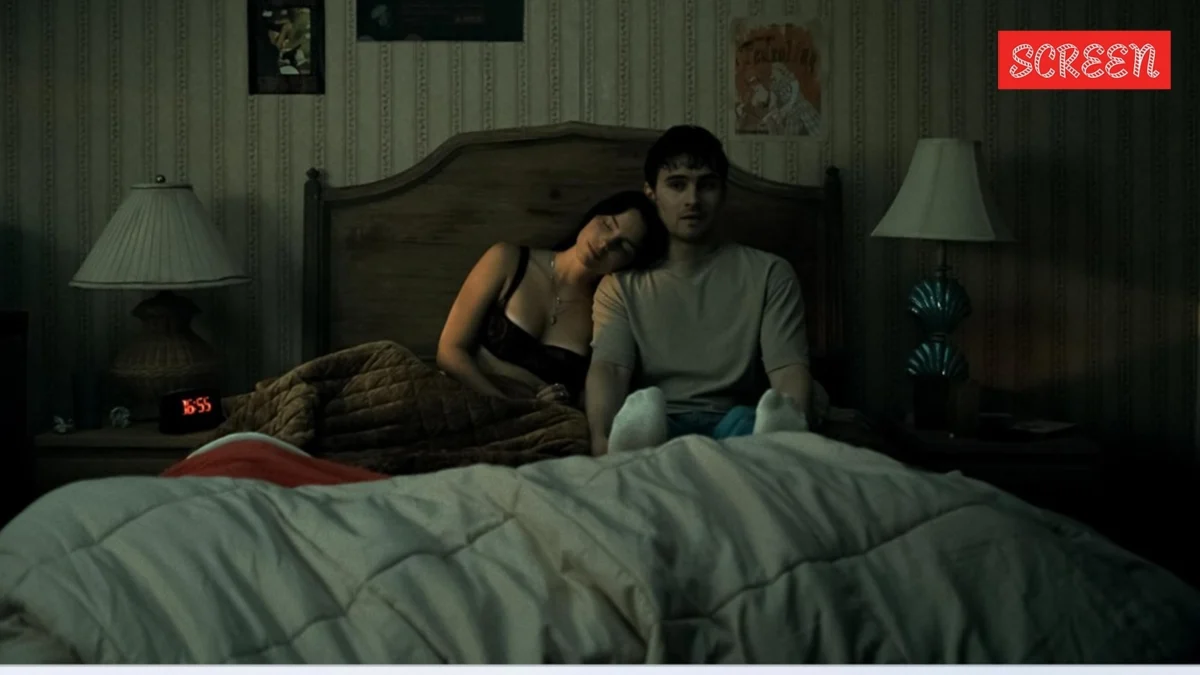
Indian cinema titan Ram Gopal Varma has thrown his considerable weight behind the burgeoning global horror sensation, "Obsession," hailing it as a groundbreaking masterclass for filmmakers worldwide. Varma, known for his distinctive cinematic vision and often provocative commentary, has not only expressed an ardent admiration for the film but has also directly challenged widely reported figures regarding its production budget. His pronouncements arrive as "Obsession," directed by Curry Barker, continues its meteoric rise, defying conventional industry wisdom with its astonishing financial success and critical acclaim.
A Global Sensation Redefining Horror Filmmaking
"Obsession," a supernatural psychological horror film helmed by American director Curry Barker, has transcended its independent origins to become one of the year’s most talked-about cinematic events. The film, starring Michael Johnston, Inde Navarrette, and Cooper Tomlinson in pivotal roles, has captivated audiences globally, not just for its chilling narrative but also for its remarkable financial performance. Reports indicate that "Obsession" has earned an astounding figure, reportedly over 230 times its initial production budget, solidifying its status as a runaway success story.
The film’s impact is not confined to box office numbers. It has garnered significant praise from both discerning audiences and influential figures within the filmmaking fraternity. This widespread appreciation has now been amplified by the endorsement of veteran Indian filmmaker Ram Gopal Varma, who revealed his profound admiration for the movie, admitting to being "obsessed" with its innovative approach.
Varma’s Declaration: A Paradigm Shift in Filmmaking
In a series of pronouncements on the social media platform X (formerly Twitter) on Sunday, June 7th, Ram Gopal Varma, a filmmaker whose influence on Indian cinema has been profound since the 1990s, articulated his admiration for "Obsession." He posited that the film serves as a crucial lesson for filmmakers across the globe, demonstrating that the conventional prerequisites for cinematic success—namely, the involvement of marquee stars, substantial budgets, and elaborate visual effects (VFX)—are not indispensable.
Varma’s assessment lauded the film’s technical prowess, particularly highlighting its editing and sound design as key contributors to an immersive and unsettling viewing experience. "I am obsessed with Obsession!" Varma declared in an extensive post. "Till a few weeks back, the whole industry believed that only movies with big stars, massive budgets, and VFX spectacles would pull audiences into theatres. Now, Obsession has reset that button. It has no big stars, no grand locations, no lavish production design, no top technicians, and was not shot in foreign locations."
This assertion from Varma carries significant weight, given his reputation for dissecting cinematic trends and identifying emerging talents. His endorsement suggests that "Obsession" represents a significant departure from the established norms of blockbuster filmmaking, offering a potent counter-narrative to the prevailing industry mindset.
Unpacking the Financial Discrepancies: Budget and Box Office
According to reports from esteemed industry publication The Hollywood Reporter, "Obsession" was initially mounted on a modest budget of approximately $750,000 (around Rs 7.12 crore). However, the film’s financial trajectory has been nothing short of extraordinary. Global box office trackers, such as Box Office Mojo, estimate its worldwide gross to be a staggering $178.78 million (approximately Rs 1,697.51 crore).
Within India, the film has also made a significant impact. Industry tracker Sacnilk reported that "Obsession" has garnered Rs 34.15 crore in domestic collections. Following a strong performance on Saturday, June 6th, which saw it mint Rs 6.75 crore, its cumulative net collection in India reached Rs 28.60 crore. These figures underscore the film’s broad appeal, resonating with audiences across diverse markets.
Varma’s Skepticism: Challenging the Reported Budget
While acknowledging the film’s immense financial success, Ram Gopal Varma has publicly questioned the accuracy of its reported production budget. He expressed his disbelief that the film’s actual making cost could have reached the Rs 7 crore mark, suggesting a significantly lower figure.
"Contrary to its reported budget of Rs 7 crore, it’s easy to see that its pure making cost cannot be more than Rs 70 lakh minus technical fees," Varma stated. He justified this assertion by pointing to the film’s contained shooting locations. "Considering it’s entirely shot in exactly three locations (two rooms in a modest house, interior of a car and the interior of a small store)," he elaborated, implying that such limited settings would naturally translate to a more economical production. This critical observation from Varma, a seasoned filmmaker with a keen eye for production intricacies, invites a closer examination of the financial reporting surrounding "Obsession."
A Deep Dive into Barker’s Direction and Visual Grammar
Varma’s praise extends beyond the film’s financial aspects to a meticulous analysis of director Curry Barker’s directorial approach. He commended Barker for the movie’s "visually simplistic but very unique" style. A particular point of admiration for Varma was Barker’s deliberate use of negative space, or "too much headspace," in many shots. Varma found this technique to be surprisingly effective in enhancing the film’s unsettling mood.
"The director’s style is visually simplistic but very unique," Varma noted. "I was especially struck by his use of too much headspace in many shots, which strangely enhances the mood." This observation highlights Barker’s innovative use of cinematic composition to evoke psychological responses from the audience, a departure from conventional framing techniques.
The Art of Editing: A Psychological Weapon
Ram Gopal Varma’s analysis delves deeply into Curry Barker’s approach to editing, viewing it not merely as a technical craft but as a potent tool for psychological manipulation. "He treats editing not just as a technical craft, but as a psychological weapon," Varma explained. He pointed to the film’s dynamic editing rhythm, characterized by a blend of rapid cuts and deliberately extended takes.
"Blending rapid cuts with especially lengthy stays (case in point is long stay on Nikki’s face in interval shot)," Varma elaborated. "These long takes build unbearable tension because the audience is trapped in the character’s perspective with no escape." This technique, Varma argues, forces viewers to confront the character’s experience directly, creating a sense of claustrophobia and heightened unease.
Furthermore, Varma was particularly impressed by Barker’s strategic use of sound effects to punctuate the narrative. "His cutting of sharp sound effects (a door slam, a sudden laugh, and a heartbeat) to create rhythmic punctuation is awe-inspiring." For those unfamiliar with the film’s production, it is noteworthy that Barker himself took on the dual roles of screenwriter and editor, underscoring his comprehensive creative vision for "Obsession."
Varma summarized Barker’s editing philosophy as an endeavor to "make the audience feel what the character feels, which is being unstable." He observed that Barker eschews traditional editing conventions, such as smooth continuity and clearly delineated emotional beats, in favor of an "extremely anarchic" style. The resultant effect, according to Varma, is a film that feels "unpredictable and alive, as if the editing itself were part of the horror."
Psychological Resonance and Global Appeal
Ram Gopal Varma further drew parallels between Barker’s lighting techniques and those of acclaimed director David Fincher, noting the effective use of "single-source lighting and lit up spaces rather than individual shots." However, he contended that Barker achieved these effects with even greater impact, leading to the film’s substantial financial success on a minimal budget.
"What needs to be even more studied are the pathbreaking editing and sound design techniques, and not to forget character design," Varma emphasized, pointing to these elements as crucial areas for future filmmakers to dissect and learn from.
In a subsequent post on X, Varma offered a compelling psychological theory to explain the widespread resonance of "Obsession." He proposed that the film’s success stems from its ability to tap into fundamental aspects of human relationships. "My theory on the tremendous success of Obsession is that every woman has a little bit of Nikki in her, which she too knows. And every man sees a little bit of Nikki in his woman; hence the connect," Varma posited. This observation suggests that the film’s horror elements are intertwined with relatable, albeit potentially unsettling, truths about human nature and interpersonal dynamics.
The global phenomenon of "Obsession" thus stands as a testament to the power of inventive storytelling, meticulous execution, and a deep understanding of psychological drivers, all achieved without the reliance on conventional industry gatekeepers. Ram Gopal Varma’s fervent endorsement and incisive analysis serve to elevate the film’s status, not just as a commercial success, but as a significant artistic achievement that is reshaping the landscape of horror cinema.
