

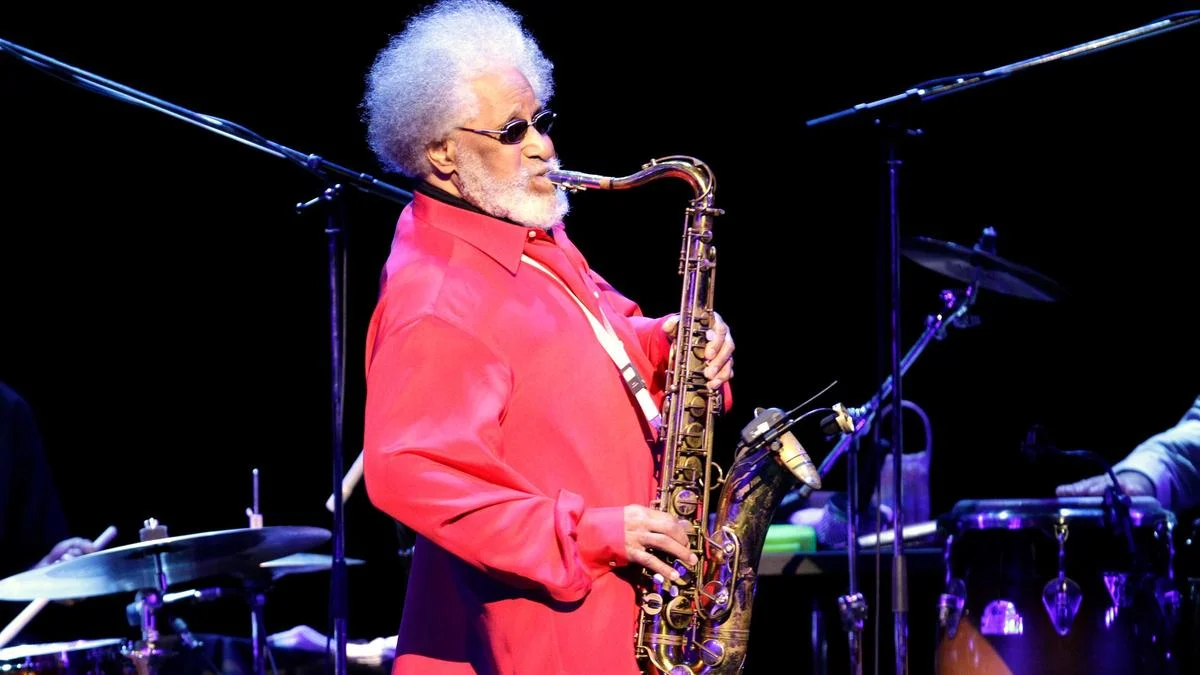
New York, NY – May 25, 2026 – The jazz world is in mourning today with the passing of Sonny Rollins, a towering figure whose revolutionary tenor saxophone playing and relentless spirit of innovation defined the genre for over half a century. Rollins, who died at his home in Woodstock, New York, at the age of 95, was a true titan, a "restless genius" whose distinctive tone and fearless exploration kept him at the vanguard of jazz until his retirement.
Spokesperson Terri Hinte confirmed Rollins’ death to The Associated Press, citing no specific cause but noting that he had been largely homebound in recent years due to various physical ailments. His departure marks the end of an era, leaving behind a legacy that has profoundly shaped the landscape of modern music.
Rollins was not merely a performer; he was a musical architect, a sonic philosopher whose improvisational prowess and bold stylistic evolutions inspired generations of musicians. He stood as one of the last living giants of the bebop era, a lineage that includes luminaries such as Charlie Parker and John Coltrane, with whom he is invariably compared as one of the most influential saxophonists of all time.
His impact extended far beyond the confines of the jazz club. Rock aficionados, for instance, were captivated by his poignant saxophone solo on the Rolling Stones’ 1981 hit "Waiting on a Friend," a collaboration born from observing Mick Jagger’s inimitable dance moves. This cross-genre appeal underscored Rollins’ universal musical language.
Despite decades of critical acclaim and a devoted fanbase, Rollins remained a perpetual student, famously referring to himself as "a work in progress." He never rested on his laurels, eschewing the comfort of a singular style for a lifelong pursuit of sonic discovery. This commitment to evolution often led him to take extended hiatuses from performing, time he dedicated to introspection and the refinement of his craft.
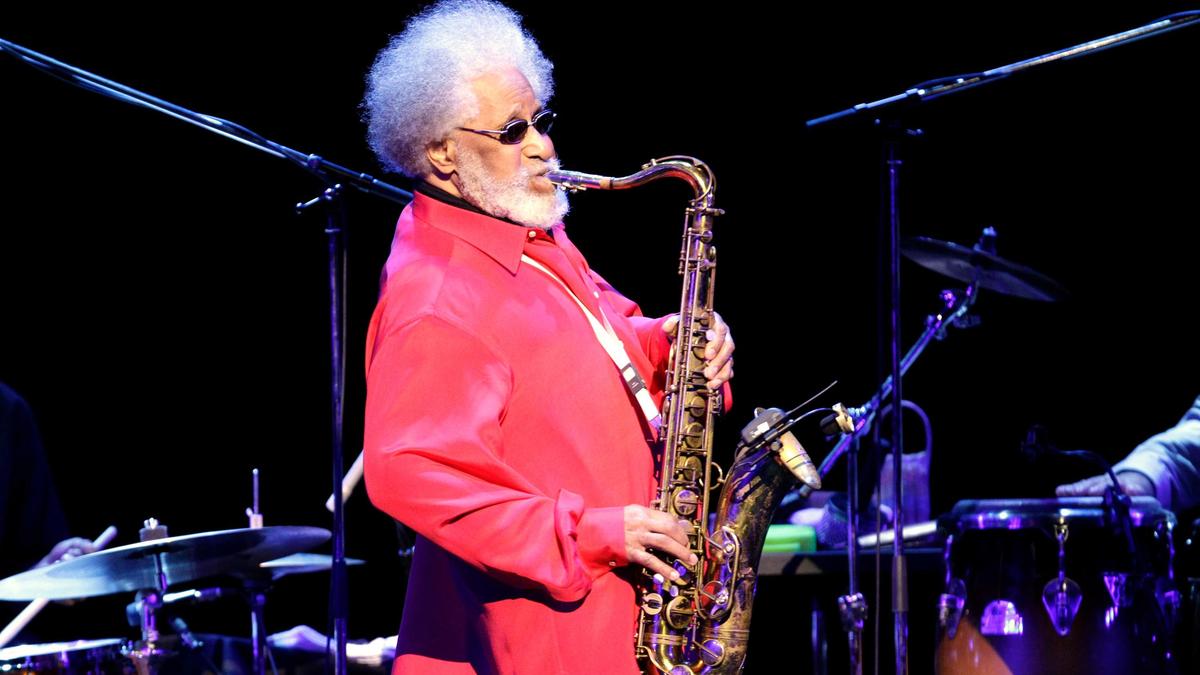
A Life in Sound: A Chronological Journey of Innovation
Born Theodore Walter Rollins on September 7, 1930, in Harlem, New York City, Sonny Rollins entered a world steeped in music. His father was a naval petty officer who played the clarinet, his sister a pianist, and his older brother a violinist. While initially drawn to the piano at age eight, the instrument didn’t capture his imagination. His childhood passions leaned towards the outdoors and baseball. However, by the age of eleven, the allure of the saxophone, specifically the alto, proved irresistible. He convinced his parents to purchase one for him, embarking on a journey of self-taught mastery, supplemented by the occasional lesson he could afford.
His prodigious talent quickly became apparent. By his late teens, he was already a seasoned performer, navigating the vibrant Harlem club scene and transitioning to the tenor saxophone, which would become his signature instrument. His early career gained significant momentum when he was invited to join the legendary Thelonious Monk’s band. This pivotal opportunity opened doors to collaborations with other jazz titans like Miles Davis and Bud Powell, who introduced him to the recording studio even before he completed high school.
However, like many artists of his generation, Rollins’ burgeoning career was threatened by the specter of addiction. At 19, he became entangled with heroin, a struggle that would lead to two prison stints – a 10-month sentence in 1950 and a three-month term in 1953. The depths of his addiction saw him living on the streets of Chicago, a stark contrast to the promising musician he was poised to become.
A turning point arrived in 1954 when Rollins voluntarily checked himself into a hospital in Lexington, Kentucky, for drug treatment. This period of detoxification proved to be more than just a physical cleansing; it was a profound spiritual awakening. "I began to have a deeper philosophy of what life was about," he recalled in a 2007 interview with the AP. "From that point on is when my consciousness awoke." This newfound clarity and perspective fueled his artistic rebirth.
Upon his release, Rollins returned to Chicago and joined the esteemed Max Roach-Clifford Brown quintet. In 1956, he released what is now considered a landmark solo album, "Saxophone Colossus." Its unadorned, hard bop sound unequivocally announced his arrival as one of jazz’s premier saxophonists, and the album remains a cornerstone of the genre.

The subsequent two years saw Rollins experimenting with a daring new format: the pianoless trio. This bold move resulted in three more critically acclaimed albums that redefined the possibilities of small jazz ensembles: "Way Out West," "A Night at the Village Vanguard," and "Freedom Suite." These recordings showcased his exceptional melodic invention and his ability to create rich harmonic textures with a stripped-down instrumentation.
At the zenith of his popularity, Rollins made a radical decision. He retreated from the public eye, embarking on a self-imposed seclusion for two years. He spent this time practicing in a solitary niche above the East River, on a Williamsburg Bridge walkway. This period of intense introspection and musical immersion was a testament to his unwavering dedication to his art. "The thing that I am most proud of in my career is that fact that I was able to see beyond being popular and all that stuff," he told the AP in 2007, "and do what my inner self told me to do."
During his absence, jazz continued to evolve, moving towards the more experimental and often chaotic sounds of free jazz. When Rollins re-emerged in 1961, he embraced this new sonic landscape, a decision that initially divided his audience. He continued to navigate this evolving terrain throughout the mid-1960s, touring extensively in Europe and fluidly shifting between traditional and avant-garde approaches. His musical contributions were also recognized in film, notably with his original music for the soundtrack of the 1966 British film "Alfie."
A profound encounter with Zen Buddhism during a trip to Japan led to another significant sabbatical, extending into the early 1970s. This period of spiritual exploration further deepened his artistic sensibility.
By the time he resumed recording in 1972, Rollins was no longer just a rising star but an established legend. He achieved mainstream recognition, receiving a Guggenheim fellowship and induction into the Downbeat Hall of Fame. His performances began to grace prestigious concert halls, replacing the intimate nightclub settings of his earlier career.

Sustained Excellence and Enduring Influence
Rollins’ prolific output continued through the 1990s and 2000s, yielding a string of critically lauded albums. He maintained a rigorous practice regimen well into his eighties, demonstrating an unwavering commitment to his craft. The eventual diagnosis of pulmonary fibrosis, a progressive lung disease, ultimately forced him into retirement. His final concert took place in 2012, and he ceased playing altogether in 2014.
Despite the physical limitations, his passion for music never waned. He spoke of missing the act of playing more than the applause. "I played a couple of concerts early on where I was out in the open in the afternoon," he told The New York Times in 2020. "I was able to look up in the sky, and I felt a communication; I felt that I was part of something. Not the crowd. Something bigger."
His late-career achievements were further recognized with Grammy Awards. In 2001, his album "This is What I Do" earned him a Grammy for Best Jazz Instrumental Album. He received another Grammy in 2006 for Best Jazz Instrumental Solo for his rendition of "Why Was I Born?" This poignant performance was captured on the album "Without a Song: The 9/11 Concert," a live recording from a concert in Boston just four days after the September 11th attacks. Rollins, who had been evacuated from his apartment near Ground Zero, performed at the urging of his wife and manager, Lucille, who passed away in 2004.
Rollins’ survivors include his nephew, Clifton Anderson, and nieces Vallyn Anderson and Gabrielle DeGroat.
A Legacy of Unwavering Artistic Integrity
Sonny Rollins’ career was a masterclass in artistic integrity and relentless self-improvement. His ability to consistently push boundaries, even when it meant alienating some of his initial fanbase, cemented his status as a visionary. He famously found listening to his earlier recordings "excruciating" because he could still hear the perceived flaws. "I don’t consider myself a musician that has learned as much as I want to learn," he stated in 2007. This insatiable drive for growth defined his enduring impact.

He leaves behind a vast trove of unreleased recordings, a testament to his prolific creative output. However, Rollins expressed no desire to dictate their release or curation. "After I get out of this planet, I’m not going to have any say about what’s going on, so I’m not worried about that," he told The New York Times in 2020. "And, boy, I agonize over my music; I won’t have to agonize about it anymore. Thank God."
Sonny Rollins was more than a saxophonist; he was a force of nature in the world of music. His bold tone, his intellectual approach to improvisation, and his unwavering commitment to artistic evolution have left an indelible mark on jazz and beyond. His music will continue to inspire, challenge, and move listeners for generations to come, a testament to a life lived in profound dedication to the art of sound.
